

Many Florida yacht owners make the same costly assumption: if the boat is still within its warranty period, any mechanical failure will be covered. That belief can cost you tens of thousands of dollars. Missing authorized service or part and fluid requirements can void a warranty even for a clear-cut manufacturing defect, leaving you with a repair bill that should never have been yours to pay. Understanding how warranties truly work, what keeps them valid, and what can silently invalidate them is one of the most practical steps you can take to protect a significant investment here in Florida.
Table of Contents
- What is a yacht warranty and what does it cover?
- How to keep your yacht warranty valid: Compliance rules you can’t ignore
- What can void your yacht warranty? Pitfalls most owners miss
- If your warranty claim is denied: Your recourse and legal rights
- The real reason most yacht owners lose warranty protection
- Partner with experts to maximize your yacht’s protection
- Frequently asked questions
Key Takeaways
| Point | Details |
|---|---|
| Follow strict compliance | Always use authorized dealers and approved fluids/parts and keep full maintenance records to avoid losing warranty protection. |
| Know what’s covered | Review your warranty for included and excluded components so you aren’t caught off guard by denied claims. |
| Document everything | Meticulous service logs and registration can make the difference between approval and costly denial. |
| Act fast on disputes | If a claim is denied, escalate quickly and use legal remedies if manufacturer support stalls. |
| Expert help pays off | Professional yacht management ensures compliance and often boosts both your enjoyment and investment return. |
What is a yacht warranty and what does it cover?
A yacht warranty is a formal promise from either the manufacturer or the dealer that they will repair or replace defective components within a defined period and under specific conditions. The two types are distinct, and confusing them is a common and expensive mistake.
A manufacturer’s warranty comes directly from the builder and typically covers factory defects in materials and workmanship. A dealer warranty is issued by the selling dealership and may fill gaps left by the manufacturer, though terms vary widely. Always read both documents in full before assuming you know what’s covered.
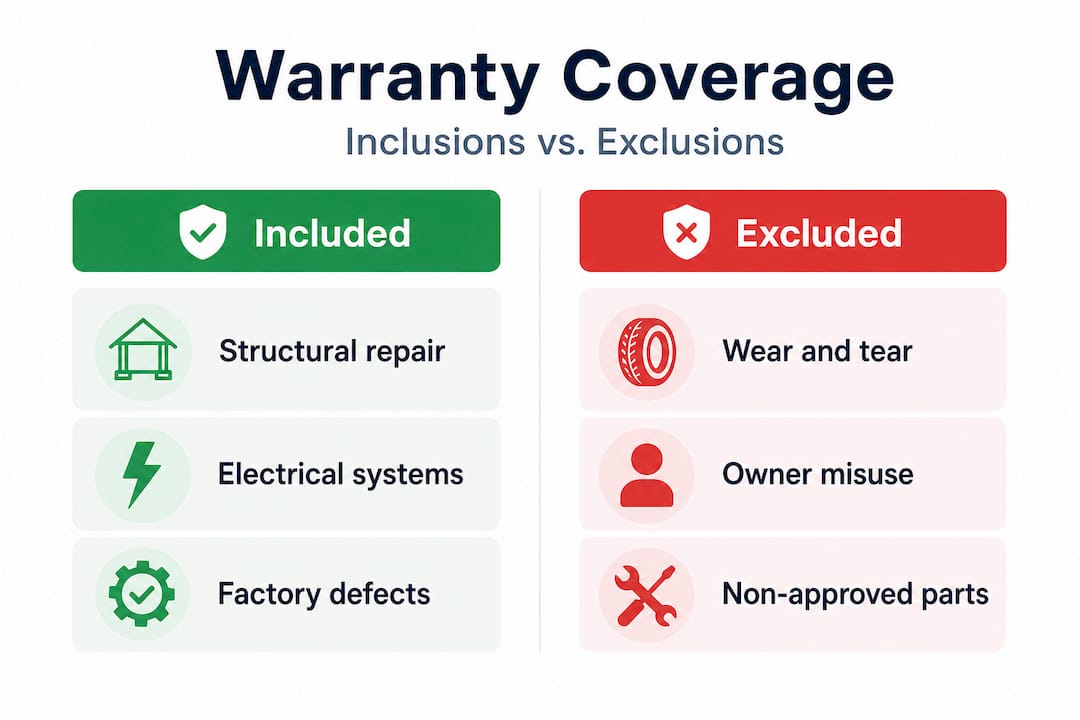
Typical coverage areas across most standard warranties include:
- Hull and structural components: Defects in the fiberglass layup, deck construction, or structural framing
- Engine and propulsion: Mechanical failures that stem from manufacturing defects, not wear
- Electronics and navigation systems: Factory-installed chartplotters, VHF radios, and autopilot systems
- Onboard systems: AC units, generators, plumbing, and electrical panels (often with shorter coverage windows)
What’s typically excluded is just as important to understand. Wear-and-tear items like belts, impellers, and zincs are almost never covered. Cosmetic damage from sun or saltwater exposure falls outside most coverage. And here is a detail that catches Florida owners off guard: certain components like sail drives or marine gear may be excluded from even the extended warranty unless specific eligibility conditions are met.
Extended warranties introduce another layer of complexity. They often carry stricter requirements than standard factory coverage, including registration deadlines, authorized service networks, and documented maintenance intervals. Staying current with maintenance for Florida yachts is not just good seamanship; it is a direct requirement for keeping extended coverage alive.
| Coverage type | Typical duration | Common inclusions | Common exclusions |
|---|---|---|---|
| Manufacturer structural | 5 to 10 years | Hull, deck, keel | Cosmetic, wear items |
| Manufacturer mechanical | 1 to 3 years | Engine, drive system | Sail drives (often) |
| Dealer warranty | Varies | System-specific | Owner-caused damage |
| Extended warranty | Up to 5 years added | Per contract | Non-registered repairs |
Understanding this table is step one. Step two is ensuring your behavior as an owner keeps all of it valid.
How to keep your yacht warranty valid: Compliance rules you can’t ignore
Knowing what your warranty promises is only part of the equation. The biggest risk is not a part failing; it is failing to follow the exact rules that keep your coverage alive. Most claim denials we have seen in Florida trace back not to engineering failures but to compliance gaps that were entirely preventable.

YANMAR’s extended warranty requires registering within 12 months of purchase, performing all scheduled maintenance through an authorized dealer, using only genuine parts and fluids, and logging every service event. That framework is not unique to YANMAR. It reflects an industry standard that most major marine manufacturers follow closely.
Here is a practical compliance checklist every Florida yacht owner should follow:
- Register your warranty immediately. Many extended warranty programs have a 12-month registration window from date of purchase. Miss it, and extended coverage may not apply at all.
- Use only authorized dealers for service. Taking your vessel to a non-certified mechanic, even a highly skilled one, can be enough to invalidate coverage on the specific system they touched.
- Specify genuine OEM parts and fluids. Aftermarket substitutes, even high-quality ones, can be cited as grounds for denial if a related component fails.
- Document every service visit. Keep physical receipts, digital records through the manufacturer’s support portal where available, and get your service manual stamped at each visit.
- Follow manufacturer maintenance intervals exactly. Not approximately. Not close enough. Exactly as specified in your owner’s manual.
Pro Tip: Create a dedicated warranty compliance folder, either physical or digital, that contains your original warranty documents, every service receipt, parts invoices, and manual stamps. If a claim is ever disputed, this folder is your strongest asset.
“A warranty is only as strong as the documentation behind it. In Florida’s salt-heavy environment, where components wear faster and service intervals matter more, staying organized is the difference between a covered repair and a surprise bill.”
Understanding maintenance cycles for longevity is directly tied to warranty compliance. And if you are purchasing a pre-owned vessel, understanding how warranty transfer at closing works ensures you do not inherit a voided policy without realizing it.
What can void your yacht warranty? Pitfalls most owners miss
Knowing what to do is only half the battle. Here is where most owners see their claims denied, and how you can make sure it does not happen to you.
Component failure alone does not guarantee a warranty claim. Manufacturers routinely deny coverage when the failure traces to missed or improper maintenance, regardless of how clear-cut the defect appears to be. This surprises owners who genuinely believed they had been diligent, only to find a single gap in their records created an opening for denial.
The most common warranty-voiding mistakes we see include:
- Using a non-authorized service provider. Even for a routine oil change, if the person performing the work is not manufacturer-certified, you may have just voided coverage on related systems.
- Installing aftermarket or non-OEM parts. This is especially common with electronics upgrades. Installing a third-party chartplotter or navigation system incorrectly can void coverage on the electrical system connected to it.
- Missing a scheduled service interval. Skip an annual service because the season was light or the boat sat unused, and the manufacturer’s records will show a gap that could support denial.
- Incomplete or missing service logs. Even if the work was done correctly, if you cannot prove it, the manufacturer does not have to take your word for it.
- Overlooked component exclusions. Owners regularly submit claims for sail drives or marine gear without realizing those categories require separate eligibility confirmation under extended coverage.
📊 Important context: In Florida, where vessels experience year-round UV exposure, humidity, and salt corrosion, maintenance intervals need to be followed with even greater precision than in less demanding climates. The environment accelerates wear on the exact components warranties often scrutinize most closely.
Pro Tip: Before any work is performed on your yacht, confirm in writing that the service provider is currently authorized by your manufacturer. Authorization can lapse, and a shop that was certified two years ago may not be today.
Investing in Florida yacht management from experienced professionals takes the compliance burden off your plate entirely. For significant concerns before or after purchase, a thorough luxury yacht inspection helps surface warranty-critical issues before they become financial problems.
If your warranty claim is denied: Your recourse and legal rights
Even when you do everything right, disagreements over what is and is not covered can still arise. Here is what you can do if that happens.
The escalation path matters. Most yacht owners who receive a denial notice assume the decision is final. It rarely is. Follow these steps in order:
- Request a written denial with specific reasons. The manufacturer or dealer must identify exactly which provision they are citing. Vague denials are easier to challenge.
- Review your documentation against their stated reason. If their denial references a maintenance gap, confirm whether your records actually support their claim. Many denials rest on assumptions.
- Escalate directly to the manufacturer. Bypass the dealer if needed. Manufacturers have customer relations and warranty review departments specifically for dispute resolution.
- Engage a marine surveyor. An independent, certified marine surveyor can provide a professional opinion that contradicts the manufacturer’s characterization of the failure’s cause.
- Invoke federal consumer protection law. The Magnuson-Moss Warranty Act gives consumers meaningful recourse when written warranty promises are not honored, even after a manufacturer refuses to act.
The Magnuson-Moss Warranty Act is a federal law that applies to consumer products, including boats, sold in the United States. It prohibits manufacturers from making you buy their branded parts as a condition of warranty coverage in most cases, and it gives you the right to pursue legal remedies if a warranted defect goes unaddressed. For Florida yacht owners, this is a powerful backstop when good-faith negotiation fails.
| Escalation stage | Who to contact | What to provide |
|---|---|---|
| Initial denial | Dealership warranty manager | Written denial, service records |
| Manufacturer review | Corporate warranty department | Full documentation package |
| Independent assessment | Certified marine surveyor | Inspection report, failure evidence |
| Legal recourse | Maritime attorney | All of the above plus written correspondence |
Understanding your rights around insurance and warranty claims creates a more complete picture of your financial protection. Warranty and insurance work differently, but together they form the foundation of a well-protected vessel.
The real reason most yacht owners lose warranty protection
Stepping back, there is a pattern behind nearly every warranty failure case we have encountered. The yacht owner did not lose coverage because their engine was poorly built or because the manufacturer acted in bad faith. They lost coverage because they underestimated the administrative side of ownership.
Warranties are contractual instruments. They have conditions, and those conditions are written to favor the manufacturer’s ability to scrutinize compliance. Authorized repair and maintenance requirements, and sometimes specific fluids and genuine parts, can void coverage even when the failure is clearly manufacturing-related. That is the fine print most people never read until it is too late.
We genuinely believe that the best-protected yacht owner treats their service records with the same seriousness they give to their vessel’s navigation equipment. The paperwork is not a formality. It is your proof of compliance, and in a warranty dispute, proof wins.
Florida’s environment adds urgency to this. The combination of UV intensity, salt air, and heat accelerates wear on every major system aboard. Manufacturers know this. When a component fails in Florida, their first review is often the service history, looking for any compliance gap that shifts financial responsibility to the owner.
Our recommendation to every client is simple: build your maintenance routines around your warranty requirements, not just around what the boat tells you it needs. A proactive, documented approach keeps your coverage intact and your resale value strong. When we help clients prepare to sell, the ones with clean, complete service logs tied to authorized dealers always command better prices. Buyers recognize protected investment when they see it.
The owners who lose coverage almost always had the same profile: knowledgeable about the water, confident in their seamanship, and genuinely surprised to discover the administrative side of ownership had been the silent weak point all along. You now know what they did not.
Partner with experts to maximize your yacht’s protection
Ready to turn your new understanding into action and peace of mind? At Yachting Experts, we bring a personalized, hands-on approach to every aspect of Florida yacht ownership, including the details that protect your investment long after the purchase is complete.

Our team works with yacht owners across Florida to ensure compliance, service coordination, and full documentation support are seamlessly handled. Whether you are building your knowledge through our Florida yacht investment guide or connecting with certified yacht maintenance experts who understand warranty requirements inside and out, we are here to make the process smooth, confident, and genuinely rewarding. Reach out to our team today and let us help you protect every dollar of your investment.
Frequently asked questions
Can I perform my own maintenance and keep my yacht warranty valid?
Most warranties require all maintenance to be performed by an authorized dealer using approved parts and fluids, fully documented in service logs; self-service typically voids coverage on the affected systems.
Are all yacht components covered equally in a typical warranty?
No, components like sail drives and marine gear may be excluded or require separate eligibility steps under extended coverage; always review component-specific exclusions in your full warranty documentation.
What legal protection do I have if my yacht warranty claim is unfairly denied?
You can escalate to the manufacturer’s corporate warranty department, engage a marine surveyor, or invoke the Magnuson-Moss Warranty Act for federal consumer protection remedies.
Does missing a single maintenance log really void my warranty?
Yes, missing or incomplete maintenance records can support a denial even for a genuine defect; manufacturers use incomplete service documentation as grounds to reject otherwise valid claims.
How do warranty rules affect yacht resale value in Florida?
A valid, transferable warranty backed by complete, authorized service records meaningfully increases resale value and buyer confidence in Florida’s competitive and discerning yacht market.
Recommended
Request A Call
Featured Listings

2027 Canados
100
Miami Florida

2015 Maiora
$3,750,000
90
Miami Florida

2027 Canados
57
Miami Florida

2019 Silent-Yachts Fair Dinkum
$1,599,000
55
Fort Lauderdale Florida

2026 Canados
49
Miami Florida

2026 Buddy Davis
47
Miami Florida

2020 Grady-White No Name
$610,000
45
Hallandale Beach Florida

2020 Viking Huckleberry
$1,495,000
44
Fort Lauderdale Florida

2027 Canados
43
Miami Florida

2021 Intrepid Dream Faster
$730,000
40
Coral Gables Florida

2016 Edgewater
$299,000
37
Miami, Florida

2022 Avid
$56,900
23
Stuart Florida
Get your yacht value Estimate
"*" indicates required fields