

A yacht is defined as a recreational vessel designed for extended voyages, equipped with sleeping quarters, a private bathroom, and independent water and electrical systems. That definition separates it from a boat in ways that go far beyond size. The yacht versus boat distinction shapes your registration requirements, insurance premiums, operational costs, and even where you can legally dock. Get it wrong, and you face coverage gaps, compliance failures, and expensive surprises. Get it right, and you make one of the most rewarding purchases of your life with full confidence.
What size and design features differentiate a yacht from a boat?
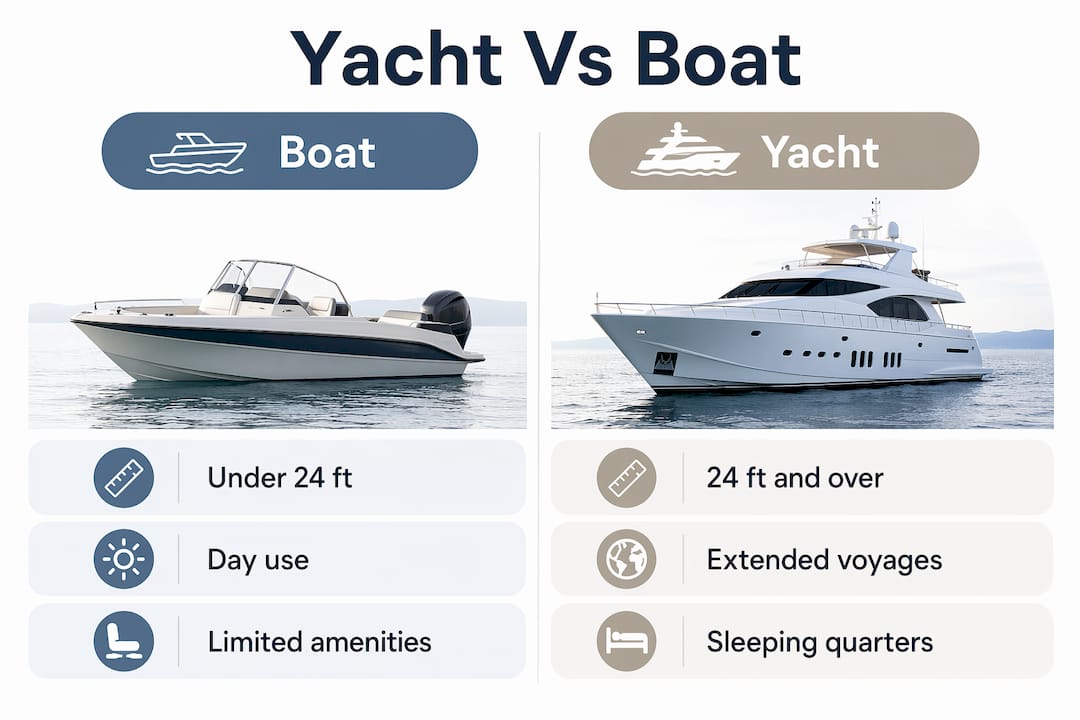
The industry consensus places the minimum yacht threshold at approximately 24 feet, but size alone does not make a vessel a yacht. Functional design matters just as much. A yacht must include habitable cabins, a head (private bathroom), and self-contained water and electrical systems. A boat typically lacks all three.
Think of it this way: a boat takes you out for the day and brings you home. A yacht is a floating home that happens to move. That distinction in purpose drives every design decision, from hull depth to galley layout to fuel capacity.
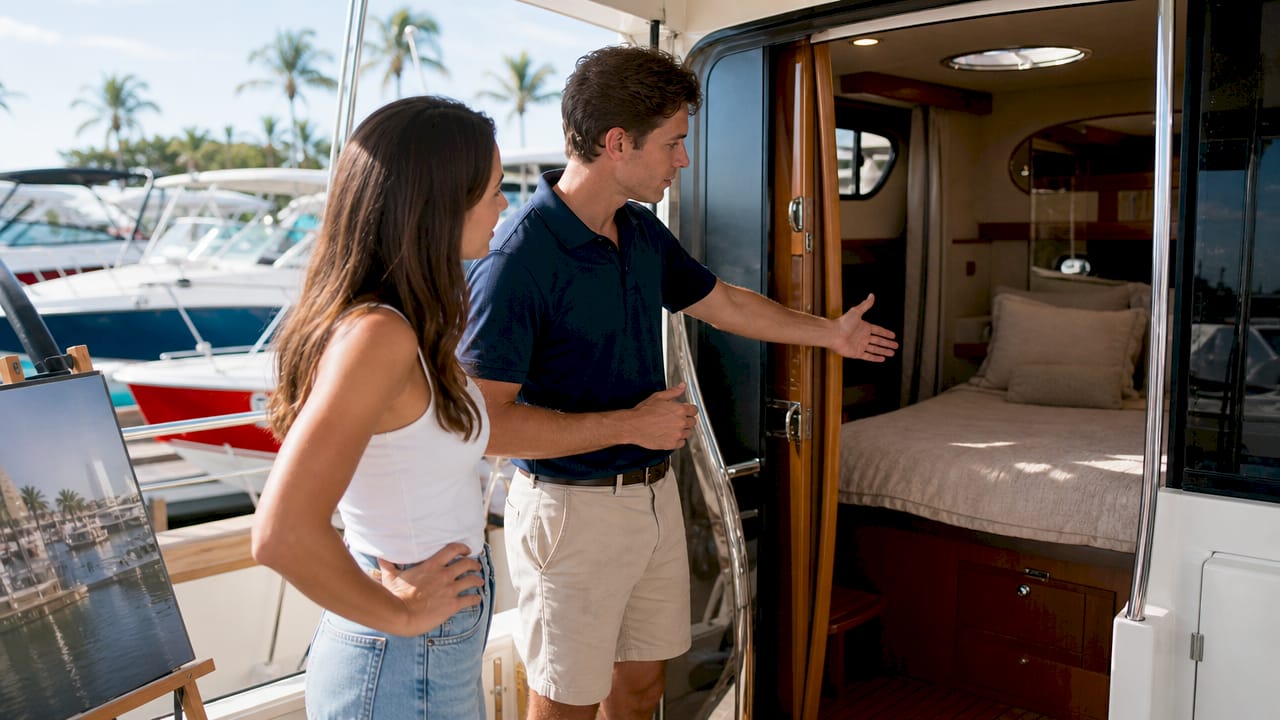
The 24-to-35-foot range covers most entry-level yachts on the market today. These vessels balance habitability with manageable maintenance and docking costs, making them the most popular starting point for first-time yacht buyers. Above 79 feet (24 meters), vessels enter superyacht territory with a completely different regulatory world.
| Feature | Boat | Yacht |
|---|---|---|
| Typical length | Under 24 feet | 24 feet and above |
| Sleeping quarters | Rarely included | Required |
| Private bathroom (head) | Not standard | Standard |
| Onboard water system | Not standard | Independent system |
| Electrical system | Basic or none | Self-contained |
| Primary use | Day trips | Extended voyages |
Pro Tip: When evaluating any vessel marketed as a yacht, check for a functioning head, a galley with a water supply, and a shore power connection. If any of those are missing, you are looking at a large boat, not a yacht.
How do legal definitions and registration rules distinguish yachts and boats?
Registration rules make the yacht versus boat distinction legally concrete. The U.S. Coast Guard (USCG) uses size and tonnage to determine which vessels require federal documentation versus state registration.
Here is how the framework breaks down:
- State registration covers most boats under 5 net tons. These are smaller recreational craft used locally, and each state manages its own process.
- USCG federal documentation is triggered for vessels above 26 feet intended for international use or commercial operation. Federal documentation provides stronger title protection and is required for certain financing arrangements.
- International codes apply at the 24-meter (79-foot) mark. Above that threshold, vessels must comply with frameworks like the MCA Large Yacht Code and SOLAS (Safety of Life at Sea) conventions.
- Purpose matters as much as tonnage. The legal distinction between a boat and a yacht depends on intended use and tonnage, not just a fixed length measurement.
Understanding Florida yacht registration requirements, for example, reveals how state and federal rules interact. A 30-foot vessel used for overnight cruising in Florida waters may need both state registration and USCG documentation depending on its use and financing structure. That overlap catches many new owners off guard.
The practical takeaway: classify your vessel correctly before you register it. The wrong classification can delay your documentation, complicate your financing, and create legal exposure if you operate outside your registered use category.
What are the distinct insurance considerations between boats and yachts?
Insurance is where misclassification becomes genuinely costly. Yacht insurance covers larger, higher-value vessels used for extended voyages, and it carries higher premiums, broader navigation areas, and underwriting requirements that standard boat policies simply do not include.
The differences are not minor. Here is what separates the two policy types:
- Liability limits. Yacht policies carry significantly higher liability limits to account for the greater risk exposure of larger vessels in open water.
- Crew coverage. If you employ a captain or crew, yacht insurance includes crew liability protection. Boat policies do not.
- Charter endorsements. Yacht policies can cover charter operations, including passenger liability. Standard boat insurance excludes commercial use entirely.
- Navigation limits. Yacht policies define broader cruising areas, including offshore and international waters. Boat policies typically restrict coverage to inland or near-coastal zones.
- Tender coverage. Many yacht policies include endorsements for tenders (the small dinghy used to get ashore). Boat insurance does not cover these separately.
The most dangerous scenario is an owner who buys a 30-foot vessel, insures it as a boat, and then takes it on an offshore passage or rents it out for a weekend. That owner has a coverage gap that could result in a total loss with no payout.
Pro Tip: Before purchasing any policy, tell your broker exactly how you plan to use the vessel, including any overnight trips, offshore passages, or charter plans. The right coverage depends entirely on actual use, not just vessel size.
For a full breakdown of coverage types, the complete owner’s guide to boat insurance at Yachtingexperts walks through every policy category in plain language.
How do operational requirements change with yacht classification?
Larger yachts do not just cost more to buy. They cost more to operate, inspect, and crew. The regulatory complexity grows sharply as vessel size increases, and novice buyers consistently underestimate this jump.
Below 24 meters, most yachts fall under recreational craft regulations. These are manageable for private owners: periodic safety checks, standard equipment requirements, and no mandatory professional crew. Above 24 meters, the picture changes entirely.
Yachts 24 meters and above must comply with the Large Yacht Code (LY3) or an equivalent framework, requiring classification society oversight, ongoing surveys, and stringent safety and manning standards. These are not optional guidelines. They are legal requirements that affect every aspect of how the vessel is operated, crewed, and maintained.
The operational checklist for large yachts includes:
- Classification society surveys. Vessels must pass periodic inspections by bodies such as Lloyd’s Register or Bureau Veritas to maintain their class certificate.
- Safety Management Systems (SMS). Owners must document safety procedures, emergency plans, and crew training records.
- Manning requirements. Large yachts require certified officers and crew at specific ratios depending on vessel size and route.
- Certificate cycles. Multiple certificates (safety equipment, radio, tonnage, load line) each have renewal timelines that must be tracked and maintained.
The operational and management demands of a large yacht are closer to running a small commercial vessel than owning a recreational boat. Buyers who plan ahead for these costs make far better ownership decisions than those who discover them after the purchase.
Key Takeaways
The yacht versus boat distinction is defined by onboard systems, legal classification, and operational requirements, not size alone.
| Point | Details |
|---|---|
| Size is a starting point | Yachts typically start at 24 feet, but habitable systems define the classification more than length. |
| Registration follows use | USCG federal documentation applies above 26 feet; international codes apply above 24 meters (79 feet). |
| Insurance must match actual use | Misclassifying a vessel as a boat when it functions as a yacht creates serious coverage gaps. |
| Operational costs scale sharply | Yachts above 24 meters face classification society surveys, manning rules, and certificate cycles. |
| Correct classification protects value | Getting the category right from day one protects your investment, financing, and legal standing. |
What I have learned after years of watching buyers get this wrong
The most common mistake I see is buyers fixating on length while ignoring the systems that actually define a yacht. Someone will look at a 28-foot vessel with a V-berth and a portable toilet and call it a yacht because it is “big enough.” That vessel is a large day boat. It does not qualify as a yacht under any serious classification standard, and insuring it as one would be just as wrong as insuring a true yacht as a simple boat.
The second mistake is underestimating the regulatory jump at 24 meters. I have spoken with buyers who were genuinely shocked to learn that their 80-foot dream vessel would require a professional captain, annual classification surveys, and a Safety Management System before they could legally operate it in international waters. That is not a bureaucratic nuisance. It is a significant budget line item that changes the economics of ownership entirely.
My honest advice: before you fall in love with a vessel, understand what yacht documentation it requires and what insurance category it falls into. Those two factors will tell you more about the true cost of ownership than the asking price ever will. The buyers who do this homework early are the ones who step aboard their first yacht with excitement rather than regret.
— Jason
Yachtingexperts is here when you are ready to take the next step
Knowing the difference between a yacht and a boat is the foundation. Acting on that knowledge with the right support is what turns a great decision into a great ownership experience.

At Yachtingexperts, we guide buyers through every stage of the process, from understanding vessel classification and registration to securing the right insurance and finding the perfect vessel for your lifestyle. Our team brings personalized attention to every client, whether you are stepping aboard your first 26-footer or trading up to something far more ambitious. When you are ready to make your move, our yacht brokerage specialists are here to make the process clear, confident, and rewarding. You can also explore how to trade up yachts and maximize your return when the time comes.
FAQ
What is the minimum size for a vessel to be called a yacht?
The industry standard places the minimum at approximately 24 feet, but the vessel must also include sleeping quarters, a private bathroom, and independent water and electrical systems to qualify as a yacht.
Does the USCG have a formal definition for yachts versus boats?
The USCG distinguishes vessels primarily by size and tonnage. Boats under 5 net tons are state-registered, while vessels above 26 feet used for international travel typically require federal USCG documentation.
Why does yacht insurance cost more than boat insurance?
Yacht insurance covers higher-value vessels used for extended voyages, and it includes crew liability, charter endorsements, broader navigation limits, and tender coverage that standard boat policies exclude.
What regulations apply to yachts over 24 meters?
Yachts above 24 meters (79 feet) must comply with the Large Yacht Code (LY3) or equivalent frameworks, requiring classification society surveys, certified crew, Safety Management Systems, and multiple certificate renewals.
Can misclassifying a vessel affect my insurance coverage?
Yes. Owners who insure a yacht under a standard boat policy face coverage gaps for offshore passages, charter operations, crew liability, and passenger claims, potentially leaving them fully exposed in a loss event.
Recommended
Request A Call
Featured Listings

2027 Canados
100
Miami Florida

2015 Maiora
$3,750,000
90
Miami Florida

2027 Canados
57
Miami Florida

2019 Silent-Yachts Fair Dinkum
$1,599,000
55
Fort Lauderdale Florida

2026 Canados
49
Miami Florida

2026 Buddy Davis
47
Miami Florida

2020 Grady-White No Name
$610,000
45
Hallandale Beach Florida

2020 Viking Huckleberry
$1,495,000
44
Fort Lauderdale Florida

2027 Canados
43
Miami Florida

2021 Intrepid Dream Faster
$730,000
40
Coral Gables Florida

2016 Edgewater
$299,000
37
Miami, Florida

2022 Avid
$56,900
23
Stuart Florida
Get your yacht value Estimate
"*" indicates required fields