

Buying a yacht in Florida without a proper survey is like purchasing a home without a single inspection. Thousands of buyers discover this lesson the hard way, walking into six and seven-figure purchases only to face expensive surprises weeks after they close. Hull blistering, concealed corrosion, electrical failures, and storm-related structural damage are common in Florida’s market, and none of them show up on a listing photo. A thorough yacht survey changes everything. It gives you a clear picture of exactly what you are buying, protects you from overpaying, and hands you real leverage at the negotiating table.
Table of Contents
- What is a yacht survey and why does it matter?
- Tools and techniques: how surveys uncover hidden issues
- Costs and value: what to expect from a Florida yacht survey
- Common problems revealed by surveys and what they mean for your investment
- Why surveys are undervalued and how Florida buyers can get ahead
- Next steps: secure your investment with expert support
- Frequently asked questions
Key Takeaways
| Point | Details |
|---|---|
| Essential protection | A thorough yacht survey is your best defense against costly hidden problems. |
| Hidden issues revealed | Modern survey tools detect moisture, corrosion, and damage invisible to the naked eye. |
| Florida adds risks | Hurricanes and humidity make full corrosion and moisture checks vital for Florida yachts. |
| Budget wisely | Expect $20-35 per foot plus possible extras for haul-outs, sea trials, or engine checks. |
| Leverage survey results | Use findings to negotiate the best deal—not just as a pass/fail test. |
What is a yacht survey and why does it matter?
With a clear need established, let’s break down what yacht surveys actually involve and how they differ for various buyers and scenarios.
A yacht survey is a professional, independent evaluation of a vessel’s physical condition, mechanical systems, and market value. A qualified marine surveyor inspects every accessible part of the boat and delivers a written report you can use for insurance, financing, or negotiations. It is not a pass/fail test. It is a detailed document that tells you the full story of a vessel.
There are three main survey types you will encounter in Florida:
- Pre-purchase survey: The most thorough option. This covers the hull, deck, structure, mechanical systems, electrical systems, safety equipment, and overall seaworthiness. If you are buying a yacht, this is non-negotiable.
- Insurance survey: Scoped to satisfy insurer requirements. It is less detailed than a pre-purchase survey and typically focuses on condition and safety rather than full mechanical evaluation.
- Appraisal survey: Purely focused on determining market value. Banks and lenders frequently request this for financing purposes.
As noted in pre-purchase vs insurance scope, a pre-purchase survey is always the most thorough, while insurance surveys are intentionally scoped down to meet specific underwriting requirements. Professional surveyors also follow ABYC (American Boat and Yacht Council) standards, which exceed the minimum USCG requirements and represent best practice for the industry.
| Feature | Pre-purchase survey | Insurance survey |
|---|---|---|
| Scope | Full structural, mechanical, electrical | Safety and condition focused |
| Outcome | Detailed defect list, value estimate | Certificate for insurer |
| Standards | ABYC preferred | Insurer-specific minimums |
| Best for | Buyers, lenders | Existing owners, renewals |
| Haul-out required | Usually yes | Sometimes optional |
Florida adds a layer of urgency here. The state’s subtropical climate accelerates corrosion, and hurricane seasons leave a trail of structural damage that is not always disclosed by sellers. Understanding the inspection process details specific to this market is essential before you sign anything.
“A survey is not just a formality. In Florida’s climate, it is your single most important tool for separating a well-maintained vessel from a liability dressed up in fresh paint.”
Tools and techniques: how surveys uncover hidden issues
Now, understanding what’s covered, let’s explore how surveyors catch what even experienced eyes miss.
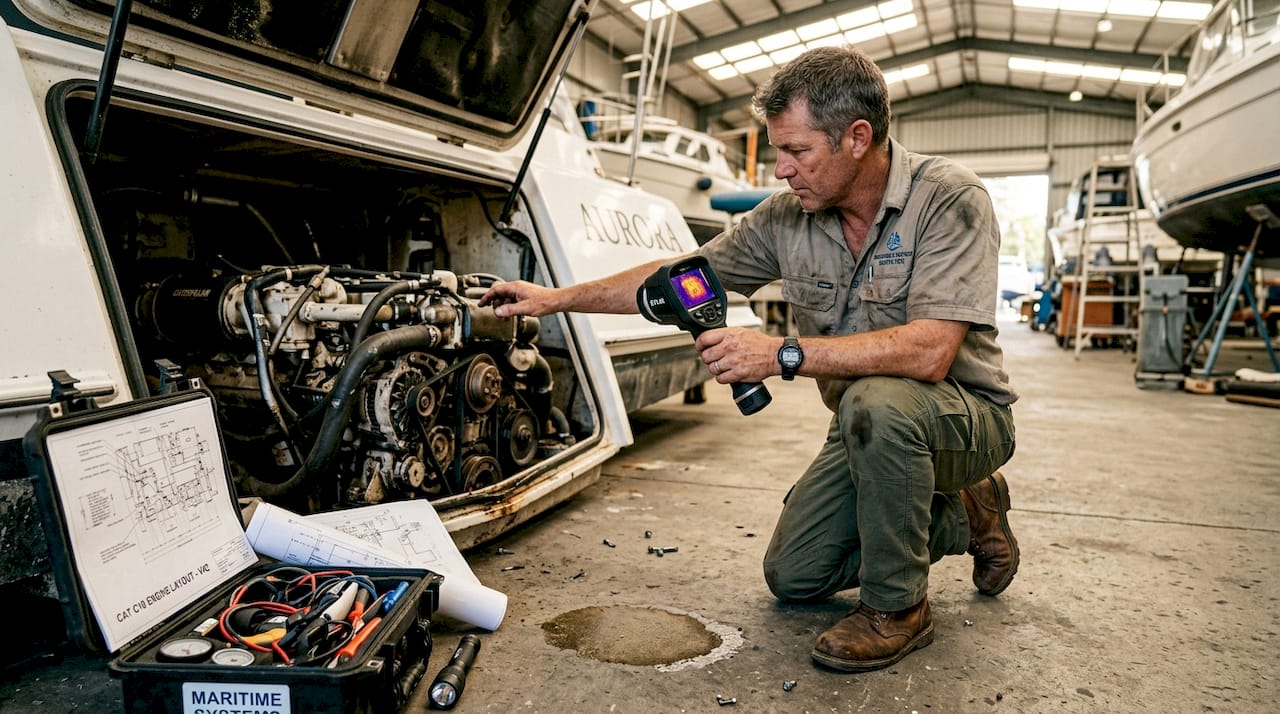
One of the biggest misconceptions about yacht surveys is that a surveyor simply walks around and looks at things. In reality, professional marine surveyors use a suite of specialized tools to detect problems invisible to the naked eye. These tools are what separate a quality survey from a cursory walkaround.
Here are the key instruments a qualified surveyor uses and what each one actually finds:
- Moisture meters: These detect elevated moisture levels inside fiberglass laminates and wooden structures. High moisture readings are an early warning sign of osmotic blistering (hull osmosis), a condition that can cost tens of thousands of dollars to fully remediate.
- Ultrasonic thickness gauges: These measure hull thickness at multiple points across the vessel. Thinning or uneven readings signal erosion, impact damage, or previous repairs that were not properly disclosed.
- Thermal imaging cameras: These reveal hidden moisture pockets, delamination, and heat anomalies in electrical systems. Thermal imaging is particularly powerful on Florida boats because moisture from heavy humidity or storm flooding can penetrate areas that look completely dry on the surface.
- Engine diagnostics: Comprehensive compression testing, oil pressure checks, and running evaluations catch early engine wear, internal leaks, and fuel system problems before they become catastrophic failures offshore.
- Oil analysis: A small sample of engine oil is sent to a lab and analyzed for metal particles, contamination, and wear indicators. It gives you a window into engine health that no visual inspection can match.
According to Hamilton Marine Services, a thorough survey integrates all of these tools together, creating a multi-layered view of the vessel’s true condition. And as highlighted in Florida-specific survey guidance, hurricane damage is especially common in Florida’s market. Buyers should always insist on thermal imaging and rigorous corrosion checks given the region’s humidity and storm history.
Pro Tip: Always ask your surveyor specifically whether thermal imaging is included in their scope. Some surveyors treat it as a standard tool while others charge it as an add-on. In Florida, it should never be optional.
The in-depth inspection workflow we recommend accounts for all of these tools and more. Skipping even one of these techniques can leave costly problems hidden until after you own the boat and the seller is long gone.
Costs and value: what to expect from a Florida yacht survey
With the technology and methods clear, it’s time to zero in on what you’ll actually spend and why it’s money well invested.
Survey costs in Florida are straightforward once you understand the pricing structure. Most marine surveyors charge by the foot of the vessel, with typical rates ranging from $20 to $35 per foot for a pre-purchase survey. A 35-foot yacht, for example, will cost approximately $700 to $1,225 at those base rates. However, the full picture of survey costs often includes several additional line items.
| Service | Typical cost in Florida |
|---|---|
| Base pre-purchase survey (per foot) | $20 to $35 |
| 35 ft vessel (estimate) | $700 to $1,225 |
| Haul-out (required for hull inspection) | $400 to $800 |
| Sea trial | $300 to $600 |
| Engine survey | $300 to $600 |
| Oil analysis (per engine) | $50 per sample |
| Thermal imaging (if not included) | $150 to $300 |
Here is how to budget intelligently for a yacht survey in Florida:
- Get itemized quotes from at least two or three surveyors. Base rates vary, and some surveyors include extras like thermal imaging while others price them separately.
- Ask specifically about haul-out coordination. Many surveyors have preferred yards, and costs can differ significantly depending on the marina.
- Budget for the sea trial as a separate line item. This is almost always extra, and skipping it on a motor yacht is a significant risk.
- Request oil analysis for each engine. On a twin-engine vessel, that’s $100 total for information that could reveal an engine nearing failure.
- Negotiate seller credits using the survey report. Once you have findings in writing, you have a factual basis for requesting price reductions or repairs before closing.
Pro Tip: The most expensive mistakes in yacht ownership almost never happen during the survey. They happen after it, when buyers skip the thorough option to save a few hundred dollars. Never cut corners here.
Understanding Florida yacht ownership costs in full context makes this even clearer. According to ownership cost data, deferred maintenance issues that slip through a poor survey can cost between 9% and 25% of the vessel’s value annually once they surface post-purchase. On a $300,000 yacht, that is $27,000 to $75,000 in unexpected expenses. The $1,500 survey suddenly looks like the best investment you ever made.
For buyers navigating their first purchase, our buyer’s guide overview explains how surveys fit into the broader deal process from offer to closing.
Common problems revealed by surveys and what they mean for your investment
Having set expectations about cost, let’s look at what surveyors typically find in Florida’s market and what that means for your investment.
Florida’s marine environment is genuinely one of the most demanding in the world. Saltwater, humidity, intense UV exposure, and annual hurricane threats create a perfect storm of potential damage on any vessel. Here are the most common issues surveyors uncover in this market:
- Hull blistering (osmosis): Water penetrates the fiberglass laminate and creates blisters beneath the gelcoat. Mild cases are manageable, but advanced osmosis requires a full barrier coat job or even structural repairs costing $15,000 to $40,000 or more.
- Stress cracks: These appear around high-load areas like cleats, chain plates, and through-hulls. Small cracks can indicate deeper structural fatigue that worsens over time.
- Corrosion: Salt air and water attack metal components aggressively. Stanchions, through-hull fittings, exhaust systems, and engine parts all corrode faster in Florida than in almost any other region.
- Moisture intrusion: Hidden moisture in deck cores (balsa or foam) causes delamination and structural softness underfoot. This is a major repair job and a safety concern.
- Engine leaks and wear: Oil, coolant, and raw water leaks are common on older vessels. Combined with lack of maintenance logs, these can signal engines nearing the end of their service life.
- Electrical system issues: Improper wiring, corroded connections, and undersized circuits are fire hazards. In Florida’s heat and humidity, electrical problems multiply fast.
- Fuel system deterioration: Rubber fuel lines degrade in Florida’s heat. Contaminated or deteriorating tanks are both a safety risk and an expensive fix.
As documented by pre-purchase inspection data, these findings are among the most frequently cited in marine survey reports across the industry. And per Florida survey guidance, hurricane damage, corrosion, and moisture intrusion appear in Florida surveys at a significantly higher rate than in colder, drier markets.
“Osmosis and corrosion are the silent deal-killers in Florida’s yacht market. What looks like a clean boat on a sunny day can be quietly falling apart from the inside out. A proper survey reveals the truth before it costs you everything.”
When your survey returns negative findings, you have three clear paths: negotiate a price reduction based on estimated repair costs, request that the seller complete specific repairs before closing, or walk away entirely if the issues are too severe or the seller won’t negotiate. Each choice protects you. The right path depends on the severity of the findings and your risk tolerance. Working with a team that understands how to protect vessel value gives you a major advantage in making that call.
Why surveys are undervalued and how Florida buyers can get ahead
Here is the perspective most buyers never hear: the real power of a yacht survey is not in avoiding bad deals. It is in making better deals.
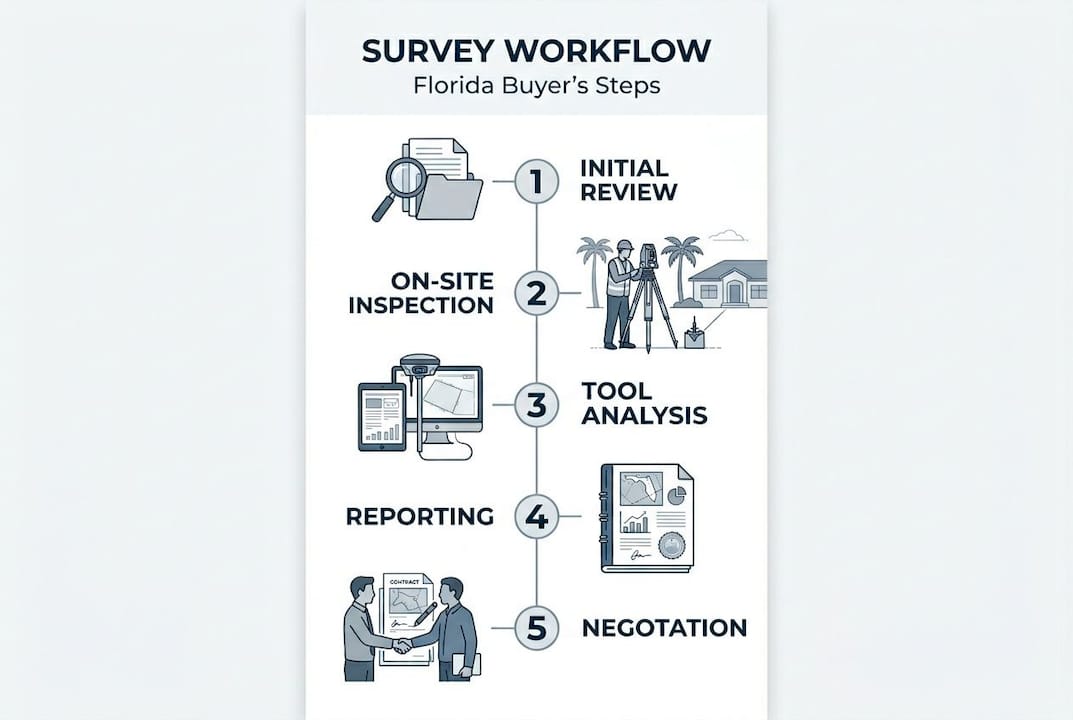
Conventional wisdom treats a survey as a binary pass/fail event. Either the boat is fine and you proceed, or something is wrong and you walk away. That framing leaves enormous value on the table. Savvy buyers in Florida treat the survey report as a negotiating document from the moment they receive it.
Think about it this way. A survey finds $12,000 in legitimate deferred maintenance, including a corroded fuel system, soft deck spots, and worn engine mounts. The seller listed the yacht at $185,000. Most buyers get nervous and walk. Experienced buyers hand that report to the seller and say the price needs to reflect reality. In a motivated seller situation, that often means a $10,000 to $15,000 price reduction, seller-funded repairs, or a combination of both. The buyer just made the survey fee back several hundred times over.
Florida’s market is competitive, and sellers know it. But most sellers also know that a bad survey finding is a liability they cannot hide once it is in writing. That shifts power to the informed buyer. We have seen our clients use survey findings to extract meaningful concessions on deals where, on the surface, the yacht seemed priced fairly.
The key is framing. Never present survey findings as a reason to blow up the deal. Present them as a factual basis for a fair adjustment. That approach works far better and keeps the transaction moving forward. Working with an experienced broker who understands this dynamic is one of the best investments you can make alongside the survey itself.
Our team has sat at dozens of negotiating tables where the survey report was the deciding document. The buyers who came prepared, with findings organized and repair estimates in hand, consistently got better outcomes than those who either panicked or ignored the findings entirely.
Next steps: secure your investment with expert support
Empowered with this knowledge, your next step is to find expert partners who can navigate the process with you.
Knowing what a survey covers is one thing. Having a team that knows how to act on the findings is where the real advantage lives.

At Yachting Experts, we guide Florida buyers through every step of the survey process, from recommending the right surveyor for your vessel type to interpreting findings and leveraging them in negotiations. Our Florida yacht broker expertise means we have been through this process on hundreds of transactions and we know exactly how to turn a survey report into a stronger deal for you. Whether you are stepping aboard your first yacht or trading up to something exceptional, we make the process seamless, clear, and genuinely exciting. Reach out to our team today and let’s talk about your next move.
Frequently asked questions
How long does a typical Florida yacht survey take?
Most Florida yacht surveys take one to two days depending on vessel size and scope, with larger yachts or additional testing such as engine surveys and haul-outs requiring more time.
Is a sea trial always included in the survey cost?
A sea trial is usually a separate charge, not included in the base survey fee, and typically costs between $300 and $600 depending on the vessel and surveyor.
What are the most expensive repairs surveyors commonly find in Florida?
Major repairs often include hull blistering from osmosis and corrosion, saltwater or hurricane-related structural damage, and engine rebuilds resulting from neglected leaks or deferred maintenance.
Can a poor survey help lower a yacht’s price?
Yes, negative survey findings are one of the most effective tools a buyer has for negotiating price reductions, seller-funded repairs, or purchase credits before closing.
How often should I get my yacht surveyed if I own in Florida?
After a pre-purchase survey, most insurers require an updated survey every three to five years or immediately following a storm event that may have caused hidden damage.
Recommended
Request A Call
Featured Listings

2027 Canados
100
Miami Florida

2015 Maiora
$3,750,000
90
Miami Florida

2027 Canados
57
Miami Florida

2019 Silent-Yachts Fair Dinkum
$1,599,000
55
Fort Lauderdale Florida

2026 Canados
49
Miami Florida

2026 Buddy Davis
47
Miami Florida

2020 Grady-White No Name
$610,000
45
Hallandale Beach Florida

2020 Viking Huckleberry
$1,495,000
44
Fort Lauderdale Florida

2027 Canados
43
Miami Florida

2021 Intrepid Dream Faster
$730,000
40
Coral Gables Florida

2016 Edgewater
$299,000
37
Miami, Florida

2022 Avid
$56,900
23
Stuart Florida
Get your yacht value Estimate
"*" indicates required fields