

Most yacht buyers and sellers underestimate the complexity of closing a deal in Florida, leading to costly delays and missed opportunities. The process involves far more than signing papers, from detailed surveys and sea trials to navigating Florida’s unique tax requirements and documentation protocols. Understanding each step is critical to protecting your investment and maximizing returns in 2026’s evolving market. This guide walks you through every stage of the yacht sales process in Florida, offering actionable insights to help you close deals smoothly and confidently.
Table of Contents
- Step-By-Step Yacht Sales And Closing Process
- Understanding Florida Tax And Documentation Requirements
- Market Trends And Timing: What Buyers And Sellers Should Know In 2026
- Applying Knowledge: Tips To Maximize Your Yacht Sale Or Purchase In Florida
- Discover Expert Support For Your Florida Yacht Journey
Key takeaways
| Point | Details |
|---|---|
| Multi-step closing process | Yacht closing involves surveys, sea trials, acceptance, and tax determinations that require careful coordination and timing. |
| Florida tax complexity | Sales and use tax obligations depend on vessel use plans and residency, making professional guidance essential. |
| Documentation agents critical | These specialists handle title transfers, lien searches, and registration to prevent legal complications. |
| 2026 market stabilization | Pricing remains firm despite economic pressures, with consumer interest increasing 1% year over year globally. |
| Timing impacts value | Days on market began moderating in late 2025, signaling strategic opportunities for both buyers and sellers. |
Step-by-step yacht sales and closing process
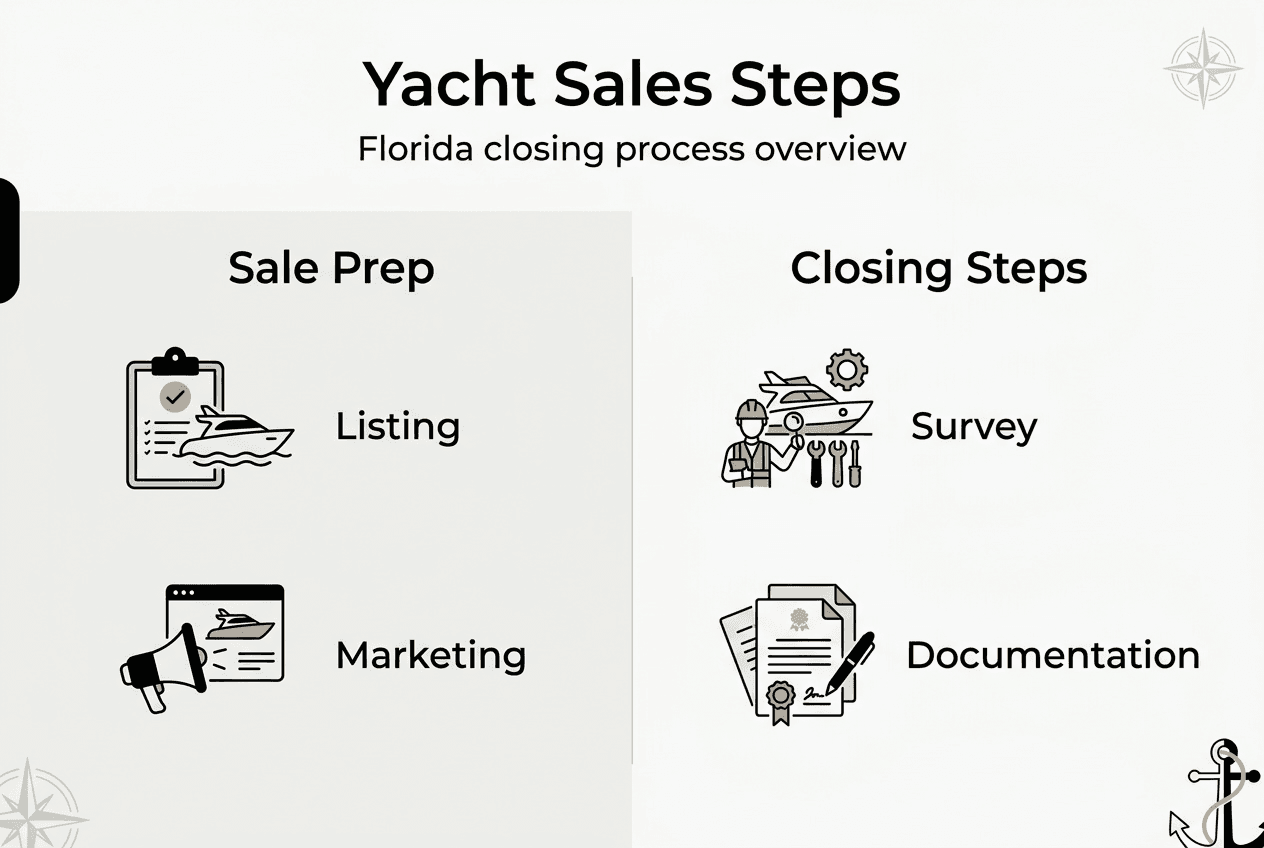
The yacht sales journey in Florida follows a structured path that protects both parties while ensuring legal compliance. The closing process includes surveys, trial runs, vessel acceptance, and tax calculations that must align perfectly to avoid delays. Each stage builds on the previous one, creating a comprehensive framework that safeguards your investment.
Listing and marketing form the foundation. Your broker photographs the vessel, creates detailed specifications, and distributes listings across multiple platforms to reach qualified buyers. Professional presentation matters tremendously in Florida’s competitive market, where high-quality imagery and accurate descriptions separate quick sales from prolonged listings. The broker screens inquiries, schedules showings, and negotiates initial offers on your behalf.
Survey and sea trial verification come next. Once you accept an offer, the buyer hires a marine surveyor to inspect the vessel’s condition thoroughly. This professional examines hull integrity, mechanical systems, electrical components, and safety equipment to identify any issues. The sea trial follows, allowing the buyer to test performance under actual operating conditions. These steps protect the buyer while giving sellers opportunities to address concerns proactively.
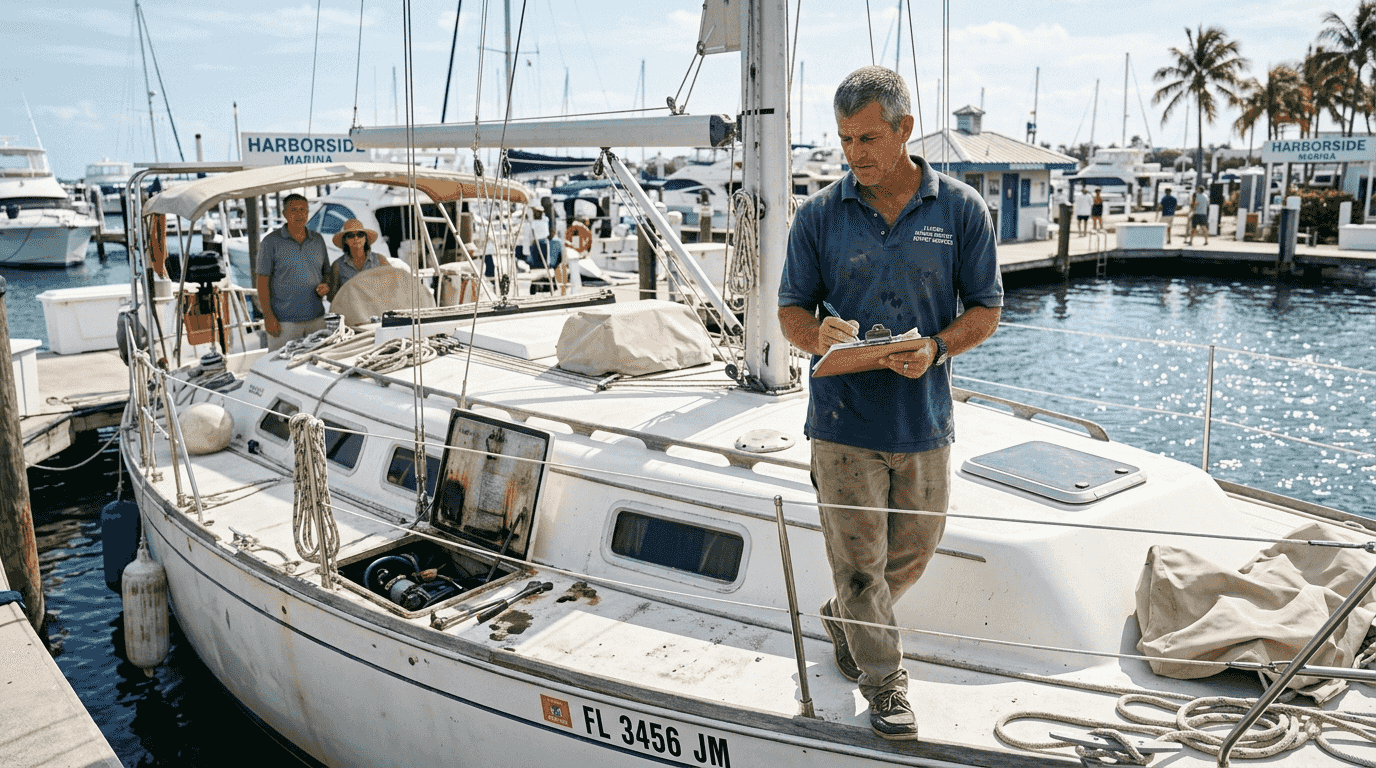
Acceptance and closing documentation finalize the deal. After satisfactory survey results, both parties sign acceptance forms and begin the formal closing process. You’ll work with documentation agents who perform title searches, verify no outstanding liens exist, and prepare transfer paperwork. Florida requires separate titles for dinghies and tenders, a detail many sellers overlook until the last minute. Your broker coordinates with all parties to ensure documents flow smoothly between attorneys, agents, and financial institutions.
Pro Tip: Schedule your documentation agent immediately after accepting an offer. These specialists often have 2 to 3 week backlogs during peak season, and delays here can jeopardize your entire timeline.
Tax determination and payment complete the transaction. Florida’s sales and use tax applies unless specific exemptions qualify. Your documentation agent calculates the exact amount based on purchase price, vessel use plans, and buyer residency status. Payment must clear before registration transfers, making accurate calculations essential. The how to sell a yacht guide provides additional insights into managing these final steps, while selling your yacht tips offer strategies to streamline the entire process.
Understanding Florida tax and documentation requirements
Florida’s tax landscape for yacht transactions differs significantly from other states, creating both challenges and opportunities for informed buyers and sellers. Tax implications vary based on vessel use plans, particularly whether the yacht remains in Florida waters or ventures beyond state boundaries. Understanding these nuances prevents costly surprises at closing.
Sales and use tax fundamentals require careful attention. Florida imposes a 6% sales tax on vessel purchases, plus any applicable local surtaxes that can add another 0.5% to 1.5% depending on county. However, buyers who sign a non-Florida affidavit declaring they will remove the vessel from state waters within specific timeframes may avoid this tax entirely. The affidavit commits you to keeping the yacht outside Florida for at least six months annually, with strict documentation requirements to prove compliance.
Documentation agents handle registration, title transfers, and lien searches that protect both parties from hidden legal issues. These professionals search federal and state databases to confirm no outstanding claims exist against the vessel. They also prepare and file all paperwork with the U.S. Coast Guard for documented vessels or the Florida Department of Highway Safety and Motor Vehicles for state-registered boats. Their expertise prevents the common mistake of incomplete filings that delay ownership transfer.
Key document types include:
- Bill of sale establishing purchase price and transfer terms
- Non-Florida affidavit for tax exemption qualification
- Coast Guard documentation or state registration applications
- Lien release letters from previous financing institutions
- Dinghy and tender separate title transfers
- Insurance certificates proving coverage effective at closing
Pro Tip: Request a preliminary title search 30 days before your target closing date. This reveals any issues early enough to resolve them without delaying the transaction.
Common paperwork pitfalls derail otherwise smooth closings. Sellers often forget that dinghies require separate documentation, creating last-minute scrambles to locate old titles or apply for duplicates. Buyers sometimes misunderstand affidavit requirements, signing documents they cannot legally comply with based on their actual usage plans. Missing signatures, incorrect dates, or incomplete forms trigger rejections that add weeks to the timeline. The Florida yacht ownership costs guide explores ongoing tax implications, while yacht investment strategies Florida examines how proper documentation protects your investment value. Understanding the role of a yacht broker Florida helps you leverage professional expertise throughout this complex process.
Market trends and timing: what buyers and sellers should know in 2026
Florida’s yacht market entered 2026 with cautious optimism following 2025’s stabilization period. The market showed renewed momentum despite economic pressures, signaling opportunities for strategic buyers and sellers who understand current conditions. Pricing dynamics shifted noticeably in the latter half of 2025, creating a more balanced environment than the extremes of previous years.
Consumer interest remained resilient with boat-related searches increasing 1% globally year over year, demonstrating sustained demand despite broader economic uncertainties. Florida specifically benefited from this trend, as the state’s favorable weather, extensive marina infrastructure, and tax advantages continue attracting yacht enthusiasts. Search volume for sportfishing vessels and luxury cruisers showed particular strength, reflecting the state’s diverse boating culture.
Pricing stayed firm across many categories despite lower volumes, and days on market began moderating later in the year. This combination suggests sellers maintained realistic expectations while buyers became more decisive after months of hesitation. The data reveals a market finding equilibrium after years of volatility.
| Market Metric | 2025 Performance | 2026 Outlook |
|---|---|---|
| Average Days on Market | 120-150 days (improved Q4) | 100-130 days (continued improvement) |
| Price Firmness | Strong across luxury segments | Stable with selective appreciation |
| Inventory Levels | Moderate, balanced supply | Slight increase expected |
| Buyer Activity | Cautious but engaged | More confident decision-making |
Timing recommendations for 2026 transactions:
- Sellers should list in January through March to capture early-year buyer enthusiasm and close before summer distractions
- Buyers gain negotiating leverage in July through September when inventory peaks and sellers become more motivated
- Both parties benefit from avoiding November and December when transaction volumes drop and service providers have limited availability
- Luxury segment sellers should target the first quarter when high-net-worth buyers make major purchasing decisions
The Florida yacht market in 2026 rewards those who combine market knowledge with strategic timing. Sellers who prepare vessels thoroughly and price competitively will capitalize on firm pricing trends, while buyers who act decisively on quality listings will secure favorable terms before competition intensifies.
The yacht market expert Florida resource explains how professionals interpret these trends for client advantage, and yacht market trends Florida provides deeper analysis of factors driving current conditions. Understanding these dynamics helps you position your transaction for maximum success.
Applying knowledge: tips to maximize your yacht sale or purchase in Florida
Transforming process knowledge into practical action separates successful transactions from problematic ones. Florida’s unique market demands a strategic approach that combines legal compliance, market awareness, and professional support. These actionable tips help you navigate each stage confidently.
Preparation checklist for sellers:
- Complete all maintenance and repairs at least 60 days before listing to allow proper documentation
- Gather service records, warranty information, and equipment manuals in organized digital and physical formats
- Schedule pre-listing survey to identify issues before buyers discover them
- Professional detailing and staging to maximize first impressions and photography quality
- Compile complete ownership history including previous surveys, upgrades, and major work
- Verify all registration and documentation current with no pending renewals during anticipated closing period
Preparation checklist for buyers:
- Secure financing pre-approval to demonstrate serious intent and expedite closing
- Research insurance options and obtain quotes before making offers
- Identify qualified marine surveyor and schedule availability for quick turnaround
- Clarify vessel use plans to determine accurate tax obligations
- Review slip availability or storage options at intended home port
- Budget for immediate post-purchase expenses like electronics upgrades or safety equipment
Leveraging documentation agents and brokers effectively requires clear communication and realistic expectations. Provide your documentation agent with complete information upfront, including any known liens, previous ownership complications, or unique registration circumstances. Your broker should receive detailed guidance on your priorities, whether that means quick sale timing, maximum price, or finding the perfect buyer who will care for your vessel properly. The selling sportfishing boat tips guide offers specialized advice for this popular Florida category.
Tax planning strategies based on vessel use:
- Document your cruising plans thoroughly if claiming non-Florida status to support affidavit compliance
- Consider vessel size and value when evaluating whether Coast Guard documentation or state registration better serves your needs
- Consult with marine tax specialists before closing to optimize legitimate deductions and exemptions
- Maintain detailed logs of vessel location and usage to support tax positions if questioned
Negotiation strategies informed by 2026 market conditions focus on data-driven positioning rather than emotional appeals. Sellers should price slightly below comparable listings to generate multiple offers and competitive bidding. Buyers benefit from thorough research that identifies how long specific vessels have been listed, allowing informed offers that respect market realities while protecting your interests. The boost boat sale value Florida resource provides specific tactics to increase sale prices through strategic improvements.
Common closing pitfalls to avoid:
- Underestimating timeline requirements and scheduling personal plans around unrealistic closing dates
- Failing to read and understand every document before signing
- Neglecting to verify insurance coverage begins exactly at ownership transfer
- Assuming verbal agreements have legal standing without written documentation
- Skipping final walkthrough inspection before accepting the vessel
Pro Tip: Create a closing checklist with your broker that assigns specific responsibilities and deadlines to each party. This simple tool prevents the miscommunication that causes most transaction delays.
Understanding yacht financing options Florida helps buyers structure deals that maximize purchasing power while maintaining financial flexibility. Proper planning transforms the complex yacht sales process into a manageable series of steps that protect your investment and achieve your yachting dreams.
Discover expert support for your Florida yacht journey
Navigating Florida’s yacht sales process becomes significantly simpler with experienced professionals guiding each step. The complexities of documentation, tax optimization, and market timing require specialized knowledge that protects your investment while maximizing returns. Whether you’re selling your current vessel or purchasing your dream yacht, expert support transforms potential stress into confident action.

Professional yacht management services handle everything from maintenance scheduling to documentation compliance, ensuring your vessel maintains peak value throughout ownership. Our team understands Florida’s unique requirements and market dynamics, providing personalized guidance tailored to your specific situation and yachting goals. We simplify the tax, financing, and closing challenges that overwhelm many buyers and sellers, turning complex processes into straightforward steps.
Explore comprehensive yacht management Florida services that protect and enhance your investment value. Our professional yacht selling assistance ensures you achieve the best possible price with minimal hassle. For those establishing ongoing yacht operations, our marine consultancy setup service provides the strategic framework for long-term success in Florida’s dynamic market.
Frequently asked questions
How long does the yacht sales closing process typically take in Florida?
The closing typically requires 4 to 6 weeks from accepted offer to final ownership transfer, though timelines vary based on vessel complexity and documentation requirements. Survey scheduling, lien searches, and documentation agent availability often create the longest delays. Buyers paying cash and purchasing vessels with clear titles can sometimes close in 2 to 3 weeks, while financed purchases or vessels with complicated ownership histories may extend to 8 weeks or more. Hiring a documentation agent immediately after offer acceptance helps meet deadlines consistently. The yacht selling timeline guide provides detailed milestones for planning purposes.
What role do documentation agents play in the Florida yacht sales process?
Documentation agents perform lien searches and complete ownership title transfers that protect both buyers and sellers from hidden legal complications. These specialists verify no outstanding claims exist against the vessel by searching federal and state databases thoroughly. They prepare and file all paperwork with appropriate agencies, whether Coast Guard documentation for larger vessels or state registration for smaller boats. Their expertise prevents the incomplete filings and procedural errors that delay closings and create legal vulnerabilities. Most experienced yacht transactions involve documentation agents as standard practice to ensure smooth, legally compliant transfers.
How can buyers legally minimize Florida sales tax on yacht purchases?
Buyers can avoid Florida’s 6% sales tax by signing a non-Florida affidavit declaring they will remove the vessel from state waters within required timeframes and keep it outside Florida for at least six months annually. Tax implications depend on vessel use plans, particularly whether you genuinely intend to cruise beyond Florida boundaries regularly. The affidavit creates legal obligations you must fulfill with proper documentation including logs, marina receipts, and maintenance records from out-of-state locations. Falsifying affidavit declarations risks significant penalties and back taxes. Consulting marine tax specialists before closing ensures you understand compliance requirements and choose strategies that match your actual usage plans legally. The Florida yacht tax strategies guide explores additional optimization approaches.
What happens if the marine survey reveals significant issues?
Survey findings typically trigger renegotiation where buyers request price reductions, repairs before closing, or credits to address identified problems. Sellers can agree to buyer requests, offer alternative solutions, or refuse and risk losing the sale. Minor issues rarely derail transactions, but major structural problems, engine failures, or safety violations often lead to significant price adjustments or deal cancellations. Smart sellers conduct pre-listing surveys to address problems proactively, maintaining negotiating strength when buyers raise concerns. Most purchase agreements include survey contingencies that allow buyers to withdraw without penalty if findings exceed specified thresholds, protecting them from purchasing vessels with hidden defects.
Do I need a yacht broker to sell my vessel in Florida?
While Florida law does not require brokers for private yacht sales, professional representation significantly increases sale prices and reduces transaction complications. Experienced brokers understand current market values, access qualified buyer networks, handle negotiations skillfully, and manage complex paperwork accurately. They also screen unqualified buyers, saving you time and protecting you from fraudulent schemes. For-sale-by-owner transactions often take longer, achieve lower prices, and encounter more legal issues than broker-represented sales. The commission cost typically pays for itself through higher sale prices, faster closings, and professional guidance that prevents costly mistakes throughout the process.
Recommended
Request A Call
Featured Listings

2027 Canados
100
Miami Florida

2015 Maiora
$3,750,000
90
Miami Florida

2027 Canados
57
Miami Florida

2019 Silent-Yachts Fair Dinkum
$1,599,000
55
Fort Lauderdale Florida

2026 Canados
49
Miami Florida

2026 Buddy Davis
47
Miami Florida

2020 Grady-White No Name
$610,000
45
Hallandale Beach Florida

2020 Viking Huckleberry
$1,495,000
44
Fort Lauderdale Florida

2027 Canados
43
Miami Florida

2021 Intrepid Dream Faster
$730,000
40
Coral Gables Florida

2016 Edgewater
$299,000
37
Miami, Florida

2022 Avid
$56,900
23
Stuart Florida
Get your yacht value Estimate
"*" indicates required fields