

TL;DR:
- Buyers must clearly define whether their yacht is for lifestyle use or investment to guide decisions.
- Proper planning involves securing financing, insurance, dockage, and completing surveys before purchase.
- Smart ownership includes chartering, fractional shares, or business structures to offset costs and maximize ROI.
Buying a yacht in Florida is one of the most exciting decisions you’ll ever make. It’s also one of the most complex. Many first-time buyers are surprised by how many moving pieces are involved, from choosing the right vessel to managing ongoing costs, taxes, and legal requirements. Without a clear workflow, it’s easy to misjudge your budget or skip critical steps, leading to costly regret. In fact, 30% of first-time buyers regret underestimating costs when they don’t offset them through chartering. This guide walks you through the complete, optimized ownership process so you can move forward with confidence.
Table of Contents
- Clarifying your yacht ownership goals
- Essential prerequisites and planning checklist
- The yacht purchase and onboarding process
- Optimizing ownership: investments, charter, and cost management
- Our take: Balancing joy and ROI in yacht ownership
- Next steps: Get expert support for your yacht journey
- Frequently asked questions
Key Takeaways
| Point | Details |
|---|---|
| Define your ownership goals | Clarify whether your focus is lifestyle enjoyment, investment, or a blend of both before starting your yacht journey. |
| Plan for all costs | Annual expenses typically run 10-15% of the yacht’s value and must be planned for reliable enjoyment. |
| Follow a structured purchase workflow | A step-by-step process with professional help ensures a smooth, compliant transaction and onboarding. |
| Leverage investment and charter strategies | Offset costs and potentially profit through chartering, fractional ownership, or business structures. |
| Get expert support | Relying on local yacht experts helps avoid common pitfalls and maximizes both owner satisfaction and financial returns. |
Clarifying your yacht ownership goals
Before you look at a single listing, you need to get clear on why you want a yacht and what you expect from it. This sounds simple, but it’s where most buyers go wrong. Two people can buy the same vessel and have completely different experiences based on their intentions.
Yacht ownership generally falls into two categories: lifestyle and investment. A lifestyle yacht is primarily for personal enjoyment, entertaining guests, weekend cruising, or exploring Florida’s incredible coastline. An investment yacht, on the other hand, is structured to generate income through chartering, fractional ownership, or business use. Owners must decide early whether their yacht is a lifestyle asset or an income vehicle, because this choice shapes every decision that follows.
Here are the key goals you should clarify before you start shopping:
- Intended use: Will you cruise privately, entertain clients, or charter the vessel to paying guests?
- Frequency of use: Are you on the water weekly, monthly, or seasonally?
- Income expectations: Do you want the yacht to offset costs, or are you comfortable covering full ownership expenses?
- Resale horizon: Are you planning to upgrade in three to five years, or hold long-term?
- Crew requirements: Will you captain yourself, or do you need a full professional crew?
Your answers directly affect which yacht size and type makes sense, what ownership structure to use, and how to plan your finances. A buyer who wants to charter their yacht aggressively will need a vessel that meets USCG charter certification standards. A buyer focused on private cruising has more flexibility.
We also strongly recommend exploring the yacht investment pros and cons before committing to any path. Understanding both sides helps you set realistic expectations.
Pro Tip: Talk to at least two or three current Florida yacht owners before you buy. Their firsthand experience with costs, dockage availability, and seasonal demand is invaluable and will save you from surprises that no article can fully prepare you for.
With clear intent, you can make smart choices about your yacht and ownership model. Next, let’s look at what you’ll need to begin.
Essential prerequisites and planning checklist
Once your goals are defined, it’s time to get your resources and team in place. Skipping this step is like building a house without a blueprint. Here’s what you need before you make any offers.
Core prerequisites at a glance:
| Prerequisite | Details |
|---|---|
| Budget | Purchase price plus 10-15% annual operating reserve |
| Insurance | Marine insurance arranged before closing |
| Tax plan | Sales tax strategy, especially for non-residents |
| Dockage | Marina slip reserved in advance |
| Survey | Independent marine survey scheduled |
| Crew | Crew sourced or captain identified if needed |
Understanding Florida yacht ownership costs is critical here. Annual ownership costs typically benchmark at 10-15% of the yacht’s purchase value. That means a $10M yacht will cost roughly $1M to $1.5M per year to operate.
“Expect $1M to $1.5M per year for a $10M yacht, including dockage, insurance, maintenance, and fuel.”
You’ll also want to assemble the right professional team:
- Yacht broker: Guides vessel sourcing, negotiation, and market insight
- Marine surveyor: Provides an independent condition and valuation report
- Maritime attorney: Handles title, liens, and registration documents
- Tax advisor: Structures ownership to minimize Florida sales and use tax
- Insurance broker: Secures marine coverage tailored to your use case
For financing, review our yacht financing guide to understand typical down payment requirements, which usually range from 30% to 50% for luxury vessels. Yacht loans differ significantly from luxury real estate assets financing, so specialized marine lenders are the right call.
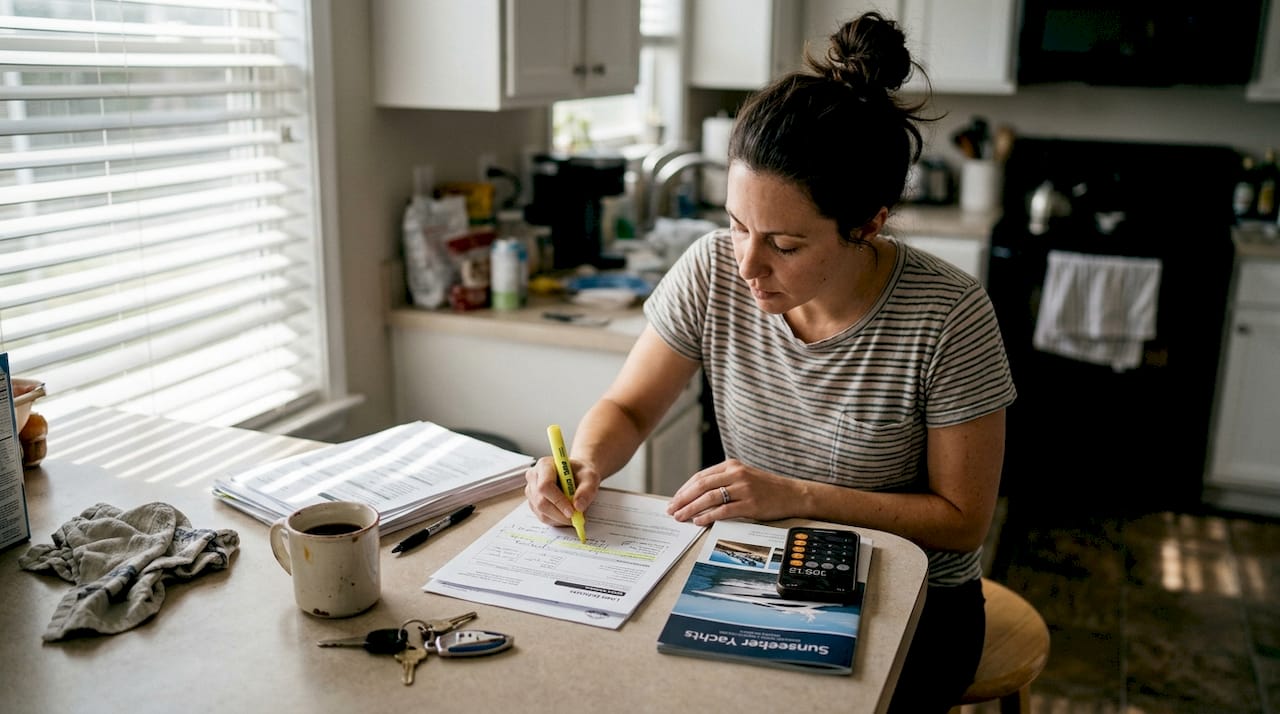
Before closing, use our yacht amenities checklist to make sure the vessel meets your lifestyle expectations and doesn’t require expensive upgrades post-purchase.
Pro Tip: Budget separately for hurricane preparation costs and title search fees. Florida’s storm season adds real costs that many buyers overlook, including haul-out fees, storm mooring, and potential damage deductibles.
Once you have your goals and checklist, it’s time to navigate the purchase and setup process.
The yacht purchase and onboarding process
This is where your preparation pays off. The purchase process in Florida involves more steps than most buyers expect, but each one protects your investment.
Step-by-step from offer to delivery:
- Vessel selection: Work with your broker to identify candidates that match your goals, size requirements, and budget.
- Sea trial: Test the yacht under real conditions before making any offer.
- Offer and deposit: Submit a written offer with a refundable deposit, typically 10%.
- Marine survey: Hire an independent surveyor to inspect the vessel’s condition, systems, and value.
- Negotiation: Use survey findings to negotiate price adjustments or required repairs.
- Due diligence: Confirm there are no outstanding liens, unpaid taxes, or title issues.
- Title search: Your maritime attorney clears the title and prepares closing documents.
- Payment and closing: Funds transfer through escrow, and ownership is officially transferred.
- Registration and documentation: Register the vessel with the USCG or Florida DMV depending on your structure.
- Delivery and onboarding: Take delivery, complete crew orientation, and activate insurance.
Review the full ownership transfer steps to avoid common pitfalls at closing.
Comparing purchase approaches:
| Approach | Best for | Key consideration |
|---|---|---|
| Direct purchase | Full control and use | Highest upfront cost |
| Brokerage purchase | Market access and negotiation | Broker commission applies |
| Fractional ownership | Lower entry cost | Shared scheduling |
Florida has some unique tax situations worth knowing. Non-residents may qualify for a sales tax exemption by removing the vessel within 10 days of purchase and registering it out-of-state within 30 days. Hurricanes also require advance planning, including pre-arranged haul-out contracts and storm mooring agreements.
For a deeper look at structuring ownership for tax efficiency, our yacht tax strategies guide covers the most effective approaches available in 2026.
Pro Tip: If you plan to remove the vessel from Florida shortly after purchase, register out-of-state to potentially avoid Florida sales tax. Work with a maritime attorney to confirm eligibility before closing.
With the yacht purchased and registered, it’s time to optimize for costs and returns.
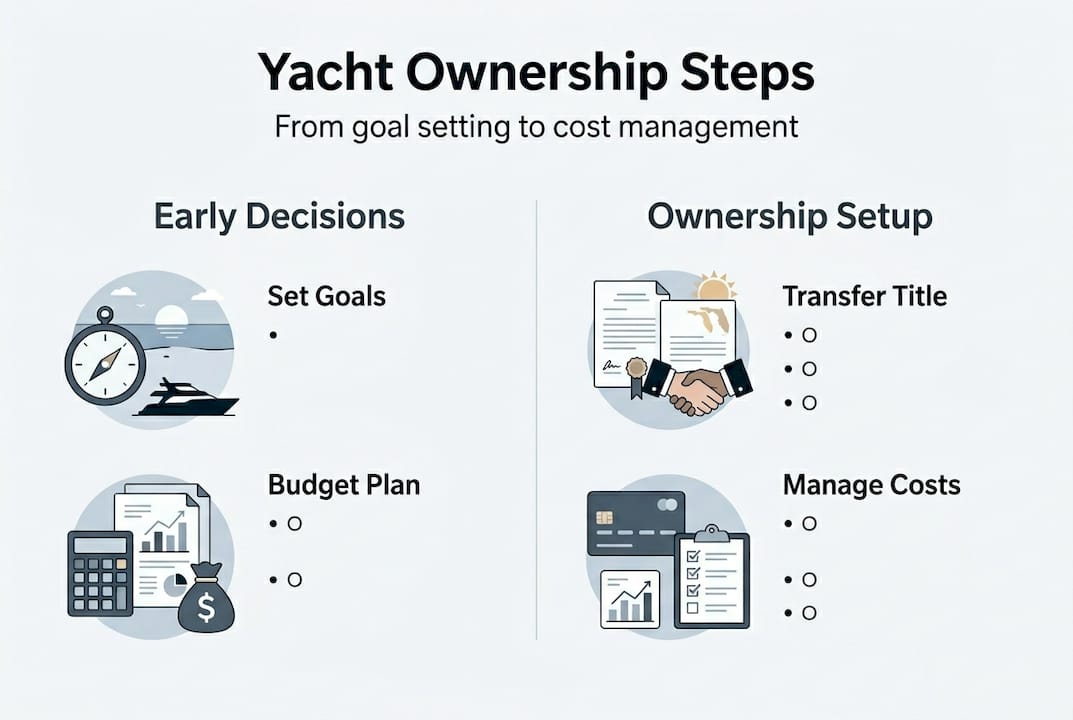
Optimizing ownership: investments, charter, and cost management
Owning a yacht doesn’t have to mean absorbing all the costs yourself. Smart owners use several strategies to offset expenses and even generate income from their vessel.
Top cost-offset strategies:
- Charter income: List your yacht with a licensed charter operator and earn revenue when you’re not using it
- Fractional ownership: Sell shares in the vessel to reduce your net cost and ongoing expenses
- Business structure: Own the yacht through an LLC or corporation to potentially deduct operating costs
- Crew cost sharing: Partner with other owners or charter operators to share crew expenses
- Seasonal optimization: Maximize charter bookings during peak Florida season (November through April)
📊 Statistic callout: Charter revenue on a well-managed $10M yacht can reach $500,000 to $1.5M per year, depending on the vessel type, marketing, and booking rate.
Charter revenue can offset 50% to 150% of total annual ownership costs, and a proper business structure may allow significant tax deductions on depreciation, crew, and operating expenses.
Explore our charter revenue strategies for a breakdown of how to price, market, and manage charter bookings effectively. For hands-off owners, professional yacht management services handle everything from crew to maintenance scheduling.
One important regulatory note: if you bring your yacht back into Florida after registering it out-of-state, use tax may apply. The timeline and usage pattern matter, so work with your tax advisor to stay compliant.
Avoiding costly missteps is just as important as finding revenue opportunities. Our guide on how to avoid buyer mistakes covers the most common errors we see from first-time Florida yacht owners.
With ongoing management and clear optimization, your yacht can be both a pleasure and an asset.
Our take: Balancing joy and ROI in yacht ownership
Here’s something we’ve observed after working with hundreds of Florida yacht buyers: the owners who are happiest long-term are not necessarily the ones with the biggest vessels or the most aggressive charter programs. They’re the ones who were honest with themselves about what they wanted from day one.
The buyers who treat their yacht purely as a financial instrument often burn out on the management complexity. The ones who ignore the financial side entirely can end up overwhelmed by costs. The sweet spot is treating your yacht as both a lifestyle investment and a managed asset.
“The happiest owners are those who see yachting as both pleasure and project.”
We’ve also seen that 30% of first-time buyers who don’t plan for charter offset end up regretting their purchase within two years. That’s not a small number. Personalization and ongoing education are what separate a great ownership experience from a stressful one. Working with a team that knows your goals, not just the market, makes all the difference. Learn how to avoid common ownership pitfalls before you commit.
Next steps: Get expert support for your yacht journey
Yacht ownership is genuinely one of life’s great pleasures, and it’s even better when you have the right team in your corner. Whether you’re still defining your goals or ready to make an offer, professional guidance makes the entire process smoother, faster, and more rewarding.

We’re here to walk you through every step, from vessel sourcing and private viewings to closing, registration, and ongoing management. Our Florida yachting guide is a great starting point for new buyers. For those ready to explore the market, understanding yacht brokerage advantages will show you exactly how a skilled broker protects your investment. And when you’re ready to maximize your returns, our yacht management services team is ready to help. This is your moment. Let’s make it exceptional.
Frequently asked questions
What is the annual cost to own a yacht in Florida?
Typical annual costs run 10-15% of the yacht’s value, covering dockage, insurance, maintenance, crew, and fuel. A $5M yacht, for example, will generally cost $500,000 to $750,000 per year to operate.
Can I offset yacht ownership costs by chartering?
Yes. Charter revenue in Florida often offsets 50-150% of ownership costs, depending on the vessel, season, and how actively it’s marketed and managed.
How can non-residents reduce Florida yacht taxes?
Non-residents may qualify for a sales tax exemption by removing the vessel from Florida within 10 days of purchase and completing out-of-state registration within 30 days.
What’s the advantage of fractional yacht ownership?
Fractional ownership lowers your entry cost to as little as a one-sixth share of the vessel’s value and reduces annual operating expenses proportionally, making luxury yachting accessible at a lower commitment level.
Recommended
Request A Call
Featured Listings

2027 Canados
100
Miami Florida

2015 Maiora
$3,750,000
90
Miami Florida

2027 Canados
57
Miami Florida

2019 Silent-Yachts Fair Dinkum
$1,599,000
55
Fort Lauderdale Florida

2026 Canados
49
Miami Florida

2026 Buddy Davis
47
Miami Florida

2020 Grady-White No Name
$610,000
45
Hallandale Beach Florida

2020 Viking Huckleberry
$1,495,000
44
Fort Lauderdale Florida

2027 Canados
43
Miami Florida

2021 Intrepid Dream Faster
$730,000
40
Coral Gables Florida

2016 Edgewater
$299,000
37
Miami, Florida

2022 Avid
$56,900
23
Stuart Florida
Get your yacht value Estimate
"*" indicates required fields