

Choosing your first yacht can quickly become overwhelming without a clear strategy. Every Florida yacht buyer deserves a vessel tailored to their real needs and financial comfort—not just a dream on paper. By starting with a true assessment of your yachting vision and budget, you protect your investment and sidestep common missteps that catch new owners off guard. This guide reveals how smart planning sets you up for seamless enjoyment, greater value, and lasting satisfaction on the water.
Table of Contents
- Step 1: Assess Your Yachting Needs and Budget
- Step 2: Select and Customize the Ideal Yacht
- Step 3: Negotiate Purchase and Arrange Documentation
- Step 4: Maintain, Enjoy, and Protect Your Investment
- Step 5: Prepare Your Yacht for Sale or Upgrade
Quick Summary
| Key Point | Explanation |
|---|---|
| 1. Define your yachting needs and budget | Clearly assess your intended use, frequency, and budget to avoid costly mistakes when selecting a yacht. |
| 2. Research different yacht types | Understand various yacht categories and their features to choose one that fits your cruising goals and lifestyle. |
| 3. Prepare for negotiation and documentation | Approach negotiations by understanding the market and ensure proper documentation to secure ownership legally. |
| 4. Maintain your yacht consistently | Establish a maintenance schedule to preserve your yacht’s value and functionality while enjoying your investment. |
| 5. Present your yacht effectively for sale | Thoroughly prepare your yacht for sale with maintenance records and a clean presentation to attract buyers and maximize value. |
Step 1: Assess Your Yachting Needs and Budget
Before you fall in love with a specific yacht, you need clarity on what you actually need and what you can afford. This assessment prevents costly mistakes and ensures you invest in a vessel that matches your lifestyle and financial reality.
Start by defining your yachting vision. Ask yourself what you’ll actually do with this boat. Will you cruise the Florida Keys for weekend getaways, spend extended time offshore, or primarily entertain clients and friends at anchor? Your intended use shapes everything—from vessel size and fuel consumption to maintenance complexity and crew requirements.
Next, consider who will use the yacht and how often. Solo skippers have different needs than families with young children. Frequent cruisers need different features than owners who dock their boats and use them seasonally. Be honest about realistic usage patterns; many first-time buyers overestimate how much time they’ll spend aboard.
Create a comprehensive budget framework encompassing income, expenses, and profit variables that covers three distinct cost categories:
- Purchase price including survey, delivery, and initial modifications
- Operating costs such as fuel, crew salaries (if applicable), dockage, and insurance
- Maintenance and repairs covering regular service, haul-outs, and unexpected replacements
Most first-time owners underestimate operating expenses by 30 to 50 percent. Budget for annual maintenance at roughly 10 percent of the yacht’s value. Insurance in Florida typically runs 1 to 3 percent of vessel value annually, depending on your experience level and coverage type.
Understanding your measurable gaps between current conditions and your yachting goals helps you prioritize what truly matters. Do you need a galley suitable for gourmet cooking, or will basic meal prep suffice? Does the master suite need to rival a five-star hotel, or is comfort during occasional overnight cruises enough?
Consider different vessel types that align with your needs. Smaller sailboats offer lower costs and easier handling. Trawlers provide comfort and range for extended cruising. Center consoles deliver speed and flexibility for day trips. Each category serves different purposes and budget levels.
Here’s a quick comparison of common yacht types to help guide your selection:
| Yacht Type | Typical Uses | Cost Level | Handling Ease |
|---|---|---|---|
| Sailboat | Leisure cruising | Lowest | Easiest for solo |
| Trawler | Long-range cruising | Moderate | Suited for families |
| Center Console | Day trips, fishing | Lower-medium | Quick, flexible |
| Sport Yacht | Entertaining, speed | Higher | Requires experience |
Set a realistic total budget that includes purchase price plus five years of operating costs—this gives you the full financial picture before you commit.
Once you have these fundamentals defined, you’re ready to explore specific vessels and market options. This clarity prevents emotional buying decisions and keeps you focused on vessels that actually work for your situation.
Pro tip: Document your needs, budget constraints, and usage expectations in writing before you start looking at yachts. This written anchor keeps you disciplined during viewings and prevents the excitement of stepping aboard your first yacht from overriding financial reality.
Step 2: Select and Customize the Ideal Yacht
With your needs and budget defined, you’re ready to find the perfect vessel and shape it to match your vision. This step transforms abstract requirements into a real yacht that you’ll love for years to come.
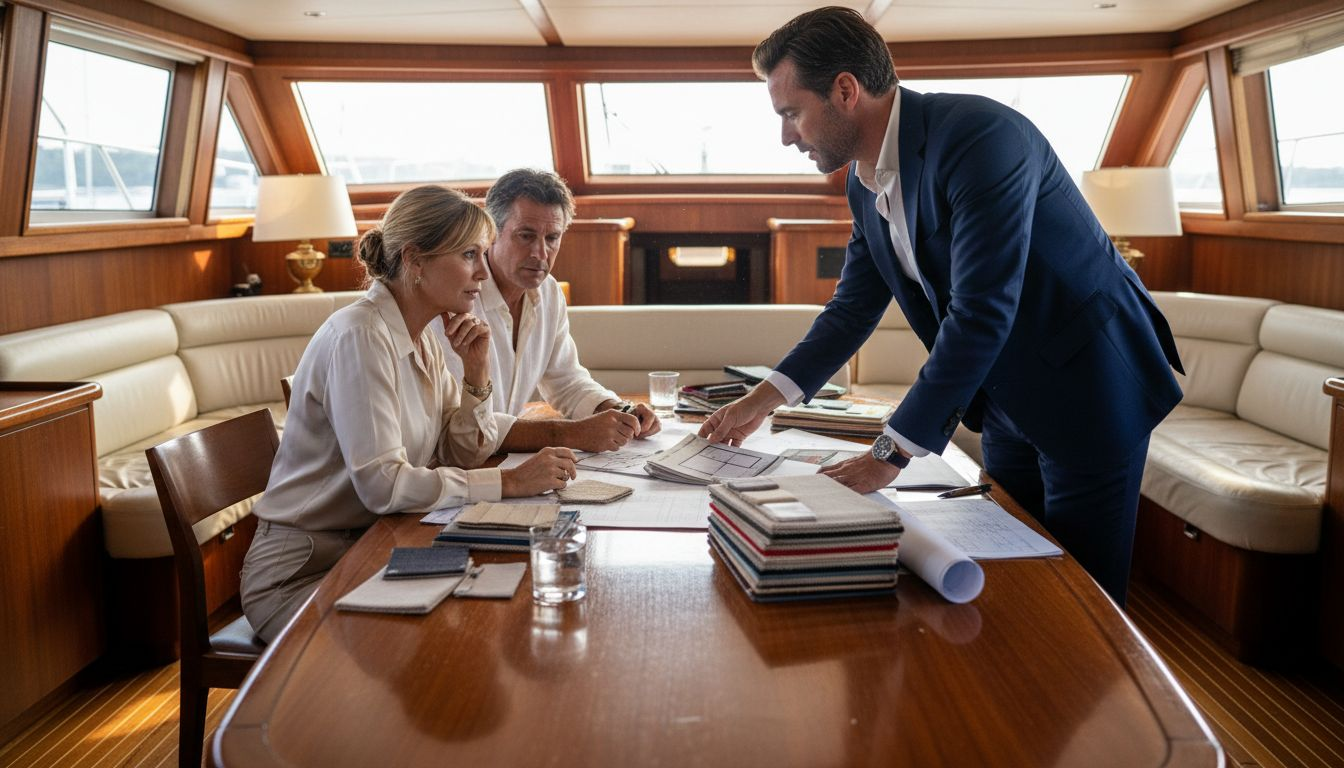
Start by exploring different yacht categories that fit your budget and intended use. Sailboats, trawlers, center consoles, and sport yachts each offer distinct advantages depending on whether you prioritize fuel efficiency, cruising range, speed, or entertainment space. Your choice here determines everything from operating costs to handling characteristics and resale value.
When evaluating specific vessels, pay attention to hull construction standards and materials that influence durability, performance, and maintenance requirements. Fiberglass dominates the market for good reason—it offers strength, relatively low maintenance, and good resale appeal. Aluminum and composite materials provide lighter weight and superior fuel efficiency but require specialized maintenance knowledge.
Begin your selection process with these key considerations:
- Layout and living space that matches your actual cruising patterns and guest needs
- Engine type and power balancing speed, fuel efficiency, and operational complexity
- Navigation and safety equipment meeting current industry standards for your cruising area
- Interior finishes and systems reflecting your comfort expectations and maintenance tolerance
Once you’ve identified promising candidates, customize strategically. Many owners upgrade avionics, add water makers, or enhance the galley with better appliances. These improvements increase both functionality and resale value. However, avoid over-customizing to your personal taste with highly specific modifications that won’t appeal to future buyers.
Ensure any modifications comply with electrical systems, fuel systems, and safety standards established by the American Boat and Yacht Council. Professional installers know these requirements and ensure your yacht remains safe and valuable.
The right yacht balances what you love today with what the market will value tomorrow—this tension keeps you from falling for charm over substance.
Remember that purchasing the right yacht at the right price matters more than endless customization. A well-chosen base vessel with modest upgrades beats an overpriced boat drowning in personalized modifications.
Pro tip: Get a professional surveyor’s report before committing to any yacht, and ask specifically about upgrade quality and compliance with current safety standards—this insight reveals hidden customization costs and structural issues that could drain your budget.
Step 3: Negotiate Purchase and Arrange Documentation
Now comes the critical part where price meets paperwork. Smart negotiation combined with proper documentation protects your investment and ensures a clean ownership transfer. This step separates smooth transactions from legal nightmares.
Start your negotiation with realistic expectations. The asking price is rarely the final price, especially in the yacht market where deals have flexibility. Research comparable vessels, review survey reports, and understand the seller’s motivation. Coming prepared with facts gives you leverage without being aggressive.
Consider working with a yacht broker during negotiations. Brokers represent either buyer or seller interests, assist with vessel searches and valuations, and handle the documentation preparation that keeps transactions on track. Their expertise in state-specific licensing requirements and transaction processes streamlines the entire purchase.
Key negotiation points typically include:
- Purchase price based on comparable sales and condition
- Included equipment and systems that transfer with the vessel
- Seller financing terms if the seller offers any assistance
- Delivery location and timing affecting additional costs
- Known repairs or warranties the seller provides
Once you’ve agreed on terms, documentation becomes your focus. Federal vessel documentation requirements including Certificates of Documentation and nationality proof govern U.S. yacht ownership. These aren’t optional—they’re legal necessities that affect your liability, taxation, and future resale.
The documentation process involves several steps. First, obtain a signed purchase agreement specifying all terms and contingencies. Next, arrange a professional survey if you haven’t already. Then work with your broker or an authorized documentation officer to file the Certificate of Documentation with the U.S. Coast Guard. This establishes your legal ownership and nationality.
Don’t skip the title search. A clean title means no hidden liens, disputes, or ownership claims hanging over the vessel. Your broker or attorney should verify this before closing. Also address any existing mortgages that must be paid off at closing.
Documentation isn’t bureaucratic busywork—it’s the legal foundation that protects your ownership and your asset’s value for years to come.
Timing matters here too. Documentation typically takes two to four weeks after submission. Build this into your purchase timeline so you’re not caught off guard.
To better visualize the purchase process, here’s a summary of key negotiation and documentation steps:
| Step | Purpose | Who Typically Handles It |
|---|---|---|
| Price Negotiation | Agree fair purchase | Buyer, broker |
| Purchase Agreement | Legal terms and details | Broker, attorney |
| Survey Inspection | Verify condition | Surveyor |
| Title Search | Uncover ownership issues | Broker, attorney |
| Documentation Filing | Establish legal ownership | Broker, documentation officer |
Pro tip: Have an attorney familiar with maritime law review your purchase agreement before signing, especially regarding contingencies for survey issues, financing, and sea trial results—this costs a few hundred dollars now and prevents thousands in disputes later.
Step 4: Maintain, Enjoy, and Protect Your Investment
Owning a yacht is thrilling, but your investment only holds value if you maintain it properly. This final step ensures your vessel stays safe, functional, and valuable for years to come while you actually enjoy the experience.
Start with a consistent maintenance schedule rather than fixing problems as they appear. Routine engine oil changes, fluid level checks, and leak inspections preserve vessel condition and prevent costly mechanical failures. A neglected yacht depreciates rapidly, while a well-maintained one holds resale value and performs reliably when you’re out on the water.
Establish these core maintenance practices from day one:
- Engine care including regular oil changes, filter replacements, and fuel system inspections
- Systems checks covering electrical, plumbing, cooling, and navigation equipment functionality
- Hull and exterior maintenance including cleaning, waxing, and checking for osmotic blistering or damage
- Interior inspection for mold, water intrusion, upholstery condition, and appliance function
- Safety equipment verification including life jackets, flares, fire extinguishers, and first aid supplies
Follow American Boat and Yacht Council standards for yacht design, construction, and repair when addressing maintenance issues or modifications. These globally recognized standards reduce accidents and enhance safety across all systems. Professional marine technicians know these standards and work within them to keep your yacht reliable.
Create a written maintenance log documenting all work completed, dates, and costs. This record proves your diligence to future buyers and helps you track which systems might need replacement soon. It also simplifies insurance claims if damage occurs.
Schedule seasonal haul-outs for bottom cleaning and inspection. Depending on your cruising area, this happens annually or every two years. A clean bottom improves fuel efficiency, prevents marine growth damage, and catches hull problems early before they become expensive.
Regular maintenance costs money today but saves thousands tomorrow—and keeps your yacht safe while you’re enjoying it.
Don’t neglect the enjoyment part either. Take your yacht out regularly, learn its systems, and use it. Vessels that sit idle develop problems faster than actively cruised yachts. Your yacht was built to be used.
Pro tip: Build relationships with trusted marine mechanics and service providers in Florida before you need emergency repairs—these connections ensure faster service, better pricing, and access to skilled professionals who understand your specific yacht’s quirks and maintenance history.
Step 5: Prepare Your Yacht for Sale or Upgrade
When you’re ready to sell or trade up to a larger vessel, preparation determines your final price and sale speed. Strategic presentation combined with proper documentation attracts serious buyers and commands top dollar for your investment.
Start with a comprehensive assessment of your yacht’s current condition. A professional yacht survey examining the hull, deck, rig, engineering, and interior provides accurate insight into maintenance needs and current valuation. This report becomes your foundation for pricing and negotiation. Buyers expect transparency, and a detailed survey report builds confidence in your asking price.
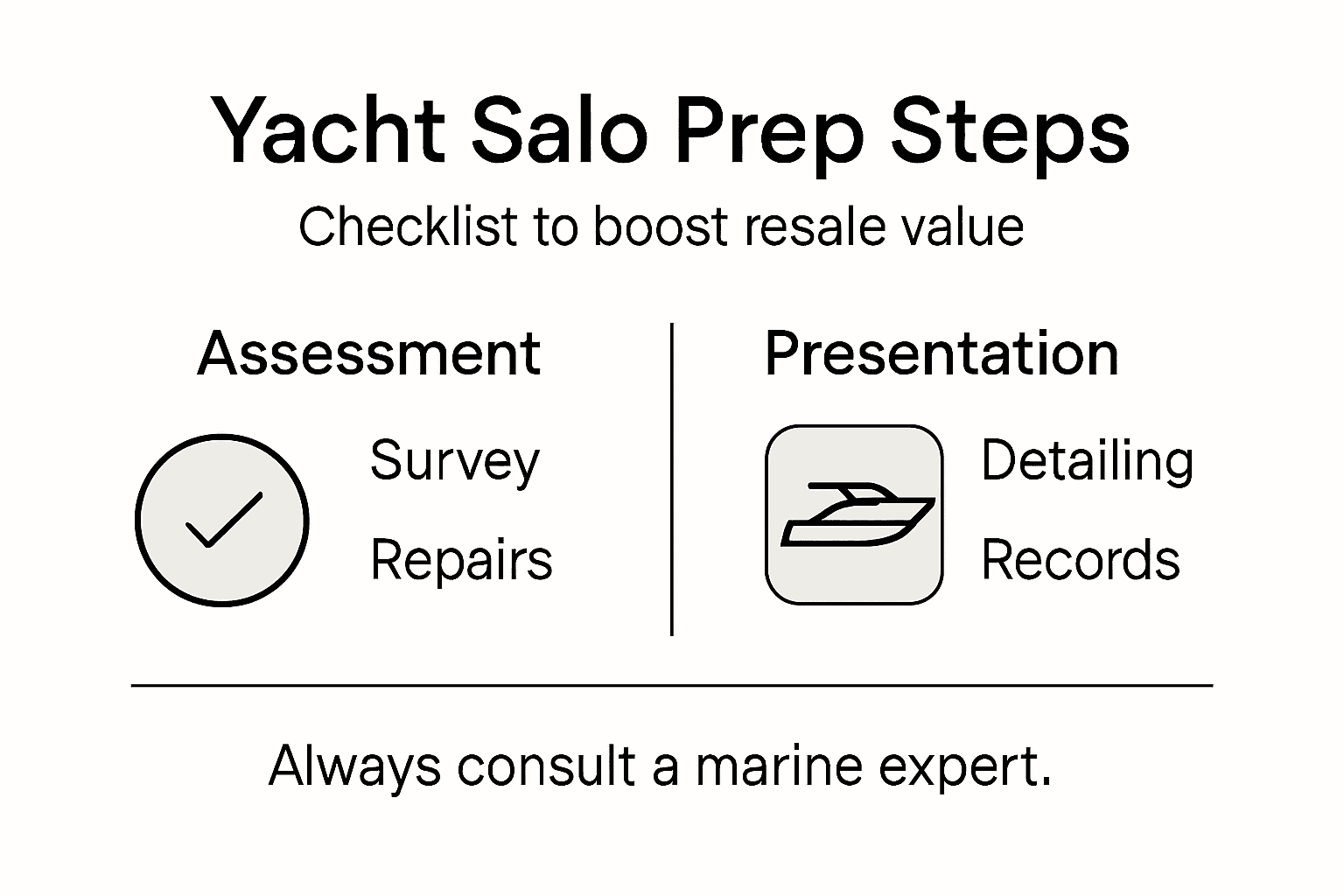
Address obvious maintenance issues before listing. Fresh paint, clean upholstery, functioning systems, and a spotless engine room make powerful first impressions. You don’t need to perform major overhauls, but fixing leaks, replacing worn hoses, and detailing the interior shows you’ve cared for the vessel.
Key preparation steps include:
- Document everything with maintenance records, service receipts, and upgrade history
- Update safety equipment including expired flares, life jackets, and inspection tags
- Deep clean the hull, deck, cabin, and engine room until they shine
- Test all systems to ensure navigation, electrical, plumbing, and mechanical components function reliably
- Photograph professionally showing both vessel details and appealing lifestyle moments
Ensure your yacht meets American Boat and Yacht Council standards and compliance requirements through their audit checklists and technical resources. This certification proves to buyers that your yacht meets current industry safety and quality benchmarks, which directly impacts perceived value and buyer confidence.
Consider working with a yacht broker during this process. Their expertise in market positioning, pricing strategy, and buyer qualification streamlines the entire sale. Brokers know what buyers in Florida are actually looking for and how to position your vessel competitively.
A well-prepared yacht sells faster and for more money than one rushed to market unprepared—preparation is an investment that pays immediate returns.
Timing matters too. Spring and early summer represent peak buying season in Florida. Plan your preparation timeline to hit the market when buyer demand is highest.
Pro tip: Create a comprehensive “maintenance and upgrade” binder showing every service performed, parts replaced, and improvement made—this tangible evidence of care justifies your asking price and significantly reduces buyer hesitation during negotiations.
Secure Your Dream Yacht with Expert Guidance and Maximize Your Investment
Navigating yacht ownership can feel overwhelming with decisions around budgeting maintenance customization and resale. This guide highlights the challenges owners face from assessing needs to preparing for sale—pain points like managing operating costs understanding compliance with safety standards and negotiating purchase terms. You want more than just a boat you want a lasting investment that fits your lifestyle and holds value.
At Yachting Experts we specialize in turning your yachting dreams into a seamless reality. Explore insights from our Uncategorized – Jason category where we share insider tips to keep your yacht safe and valuable. We provide personalized support through every step with a keen eye for detail and dedication to client satisfaction.

Take action now by partnering with us to avoid costly mistakes and unlock maximum return on your yacht investment. Whether buying customizing or ready to sell get expert negotiation help and trusted maintenance strategies. Visit Yachting Experts to start your journey with confidence today.
Frequently Asked Questions
How do I assess my yachting needs before purchasing?
Start by defining how you plan to use the yacht, whether for cruising, entertaining, or fishing. Make a list of the features that are crucial for your lifestyle and budget, helping you narrow down your options effectively.
What costs should I consider in my yacht purchase budget?
When budgeting for a yacht, include the purchase price, operating costs, and maintenance expenses. For example, allocate around 10% of the yacht’s value annually for maintenance to avoid underestimating expenses.
How can I successfully negotiate the purchase price of a yacht?
Research comparable vessels to establish a fair market value and come prepared with facts during negotiations. Understand the seller’s motivation to gain leverage and aim to negotiate a price that’s 10-15% lower than the asking price if the condition justifies it.
What documentation is necessary for yacht ownership transfer?
You will need to complete a purchase agreement, conduct a title search, and file for a Certificate of Documentation with the U.S. Coast Guard. Ensure that all paperwork is organized and verified, as this protects your ownership and legal rights.
How can I maintain my yacht to maximize its resale value?
Establish a regular maintenance schedule that includes routine inspections and quality checks for all systems. Keeping detailed records of maintenance and repairs will also help maintain resale value and demonstrate care to future buyers.
When is the best time to prepare my yacht for sale?
Prepare your yacht for sale during the spring or early summer, as this is peak buying season. Completing necessary maintenance and upgrades at this time helps attract buyers and can lead to a quicker sale at a better price.
Recommended
- Yacht Investment Explained: Maximizing Florida ROI
- Sell
- How to Sell a Yacht for Maximum Value Step by Step
- What Is Yacht Brokerage and Maximizing Your Return
- TV on Yachts | All Pay TV
- Luxury Towel Features Explained: The 2025 Owner’s Guide – Lotus Linen
- Why Invest in Art Prints: Value, Style, and Potential
Request A Call
Featured Listings

2027 Canados
100
Miami Florida

2015 Maiora
$3,750,000
90
Miami Florida

2027 Canados
57
Miami Florida

2019 Silent-Yachts Fair Dinkum
$1,599,000
55
Fort Lauderdale Florida

2026 Canados
49
Miami Florida

2026 Buddy Davis
47
Miami Florida

2020 Grady-White No Name
$610,000
45
Hallandale Beach Florida

2020 Viking Huckleberry
$1,495,000
44
Fort Lauderdale Florida

2027 Canados
43
Miami Florida

2021 Intrepid Dream Faster
$730,000
40
Coral Gables Florida

2016 Edgewater
$299,000
37
Miami, Florida

2022 Avid
$56,900
23
Stuart Florida
Get your yacht value Estimate
"*" indicates required fields