

Owning a yacht in Florida means more than enjoying perfect weather and scenic coastlines. For affluent yacht owners, every vessel is both a statement of luxury lifestyle and an opportunity for strategic financial growth. Yacht investments stand apart from traditional assets due to their unique blend of custom engineering, brand prestige, and tangible recreational value. Here you will discover how to capitalize on Florida’s robust maritime market, identifying proven strategies to protect your capital, generate income, and streamline the complexities of yacht transactions.
Table of Contents
- What Makes Yacht Investment Unique
- Popular Yacht Types And Ownership Models
- How Yacht Income And Value Work
- Florida Legal Framework And Tax Strategies
- Critical Costs, Risks, And Common Pitfalls
- Selling Your Yacht For Maximum Return
Key Takeaways
| Point | Details |
|---|---|
| Unique Asset Class | Yacht investment merges lifestyle and financial potential, particularly in the Florida market. |
| Ownership Models | Diverse options like full ownership, fractional ownership, and charter management cater to varying investor needs. |
| Income Streams | Key return mechanisms include charter revenue and potential appreciation of high-quality vessels. |
| Cost Management | Investors must be aware of ongoing operational costs, insurance, and possible depreciation risks to safeguard their investments. |
What Makes Yacht Investment Unique
Yacht investment stands apart from traditional asset classes due to its extraordinary combination of tangible luxury and potential financial appreciation. Unlike standard investments, yachts represent a unique intersection of lifestyle asset and strategic financial instrument, particularly in the Florida maritime market.
The uniqueness of yacht investment stems from several distinctive factors:
-
Custom Engineering: Yachts are not mass-produced commodities but bespoke vessels crafted with precision. Top-tier yacht manufacturers like Feadship demonstrate how advanced engineering and limited production contribute to value retention.
-
Brand Prestige: Certain yacht brands command premium valuations based on reputation, craftsmanship, and historical performance in the resale market.
-
Experiential Asset: Unlike stocks or bonds, yachts provide tangible recreational value while potentially generating income through charter opportunities.
-
Limited Supply: The scarcity of high-quality, well-maintained vessels creates natural value preservation mechanisms.
Unlike conventional investments, yacht valuation depends on complex variables beyond simple market metrics. Factors such as build quality, technological sophistication, maintenance history, and brand reputation significantly influence long-term financial performance.
The Florida market offers unique advantages for yacht investors, with its robust maritime infrastructure, favorable tax environment, and year-round boating conditions. Sophisticated investors recognize that yacht ownership transcends mere transportation – it represents a strategic asset with potential for appreciation.
Pro tip: Conduct thorough due diligence on yacht maintenance history and seek professional valuation before making any investment decisions.
Popular Yacht Types and Ownership Models
Yacht ownership in Florida represents a sophisticated investment landscape with diverse options tailored to individual preferences and financial strategies. Yacht classifications range widely based on size, purpose, and intended use, creating multiple entry points for potential investors.
The primary yacht types investors typically consider include:
- Motor Yachts: Powered by engines, offering luxurious accommodations and extensive range
- Sailing Yachts: Emphasizing traditional maritime experience and performance
- Expedition Yachts: Designed for long-distance travel and remote exploration
- Superyachts: Exceptional vessels exceeding 131 feet, often requiring professional crew management
Ownership models in the maritime investment ecosystem are equally diverse, presenting investors with flexible strategies:
- Full Private Ownership: Complete control and personal usage
- Fractional Ownership: Shared investment reducing individual financial burden
- Charter Management: Generating potential revenue through professional rental programs
- Bareboat Charters: Allowing self-operation with potential income generation
The selection process involves carefully evaluating personal objectives, budget constraints, and intended usage. Hull design significantly impacts vessel performance, with options like monohulls offering traditional experiences and catamarans providing enhanced stability and speed.
Florida’s maritime environment particularly supports diverse yacht ownership models, with year-round boating conditions and robust maritime infrastructure creating ideal investment conditions. Sophisticated investors recognize that yacht selection transcends mere transportation – it represents a strategic lifestyle and financial asset.
Pro tip: Consult a professional yacht broker to thoroughly assess your specific investment goals and match them with the most appropriate yacht type and ownership model.
Here’s a comparison of popular yacht ownership models and their core benefits for investors:
| Ownership Model | Control Level | Upfront Cost | Revenue Potential |
|---|---|---|---|
| Full Private Ownership | Complete control | Highest | Limited, unless chartered |
| Fractional Ownership | Shared decision | Lower | Depends on usage agreement |
| Charter Management | Professional handle | Variable | Regular charter income |
| Bareboat Charters | Self-operate | Moderate | Occasional income possible |
How Yacht Income and Value Work
Navigating the financial landscape of yacht investment requires understanding the complex mechanisms of value generation and income potential. Yacht value preservation depends on multiple sophisticated factors, with premium brands demonstrating remarkable capital retention strategies.
Primary income streams for yacht investments include:
- Charter Revenue: Generating income by renting the vessel during non-personal use periods
- Appreciation: Strategic investments in high-quality vessels that maintain or increase value
- Tax Advantages: Potential write-offs and deductions associated with yacht ownership
- Lifestyle Asset: Combining personal enjoyment with potential financial returns
Value retention in yacht investments is influenced by critical factors:
- Construction Quality: Superior engineering and materials
- Brand Reputation: Prestigious manufacturers with proven track records
- Maintenance History: Consistent, professional vessel upkeep
- Market Demand: Alignment with current maritime trends and preferences
Florida’s unique maritime ecosystem provides exceptional conditions for yacht investments, offering year-round usage, favorable tax environments, and robust charter markets. Sophisticated investors recognize that yacht ownership transcends traditional asset classes, representing a dynamic intersection of lifestyle and financial strategy.
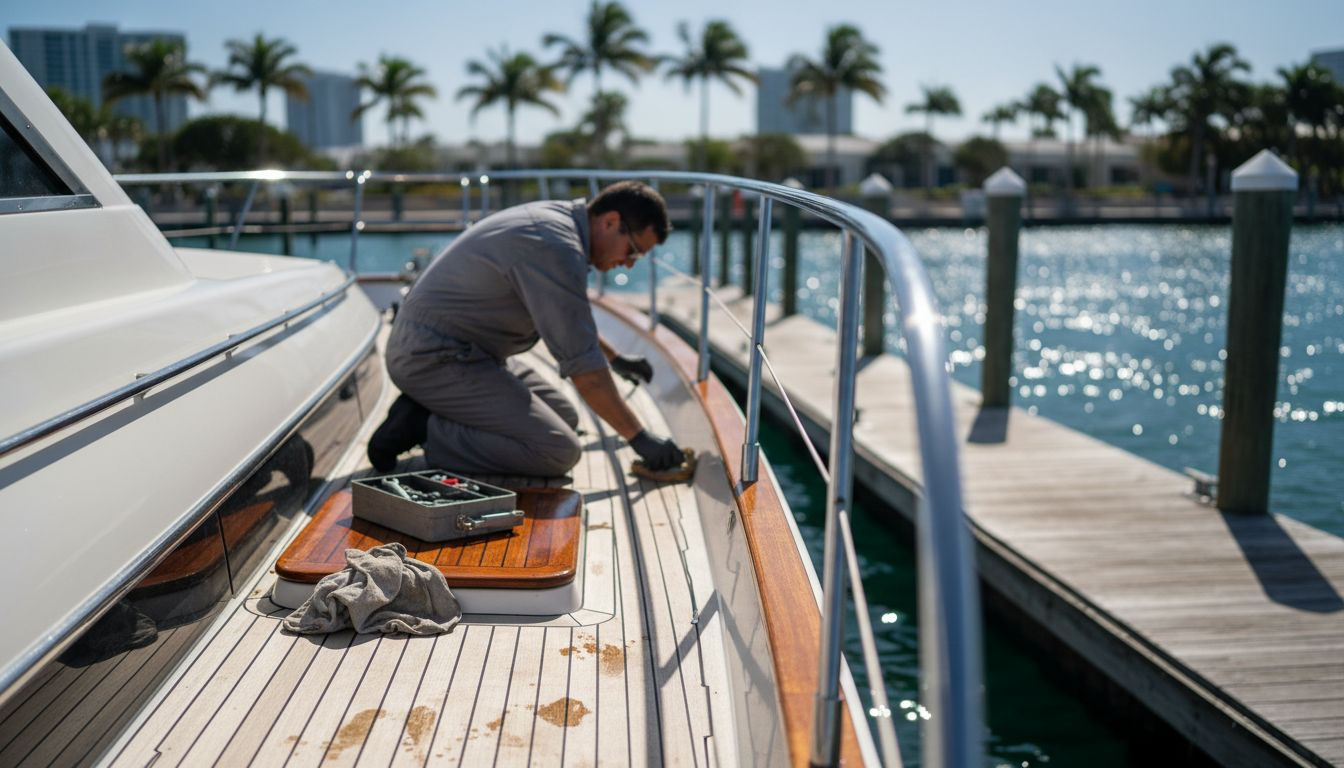
The depreciation curve for high-end yachts differs significantly from standard vehicles. Premium vessels from renowned manufacturers can maintain substantial value, with some top-tier brands experiencing minimal value reduction over time. This makes yacht investment a potentially lucrative alternative to conventional investment vehicles.
Pro tip: Develop a comprehensive maintenance and upgrade strategy to maximize your yacht’s long-term value and income potential.
Florida Legal Framework and Tax Strategies
Navigating the complex legal and tax landscape of yacht ownership in Florida requires strategic understanding of state-specific regulations and federal compliance requirements. Florida provides unique tax strategies that can significantly impact the financial feasibility of yacht investments.
Key tax considerations for yacht investors include:
- Sales Tax Limitations: Florida caps sales/use tax at $18,000 regardless of vessel price
- Business Use Deductions: Tax write-offs available when business usage exceeds 50%
- Documentation Requirements: Strict IRS substantiation rules for expense claims
- Marketing Potential: Yachts can serve as business entertainment and marketing assets
Legal compliance involves several critical regulatory components:
- Broker Licensing: Adherence to Chapter 326 regulations
- Transaction Oversight: Comprehensive consumer protection protocols
- Ownership Documentation: Precise record-keeping and registration requirements
- Transactional Transparency: Mandatory disclosures and legal reporting
Yacht broker regulations in Florida have recently evolved, expanding definitions and licensing requirements to enhance market integrity. The state maintains a robust framework that balances investor protection with market flexibility.
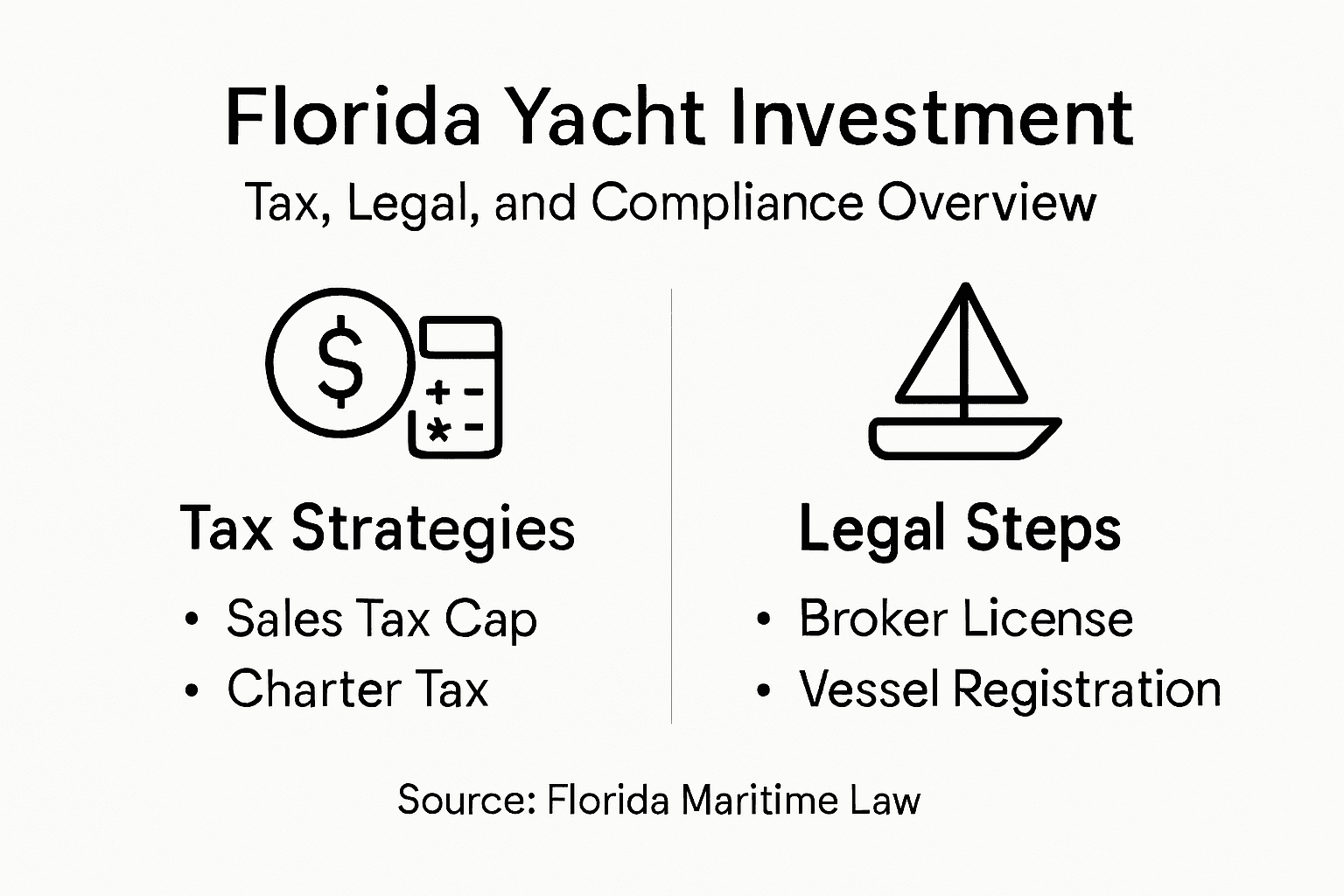
Sophisticated yacht investors must approach Florida’s legal environment with meticulous attention to detail. Understanding the nuanced interplay between federal tax laws and state maritime regulations can transform potential compliance challenges into strategic advantages.
Pro tip: Consult a specialized maritime tax attorney to develop a comprehensive compliance strategy tailored to your specific yacht investment scenario.
Critical Costs, Risks, and Common Pitfalls
Yacht investment demands a comprehensive understanding of the multifaceted financial landscape, with hidden expenses lurking beneath the surface. Sophisticated investors must navigate a complex ecosystem of costs that extend far beyond the initial purchase price.
Key cost categories for yacht ownership include:
- Purchase Expenses: Initial vessel acquisition and potential financing costs
- Operational Costs: Crew salaries (30-40% of total expenses)
- Maintenance Investments: Annual upkeep representing 10-15% of yacht value
- Regulatory Compliance: Legal and documentation expenses
Critical financial risks investors must anticipate:
- Depreciation Potential: Significant value reduction over time
- Unexpected Repair Costs: Potentially substantial unplanned expenditures
- Insurance Complexities: Annual premiums typically 1-2% of vessel value
- Tax Compliance Challenges: Potential penalties for improper documentation
Common pitfalls that derail yacht investment strategies often stem from:
- Underestimating ongoing operational expenses
- Overestimating personal versus business usage
- Neglecting comprehensive maintenance planning
- Insufficient understanding of tax implications
Florida’s unique maritime environment offers significant investment opportunities, but requires meticulous financial planning. Successful yacht investors approach their assets with a strategic, holistic perspective that balances lifestyle aspirations with rigorous financial management.
Pro tip: Create a comprehensive five-year financial projection that includes all potential expenses, maintenance costs, and potential revenue streams before finalizing your yacht investment.
Below is a quick summary of major ongoing costs and risks unique to yacht investment in Florida:
| Expense or Risk | Typical Range | Key Notes |
|---|---|---|
| Crew Salaries | 30-40% of yearly budget | Required for large yachts |
| Maintenance & Upkeep | 10-15% of vessel value | Influences resale value |
| Insurance Premiums | 1-2% of vessel value | Rates vary by use and location |
| Depreciation Risk | High for new mass-market | Lower for premium brands |
| Tax Compliance | Penalties for errors | Robust planning essential |
Selling Your Yacht for Maximum Return
Maximizing your yacht’s resale value requires a strategic approach that combines meticulous maintenance, precise market timing, and sophisticated presentation. Professional selling strategies can significantly impact your final return on investment.
Critical factors influencing yacht resale value include:
- Maintenance Records: Comprehensive, documented service history
- Cosmetic Condition: Pristine exterior and interior appearance
- Technological Updates: Modern navigation and entertainment systems
- Market Positioning: Strategic pricing aligned with current maritime market trends
Key steps to optimize your yacht’s market value:
- Professional Detailing: Complete restoration and cosmetic preparation
- Comprehensive Documentation: Compile exhaustive maintenance and upgrade records
- Strategic Pricing: Conduct thorough market comparative analysis
- Professional Representation: Engage specialized yacht brokerage services
Seasoned investors understand that yacht selling is an art form requiring nuanced understanding of maritime market dynamics. Timing, presentation, and detailed documentation can dramatically influence the final sale price, potentially generating substantial returns beyond initial expectations.
Florida’s robust maritime market provides unique advantages for yacht sellers, with year-round boating conditions and a sophisticated investor ecosystem creating optimal selling environments.
Pro tip: Begin preparing your yacht for sale at least six months before listing, focusing on comprehensive maintenance and strategic cosmetic improvements to maximize market value.
Unlock the Full Potential of Your Florida Yacht Investment
Investing in a yacht requires expert insight into complex factors like maintenance history, tax strategies, and the nuances of Florida’s maritime market. If you want to avoid common pitfalls and maximize your return on investment, connecting with professionals who understand these unique challenges is essential. Our team embraces your specific needs and guides you step-by-step through this sophisticated process.
Discover how our dedication to client satisfaction and keen eye for detail can make your yacht ownership experience both financially rewarding and enjoyable. Whether you are exploring ownership models or preparing to sell, start with confidence by visiting our Uncategorized – Jason for expert insights and personalized support.

Ready to navigate your yacht investment with ease and precision? Let Yachting Experts provide the high-touch assistance you deserve. Begin your journey today by learning more about our personalized services and how we ensure you get the best price and maximum ROI. For insider introductions to our team who live and breathe yachting, check out New Team Member – Jason. Take the next step and secure your success now.
Frequently Asked Questions
What factors contribute to the unique value of yacht investments?
The value of yacht investments is influenced by custom engineering, brand prestige, experiential value, and limited supply, making them distinct from traditional asset classes.
How does yacht ownership differ from conventional investments?
Yacht ownership provides tangible recreational benefits and potential income through charter opportunities, alongside the possibility of financial appreciation as a lifestyle asset.
What are the primary types of yachts available for investment?
The main yacht types include motor yachts, sailing yachts, expedition yachts, and superyachts, each offering different features and experiences suited to various investor preferences.
What common costs should yacht investors be aware of?
Yacht investors should consider ongoing costs such as purchase expenses, operational costs, maintenance investments, insurance premiums, and legal compliance fees.
Recommended
Request A Call
Featured Listings

2027 Canados
100
Miami Florida

2015 Maiora
$3,750,000
90
Miami Florida

2027 Canados
57
Miami Florida

2019 Silent-Yachts Fair Dinkum
$1,599,000
55
Fort Lauderdale Florida

2026 Canados
49
Miami Florida

2026 Buddy Davis
47
Miami Florida

2020 Grady-White No Name
$610,000
45
Hallandale Beach Florida

2020 Viking Huckleberry
$1,495,000
44
Fort Lauderdale Florida

2027 Canados
43
Miami Florida

2021 Intrepid Dream Faster
$730,000
40
Coral Gables Florida

2016 Edgewater
$299,000
37
Miami, Florida

2022 Avid
$56,900
23
Stuart Florida
Get your yacht value Estimate
"*" indicates required fields