

Yacht documentation essentials are the legal paperwork and registrations required to prove ownership, comply with maritime law, and protect your investment at every stage of ownership. The U.S. Coast Guard’s National Vessel Documentation Center (NVDC) issues the Certificate of Documentation (COD), which is the gold standard for federal vessel registration. State programs like Florida’s registration offer a faster, lower-cost alternative. Foreign registries such as the British Virgin Islands, Marshall Islands, and Cayman Islands add another layer of options with their own tax and cruising implications. Getting this right from day one protects your title, your financing, and your freedom on the water.
1. What are the yacht documentation essentials every owner needs?
Every yacht owner needs a core set of papers that prove who owns the vessel, what it is, and that it meets legal requirements. Key ownership documents include the bill of sale, builder’s certificate, hull identification number (HIN), and tonnage certificate. Missing any one of these can delay registration or create legal uncertainty that follows the vessel for years.
Here is what belongs in every owner’s documentation file:
- Bill of sale: The primary proof of purchase and marine title transfer. Every transaction in the ownership chain should have one.
- Builder’s certificate: Confirms the vessel’s original construction specs and manufacturer. Required for new vessels entering documentation for the first time.
- Hull Identification Number (HIN): A 12-character code permanently attached to the hull. It traces the vessel’s history, recalls, and prior ownership.
- Tonnage certificate: Verifies the vessel’s gross and net tonnage. Federal documentation requires at least 5 net tons, which typically corresponds to a vessel roughly 27–30 feet in length.
- Certificate of Documentation (COD): Issued by the NVDC. This is the internationally recognized proof of U.S. nationality for your vessel.
- Insurance certificate: Required by marinas, lenders, and foreign customs. Your insurer issues this after underwriting the vessel.
- Ship station radio license: Issued by the FCC. Required for any vessel operating a VHF radio in international waters.
- Certificate of seaworthiness: Required in some jurisdictions and by certain insurers. Confirms the vessel is fit for its intended use.
Pro Tip: Keep a waterproof, organized binder onboard with copies of every document. Customs officers, Coast Guard inspectors, and marina staff will ask for these, and having them ready saves time and avoids fines.
2. How does the yacht registration process work: U.S. federal, state, and foreign registries?
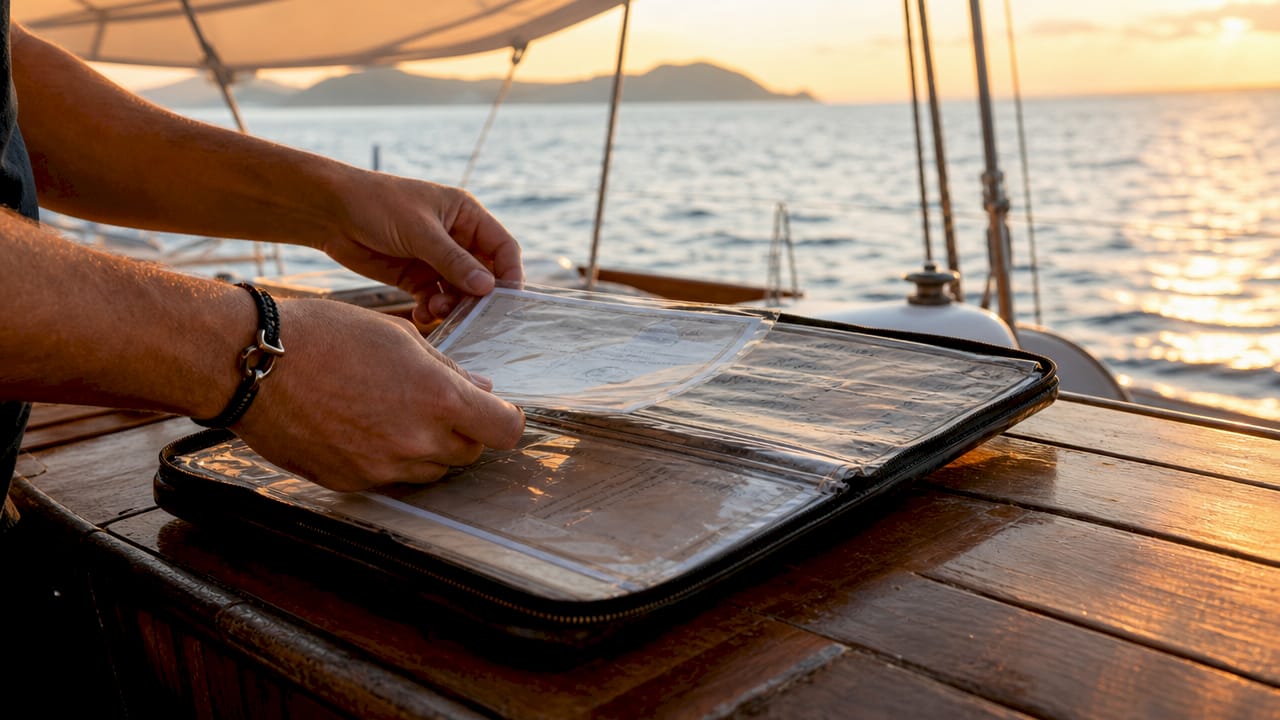
Selecting the correct registry is the single most consequential decision in the yacht ownership process. It affects your taxes, your customs obligations, and where you can cruise without hassle. The three main paths are U.S. federal documentation, state registration, and foreign flag registration.
U.S. federal documentation (NVDC)
Federal documentation is available to U.S. citizens who own vessels of at least 5 net tons. It enables commercial use, qualifies the vessel for a preferred ship mortgage, and establishes U.S. nationality for international travel. The COD is valid for one year and must be renewed annually. Processing typically takes about a month due to NVDC workload.
Florida state registration
Florida state registration offers quick turnaround and affordable fees. It works well for owners who keep their vessel in Florida and do not travel internationally. However, it does not carry the international recognition of federal documentation, and it does not support a preferred ship mortgage. Regardless of state registration status, all vessels must still comply with U.S. Customs and Coast Guard regulations.
Foreign flag registries
Foreign registrations such as BVI, Marshall Islands, and Cayman Islands are popular for tax planning and corporate ownership structures. They do require additional steps, including tonnage surveys and company formation, which add cost and complexity. Foreign-flagged yachts must clear U.S. Customs every time they enter American waters and report to multiple agencies. Cruising flexibility within U.S. waters is also restricted.
| Registry | Best for | Key benefit | Key limitation |
|---|---|---|---|
| U.S. Federal (NVDC) | U.S. citizens, lenders | Preferred mortgage, international recognition | Annual renewal, ~1 month processing |
| Florida state | Domestic use, quick setup | Fast, low cost | No international recognition |
| Foreign flag (BVI, Cayman, Marshall Islands) | Corporate ownership, tax planning | Tax efficiency | Customs clearance required in U.S. waters |
Pro Tip: Consult a maritime attorney before choosing a registry, especially if you plan to charter, finance, or operate internationally. The right choice at purchase saves significant legal and tax costs later.
3. What are the essential steps for documenting your yacht?
The yacht registration process follows a clear sequence. Skipping steps or submitting incomplete forms is the most common reason for delays.
- Gather proof of ownership. Collect every bill of sale in the chain of title, the builder’s certificate, and the HIN verification. Gaps in the chain create title defects that can block registration.
- Obtain a tonnage measurement. For federal documentation, a licensed marine surveyor measures gross and net tonnage. This step confirms eligibility under the 5-net-ton threshold.
- Complete the correct NVDC or state forms. For federal documentation, submit NVDC Form CG-1258 (Application for Initial Issue, Exchange, or Replacement of Certificate of Documentation). State forms vary by jurisdiction.
- Resolve any liens or encumbrances. If the vessel has an existing mortgage or lien, obtain a lien release before or during the application. Lenders must coordinate directly with the NVDC for preferred mortgages.
- Submit the application with fees. The NVDC processes applications in the order received. Federal documentation typically takes about a month. Expedited processing is available for an additional fee.
- Display the vessel name and hailing port. Once documented, federal rules require the vessel’s name and hailing port to appear on the hull in letters at least four inches high.
- Renew annually. The COD expires every year. Set a calendar reminder at least 60 days before expiration to avoid a lapse in compliance.
- Keep records onboard. The COD, insurance certificate, radio license, and any applicable cruising permits must be accessible during inspections.
Pro Tip: Request a preliminary title search through the NVDC Abstract of Title before purchase. This reveals any recorded liens or mortgages on the vessel before you close the deal.
4. How yacht documentation impacts financing, insurance, and resale value
Proper documentation does more than satisfy a legal checkbox. It directly affects your ability to finance, insure, and eventually sell your vessel at the best price.
Federal documentation supports preferred ship mortgages, which offer stronger lender protections and often better loan terms than state-registered vessels can access. Lenders require federal documentation as a condition of most large marine loans. Without it, financing options narrow significantly.
Insurance underwriters also rely on documentation status when assessing risk and setting premiums. A vessel with a clear, documented chain of ownership is easier to underwrite and faster to settle claims on. Gaps in documentation can delay or reduce claim payouts.
“Documentation status influences financing options and insurance claim processes in ways that most buyers don’t anticipate until they’re already in the middle of a transaction.”
When it comes time to sell, clear ownership documentation is one of the strongest signals of a well-maintained, trustworthy vessel. Buyers and their brokers will scrutinize the chain of title, lien history, and registration status. Incomplete or missing papers create doubt and reduce offers. A clean documentation file, by contrast, supports your asking price and speeds up the closing process.
Here is what documentation status affects at resale:
- Chain of title clarity: Every bill of sale in sequence proves unbroken ownership.
- Lien history: An NVDC Abstract of Title confirms no undisclosed mortgages exist.
- Registration continuity: Lapsed documentation raises red flags for buyers and lenders.
- Survey readiness: Current tonnage certificates and seaworthiness records support a clean survey.
Key takeaways
Yacht documentation is the foundation of legal ownership, financing eligibility, and resale value. Every owner needs a complete, current file before leaving the dock.
| Point | Details |
|---|---|
| Core documents are non-negotiable | Bill of sale, HIN, builder’s certificate, and COD must all be current and onboard. |
| Registry choice drives long-term costs | Federal, state, and foreign registries each carry different tax, mortgage, and cruising implications. |
| Annual renewal is mandatory | The NVDC Certificate of Documentation expires yearly; a lapse risks compliance penalties. |
| Documentation supports financing | Federal documentation is required for preferred ship mortgages and affects insurance underwriting. |
| Clean title accelerates resale | A complete chain of ownership and lien-free record directly supports your asking price. |
What I’ve learned about documentation after years in the yacht market
After working with hundreds of buyers and sellers, the single most consistent mistake I see is treating documentation as an afterthought. Buyers get excited about the vessel, rush to close, and then discover a lien, a gap in the title chain, or a lapsed COD after the money has changed hands. That moment is expensive and stressful in equal measure.
The registry decision deserves far more attention than it gets. I have seen owners choose Florida state registration because it was fast and cheap, only to find out six months later that they cannot secure the marine loan they need because their lender requires federal documentation. I have also seen the opposite: owners who went straight to a foreign flag registry for tax reasons and then spent thousands on customs clearance every time they wanted to cruise the Bahamas from Miami.
My honest advice is to treat the documentation decision the same way you treat the survey. Get a maritime attorney involved early, before you sign a purchase agreement. The cost of an hour of legal advice is trivial compared to the cost of unwinding a bad registry choice. And once you have the right structure in place, stay on top of renewals. A lapsed COD is not just a paperwork problem. It is a compliance exposure that can affect your insurance coverage and your ability to sell.
The owners who have the smoothest experiences are the ones who build a documentation checklist before they start shopping, not after they find the boat they love. That discipline pays off at every stage: financing, insuring, cruising, and eventually selling.
— Jason
Yachtingexperts is here to guide you through every document
Getting your yacht’s paperwork right is one of the most valuable things you can do for your investment. At Yachtingexperts, we walk you through the entire process, from registry selection and document preparation to coordinating with maritime attorneys and lenders. We know which questions to ask, which forms to file, and how to avoid the delays that catch most owners off guard.

Whether you are buying your first vessel or trading up to something bigger, our team provides personalized guidance on maritime compliance setup so your documentation is complete, current, and working for you. We also connect you with the right professionals for complex ownership structures, foreign registries, and preferred mortgage financing. Reach out to Yachtingexperts and let us make one of your biggest investments as straightforward as it should be.
FAQ
What size vessel qualifies for U.S. federal documentation?
Federal documentation is available for vessels of at least 5 net tons, which typically corresponds to a vessel roughly 27–30 feet in length. The vessel must also be owned by a U.S. citizen.
How often does the Certificate of Documentation need to be renewed?
The COD issued by the NVDC is valid for one year and must be renewed annually. Failure to renew on time risks compliance penalties and can affect insurance and financing status.
What is the difference between state registration and federal documentation?
State registration like Florida’s is faster and cheaper but does not provide international recognition or support a preferred ship mortgage. Federal documentation through the NVDC is required for most marine loans and is recognized in foreign ports.
Why do foreign-flagged yachts face restrictions in U.S. waters?
Foreign-flagged vessels must clear U.S. Customs each time they enter American waters and report to multiple agencies. This adds cost and logistical complexity compared to U.S.-documented vessels.
What happens if documentation is incomplete at the time of sale?
Gaps in the chain of title, missing lien releases, or lapsed registration create legal uncertainty that can delay closing, reduce the sale price, or expose both buyer and seller to liability. A clean documentation file is one of the strongest assets in any yacht transaction.
Recommended
Request A Call
Featured Listings

2027 Canados
100
Miami Florida

2015 Maiora
$3,750,000
90
Miami Florida

2027 Canados
57
Miami Florida

2019 Silent-Yachts Fair Dinkum
$1,599,000
55
Fort Lauderdale Florida

2026 Canados
49
Miami Florida

2026 Buddy Davis
47
Miami Florida

2020 Grady-White No Name
$610,000
45
Hallandale Beach Florida

2020 Viking Huckleberry
$1,495,000
44
Fort Lauderdale Florida

2027 Canados
43
Miami Florida

2021 Intrepid Dream Faster
$730,000
40
Coral Gables Florida

2016 Edgewater
$299,000
37
Miami, Florida

2022 Avid
$56,900
23
Stuart Florida
Get your yacht value Estimate
"*" indicates required fields