

Selecting the perfect yacht charter can feel overwhelming when you’re navigating a market valued at billions and packed with options. You want a seamless luxury experience, but coordinating itineraries, verifying credentials, and managing contracts demand expertise you may not have. This guide simplifies the process by breaking down market trends, preparation essentials, execution steps, and verification strategies. You’ll gain the confidence to plan an unforgettable charter vacation while avoiding common pitfalls that can derail even the most carefully planned trips.
Table of Contents
- Understanding The Luxury Yacht Charter Market In 2026
- Preparing For Your Yacht Charter: What You Need To Know
- Executing Your Yacht Charter: Step-By-Step Guide
- Verifying And Maximizing Your Yacht Charter Experience
- Discover Expert Yacht Charter Services With Yachting Experts
- Frequently Asked Questions About Yacht Chartering
Key takeaways
| Point | Details |
|---|---|
| Market growth demands expertise | The yacht market is expanding rapidly, making professional guidance critical for navigating options and securing value. |
| Preparation maximizes results | Defining goals, budgeting comprehensively, and engaging advisors ensure your charter meets luxury expectations. |
| Step-by-step execution ensures success | Shortlisting yachts, reviewing contracts, and planning itineraries create a smooth charter experience. |
| Verification drives future value | Evaluating outcomes and providing feedback help you refine future charters and explore ownership opportunities. |
Understanding the luxury yacht charter market in 2026
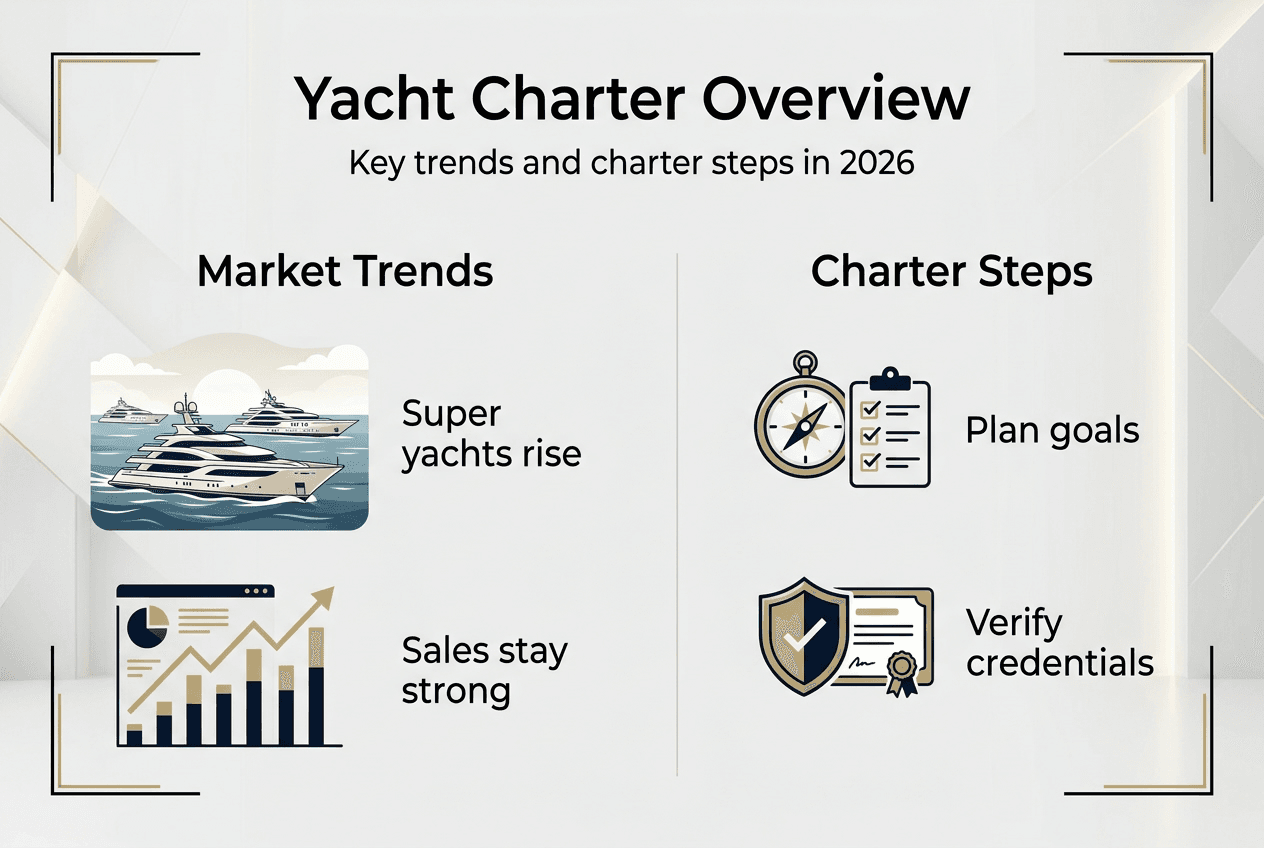
The yacht market has experienced remarkable expansion in recent years. The global yacht market reached $11.6 billion in 2024 and is projected to grow to $17.06 billion by 2030, driven by increasing demand from affluent travelers seeking personalized luxury experiences. This growth creates both opportunities and challenges for charterers who want to secure the best vessels without overpaying or compromising on quality.
Super yachts dominate this landscape. The super yacht segment accounts for approximately 37.1% market share in 2024, expected to grow over 7% annually through 2034. These vessels offer unmatched amenities, from spa facilities to helicopter pads, catering to clients who demand the highest standards. Understanding this segment helps you identify which yachts deliver genuine luxury versus those that simply carry premium price tags.
Due diligence becomes essential in this competitive environment. Buyers and charterers now conduct extensive research before committing, often engaging professional advisors to evaluate vessels, verify credentials, and negotiate favorable terms. This shift reflects a more sophisticated market where informed decisions protect investments and ensure memorable experiences.
Pro Tip: Request detailed maintenance records and crew certifications before finalizing any charter agreement to verify the yacht meets safety and luxury standards.
The sales volume for large yachts remains robust. In 2024, 369 yachts over 24 meters changed hands, demonstrating healthy inventory turnover and diverse selection options. This availability means you can find vessels tailored to specific preferences, whether you prioritize speed, onboard entertainment, or extended range for remote destinations.
| Market Metric | 2024 Value | 2030 Projection |
|---|---|---|
| Global market size | $11.6 billion | $17.06 billion |
| Super yacht market share | 37.1% | Growing 7% annually |
| Yachts sold over 24m | 369 units | Increasing inventory |
Navigating this market without expertise can lead to costly mistakes. Engaging a luxury yachting guide 2026 helps you understand current yachting market trends 2026 and position yourself for success. Professional advisors bring insider knowledge about vessel availability, pricing benchmarks, and emerging destinations that align with your vision.
Preparing for your yacht charter: what you need to know
Successful charters start with clear goals. Define your priorities before exploring options. Are you seeking adventure in the Mediterranean, relaxation in the Caribbean, or cultural immersion in Southeast Asia? Your destination influences yacht selection, crew expertise, and itinerary planning. Consider group size, preferred activities, and any special requirements like dietary restrictions or accessibility needs.

Budgeting requires comprehensive thinking beyond the base charter fee. Account for fuel costs, docking fees, provisioning, crew gratuities, and excursion expenses. Many charterers underestimate these additional costs, which can add 30 to 40 percent to the total investment. Creating a detailed budget prevents surprises and ensures you allocate resources to experiences that matter most.
Understanding yacht categories helps you match vessels to your needs. Motor yachts offer speed and modern amenities, while sailing yachts provide traditional elegance and quieter operation. Catamarans deliver stability and spacious layouts ideal for families, whereas expedition yachts enable access to remote regions with specialized equipment. Each category serves different preferences, so clarifying your priorities streamlines the selection process.
Professional advisors transform the charter experience. Today’s purchasers conduct extensive due diligence and engage professional advisors for long-term investment decisions, and the same principle applies to chartering. Brokers provide access to exclusive listings, negotiate contracts, and coordinate logistics that would otherwise consume weeks of your time. Their expertise ensures you avoid problematic vessels and secure favorable terms.
Pro Tip: Schedule virtual tours of shortlisted yachts to assess layout, condition, and amenities before committing to an in-person inspection.
Key preparation steps include:
- Research destinations and seasonal weather patterns to optimize timing
- Compile a guest list with specific needs and preferences
- Identify must-have amenities versus nice-to-have features
- Establish communication protocols with your broker or advisor
- Review insurance coverage for personal belongings and liability
Engaging an expert yacht advisory setup early in the process provides strategic advantages. Advisors help you avoid common mistakes, such as booking during peak season without adequate lead time or selecting yachts that lack proper certifications. Their guidance ensures your preparation phase builds a foundation for a flawless charter experience.
Executing your yacht charter: step-by-step guide
Shortlisting yachts requires systematic evaluation. Start by reviewing vessel specifications, crew qualifications, and client testimonials. Verify that yachts hold current safety certifications and insurance coverage. Request references from previous charterers to gain insights into crew professionalism, vessel maintenance, and overall satisfaction. This due diligence protects you from booking yachts that promise luxury but deliver disappointment.
Contract considerations demand careful attention. Charter agreements should clearly outline payment schedules, cancellation policies, liability coverage, and dispute resolution procedures. Review clauses related to itinerary changes, as weather or mechanical issues may require flexibility. Ensure the contract specifies included services, such as water sports equipment, specialty dining, and shore excursions, to avoid unexpected charges.
Pro Tip: Negotiate a pre-charter meeting with the captain to discuss your itinerary preferences, dietary requirements, and any special requests before departure.
Itinerary planning balances structure with spontaneity. Outline preferred destinations and activities while allowing flexibility for weather conditions or unexpected opportunities. Collaborate with the crew to identify hidden gems, local events, and optimal anchorages that enhance your experience. The best itineraries blend iconic landmarks with off-the-beaten-path discoveries that create lasting memories.
Onboard luxury services elevate your charter from good to exceptional. Confirm that the yacht provides amenities matching your expectations, from gourmet dining and spa treatments to advanced entertainment systems and water toys. Communicate preferences for meal timing, activity scheduling, and privacy requirements to ensure the crew delivers personalized service throughout your journey.
Crew interaction sets the tone for your entire experience. Establish clear communication with the captain and chief steward regarding daily routines, service expectations, and any concerns that arise. Respectful, professional relationships with crew members foster an atmosphere where they anticipate your needs and exceed expectations. In 2024, 369 yachts over 24 meters were sold, highlighting availability and selection diversity, which means you have leverage to demand excellence.
Execution steps in order:
- Finalize yacht selection and sign the charter agreement
- Coordinate travel logistics including flights and ground transportation
- Submit provisioning preferences and special requests to the crew
- Confirm itinerary details and backup plans for weather contingencies
- Conduct a pre-charter inspection to verify yacht condition
- Brief all guests on safety procedures and yacht protocols
- Maintain open communication with crew throughout the charter
| Execution Phase | Key Actions | Timeline |
|---|---|---|
| Selection | Review options, verify credentials, negotiate terms | 60-90 days before |
| Contracting | Sign agreement, arrange payments, confirm insurance | 45-60 days before |
| Planning | Finalize itinerary, submit preferences, coordinate logistics | 30-45 days before |
| Boarding | Inspect yacht, meet crew, review safety protocols | Day of departure |
Following a structured yacht charter process guide ensures nothing falls through the cracks. Professional oversight during execution prevents miscommunication and keeps your charter on track for success.
Verifying and maximizing your yacht charter experience
Evaluating charter outcomes requires honest assessment. Did the yacht meet your expectations for condition, amenities, and performance? Was the crew attentive, professional, and responsive to your needs? Did the itinerary deliver the experiences you envisioned? Documenting these observations while details remain fresh helps you articulate feedback and plan future charters more effectively.
Common problems include mechanical issues, crew performance gaps, and itinerary disruptions. Address concerns immediately with the captain or broker rather than waiting until the charter ends. Most issues can be resolved quickly when communicated promptly and professionally. If problems persist, document them with photos and written notes to support any claims for compensation or refunds.
Feedback drives continuous improvement. Provide detailed reviews to your broker covering yacht condition, crew performance, and overall satisfaction. Constructive feedback helps other charterers make informed decisions and encourages yacht owners to maintain high standards. Positive reviews for exceptional experiences also reward crews who deliver outstanding service.
Pro Tip: Create a charter journal documenting daily highlights, crew interactions, and any issues to ensure accurate feedback and preserve memories for future reference.
Comparing charter options versus ownership clarifies long-term strategies. Chartering offers flexibility to explore different vessels, destinations, and styles without the financial burden of ownership. You avoid maintenance costs, crew salaries, and depreciation while enjoying luxury experiences. However, frequent charterers may find ownership more economical over time, especially when offsetting costs through charter income during unused periods.
Key evaluation criteria:
- Yacht condition compared to listing photos and descriptions
- Crew professionalism and responsiveness to requests
- Itinerary execution and flexibility for changes
- Value received relative to total investment
- Likelihood of rebooking the same yacht or crew
| Consideration | Chartering | Ownership |
|---|---|---|
| Upfront cost | Charter fee only | Purchase price plus ongoing expenses |
| Flexibility | Try different yachts and destinations | Committed to one vessel |
| Maintenance | Included in charter fee | Owner responsibility |
| Availability | Book when desired | Use anytime, offset with charter income |
Planning future charters becomes easier with experience. You’ll develop preferences for yacht styles, crew dynamics, and destinations that align with your vision. Maintaining relationships with trusted brokers and crews creates continuity and ensures consistent quality. Some charterers establish annual traditions, returning to favorite yachts and destinations while exploring new options during additional trips.
Maximizing long-term value means leveraging each charter to refine your approach. Apply lessons learned to negotiate better terms, select superior vessels, and create more memorable experiences. Consider how chartering fits into broader lifestyle goals, including potential ownership or investment in yacht-related opportunities. A maximize luxury yacht resale value 2026 expert guide can help you understand ownership economics if you decide to transition from chartering.
Discover expert yacht charter services with Yachting Experts
Navigating the yacht charter market demands expertise you may not have time to develop on your own. Yachting Experts provides personalized consulting that transforms complex decisions into confident choices. We connect you with exclusive super yacht listings, negotiate favorable terms, and coordinate every detail from initial planning through final disembarkation.

Our expert yacht advisory setup ensures you access vessels that match your vision while avoiding common pitfalls. We leverage deep industry relationships to secure priority booking, competitive pricing, and insider knowledge about crew reputations and vessel conditions. Whether you’re planning your first charter or your fiftieth, our team delivers the high-touch service that sets us apart. Explore our yacht charter profit optimization strategies and comprehensive yacht ownership guide to elevate your yachting experience.
Frequently asked questions about yacht chartering
What is the typical length of a yacht charter?
Most luxury yacht charters run seven days, providing enough time to explore multiple destinations without feeling rushed. Shorter three to five day charters work well for quick getaways, while extended two to three week charters allow deeper exploration of remote regions.
What factors influence yacht charter pricing?
Pricing depends on yacht size, age, amenities, destination, and season. Peak season in popular regions commands premium rates, while shoulder season offers better value. Additional costs include fuel, provisioning, docking fees, and crew gratuities, which typically add 30 to 40 percent to the base charter fee.
How do I select a trustworthy yacht broker?
Look for brokers with established industry credentials, positive client testimonials, and membership in professional organizations. Request references from previous clients and verify their access to quality yacht listings. A trustworthy broker prioritizes your needs over commission, providing honest assessments and transparent communication throughout the process.
What is the difference between bareboat and crewed charters?
Bareboat charters provide the yacht without crew, requiring you to captain and operate the vessel yourself. This option suits experienced sailors seeking autonomy and lower costs. Crewed charters include professional captain and crew who handle all navigation, maintenance, and service, delivering a full-service luxury experience.
What insurance considerations apply to yacht charters?
Charter agreements typically include hull and liability insurance, but you should verify coverage limits and exclusions. Consider purchasing travel insurance that covers trip cancellation, medical emergencies, and personal belongings. Some policies offer charter-specific coverage for itinerary disruptions or yacht mechanical failures that affect your vacation.
Recommended
Request A Call
Featured Listings

2027 Canados
100
Miami Florida

2015 Maiora
$3,750,000
90
Miami Florida

2027 Canados
57
Miami Florida

2019 Silent-Yachts Fair Dinkum
$1,599,000
55
Fort Lauderdale Florida

2026 Canados
49
Miami Florida

2026 Buddy Davis
47
Miami Florida

2020 Grady-White No Name
$610,000
45
Hallandale Beach Florida

2020 Viking Huckleberry
$1,495,000
44
Fort Lauderdale Florida

2027 Canados
43
Miami Florida

2021 Intrepid Dream Faster
$730,000
40
Coral Gables Florida

2016 Edgewater
$299,000
37
Miami, Florida

2022 Avid
$56,900
23
Stuart Florida
Get your yacht value Estimate
"*" indicates required fields