

TL;DR:
- Professional yacht appraisals are essential for accurate market value and financial decisions.
- There are two main types: Fair Market Value for sales and Insured/Replacement Value for insurance.
- Certified appraisals, especially in Florida, prevent costly discrepancies during sales, insurance, or tax processes.
If you’ve ever typed your yacht’s details into an online estimator and felt confident about the number you got back, we have some important news for you. That figure may be thousands of dollars off from what a buyer will actually pay, what your insurer will cover, or what the IRS will accept. For Florida yacht owners navigating resale, insurance renewals, or investment decisions, the gap between a digital guess and a certified appraisal can be financially painful. This guide walks you through exactly what professional yacht appraisals involve, which type you need, and how to use one to protect and maximize your vessel’s value.
Table of Contents
- What is a yacht appraisal and why does it matter?
- Types of yacht appraisal: Which value matters for you?
- The yacht appraisal process: Step-by-step in Florida
- Factors influencing yacht value: Florida nuances
- Professional vs online: What most yacht owners miss
- Next steps for accurate yacht appraisal in Florida
- Frequently asked questions
Key Takeaways
| Point | Details |
|---|---|
| Certified surveyors matter | Only SAMS/NAMS-accredited marine surveyors are trusted for legal, insurance, and tax purposes. |
| Appraisal type is crucial | Choosing between Fair Market and Insured Value affects your sale price, coverage, and compliance. |
| Florida factors impact value | Local conditions like hurricanes and the luxury trend can dramatically raise or lower your yacht’s appraisal. |
| Professional beats online | Automated guides rarely match the accuracy or legal acceptance of expert appraisals. |
| IRS rules apply to donations | High-value donations need a certified appraisal to meet IRS regulations and avoid penalties. |
What is a yacht appraisal and why does it matter?
A yacht appraisal is a formal, documented assessment of your vessel’s current market value conducted by a qualified professional. It is not a quick online lookup or a dealer’s ballpark estimate. It is a structured evaluation that considers your yacht’s physical condition, mechanical systems, documentation history, and current market conditions.
What yacht appraisals involve includes a detailed inspection of hull, systems, engines, and documentation, performed by certified marine surveyors often accredited by SAMS (Society of Accredited Marine Surveyors) or NAMS (National Association of Marine Surveyors). These credentials matter because lenders, insurers, and the IRS all require appraisals from recognized professionals.
Why do Florida yacht owners specifically need this? A few reasons stand out:
- Resale: Buyers and their lenders need an independent valuation before financing or closing a deal.
- Insurance: Insurers use appraisals to set coverage limits and process claims accurately.
- Tax obligations: Donations, estate transfers, and certain purchases trigger IRS appraisal requirements.
- Investment tracking: Knowing your Florida yacht valuation helps you time a sale or upgrade strategically.
- Legal disputes: Divorce settlements, partnership dissolutions, and damage claims all rely on certified value.
Florida’s yacht market adds extra layers of complexity. Hurricane exposure, saltwater corrosion, and a highly active luxury resale market all influence how surveyors assess value here compared to, say, a freshwater lake in the Midwest. Florida also has specific yacht tax guide Florida considerations tied to sales tax, use tax, and registration that make accurate appraisals even more critical.
Certified matters. SAMS and NAMS accreditation means your surveyor has passed rigorous testing, maintains continuing education, and follows a professional code of ethics. Always verify credentials before booking.
Skipping a professional appraisal to save a few hundred dollars is one of the most common and costly mistakes we see Florida yacht owners make. The investment in a proper appraisal pays for itself the moment you sit across from a buyer or file an insurance claim.
Types of yacht appraisal: Which value matters for you?
Not all appraisals are created equal, and the type you need depends entirely on what you plan to do with the result. The two primary categories are Fair Market Value and Insured/Replacement Value, and confusing them can leave you either underinsured or unable to close a deal.
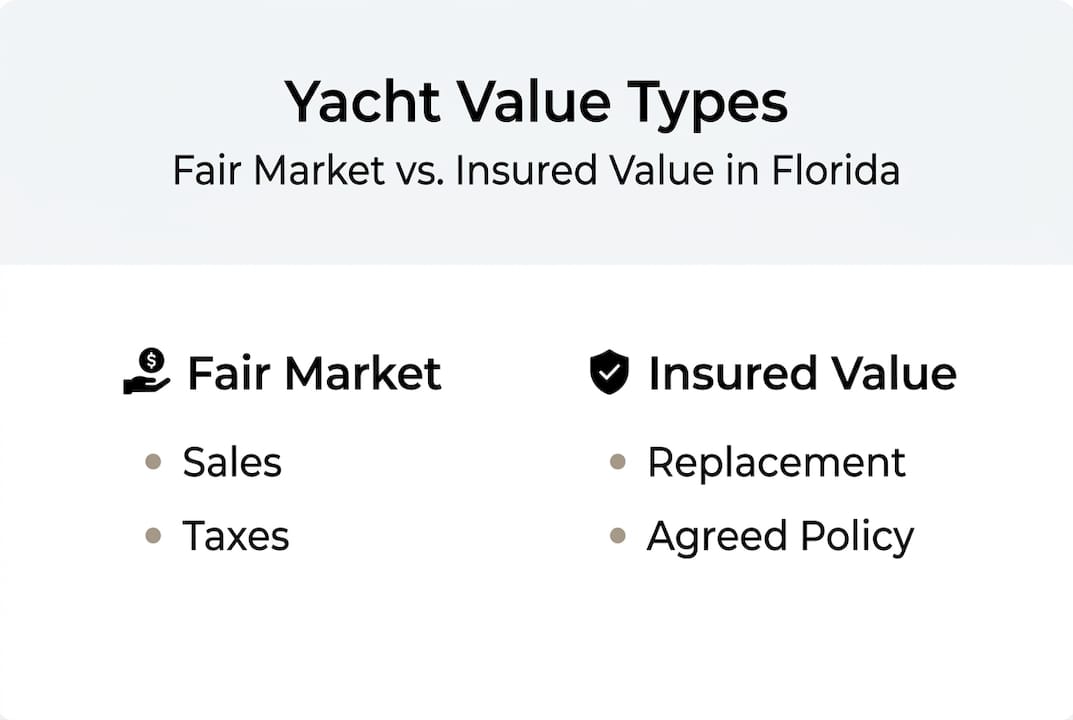
Insurance coverage factors show that Fair Market Value is used for sales, loans, and taxes, while Insured/Replacement Value is used to set insurance coverage amounts. Here is how each one applies to your situation:
- Selling your yacht: You need Fair Market Value to price competitively and support buyer financing.
- Setting up insurance: You need Insured or Replacement Value to ensure full coverage after a loss.
- Gifting or donating: IRS rules require Fair Market Value from a qualified appraiser.
- Estate planning: Fair Market Value is used for probate and inheritance calculations.
- Refinancing: Lenders require Fair Market Value to approve loan amounts.
Here is a side-by-side comparison to make this crystal clear:
| Feature | Fair Market Value | Insured/Replacement Value |
|---|---|---|
| Primary use | Sales, loans, taxes | Insurance coverage |
| Based on | Current market comparables | Cost to replace or rebuild |
| Typically higher or lower | Usually lower | Usually higher |
| Who requests it | Buyers, lenders, IRS | Insurance carriers |
| Policy type | N/A | Agreed Value or Actual Cash Value |
One important distinction within Florida yacht insurance policies is Agreed Value versus Actual Cash Value. Agreed Value policies pay out the full insured amount with no depreciation deducted. Actual Cash Value policies subtract depreciation, which means you could receive far less than expected after a total loss.
Pro Tip: If your yacht is a newer or high-value vessel, push for an Agreed Value policy backed by a fresh appraisal. It costs slightly more in premiums but protects you from a devastating depreciation deduction at claim time.
The yacht appraisal process: Step-by-step in Florida
Knowing what to expect from a professional appraisal removes the anxiety and helps you prepare. Here is exactly how the process unfolds for Florida yacht owners.
- Gather your documentation. Pull together your vessel’s title, registration, purchase records, maintenance logs, upgrade receipts, and any prior survey reports. A surveyor who can see a complete service history will produce a more accurate and favorable report.
- Schedule the inspection. Your certified surveyor will arrange a time to physically inspect the vessel, ideally while it is in the water and operational. Out-of-water haul-outs may also be requested for hull inspections.
- Hull and structural inspection. The surveyor examines the hull for osmotic blistering, stress cracks, impact damage, and signs of prior repairs. Florida’s saltwater environment accelerates certain types of corrosion, so this step is especially thorough here.
- Engine and mechanical systems review. Certified marine surveyors inspect engines, fuel systems, bilge pumps, electrical panels, and plumbing for functionality and safety compliance.
- Electronics and safety equipment check. Navigation systems, communication gear, life-saving equipment, and fire suppression systems are all evaluated for condition and current compliance with USCG standards.
- Documentation and market research. The surveyor cross-references your vessel against recent comparable sales, current listings, and recognized guides to establish a defensible value.
- Written appraisal report. You receive a detailed written report that documents every finding, the methodology used, and the final value conclusion. This is the document your insurer, lender, or buyer will rely on.
Using a thorough yacht inspection checklist before the appraisal day is a smart move. It helps you catch any deferred maintenance items that could drag your value down. Solid yacht management Florida practices throughout ownership make a measurable difference at appraisal time.
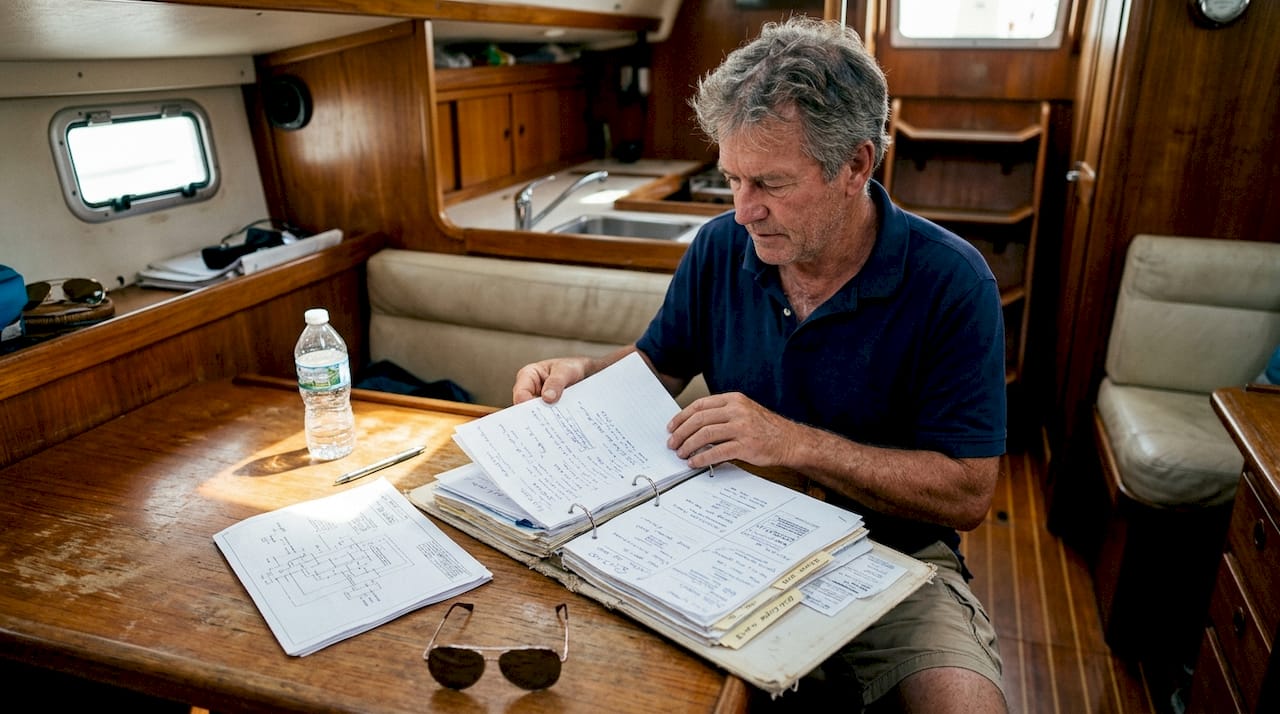
Pro Tip: Organize your maintenance records in a binder or digital folder before the surveyor arrives. Documented oil changes, engine service, and system upgrades can meaningfully increase your appraised value.
Factors influencing yacht value: Florida nuances
Understanding what drives your yacht’s appraised value puts you in a stronger position, whether you are preparing to sell, insure, or invest. Florida’s unique conditions create some surprising dynamics that most generic guides overlook.
Depreciation and age are the starting point. Most production yachts lose value over time, with the steepest drops in the first few years. However, the picture is more nuanced than a straight-line decline.
Factors that can work in your favor include:
- Custom builds and rare models that have limited supply in the resale market
- Recent major upgrades such as engine replacements, new electronics, or interior refits
- Low engine hours relative to the vessel’s age
- Documented hurricane-proofing measures and storm storage history
- Consistent professional maintenance through a certified service provider
For charter yachts, surveyors may use an income approach, calculating value based on the vessel’s revenue-generating capacity rather than comparable sales alone. This method can produce significantly different results than a standard market comparison.
| Value Factor | Impact on Appraisal | Florida-Specific Note |
|---|---|---|
| Age and condition | High | Saltwater accelerates wear |
| Engine hours | High | Lower hours = higher value |
| Hurricane history | Medium to high | Undisclosed damage is a red flag |
| Custom features | Variable | Rare specs can boost value |
| Charter income history | Medium | Supports income-based valuation |
| Recent upgrades | Medium to high | Must be documented |
For custom yacht appraisal situations, standard depreciation tables simply do not apply. A one-of-a-kind vessel with premium craftsmanship and rare specifications can actually appreciate in value, which is one reason why yacht investment value Florida analysis requires expert eyes rather than automated tools.
The IRS adds another layer of complexity. For charitable donations, estate transfers, or deductions, IRS yacht appraisal rules require a qualified appraisal from a certified professional for any vessel valued over $5,000. Failing to meet this standard can result in denied deductions and penalties. Review the yacht tax IRS rules before making any tax-related decisions involving your vessel.
IRS rule to know: For donations or estate transfers involving vessels valued above $5,000, a qualified appraisal is legally required. An online estimate will not satisfy this requirement.
Professional vs online: What most yacht owners miss
Here is our honest take: online valuation tools like NADA guides are useful for a quick orientation, nothing more. We have seen Florida yacht owners walk into negotiations or insurance renewals armed with a NADA number, only to discover it is off by 20% or more in either direction. NADA marine estimates are preferred starting points, but SAMS and NAMS certified appraisals are what buyers, insurers, and the IRS actually trust.
Consider this scenario: an owner relies on an online tool that values his 58-foot motoryacht at $680,000. A certified surveyor, after inspecting unreported hurricane damage and outdated electronics, arrives at $595,000. That gap does not just affect the sale price. It affects the insurance payout, the loan approval, and the tax filing.
The moment you need your yacht’s value to hold up under scrutiny, whether in a sales negotiation, an insurance claim, or an IRS audit, only a professional yacht valuation will do. In Florida especially, where the luxury market moves fast and weather events create hidden damage, the professional touch is not optional. It is your financial protection.
Pro Tip: If you are buying, selling, insuring, donating, or financing a yacht in Florida, get a certified appraisal first. It is the single step that protects every other decision you make.
Next steps for accurate yacht appraisal in Florida
You now have a clear picture of what yacht appraisals involve, which type fits your goals, and what factors shape your vessel’s value in the Florida market. The next step is turning that knowledge into action.

At Yachting Experts, we guide Florida yacht owners through every stage of the appraisal and valuation process with a personalized, hands-on approach. Whether you are preparing to sell, reviewing your insurance coverage, or planning a smart upgrade, our team connects you with the right certified professionals and resources. Explore our guide to boost boat sale value Florida before your appraisal, and discover how smart yacht investment value management keeps your vessel performing as a financial asset. Reach out today and let us help you get the accurate number your yacht deserves.
Frequently asked questions
How long does a yacht appraisal take in Florida?
Most appraisals take 1 to 3 days depending on the size and complexity of the vessel, with larger luxury yachts requiring more time for thorough inspection and documentation review.
Do I need a professional appraisal for insurance or IRS reporting?
Yes. For insurance coverage and IRS donations over $5,000, a certified appraisal from a qualified professional is legally required to establish accurate value and maintain compliance.
What is the difference between Fair Market Value and Insured Value?
Fair Market Value reflects what a buyer will pay in the current market and is used for sales and taxes, while Insured Value covers replacement cost for insurance claims after a loss.
Can online tools accurately estimate yacht value?
NADA and similar tools provide rough estimates that are useful for orientation, but certified SAMS or NAMS surveyor appraisals are far more accurate and are the only option legally recognized for insurance, lending, and IRS purposes.
Recommended
Request A Call
Featured Listings

2027 Canados
100
Miami Florida

2015 Maiora
$3,750,000
90
Miami Florida

2027 Canados
57
Miami Florida

2019 Silent-Yachts Fair Dinkum
$1,599,000
55
Fort Lauderdale Florida

2026 Canados
49
Miami Florida

2026 Buddy Davis
47
Miami Florida

2020 Grady-White No Name
$610,000
45
Hallandale Beach Florida

2020 Viking Huckleberry
$1,495,000
44
Fort Lauderdale Florida

2027 Canados
43
Miami Florida

2021 Intrepid Dream Faster
$730,000
40
Coral Gables Florida

2016 Edgewater
$299,000
37
Miami, Florida

2022 Avid
$56,900
23
Stuart Florida
Get your yacht value Estimate
"*" indicates required fields