

Generic online yacht value calculators sound convenient, but they frequently miss the factors that matter most in Florida’s dynamic market. Seasonal demand shifts, local buyer trends, and your vessel’s unique condition all play a significant role in determining true market value. If you’ve ever plugged your yacht’s details into an online tool and walked away with a number that felt “off,” you’re not imagining things. Reliable, defensible valuations are the cornerstone of a profitable sale, and understanding what separates a trustworthy appraisal from a risky estimate can mean the difference between leaving money on the table and walking away with maximum ROI.
Table of Contents
- What makes a yacht valuation trustworthy?
- Common valuation pitfalls and how to avoid them
- The value of a defensible written report
- Who should perform and trust a valuation?
- How owners can use a valuation to boost ROI
- The uncomfortable truth most yacht owners miss about valuations
- Next steps: Secure your yacht’s true value with expert guidance
- Frequently asked questions
Key Takeaways
| Point | Details |
|---|---|
| Concrete methodology matters | The most reliable yacht valuations use multiple standardized approaches and actual sold prices. |
| Written reports are essential | A defensible, audit-ready written report protects your position and impresses buyers, banks, and insurers. |
| Choose certified appraisers | Accredited Florida surveyors following USPAP standards ensure your valuation stands up to scrutiny. |
| Leverage for negotiation | Trustworthy valuations reduce haggling and help you command top dollar when selling your yacht. |
| Documentation prevents costly errors | Clear reports with recent data and adjustments guard you from common pitfalls that cost owners money. |
What makes a yacht valuation trustworthy?
A lot of yacht owners assume that any number attached to their vessel qualifies as a valuation. In reality, not all estimates are created equal. A genuinely trustworthy valuation is built on a structured, transparent methodology that stands up to scrutiny from banks, insurers, and serious buyers alike.
Yacht valuations are trusted when they use a defensible methodology, specifically a combination of market (or comparable sales), cost, and sometimes income approaches, and clearly document every assumption rather than relying on a single formula or a generic online estimate. For Florida yacht owners, this matters enormously because our market moves fast and regional conditions influence pricing in ways a national database simply can’t capture.
Here’s what a trustworthy methodology looks like in practice:
- Comparable sales approach: The appraiser analyzes recent, actual sold prices for similar vessels in comparable condition, not asking prices or wishful listings.
- Cost approach: This method estimates the cost to replace or reproduce the yacht, adjusted for depreciation, age, and current condition.
- Income approach: Primarily used for charter vessels, this method values the yacht based on its earning potential over time.
| Approach | Best used for | Key data source |
|---|---|---|
| Comparable sales | Most yacht sales | Brokerage sold records |
| Cost | New or rare vessels | Replacement cost data |
| Income | Charter yachts | Revenue and expense records |
For Florida yacht valuations, a skilled appraiser will triangulate across at least two of these approaches, cross-referencing brokerage databases, auction results, and private sales records to build a complete picture.
Pro Tip: Always ask your appraiser which methodology they’re using and why. If they can’t explain it clearly, that’s a red flag worth acting on.
Common valuation pitfalls and how to avoid them
Knowing what trustworthy looks like is the first step. The next step is recognizing the traps that trip up even experienced yacht owners during the valuation process.
Edge cases that commonly reduce valuation reliability include using outdated comparables or asking prices instead of actual sold prices, ignoring seasonality and local demand, and failing to adjust for non-equivalent equipment or condition. In Florida, these mistakes can translate to tens of thousands of dollars in miscalculated value, which is a costly error in any market.
Here are the most frequent missteps we see, and what you can do to sidestep them:
-
Relying on asking prices instead of sold prices. Listings are aspirational. What a seller wants and what a buyer pays are often very different figures. Always confirm your appraiser is using closed transaction data.
-
Using outdated comparables. A comparable sale from 18 months ago may have little relevance in today’s market. Florida’s yacht demand spikes seasonally, especially between October and March when Northern buyers arrive. Your valuation should reflect current conditions.
-
Ignoring your vessel’s unique condition. A yacht with fresh teak, updated electronics, and a recent engine overhaul is worth more than a statistically similar vessel with deferred maintenance. Good appraisers make specific, documented adjustments for these differences.
-
Skipping the written report. Verbal estimates and quick online quotes provide no legal or financial protection. A written report with clear adjustments is what lenders, insurers, and serious buyers require.
| Pitfall | Impact on value | How to fix it |
|---|---|---|
| Using asking prices | Inflates estimate | Demand sold-price data only |
| Outdated comparables | Misses market shifts | Require recent (6-month) data |
| Ignoring condition | Over or undervalues | Insist on condition adjustments |
| No written report | No legal standing | Always request documentation |
Remember: One bad number in your valuation can echo through your entire negotiation. A buyer who finds inconsistencies in your pricing will use them as leverage, often aggressively.
When preparing your yacht for sale, addressing condition issues before the appraisal can directly increase your documented value. And if you’re focused on maximizing Florida yacht sale ROI, pairing a strong valuation with excellent video marketing your yacht gives serious buyers the visual confidence to move at your asking price.
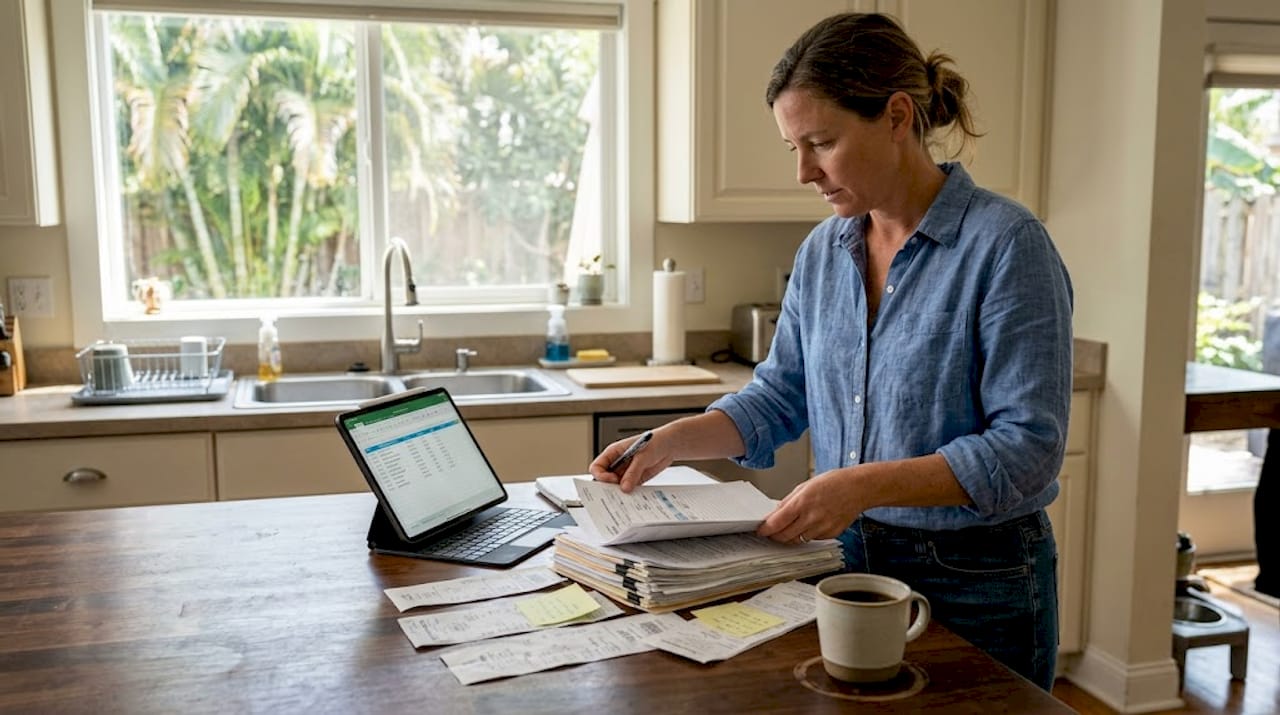
Pro Tip: Pull together maintenance logs, upgrade receipts, and service records before your appraisal. Documented improvements can support meaningful upward adjustments in your final report.
The value of a defensible written report
Avoiding the common traps is important, but securing the right kind of documentation is what truly protects your interests when the stakes are high.
A written, defensible valuation report does more than just state a number. It explains how that number was reached, which is exactly what lenders, insurance companies, and sophisticated buyers need before they commit. To maximize ROI and streamline selling, request a written report that shows a vessel-specific condition basis, comparable sold-price analysis with documented adjustments, and explicit methodology and assumptions. This directly addresses the most common causes of valuation mismatch.
Here’s what a strong written report should include:
- Vessel-specific condition notes: Not “good condition” but detailed observations about hull integrity, engine hours, electronics, and systems.
- Comparable sold-price analysis: A minimum of three to five comparable sold transactions with clear adjustments explaining why each one was included or discounted.
- Methodology disclosure: A transparent explanation of which approaches were used, in what proportion, and why.
- Market context: Local Florida market commentary that situates your vessel’s value within current supply and demand trends.
- Appraiser credentials: Licensing information and any professional affiliations that establish authority.
Reports that follow USPAP (Uniform Standards of Professional Appraisal Practice) guidelines carry particular weight. USPAP-compliant reports are recognized in legal disputes, financing applications, and insurance claims, making them the gold standard for serious transactions. Understanding accurate yacht appraisals means recognizing that a casual broker quote simply won’t protect you the way a formal written report does.
It’s also worth understanding yacht depreciation factors, because a skilled appraiser will apply depreciation schedules correctly, ensuring you’re not penalized unfairly for standard wear while still accounting for genuine value reduction over time.
Pro Tip: If you’re financing a purchase or insuring a high-value vessel, ask specifically for a USPAP-compliant report upfront. It saves significant time during underwriting and prevents costly delays at closing.
Who should perform and trust a valuation?
Having a solid report isn’t enough. It matters just as much who prepares it and what professional standards guide their work. Choosing the wrong appraiser can undermine even the best-structured valuation process.
When the valuation will be used to secure lender, insurance, or legal acceptance, prioritize practitioners and reports described as standardized and compliance-oriented, such as USPAP-compliant appraisals or those following accredited marine survey protocols, rather than relying on a marketing quote alone.
Here’s what to look for when selecting your appraiser:
- Professional credentials: Look for membership in recognized organizations like NAMS (National Association of Marine Surveyors) or SAMS (Society of Accredited Marine Surveyors). These credentials signal rigorous training and ethical standards.
- USPAP compliance: For financial or legal purposes, confirm the appraiser is familiar with and compliant with USPAP guidelines.
- Local Florida experience: An appraiser who knows the Fort Lauderdale or Miami markets will make far more accurate adjustments than a generalist working from national averages.
- Track record and references: Ask for sample reports and speak with past clients. A confident, qualified appraiser will welcome this due diligence.
📊 Statistic callout: Studies of marine survey practices indicate that vessels appraised by NAMS or SAMS credentialed surveyors consistently produce valuations that align more closely with actual final sale prices than uncredentialed estimates, reducing negotiation friction and shortening time on the market.
Using a yacht expert with deep local roots isn’t just convenient. It’s a measurable advantage in a competitive market where buyer sophistication is high and the margin for error is low.
How owners can use a valuation to boost ROI
With a qualified expert and a written report in hand, you can put your valuation to work for a smooth, profitable sale. A defensible number isn’t just a formality; it’s an active tool for smarter pricing, stronger marketing, and sharper negotiations.
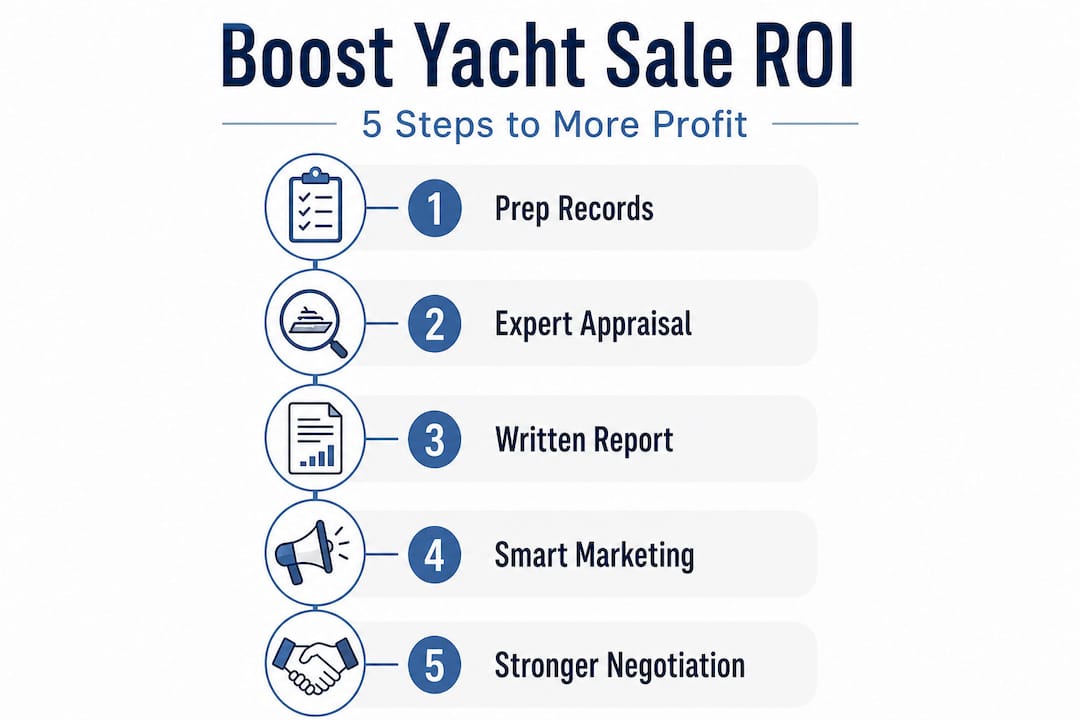
Valuation guidance warns against relying on asking prices that may be inflated, using outdated comparables in a fast-moving market, and not clearly stating assumptions. It also recommends using sold prices and multiple data sources including brokerage databases, listings, and auction results. These principles translate directly into your selling strategy.
Here’s how to leverage your valuation for maximum ROI:
- Set a realistic asking price from day one. Overpriced vessels sit on the market and accumulate stigma. A credible valuation anchors your pricing in verifiable data, so buyers take you seriously from the first conversation.
- Use the report to reduce negotiation friction. When buyers or their brokers push back on price, a professionally prepared written report is your most powerful response. It shifts the conversation from opinion to evidence.
- Guide your marketing strategy. Your broker should use the valuation to identify and emphasize the features that justify your price point. Whether it’s a recent repower, premium electronics, or custom interior finishes, documented value adds credibility to every marketing claim.
- Identify smart pre-listing upgrades. A good appraisal reveals exactly which improvements would generate the highest return. Not every upgrade adds equal value; a valuation helps you prioritize where to invest.
- Time your listing strategically. Use the market commentary in your report to identify the optimal window for listing. Florida’s peak season runs roughly October through March, and listing with a current valuation in hand positions you perfectly for that demand surge.
Pairing a strong written valuation with professional yacht marketing strategies amplifies your results significantly. High-quality visual content validates your asking price emotionally, while the valuation validates it logically. Together, they create an irresistible case for serious buyers.
For owners committed to maximizing yacht resale value, the combination of a defensible appraisal and a well-executed marketing campaign consistently produces the strongest outcomes in Florida’s competitive brokerage environment.
Pro Tip: Share your valuation report with your broker before listing, not after. It should shape your entire selling strategy, from pricing to presentation to the specific buyer profile you’re targeting.
The uncomfortable truth most yacht owners miss about valuations
Here’s the candid perspective we’ve developed after years of helping Florida yacht owners navigate sales, trades, and upgrades: most owners treat valuations as a checkbox, not a strategy.
They order an appraisal because the bank requires one, or because their broker mentioned it in passing. They accept the first number they receive, often from an online tool or a back-of-envelope broker quote, and build their entire selling plan around it. Then they wonder why the negotiation gets messy or why the sale drags on longer than expected.
The Florida market moves quickly. A valuation that was accurate in January may be meaningfully different by April. Accepting a stale or undefended number in a fast-moving market is one of the most expensive mistakes we see owners make. It doesn’t feel like a big deal until a buyer’s surveyor comes in with a competing number and your entire negotiating position collapses.
The real insight here is that a trustworthy valuation isn’t compliance paperwork. It’s your primary leverage in one of the most significant financial transactions you’ll make. Think of it the way you think about a pre-sale boat survey: it’s not just about finding problems, it’s about owning the narrative before someone else does.
Understanding the true value of yacht brokerage means recognizing that a great broker doesn’t just list your yacht; they use every available tool, including your valuation, to position you for the strongest possible outcome. Demand that standard. Don’t let urgency or impatience shortcut a process that has a direct, measurable impact on your return.
Next steps: Secure your yacht’s true value with expert guidance
You now have the knowledge to recognize a trustworthy valuation, avoid the pitfalls, and put a defensible report to work for your sale. The next step is connecting with the right team to make it happen.

At Yachting Experts, we specialize in Florida yacht sales with the kind of personalized, hands-on support that turns complex transactions into seamless experiences. Our team knows the local market inside and out, and we’re passionate about helping you achieve the maximum return on your investment. Whether you’re ready to list today or still getting your yacht ready for sale, we’re here to walk you through every step with confidence and clarity. Connect with our Florida yacht broker support team today and let’s start building your strongest possible selling strategy together.
Frequently asked questions
What methods do trustworthy yacht valuations use?
Trustworthy valuations use comparable sales, cost, and sometimes income approaches, always documenting assumptions clearly rather than relying on a single formula.
Why shouldn’t I trust an online yacht value calculator?
Online calculators often rely on inflated asking prices and outdated comparables, missing the local nuances and current market conditions that drive accurate Florida valuations.
How can I validate that a yacht valuation is credible?
A credible valuation includes a written report built on vessel-specific condition data and comparable sold-price analysis with transparent methodology and documented adjustments.
Who should appraise my yacht for best results?
Use an accredited marine appraiser with NAMS or SAMS credentials, and for financial or legal transactions, confirm they follow USPAP-compliant appraisal standards with direct Florida market experience.
Can a strong valuation alone maximize my sale ROI?
A strong valuation is your most important foundation, but it delivers the best results when paired with targeted marketing, strategic pricing, and an experienced broker who knows how to present your vessel’s documented value to the right buyers.
Recommended
Request A Call
Featured Listings

2027 Canados
100
Miami Florida

2015 Maiora
$3,750,000
90
Miami Florida

2027 Canados
57
Miami Florida

2019 Silent-Yachts Fair Dinkum
$1,599,000
55
Fort Lauderdale Florida

2026 Canados
49
Miami Florida

2026 Buddy Davis
47
Miami Florida

2020 Grady-White No Name
$610,000
45
Hallandale Beach Florida

2020 Viking Huckleberry
$1,495,000
44
Fort Lauderdale Florida

2027 Canados
43
Miami Florida

2021 Intrepid Dream Faster
$730,000
40
Coral Gables Florida

2016 Edgewater
$299,000
37
Miami, Florida

2022 Avid
$56,900
23
Stuart Florida
Get your yacht value Estimate
"*" indicates required fields