

Why stage your yacht? Boost value, trust, and market appeal
A quick rinse and a vacuum might feel like enough to prep your yacht for sale, but Florida’s most serious buyers see through surface-level polish in minutes. That small rust stain near the engine hatch? A negotiation chip. The scuffed salon cushions? Another reason to lower the offer. Staging a yacht is a disciplined process that goes far beyond cleaning, and it can make the difference between a long, frustrating listing and a fast, rewarding sale. This guide breaks down exactly what yacht staging is, what it delivers financially, and how you can put it to work before your first showing.
Table of Contents
- What is yacht staging and why does it matter?
- The financial impact: Value, trust, and faster sales
- How to stage your yacht: Core steps and expert advice
- Common pitfalls and advanced strategies in yacht staging
- Why most sellers miss out: The case for radical transparency
- Ready to stage or sell? Tap Florida’s yachting experts
- Frequently asked questions
Key Takeaways
| Point | Details |
|---|---|
| Staging boosts value | Properly staged yachts attract higher offers and faster sales by increasing trust and appeal. |
| Transparency is vital | Fix issues where possible and honestly disclose any remaining flaws to avoid negotiation losses. |
| Mechanical condition matters | Showcasing a clean engine room and maintained systems is as important as visual upgrades. |
| Avoid over-staging | Overdoing or hiding problems can backfire; buyers value honesty and real maintenance. |
What is yacht staging and why does it matter?
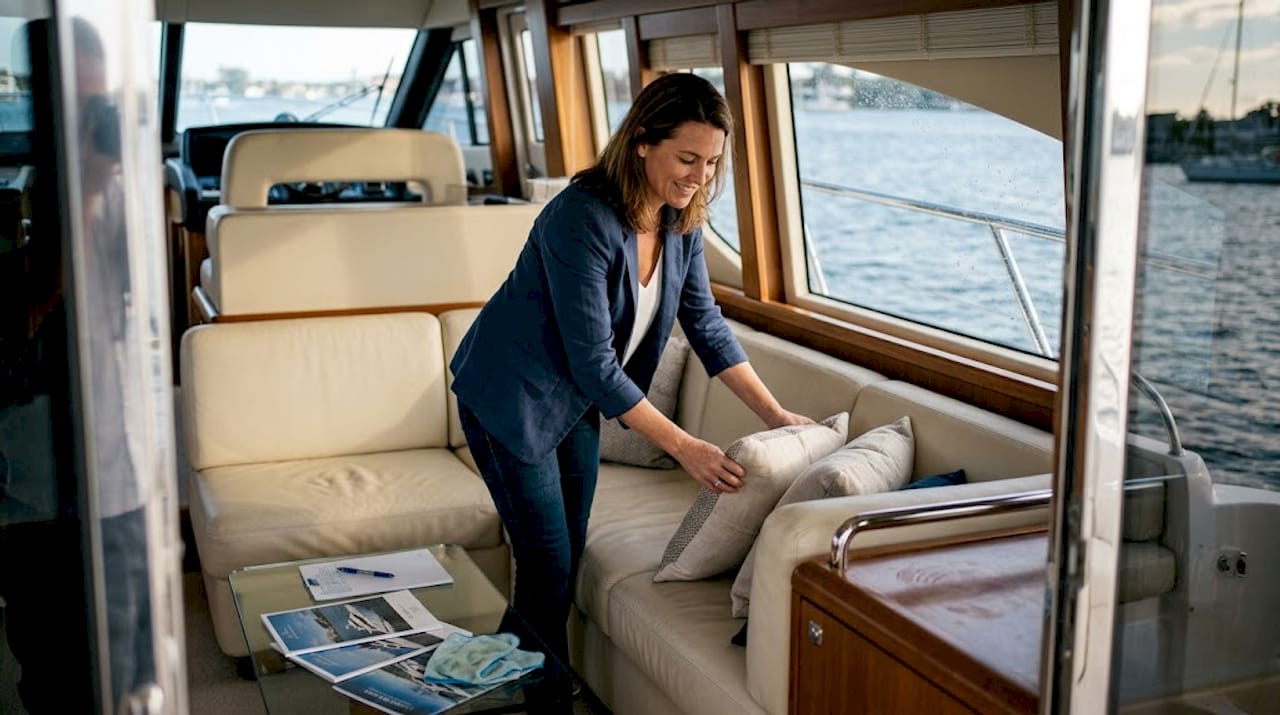
Yacht staging is the process of preparing your vessel for sale by optimizing every element a buyer sees, touches, and evaluates. Think of it as the marine equivalent of home staging. You’re not just cleaning; you’re curating an experience that builds buyer confidence, minimizes hesitation, and supports the highest possible offer.
Most sellers focus exclusively on cosmetic appearance. They scrub the hull, maybe replace a few seat cushions, and call it done. Staging goes several steps further. It addresses mechanical systems, documentation, scent, lighting, layout, and even the small lifestyle details that help a buyer picture themselves cruising the Florida coast on a Saturday afternoon. That mental picture is powerful, and it’s worth real dollars.
Yacht staging rests on two core pillars:
- Visual lifestyle cues: How the vessel looks, feels, and inspires the buyer during a walkthrough.
- Mechanical confidence: The cleanliness of the engine room, up-to-date service logs, and clearly maintained systems that signal the boat won’t be a money pit after purchase.
Both pillars work together. A stunning interior paired with a greasy, cluttered engine room sends a confusing message. Buyers become suspicious. They wonder what else might be neglected. On the other hand, a boat that shows pride of ownership throughout, from the polished helm station to an organized, dry engine room, tells a consistent story of care.
Why does every flaw matter so much? Because buyers treat visible problems as negotiating ammunition. A scratch on the gelcoat, a flickering navigation light, or a soft spot on the teak deck all become justifications to push the price down. Strategic staging aligns what buyers see with the lifestyle they’re buying into, while being honest: fix what you can and disclose what you cannot.
Here’s a quick look at the essential elements of a well-staged yacht:
A well-staged yacht is one where a buyer steps aboard and immediately feels that every system has been cared for, every surface respected, and every detail considered. That feeling translates into trust, and trust translates into offers.
- Clean, organized bilge and engine room with no oil residue
- Fresh or professionally cleaned upholstery and soft furnishings
- Working lights, electronics, and navigation systems
- Updated maintenance logs and service records on hand
- Clear, uncluttered deck and cockpit spaces
- Pleasant, neutral scent throughout the cabin
- Polished stainless steel and non-oxidized hull surfaces
For a broader look at how to position your vessel effectively, our selling your yacht guide covers the complete preparation and marketing journey from start to finish.
The financial impact: Value, trust, and faster sales
Understanding the “what” is only part of the story. The real question for most sellers remains: does staging deliver a measurable return? Here’s what the numbers say.
Properly staged and upgraded yachts consistently command higher prices in the Florida market. Interior upgrades and modern features can generate meaningful resale premiums, with broker-reported figures showing that modernized interiors and updated technology packages significantly influence final sale prices. Buyers in the $300,000 to $2 million range, which describes a large portion of the Florida market, are especially sensitive to perceived quality and move-in readiness.
Here’s a snapshot comparison between staged and unstaged listings:
| Factor | Unstaged yacht | Staged yacht |
|---|---|---|
| Days on market | 90 to 180+ days | 30 to 60 days |
| Buyer negotiation leverage | High (many visible flaws) | Low (fewer negotiation chips) |
| Final sale price vs. asking | 5 to 15% below asking | Closer to asking or above |
| Buyer trust level | Lower (uncertainty) | Higher (documented care) |
| Number of serious inquiries | Fewer | More |
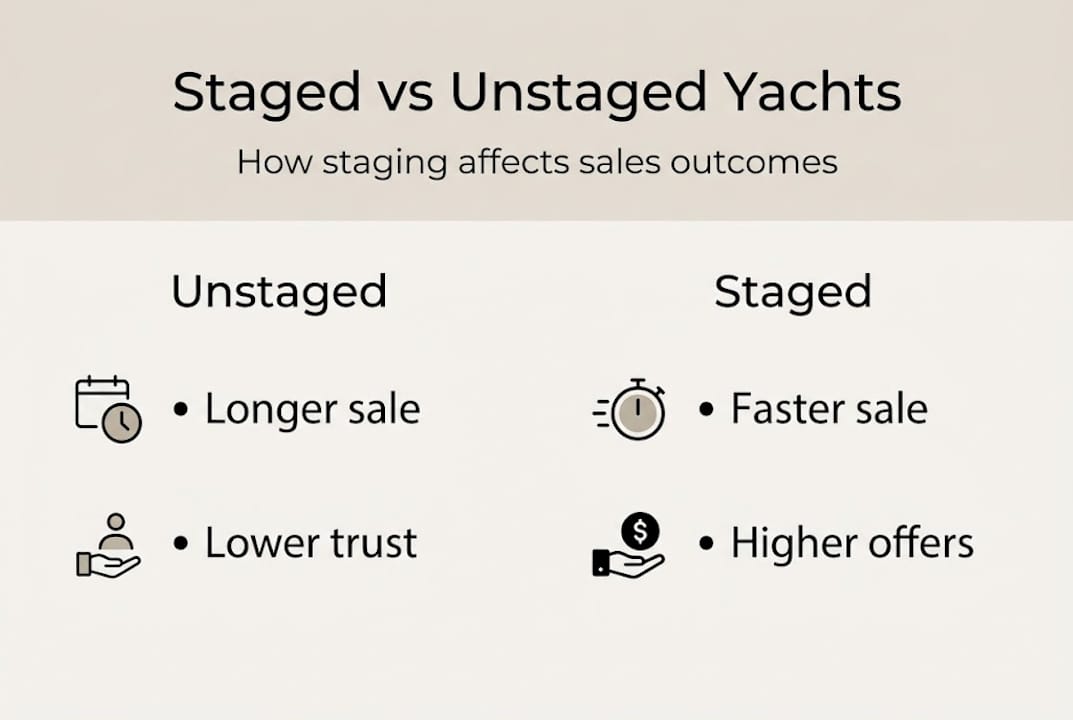
The trust element is often underestimated. When a buyer sees a clean engine room, an organized service log binder, and a neatly maintained bilge, they mentally reduce the “unknown risk” they associate with the purchase. That risk reduction has real financial value. It reduces the likelihood they’ll walk away, reduces the severity of their price negotiations, and increases the probability they’ll move quickly before second-guessing.
For sellers looking to understand the broader financial picture, our resale value expert guide digs into the specific upgrades that deliver the strongest returns in today’s market.
Pro Tip: Not all upgrades are created equal. New electronics, updated upholstery, and a freshly painted hull deliver far greater returns than expensive structural modifications buyers may not even notice. Focus your budget on what buyers see first and what they check first.
Consider this real-world scenario: two identical 45-foot motor yachts listed in Fort Lauderdale in the same month. One seller simply cleaned the boat and listed at $480,000. The second seller invested $8,000 in detailing, new salon upholstery, a full service of the engines, and professional photos. They listed at $495,000 and sold within six weeks, receiving offers within 2% of asking. The first boat sat for four months and eventually closed at $450,000 after multiple price reductions.
That $45,000 gap tells you everything about what staging actually delivers. For sellers ready to act, understanding how to maximize ROI in Florida is the natural next step.
How to stage your yacht: Core steps and expert advice
With clear incentives to stage, what steps really make a difference? The following process balances expert recommendations with practical experience in the Florida market.
-
Start with a thorough mechanical inspection. Before touching the aesthetics, have a qualified marine mechanic inspect engines, steering, electrical systems, and through-hull fittings. Fix what you can. Knowing the condition of every system lets you stage confidently and disclose honestly.
-
Organize and update all documentation. Gather service records, fuel logs, warranty information, and upgrade receipts. Present them in a clean binder or digital folder. This step alone builds enormous buyer confidence and removes a major source of hesitation.
-
Hire a professional boat detailing service. A professional detail goes far beyond what most owners achieve on their own. Marine detailers know how to treat oxidized gelcoat, clean teak, condition vinyl, and polish stainless steel to a standard that photographs beautifully and impresses in person.
-
Address the engine room specifically. As industry experts note, buyers check that every scratch and stain becomes a negotiation chip, and showing a clean, dry engine room builds trust quickly. Wipe down all surfaces, label fluid reservoirs clearly, and ensure there are no active leaks or oil stains.
-
Refresh interior soft furnishings. Reupholstering salon seating, replacing worn berth cushions, or even adding tasteful throw pillows can transform the feel of a cabin from dated to desirable. Match colors to current buyer preferences, typically clean nautical palettes of navy, white, and warm gray.
-
Stage for lifestyle, not just function. Add a few tasteful lifestyle touches: a quality pair of binoculars on the helm, a folded captain’s chart on the nav table, fresh flowers or a bowl of citrus in the galley. These details help buyers visualize the experience rather than just the equipment.
-
Declutter every space aggressively. Remove all personal gear, fishing equipment, extra lines, and anything that makes the boat feel like it belongs to someone else. Buyers need space to imagine themselves aboard.
What not to do: Don’t use strong air fresheners to mask musty smells or mildew. Buyers will notice the cover-up and assume the worst. Address the source through ventilation, cleaning, and moisture control before the first showing.
For ongoing care that preserves value between now and your listing date, our guide on yacht maintenance tips is an excellent resource. And for the full picture of preparation and marketing in Florida, our boat selling best practices guide covers the complete timeline sellers should follow.
Common pitfalls and advanced strategies in yacht staging
Getting the basics right is essential, but advanced sellers set themselves apart by knowing what to avoid and how to turn staging into a strategic advantage.
The biggest mistake sellers make is over-staging or covering up real problems. Hiding issues can backfire badly. Experienced buyers and surveyors spot cover-ups quickly, whether it’s fresh paint over corrosion, new carpet concealing a soft subfloor, or excessive deodorizer masking mildew. When discovered, these attempts to hide problems destroy trust entirely and often kill deals that might have survived honest disclosure.
Here’s a direct comparison between the two approaches:
| Approach | Short-term effect | Long-term outcome |
|---|---|---|
| Honest staging with full disclosure | Slightly lower initial offer possible | Smoother sale, fewer deal-fall-throughs |
| Cosmetic cover-ups | May attract initial interest | Survey failures, buyer withdrawal, price collapse |
| Under-staging (minimal effort) | Lower inquiries, more price pressure | Extended time on market, lower final price |
| Strategic, documented staging | Strong buyer confidence | Faster close, closer to asking price |
For advanced sellers targeting maximum value, especially those considering charter positioning or fractional sale options, here are additional strategies:
- Upgrade technology selectively. Chartplotters, autopilot systems, and AIS transponders are features buyers actively look for. These upgrades often pay for themselves in both resale value and reduced negotiation pressure.
- Document every upgrade and repair. Keep receipts, photos, and contractor details for every improvement. A buyer who sees a professional invoice for engine service feels far safer than one who hears “it was done recently” with no paper trail.
- Stage for charter-ready appeal. If your yacht could serve as a charter vessel, stage it to reflect that versatility. Safety equipment should be current, the galley should be stocked and accessible, and the sleeping accommodations should look hotel-clean.
- Use professional photography and video. Visual marketing sets the tone before a buyer ever steps aboard. Drone footage, interior walkthroughs, and sunset bow shots all contribute to a higher perceived value listing.
Pro Tip: Always keep a clear folder with documentation ready for every repair, upgrade, and service appointment. During a buyer walkthrough or survey, being able to pull out organized records immediately communicates professionalism and reduces buyer anxiety more than almost any cosmetic upgrade.
For sellers thinking about the bigger management picture, our resource on yacht management strategies outlines how proactive ownership protects and grows your investment. Strong yacht marketing visuals also play a significant role in attracting the right buyers to a well-staged listing.
Why most sellers miss out: The case for radical transparency
After years of working with Florida yacht sellers, we’ve noticed a clear pattern: the sellers who get the best outcomes are rarely the ones with the most polished boats. They’re the ones who are the most honest.
Florida buyers are sophisticated. Many have purchased before, worked with marine surveyors, and know exactly what a well-maintained engine room should look like versus one that’s been hastily cleaned for a showing. They arrive alert and attentive. When something feels off, even subconsciously, they pull back.
We’ve seen deals collapse not because a vessel had real problems, but because the seller’s reluctance to disclose minor issues made buyers suspect there were major ones. Conversely, we’ve watched sellers openly acknowledge a repaired through-hull fitting or a replaced impeller, hand over the service invoice, and watch the buyer relax visibly. That transparency built more trust than a full cosmetic detail could.
Experts consistently recommend fixing what you can and being transparent about what remains. This approach isn’t just ethical; it’s strategic. It reduces survey surprises, keeps deals from falling apart at the last minute, and positions you as the kind of seller a serious buyer wants to work with.
Radical transparency, paired with genuine quality staging, is the winning formula. Visit our transparent selling process page to see exactly how we guide Florida sellers through this mindset and process from day one.
Ready to stage or sell? Tap Florida’s yachting experts
If everything you’ve read has you thinking about your next move, we’re here to make it a great one. At Yachting Experts, we bring our signature hands-on approach to every sale, helping you identify the right staging priorities, connect with trusted detailing and service professionals, and position your vessel for the strongest possible result in the Florida market.

Our team has helped dozens of Florida yacht owners move from “thinking about selling” to “closed and trading up” with confidence and clarity. Whether you’re ready to list now or just exploring your options, our complete staging and value guide gives you a proven roadmap. When you’re ready to talk strategy with a real expert, consult a yachting expert and let’s map out your path to maximum return.
Frequently asked questions
What’s the difference between cleaning and staging a yacht?
Staging goes far beyond cleaning. It involves arranging, upgrading, repairing, and presenting every area of the vessel, including mechanical systems, to match what serious buyers expect and to build genuine confidence throughout the walkthrough. Strategic staging aligns visual lifestyle cues with mechanical transparency for maximum impact.
How much more can I sell my yacht for if I stage it?
Properly staged yachts with modernized features and documented maintenance regularly support higher offers and sell faster than unstaged alternatives. Staging and upgrades help owners match buyer expectations around interiors, deck presentation, and technology, all of which influence final price.
Is it ever a mistake to stage my yacht?
Over-staging or concealing real defects almost always backfires. It’s far better to fix what you can and be transparent about remaining issues, since buyers and surveyors will find problems anyway, and hidden flaws damage trust far more than honest disclosure ever would.
What’s the most important area to stage on a yacht?
The engine room, salon, and open deck spaces deliver the highest return when staged properly. A clean, dry engine room in particular builds buyer trust faster than almost any other single staging element during a showing.
Recommended
Request A Call
Featured Listings

2027 Canados
100
Miami Florida

2015 Maiora
$3,750,000
90
Miami Florida

2027 Canados
57
Miami Florida

2019 Silent-Yachts Fair Dinkum
$1,599,000
55
Fort Lauderdale Florida

2026 Canados
49
Miami Florida

2026 Buddy Davis
47
Miami Florida

2020 Grady-White No Name
$610,000
45
Hallandale Beach Florida

2020 Viking Huckleberry
$1,495,000
44
Fort Lauderdale Florida

2027 Canados
43
Miami Florida

2021 Intrepid Dream Faster
$730,000
40
Coral Gables Florida

2016 Edgewater
$299,000
37
Miami, Florida

2022 Avid
$56,900
23
Stuart Florida
Get your yacht value Estimate
"*" indicates required fields