

Sportfishing boat insurance is defined as a specialized form of marine insurance that protects your vessel, fishing equipment, and liability exposure against accidents, theft, storm damage, and injury claims. Understanding why insure your sportfishing boat matters comes down to one reality: a single uninsured incident can cost more than the boat itself. Premiums typically run 1%–3% of your boat’s appraised value, which means protecting a $150,000 center console might cost you as little as $1,500 a year. That is not a large price to pay for financial security on the water. Without coverage, you absorb every dollar of damage, every liability claim, and every piece of stolen gear out of pocket.
Why insure your sportfishing boat: the risks that demand it
Sportfishing boats face a specific set of risks that standard homeowner or auto policies will never touch. Knowing what those risks are makes the case for coverage impossible to argue against.
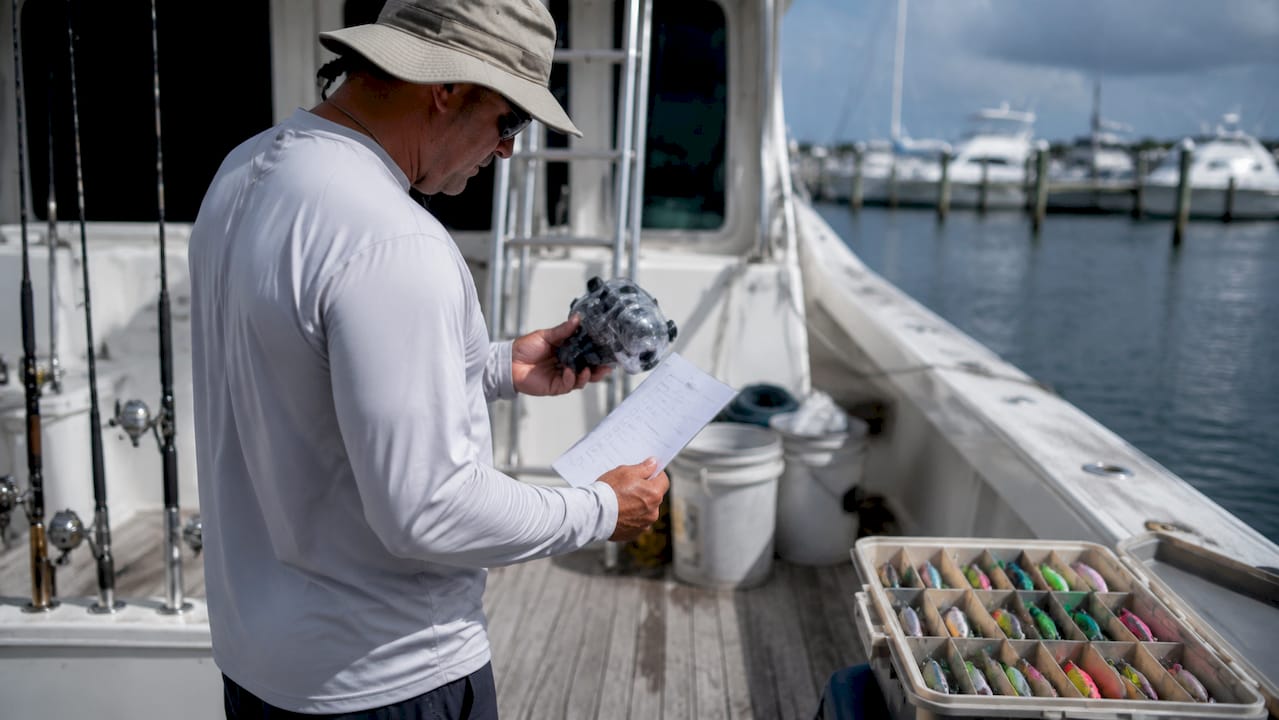
Physical damage is the most obvious category. Boat insurance covers collisions, fire, theft, vandalism, and storms, but it draws a hard line at wear and tear, corrosion, and maintenance failures. That distinction matters. Insurance is designed to handle sudden, unexpected losses, not the slow deterioration that comes from skipping your annual engine service. Hurricane season alone justifies the premium for any boat owner along the Gulf Coast or Atlantic seaboard.
Liability exposure is where owners get blindsided most often. If a passenger slips on your deck and breaks an arm, or your boat swings into a neighboring slip and damages a $200,000 sportfisher, you are personally responsible for those costs without liability coverage. The financial exposure from a single serious injury claim can reach six figures before a lawsuit even gets filed.
Fishing gear and electronics represent a third category that catches owners off guard. Fishing gear, electronics, and personal effects require specific endorsements for coverage and are not automatically included in standard policies. A quality trolling motor, a Garmin chartplotter, and a full spread of offshore rods and reels can easily add up to $20,000 or more. That gear needs its own protection.
- Collision and allision (striking a fixed object like a dock or buoy)
- Storm and hurricane damage, including wind and flooding
- Fire, theft, and vandalism at the marina or on a trailer
- Passenger injury and third-party property damage
- Fishing equipment, GPS units, and onboard electronics
Pro Tip: Document all fishing gear with photos and serial numbers before you need to file a claim. Insurers require this documentation to validate gear claims, and having it ready speeds up the process significantly.
One coverage gap that surprises owners: operating outside your policy’s navigation limits can void a claim entirely. If your policy covers inshore and nearshore waters but you run 60 miles offshore for a blue marlin tournament, you may be fishing without any protection at all.
How sportfishing policies differ from standard boat coverage
Not all boat insurance is built the same. A standard recreational boat policy written for a pontoon or a ski boat is not designed for a 35-foot center console running at tournament speeds with $30,000 in electronics aboard.
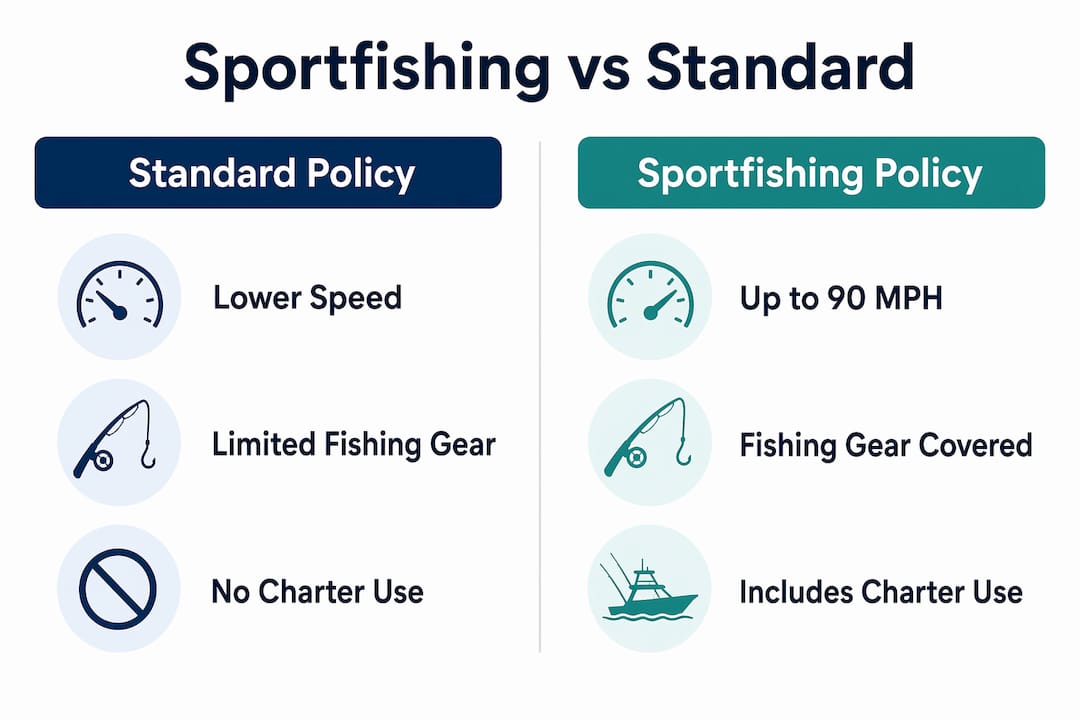
Specialized sportfishing policies cover vessels capable of speeds up to 90 MPH and include protection for fishing-specific gear like trolling motors and GPS units that standard policies exclude. That speed threshold matters for offshore boats running twin 300-horsepower outboards. A standard policy might classify your vessel as outside its coverage parameters the moment you push past a certain speed rating.
The table below breaks down the key differences between a standard recreational policy and a sportfishing-specific policy:
| Coverage Feature | Standard Recreational Policy | Sportfishing-Specific Policy |
|---|---|---|
| Vessel speed coverage | Typically up to 35–50 MPH | Up to 90 MPH |
| Fishing gear and electronics | Not included by default | Available as endorsements |
| Tournament participation | Often excluded | Can be added |
| Commercial/charter use | Excluded | Requires commercial endorsement |
| Hull coverage type | Actual cash value common | Agreed value available |
The charter use distinction is critical. Using a boat for paid charters without the correct commercial insurance can lead to denied claims and serious liability exposure. If you take paying clients out even occasionally, a recreational policy will not protect you. You need a commercial endorsement or a separate guide insurance policy. Many owners do not realize this until a claim gets denied.
Pro Tip: If you fish tournaments regularly, ask your agent specifically about tournament coverage. Prize fish, entry fees, and tournament-related liability are separate considerations that not every policy addresses by default.
High-value sportfishing boats require tailored insurance beyond what a standard policy provides. The more your boat is worth and the more specialized your use, the more important it becomes to work with an agent who understands the marine market specifically.
What liability limits should sportfishing boat owners carry?
Liability coverage is the part of your policy that pays when someone else gets hurt or their property gets damaged because of your boat. Setting the right limit is one of the most consequential decisions you make when buying coverage.
Industry-recommended liability limits range from $300,000 to $500,000 for recreational boat owners. That range reflects the real cost of serious accidents on the water. A passenger injury requiring surgery, rehabilitation, and lost wages can exceed $300,000 on its own. Add legal fees and a settlement, and a basic $100,000 policy leaves you personally exposed for the difference.
Many marinas require proof of liability insurance to grant dockage, with minimum requirements typically falling between $100,000 and $300,000. If you keep your boat at a marina, you may not have a choice. Lenders financing your vessel will also require coverage as a loan condition.
Here is how to evaluate the right liability limit for your situation:
- Passenger frequency: The more people you regularly take out, the higher your exposure to injury claims.
- Boat size and speed: Larger, faster boats create more potential for serious accidents and property damage.
- Navigation area: Offshore fishing in open ocean carries different risk than inshore bay fishing.
- Marina requirements: Check your slip agreement for minimum liability requirements before choosing a limit.
- Personal assets: Your liability coverage should be high enough to protect your home, savings, and other assets from a judgment.
Marine insurance is designed to prevent catastrophic financial loss from unexpected accidents, not to cover routine costs. Think of liability coverage as the firewall between a bad day on the water and a financial crisis that follows you home.
How to choose the right policy for your boat and usage
Choosing the right sportfishing boat insurance policy is not a one-size-fits-all process. Your coverage should reflect your specific vessel, how you use it, where you fish, and what gear you carry.
-
Work with a marine-specialist agent. Boating habits like navigation areas, frequency, and tournament participation influence coverage needs, and independent agents familiar with sportfishing policies can tailor quotes to match your actual risk profile. A general insurance agent may not know the difference between an agreed value and actual cash value hull policy.
-
Choose agreed value over actual cash value for hull coverage. Agreed value pays the full insured amount if your boat is a total loss. Actual cash value pays the depreciated market value, which can leave a significant gap on a boat you bought new three years ago.
-
Add the right endorsements. Fishing equipment, hurricane haul-out coverage, and medical payments are three add-ons worth serious consideration. Hurricane haul-out coverage pays for the cost of pulling your boat from the water before a named storm, which can run $1,000 or more at a busy yard.
-
Review your policy annually. Owners must update policies when moving from private use to occasional paid charter to avoid claim denials. If you add a new Simrad electronics suite or a $4,000 electric reel setup, your policy needs to reflect that new value.
-
Understand your navigation limits. Know exactly where your policy covers you. If you plan to fish the Bahamas, the Florida Keys, or the Gulf Stream, confirm those waters are included before you leave the dock.
-
Ask about discounts. Premiums can be reduced for boating safety courses, bundled policies, and clean records. A USCG Auxiliary or America’s Boating Club safety course can lower your premium while making you a better captain.
Pro Tip: Get at least three quotes from agents who specialize in marine insurance. Rates and coverage terms vary significantly between carriers, and the cheapest policy is rarely the one that pays best when you need it.
Protecting your boat ownership investment means treating insurance as a core part of your annual budget, not an afterthought. Factor it in alongside fuel, maintenance, and slip fees from day one.
Key takeaways
Sportfishing boat insurance is a non-negotiable layer of financial protection that covers your hull, fishing gear, liability exposure, and the people aboard your vessel.
| Point | Details |
|---|---|
| Premiums are affordable | Annual premiums run 1%–3% of boat value, making coverage cost-effective for most owners. |
| Fishing gear needs endorsements | Trolling motors, GPS units, and rods require specific add-ons; standard policies exclude them. |
| Liability limits should be high | Carry $300,000–$500,000 in liability coverage to protect personal assets from injury claims. |
| Charter use requires separate coverage | Recreational policies deny claims for paid trips; commercial endorsements are required. |
| Review your policy every year | Update coverage when you add gear, change usage, or fish new navigation areas. |
The coverage mistake i see sportfishing owners make every time
I have worked with enough sportfishing boat owners to spot the pattern immediately. They spend months researching the right hull, the right outboard configuration, and the right electronics package. Then they spend about 20 minutes on insurance and pick the cheapest policy they can find online.
The problem is not that they bought insurance. The problem is that they bought the wrong insurance. A $500 annual premium sounds great until you realize it came with a $50,000 navigation limit, no fishing gear coverage, and an actual cash value hull clause that will pay you $80,000 on a boat you paid $140,000 for two years ago.
The second mistake I see constantly is owners who start taking paying clients out on weekends without updating their policy. They figure it is just a few friends who happen to chip in for fuel. The insurance company does not see it that way. Operating a charter business on a recreational policy risks claim denial, and the liability exposure from an uninsured paid trip is enormous.
My honest advice: treat your insurance review the same way you treat your annual engine service. Set a date, sit down with a marine-specialist agent, and go through every line of your policy. Check your navigation limits against where you actually fished last season. Verify that your gear endorsement reflects what is actually on the boat. Confirm your liability limit is high enough to protect your home and savings, not just your boat.
The owners who get this right sleep better. The ones who do not find out the hard way, usually at the worst possible moment.
— Jason
Get the right sportfishing coverage with Yachtingexperts
Protecting your sportfishing boat starts with having the right team in your corner. At Yachtingexperts, we bring the same hands-on, personalized approach to insurance guidance that we apply to every aspect of boat ownership. We know that your vessel is one of your most significant investments, and we are here to make sure it stays protected.

Whether you are insuring a new center console, adding fishing gear endorsements, or transitioning from recreational to charter use, our team helps you find tailored sportfishing coverage that matches your actual needs. We work with owners across Florida and beyond to review existing policies, identify gaps, and connect you with the right marine insurance specialists. Reach out to Yachtingexperts today and let us help you protect what you have worked hard to build on the water.
FAQ
What does sportfishing boat insurance typically cover?
Sportfishing boat insurance covers physical damage from collisions, storms, fire, theft, and vandalism, plus liability for passenger injuries and third-party property damage. Fishing gear and electronics require separate endorsements and are not included in standard policies by default.
How much does boat insurance for fishing cost annually?
Annual premiums average $200–$600 for smaller boats and scale with vessel value, typically running 1%–3% of the boat’s appraised value. High-value sportfishing vessels with specialized gear will fall toward the higher end of that range.
Do i need special insurance if i take paying clients fishing?
Yes. Standard recreational policies exclude commercial use, and claims from paid trips will be denied without a commercial endorsement or guide insurance policy. Even occasional paid charters require updated coverage.
What liability limit should i carry on my sportfishing boat?
Carry between $300,000 and $500,000 in liability coverage to protect against serious injury or property damage claims. Many marinas also require a minimum liability certificate before granting dockage.
Does my policy cover me if i fish offshore or in the bahamas?
Only if those waters fall within your policy’s specified navigation limits. Operating outside insured navigation areas can void claims entirely, so confirm your coverage territory with your agent before any offshore or international trip.
Recommended
Request A Call
Featured Listings

2027 Canados
100
Miami Florida

2015 Maiora
$3,750,000
90
Miami Florida

2027 Canados
57
Miami Florida

2019 Silent-Yachts Fair Dinkum
$1,599,000
55
Fort Lauderdale Florida

2026 Canados
49
Miami Florida

2026 Buddy Davis
47
Miami Florida

2020 Grady-White No Name
$610,000
45
Hallandale Beach Florida

2020 Viking Huckleberry
$1,495,000
44
Fort Lauderdale Florida

2027 Canados
43
Miami Florida

2021 Intrepid Dream Faster
$730,000
40
Coral Gables Florida

2016 Edgewater
$299,000
37
Miami, Florida

2022 Avid
$56,900
23
Stuart Florida
Get your yacht value Estimate
"*" indicates required fields