

Yacht chartering remains one of the most misunderstood concepts in luxury travel. Many assume it’s reserved for billionaires or simply a fancier version of a cruise. In reality, yacht chartering is the practice of renting a yacht for a set period, typically a week, for leisure travel to coastal or island destinations, serving as a private floating home with varying levels of crew support. It’s a flexible, personalized way to explore the world’s most stunning waterways without the commitment of ownership. Whether you’re an experienced sailor seeking adventure, a luxury traveler wanting privacy, or someone testing the waters before buying, understanding yacht chartering opens doors to unforgettable experiences tailored precisely to your vision.
Table of Contents
- Key takeaways
- Understanding yacht chartering: what it really means
- Types of yacht charters: choosing the best fit for your trip
- How much does yacht chartering cost? Understanding pricing and hidden fees
- The yacht charter process: from booking to setting sail
- Discover expert yacht charter services with Yachting Experts
- Frequently asked questions
Key Takeaways
| Point | Details |
|---|---|
| What yacht chartering is | Chartering lets you rent a yacht for a defined period as a private floating home with varying crew support, without ownership obligations. |
| Flexible luxury alternative | Charter itineraries are customizable, letting you choose where to anchor, when to sail, and which activities to pursue. |
| Charter types explained | There are bareboat, skippered, and crewed charters, each offering different levels of self sufficiency and crew involvement. |
| Bareboat requirements | Bareboat charters require sailing qualifications and carry full responsibility for safety and navigation, while other options provide more crew support. |
| Booking to embarkation steps | You select yacht, destination, and dates, then proceed through booking to embarkation with crew preferences shaping the voyage. |
Understanding yacht chartering: what it really means
Yacht chartering transforms how you experience the ocean. Unlike owning a yacht, which demands constant maintenance, insurance, and docking fees, chartering gives you access to premium vessels for defined periods without long-term obligations. You select your yacht, destination, and dates, then enjoy a private floating retreat tailored to your preferences.
This approach differs fundamentally from traditional cruises. Where cruise ships follow fixed itineraries with thousands of passengers, yacht chartering offers complete flexibility. You decide where to anchor, when to sail, and what activities fill your days. Your yacht becomes your exclusive sanctuary, not a shared resort.
The appeal spans multiple traveler profiles:
- Luxury travelers seeking privacy and personalized service
- Event planners organizing intimate celebrations or corporate retreats
- Experienced sailors wanting adventure without ownership costs
- Prospective yacht buyers testing vessels and lifestyles before purchasing
- Families desiring unique vacation experiences away from crowded resorts
Many believe yacht chartering requires extreme wealth. While premium charters exist, options range from modest sailboats to superyachts, accommodating various budgets. The real value lies in customization. Your crew learns your preferences, your chef prepares meals to your taste, and your itinerary adapts to weather and whims.
“Yacht chartering democratizes luxury sailing by removing ownership barriers while preserving the personalized, private experience that makes yachting exceptional.”
Think of it as renting a floating villa with crew, where every detail serves your vision. Whether exploring Caribbean islands, Mediterranean coastlines, or secluded coves, the yacht becomes your base for discovery. This flexibility, combined with professional support, makes yacht chartering accessible to anyone seeking extraordinary travel experiences beyond conventional tourism.
Types of yacht charters: choosing the best fit for your trip
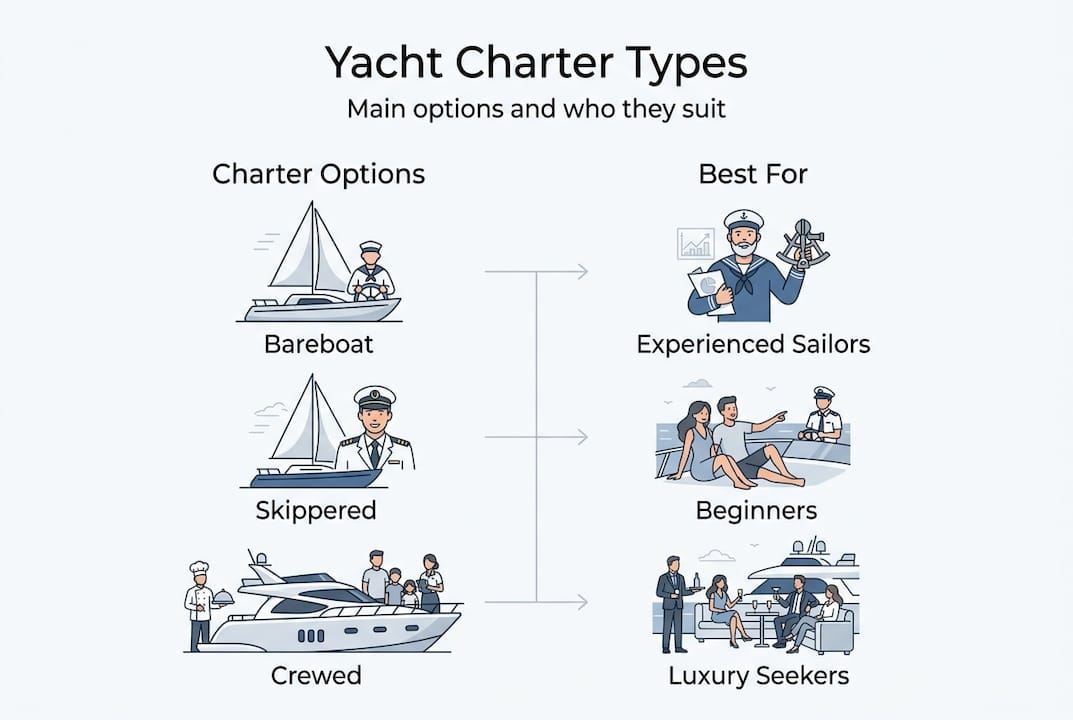
Selecting the right charter type determines your entire experience. Three main types exist: bareboat, skippered, and crewed, each serving different skill levels and preferences.
Bareboat charters put you in command. You operate the yacht independently, navigating, anchoring, and managing all sailing tasks. This option requires proper sailing qualifications like RYA or ICC licenses, plus demonstrated competence. Charter companies verify your credentials before handing over keys. Bareboat suits experienced sailors craving autonomy and privacy. You control the itinerary completely, adjusting plans without consulting crew. However, you also bear full responsibility for safety, navigation, and any incidents.
Skippered charters offer a middle ground. A professional captain handles navigation and yacht operation while you participate as much or little as desired. This works well for sailors with some experience who want guidance, or those learning while enjoying vacation. The skipper manages technical aspects, shares local knowledge, and ensures safe passage. You still customize the itinerary and enjoy relative privacy, but with expert support. Costs fall between bareboat and fully crewed options.
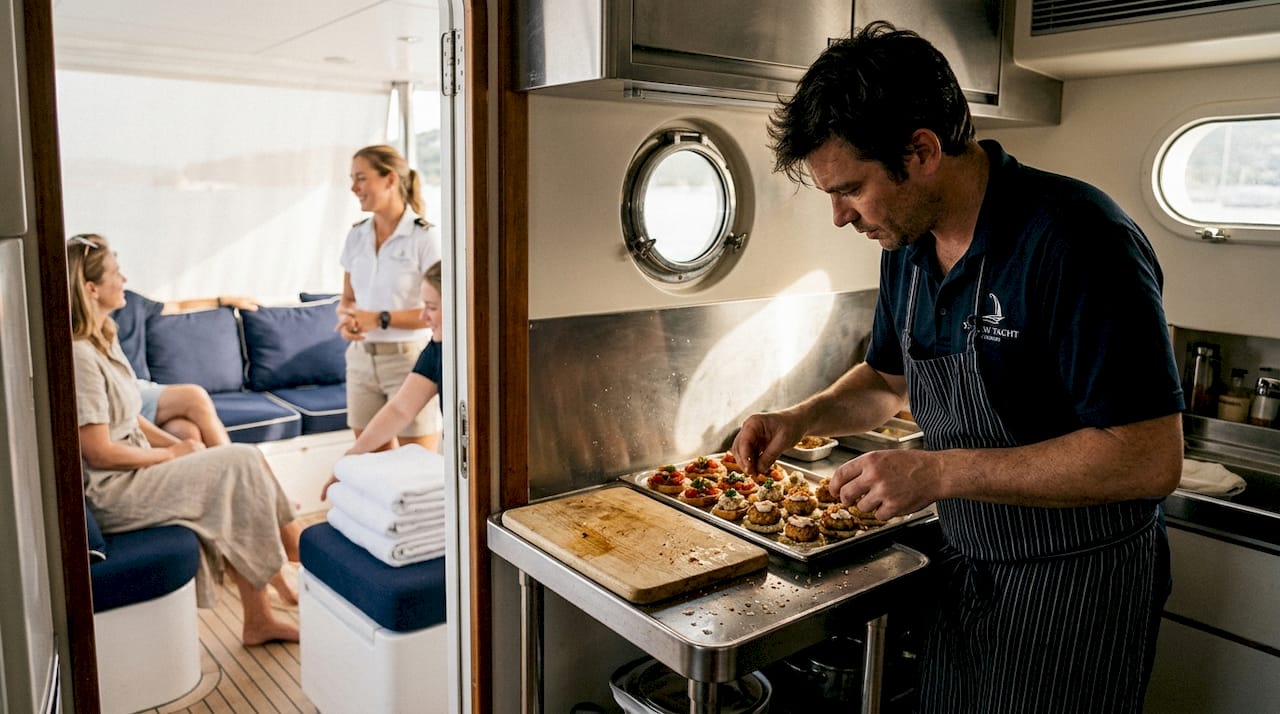
Crewed charters deliver full-service luxury. Your professional team typically includes a captain, chef, deckhands, and sometimes stewards, depending on yacht size. Crewed charters suit luxury travelers and potential owners testing ownership without commitment. The crew handles everything from navigation to gourmet meals, water sports setup to cabin service. You simply relax and enjoy.
| Charter Type | Crew Included | Qualifications Needed | Best For | Typical Cost |
|---|---|---|---|---|
| Bareboat | None | Sailing licenses required | Experienced sailors wanting control | Lowest |
| Skippered | Captain only | Some experience helpful | Intermediate sailors, learners | Mid-range |
| Crewed | Full professional team | None | Luxury travelers, first-timers, potential buyers | Highest |
Your choice depends on three factors: sailing experience, desired service level, and budget. First-timers typically choose crewed charters for worry-free luxury. Experienced sailors often prefer bareboat for independence. Those in between find skippered charters ideal.
Pro Tip: Match your charter type to your actual sailing skills, not your aspirations. Overestimating abilities can turn dream vacations into stressful ordeals. If uncertain, consult a yacht broker who can assess your experience and recommend appropriate options. Many luxury yachting experiences begin with crewed charters before clients transition to other types as they gain confidence.
How much does yacht chartering cost? Understanding pricing and hidden fees
Yacht charter pricing confuses many first-timers because the advertised rate rarely reflects total cost. Understanding the complete financial picture prevents budget surprises and helps you plan accurately.
Base charter rates cover the yacht and crew (for crewed charters) for your rental period, typically one week. Rates vary dramatically based on yacht size, age, type, and amenities. A modest 40-foot sailboat might start at $3,000 weekly for bareboat, while luxury crewed yachts range from $25,000 to over $500,000 weekly for superyachts.
Advance Provisioning Allowance (APA) represents 30-40% of the base rate covering operational expenses: fuel, food, beverages, docking fees, and activities. You pay this upfront; the crew manages spending and returns unused portions or bills overages at trip end. APA ensures quality provisioning while giving you spending control.
Additional mandatory costs include:
- Gratuity for crew (15-20% of base rate for exceptional service)
- VAT or local taxes (varies by region, often 10-25%)
- Delivery fees if picking up/dropping off at different locations
- Special permits for certain cruising areas
- Insurance premiums for bareboat charters
Regional and seasonal variations significantly impact pricing. Mediterranean charters face higher VAT and fuel costs than Caribbean options. High season (summer Mediterranean, winter Caribbean) commands premium rates, sometimes 30-50% above low season. Caribbean charters often include more all-inclusive options, while Mediterranean typically uses APA structures.
| Cost Component | Percentage of Base | When Paid | What It Covers |
|---|---|---|---|
| Base charter fee | 100% (reference) | Deposit + final payment | Yacht rental, crew salaries |
| APA | 30-40% | Before departure | Fuel, food, docking, activities |
| Gratuity | 15-20% | End of charter | Crew service reward |
| VAT/taxes | 10-25% | With base payment | Government taxes |
| Total typical cost | 155-185% | Various | Complete charter experience |
Pro Tip: Budget for a 45-55% premium over the base rate to cover all expenses comfortably. This prevents mid-trip budget stress and ensures you enjoy premium provisions without constant cost concerns. Many first-time charterers underestimate total costs, leading to disappointment when bills arrive.
Yacht age and condition also affect pricing. Newer yachts with modern amenities command higher rates but offer better reliability and comfort. Older vessels cost less but may lack contemporary features. Consider your priorities when balancing cost against experience quality.
“The difference between advertised rates and actual charter costs catches many by surprise. Smart charterers budget for total expenses upfront, ensuring their dream vacation doesn’t become a financial headache.”
For those considering yacht ownership, chartering first provides realistic cost exposure. You’ll experience operational expenses firsthand, helping inform ownership decisions with actual data rather than estimates.
The yacht charter process: from booking to setting sail
Successfully chartering a yacht involves several coordinated steps. Understanding this process helps you prepare properly and avoid common first-timer mistakes.
Step 1: Define your charter parameters
Start by clarifying your vision. Which destination appeals to you? What time of year works best? How many guests will join? What experience level do you have? These answers guide all subsequent decisions. Research popular cruising areas like the British Virgin Islands, Greek Islands, French Riviera, or Croatian coast, each offering distinct experiences.
Step 2: Engage a yacht broker
Professional yacht brokers simplify the entire process, especially for first-timers. They understand yacht availability, negotiate contracts (often using MYBA standard agreements), and manage complexity you might not anticipate. Brokers access inventory across multiple charter companies, finding options matching your specific requirements. Their services typically cost you nothing; they receive commission from yacht owners.
Step 3: Select your yacht and finalize details
Review broker recommendations, examining yacht specifications, photos, crew profiles, and past guest reviews. Modern charter platforms offer virtual tours and detailed amenities lists. Once you select a yacht, the process involves signing contracts, providing preferences for itinerary, food, beverages, and special requests. Communicate dietary restrictions, activity interests, and celebration plans so crew can prepare appropriately.
Step 4: Handle documentation and payments
Pay your deposit (typically 50% of base rate) to secure the booking. Review cancellation policies carefully, as these vary by charter company and season. For bareboat charters, submit sailing credentials like RYA or ICC licenses and provide resume of sailing experience. Many companies require reference checks from previous charters or sailing clubs. Weather contingency planning matters, particularly in hurricane-prone regions or winter Mediterranean conditions.
Step 5: Final preparations and embarkation
Pay remaining balance (usually 4-6 weeks before departure) along with APA. Confirm flight arrangements to your departure port. Upon arrival, you’ll meet your crew (for crewed/skippered charters) or complete yacht orientation and inspection (for bareboat). Crew will review safety equipment, yacht systems, and emergency procedures. For crewed charters, discuss your preferences again, as crew may suggest itinerary adjustments based on current weather and local events.
The entire timeline from initial inquiry to embarkation typically spans 2-6 months for popular seasons, though last-minute bookings sometimes work for flexible travelers. Early booking (6-12 months ahead) secures best yacht selection and preferred dates.
Brokers prove invaluable throughout this journey. They handle contract negotiations, coordinate with charter companies, arrange insurance, and troubleshoot issues. First-time charterers particularly benefit from broker expertise, as yacht brokerage professionals understand nuances that might escape newcomers. For additional context on the charter industry, review comprehensive charter explanations that detail operational aspects.
Unlike yacht ownership, chartering eliminates maintenance burdens, storage concerns, and depreciation worries. You enjoy premium experiences without long-term commitments, making it ideal for testing yachting lifestyle before potential purchase decisions.
Discover expert yacht charter services with Yachting Experts
Navigating yacht chartering complexities becomes effortless with the right guidance. Yachting Experts delivers comprehensive support for charter bookings, yacht selection, and luxury sailing experiences tailored to your specific vision. Whether you’re planning your first charter or seeking the perfect vessel for a special celebration, our team provides personalized advice that simplifies every decision.

Our specialized services connect you with ideal yachts and expert crews across premier destinations worldwide. We understand that yacht chartering represents a significant investment in unforgettable experiences. That’s why we hold your hand through the entire process, from initial consultation through embarkation day. Our yacht brokerage expertise ensures you avoid common pitfalls while maximizing value and enjoyment.
For those considering ownership after chartering, we offer guidance on yacht ownership strategies that help you transition smoothly from charterer to owner. Our keen eye for detail, dedication to client satisfaction, and unrivaled passion for yachting set us apart in delivering experiences that exceed expectations.
Frequently asked questions
What is the difference between a yacht charter and owning a yacht?
Yacht chartering involves renting a yacht temporarily without ownership responsibilities like maintenance, insurance, or docking fees. You pay only for the time you use the vessel, enjoying flexibility to try different yachts and destinations. Ownership includes ongoing costs for upkeep, crew salaries, storage, and depreciation, typically totaling 10-15% of yacht value annually. Chartering offers variety and freedom without long-term financial commitments.
Can I charter a yacht without prior sailing experience?
Yes, through skippered or fully crewed charters, no sailing experience is required. The professional crew handles all navigation, operation, and safety aspects while you relax and enjoy. Crewed charters provide complete luxury service including captain, chef, and deckhands. Bareboat charters, however, require proper sailing licenses and demonstrated competence, as you operate the yacht independently.
What additional costs should I expect beyond the base yacht charter fee?
Additional costs typically include APA covering fuel, food, beverages, and docking (30-40% of base rate), crew gratuity (15-20%), and VAT or local taxes (10-25% depending on region). Special requests like premium wines, water toys, or spa services may incur extra charges. Total expenses often reach 45-55% above the advertised base rate, so budget accordingly for a complete luxury experience.
How do yacht brokers help in the chartering process?
Yacht brokers manage yacht selection, contract negotiations, and itinerary customization, streamlining the entire charter process. They access extensive yacht inventories, understand regional regulations, and negotiate favorable terms on your behalf. Brokers provide expert advice on destinations, yacht suitability, and crew quality, helping first-timers avoid common mistakes. Their services typically cost charterers nothing, as they receive commission from yacht owners, making them invaluable resources for successful charter experiences.
Recommended
Request A Call
Featured Listings

2027 Canados
100
Miami Florida

2015 Maiora
$3,750,000
90
Miami Florida

2027 Canados
57
Miami Florida

2019 Silent-Yachts Fair Dinkum
$1,599,000
55
Fort Lauderdale Florida

2026 Canados
49
Miami Florida

2026 Buddy Davis
47
Miami Florida

2020 Grady-White No Name
$610,000
45
Hallandale Beach Florida

2020 Viking Huckleberry
$1,495,000
44
Fort Lauderdale Florida

2027 Canados
43
Miami Florida

2021 Intrepid Dream Faster
$730,000
40
Coral Gables Florida

2016 Edgewater
$299,000
37
Miami, Florida

2022 Avid
$56,900
23
Stuart Florida
Get your yacht value Estimate
"*" indicates required fields