

Selling your yacht in Florida can feel as complex as navigating an unfamiliar channel. With a competitive market and significant investment on the line, trusting the process to just anyone risks delays, lower returns, and constant headaches. Experienced yacht brokers bring professional expertise and ethical standards to every transaction, guiding owners through valuations, marketing, paperwork, and negotiation to help ensure your upgrade goes smoothly and profitably.
Table of Contents
- Yacht Brokerage Explained And Misconceptions
- Types Of Yacht Brokerage And Key Distinctions
- The Yacht Buying And Selling Process
- Legal And Financial Aspects In Florida
- Avoiding Costly Mistakes And Maximizing Returns
Key Takeaways
| Point | Details |
|---|---|
| Broker Roles Matter | Understanding the differences between listing brokers, selling brokers, and buyer’s agents is crucial for selecting the right representation. Each has distinct responsibilities and impacts the sale process significantly. |
| Commission Structure Variability | Brokerage commissions typically range from 5-10%, and structures can vary widely. Clear communication about fees is essential to avoid misunderstandings. |
| Importance of Market Knowledge | A knowledgeable broker can significantly affect your return on investment by leveraging local market trends and buyer preferences. Proper evaluation and marketing strategies are fundamental to a successful transaction. |
| Legal Compliance is Key | Familiarize yourself with Florida’s legal requirements for yacht transactions, including broker licensing and fiduciary duties, to safeguard your investments and ensure a smooth process. |
Yacht brokerage explained and misconceptions
Yacht brokerage is more than just listing boats for sale. A yacht broker acts as a licensed professional who represents buyers, sellers, or both during vessel transactions. Think of them as your specialized real estate agent, but for the water.
Here’s what actually happens in the brokerage process:
- A broker evaluates your vessel’s market value based on comparable sales, condition, and current demand
- They create targeted marketing strategies to reach qualified buyers or find vessels matching your needs
- They handle negotiations, coordinate inspections, and manage all paperwork
- They guide you through financing options and ensure regulatory compliance
What Brokers Actually Do
The misconception exists that brokers are simply sales people who list boats. Reality is different. Professional yacht brokers undergo training and maintain high professional and ethical standards to represent your interests properly.
Brokers provide market intelligence you can’t access alone. They know recent sales prices, buyer preferences in your market segment, and timing strategies that maximize your returns.
Your broker also handles the complexity of yacht transactions. They coordinate surveys, title transfers, insurance transitions, and often manage documentation that confuses even experienced boat owners.
Common Misconceptions
First myth: All brokers charge the same commission. False. Commission structures vary widely—typically 5-10% depending on the vessel size and market conditions.
Second myth: You don’t need a broker if you sell privately. This misses the reality that qualified buyers often work through brokers. You’ll spend months marketing, fielding unqualified inquiries, and managing showings.
Third myth: Brokers work equally hard for sellers and buyers. Professional brokers represent one party at a time and focus entirely on that client’s interests—not both simultaneously.
The Yacht Brokers Association of America was founded in 1920 to uphold professional competency and ethical standards, helping ensure brokers operate with integrity and client focus.
Fourth myth: You can list with multiple brokers to get more exposure. This creates legal and ethical issues. Exclusive listings actually perform better because brokers invest marketing resources when they control the sale.
Why This Matters for Florida Yacht Owners
Florida’s competitive yacht market means broker selection directly impacts your return on investment. A broker who understands local market trends, seasonal buyer patterns, and regional vessel preferences will sell your boat faster and often at a higher price.
The right broker knows whether buyers in your market value performance upgrades, recent refits, or specific warranty packages. They understand what drives demand for 45-foot sportfishers versus luxury cruisers in the current market.
Pro tip: Ask potential brokers for their sold inventory from the last two years in your vessel’s category—this shows actual market success, not just marketing claims.
Types of yacht brokerage and key distinctions
Not all yacht brokers operate the same way. Understanding the different brokerage models helps you choose the right representation for your situation. Each type has distinct responsibilities, compensation structures, and client loyalties.
The Three Main Brokerage Types
Yacht brokerage falls into three categories based on who the broker represents:
- Listing brokers represent the seller and list the vessel for sale
- Selling brokers represent the buyer and help them find suitable vessels
- Buyer’s agents work exclusively for buyers, offering dedicated search and negotiation services
Listing Brokers and Seller Representation
A listing broker is hired by the boat owner to market and sell the vessel. They’re paid by the seller, typically through commission on the final sale price. This creates clear alignment—their success depends directly on selling your boat.
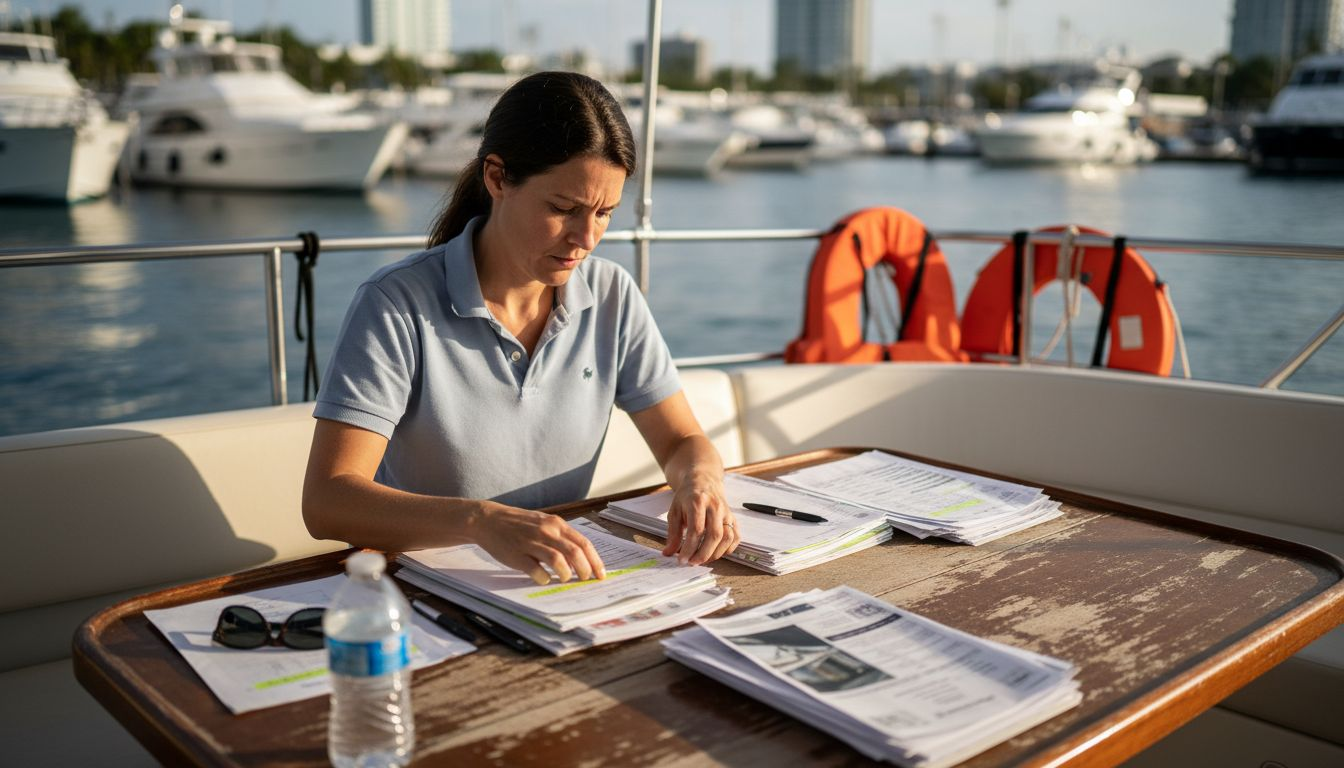
Listing brokers handle all the heavy lifting. They conduct market analysis, create marketing materials, coordinate showings, manage inspections, and negotiate on your behalf. They know your boat’s value and market positioning.
When you list exclusively with one broker, they invest significant marketing resources because they control the sale. Shared listings dilute this incentive, often resulting in slower sales and lower prices.
Selling Brokers and Buyer Representation
A selling broker represents the buyer. They help clients search for vessels matching their needs, conduct due diligence, and negotiate favorable purchase terms. They’re compensated through commission split from the listing broker’s fee.
Buyer’s brokers focus entirely on protecting the buyer’s interests. They uncover vessel condition issues, verify documentation, and ensure fair pricing. This specialized representation prevents costly mistakes.
Yacht brokers play distinct roles depending on whether they represent sellers, buyers, or both parties in a transaction.
Specialist Buyer’s Agents
Some brokers work exclusively as buyer’s agents, never representing sellers. This creates complete alignment with buyer interests without conflicts of interest. They specialize in vessel searches, market analysis, and negotiation strategy.
Specialist buyer’s agents excel at finding off-market vessels, accessing pocket listings, and leveraging their network for exclusive opportunities. They’re particularly valuable if you’re searching for specific vessel types or rare models.
Here’s a summary comparing the main yacht brokerage roles and how they serve clients:
| Brokerage Role | Who They Represent | Key Responsibilities | Typical Compensation |
|---|---|---|---|
| Listing Broker | Seller | Markets and sells vessel | Commission from sale price |
| Selling Broker | Buyer | Finds/matches vessels, negotiates | Commission split with listing broker |
| Specialist Buyer’s Agent | Buyer only | Exclusive search, negotiates | Commission or buyer fee |
This table highlights how representation differs and helps you assess which model fits your needs.
Professional Credentials Matter
The Certified Professional Yacht Broker (CPYB) credential distinguishes brokers who’ve completed rigorous training and maintain ethical standards. This certification requires ongoing education and adherence to professional codes.
A certified broker demonstrates expertise in brokerage roles, legal requirements, and professional responsibilities—offering confidence that your interests receive expert handling.
Florida requires yacht broker licensing, and California has specific regulations as well. Verify your broker holds proper credentials for your state before signing any agreements.
Compensation and Conflict of Interest
Understanding how brokers earn money reveals their incentives. Seller-side brokers earn commission when your boat sells. Buyer-side brokers earn commission when your purchase closes.
Dual representation (one broker representing both parties) creates potential conflicts. Even with disclosure, ask whether your broker represents multiple interests in the same transaction.
Pro tip: Ask your broker point-blank: “Who do you represent in this transaction, and how are you compensated?” Clear answers reveal whether their incentives align with yours.
The yacht buying and selling process
Whether you’re buying your first yacht or upgrading to a larger vessel, the process follows a structured path. Understanding each stage helps you avoid costly mistakes and make informed decisions. Sellers benefit from knowing what buyers expect at each step.
Stage One: Define Your Requirements
Buyers start by clarifying what they actually need. Vessel size, performance capabilities, cruising range, and onboard amenities vary dramatically. Are you seeking a weekender or a liveaboard? Do you prioritize speed or stability?
Sellers must understand their boat’s market position and target buyer profile. A 35-foot sportfisher attracts different buyers than a 45-foot cruiser. Knowing your vessel’s strengths helps price it competitively.
This clarity prevents wasting time on unsuitable matches. A broker helps both parties articulate requirements and identify realistic options.
Stage Two: Listing and Marketing
For sellers, this stage involves preparing your vessel for market. Professional photos, detailed specifications, and honest condition descriptions attract qualified buyers. Poor presentation costs you thousands in negotiating power.
Marketing strategy matters significantly. High-quality online listings, broker networks, and targeted advertising reach serious buyers. Your broker’s network access is invaluable here.
Buyers begin their search by reviewing available vessels. They access broker listings, private sales, and sometimes government boat auctions for potential deals.
Stage Three: Inquiries and Showings
Buyers express interest in vessels matching their criteria. Your broker schedules viewings, screens unqualified inquiries, and manages showing logistics. This protects your time and privacy.
During showings, buyers inspect systems, test-run the vessel, and assess overall condition. Allow adequate time for thorough evaluation. Rushed showings often kill serious deals.
Take detailed notes during conversations. Document buyer questions and concerns—they reveal what matters most to your market.
Stage Four: Inspections and Due Diligence
Serious buyers commission professional surveys and inspections. These detailed assessments reveal mechanical issues, structural concerns, and safety problems. Budget 2,000 to 5,000 dollars for comprehensive surveys on larger vessels.
The buying process involves detailed inspections where buyers evaluate vessel condition and negotiate repairs or price reductions based on findings.
Sellers should complete their own survey first. Discovering problems before listing prevents surprises during negotiations and positions your boat more competitively.
Stage Five: Negotiation and Agreement
Buyers make offers based on survey findings, comparable sales, and market conditions. First offers are rarely final prices. Expect negotiation on price, included equipment, and post-sale repairs.
Your broker handles counteroffers professionally, protecting your interests while keeping deals alive. Reasonable flexibility often closes sales that rigid positions kill.
Clear communication and realistic expectations during negotiation prevent deal collapse and often result in faster, cleaner closings.
Stage Six: Closing and Transfer
Once terms are agreed, documentation begins immediately. Title transfer, insurance coordination, registration changes, and payment processing require careful attention. Missing a single step delays closing.
Your broker manages documentation flow, ensuring nothing falls through cracks. They coordinate with surveyors, insurance agents, and title companies.
Pro tip: Start your pre-closing inspection 48 hours before scheduled closing—verify agreed repairs are complete and systems operate as promised.
Legal and financial aspects in Florida
Florida yacht transactions operate under strict legal requirements designed to protect both buyers and sellers. Understanding these rules prevents costly mistakes and ensures compliant transactions. Your broker’s licensing and bonding directly impact your protection.
Broker Licensing and Bonding Requirements
All Florida yacht brokers must be licensed and bonded through the Florida Department of Business & Professional Regulation. This licensing requirement applies to any transaction involving vessels over 32 feet. Unlicensed brokers operating in Florida face penalties and can’t legally close deals.
Bonding requirements protect clients financially. If a broker mishandles funds or violates their fiduciary duties, the bond provides recovery options. Always verify your broker’s current license status before signing agreements.
Florida brokers must maintain compliance with state licensing laws, bonding requirements, and ethical conduct standards governing yacht transactions.
Fiduciary Duties and Client Protection
Your broker has fiduciary responsibilities to you. This means they must act in your best interest, disclose all material facts, and maintain confidentiality. Breaching these duties exposes brokers to legal liability.
These duties include:
- Honest representation of vessel condition and market value
- Transparent disclosure of all offers and counteroffers
- Proper handling of earnest money and deposits
- Compliance with all applicable regulations
- Conflict-of-interest disclosure when representing multiple parties
Clear written agreements prevent misunderstandings. Always document your broker’s scope of representation, commission structure, and exclusive listing terms.
Commission Structures and Financial Terms
Florida law requires clear disclosure of commission agreements before transactions begin. Commission typically ranges from 5-10% of the final sale price, split between listing and selling brokers.
Negotiate commission carefully. Higher prices don’t always justify higher percentages. Some brokers offer reduced rates for well-maintained vessels or quick sales.
Write all financial terms in your listing agreement. Include specifics about when commission is due, whether it applies to private sales, and what services are included.
Regulatory Compliance and Documentation
Yacht transactions require extensive documentation. Title verification, bill of sale, survey reports, and registration transfers must all be accurate and timely.
Brokers must adhere to disclosure requirements and business operation standards established by Florida law to ensure legal compliance and financial transparency.
Missing or incorrect documents delay closings and create legal exposure. Your broker manages this documentation flow, coordinating with title companies, the Florida Department of Motor Vehicles, and insurance providers.
Tax Implications for Sellers
Selling your yacht triggers tax considerations. Capital gains, depreciation recapture, and state sales tax compliance require attention. Consult a tax professional before closing.
Some sellers incorrectly assume yacht sales are tax-free. Federal and state tax obligations vary based on your purchase price, sale price, and how long you owned the vessel.
Florida brokers ensure all transactions follow state regulatory frameworks, protecting both parties through proper documentation and legal compliance.
Document your original purchase price, improvements, and maintenance expenses. These records establish your cost basis for tax calculations.
Consider these key legal and financial requirements for Florida yacht sales:
| Requirement | Who Enforces | Purpose | Common Pitfalls |
|---|---|---|---|
| Broker Licensing & Bonding | FL Dept. of Business | Legal operation, client protection | Using unlicensed brokers |
| Fiduciary Duties | State law, courts | Ensure broker acts in your interest | Not disclosing conflicts |
| Commission Agreement Disclosure | Florida state law | Transparency of fees | Unclear or missing agreements |
| Proper Documentation | State agencies, brokers | Legal transfer and registration | Delayed or incorrect paperwork |
Understanding these elements helps avoid costly mistakes when buying or selling a yacht in Florida.
Pro tip: Hire a marine surveyor and tax professional before listing—their reports strengthen your asking price and prevent post-closing tax surprises.
Avoiding costly mistakes and maximizing returns
Many Florida yacht owners leave money on the table through preventable mistakes. Underpricing your vessel, poor marketing, mishandling negotiations, and inadequate due diligence all erode your return on investment. Strategic planning prevents these costly errors.
Pricing Your Vessel Correctly
The biggest mistake is pricing based on emotion rather than market data. Your purchase price doesn’t determine current value. Recent comparable sales, current market demand, and your vessel’s condition do.
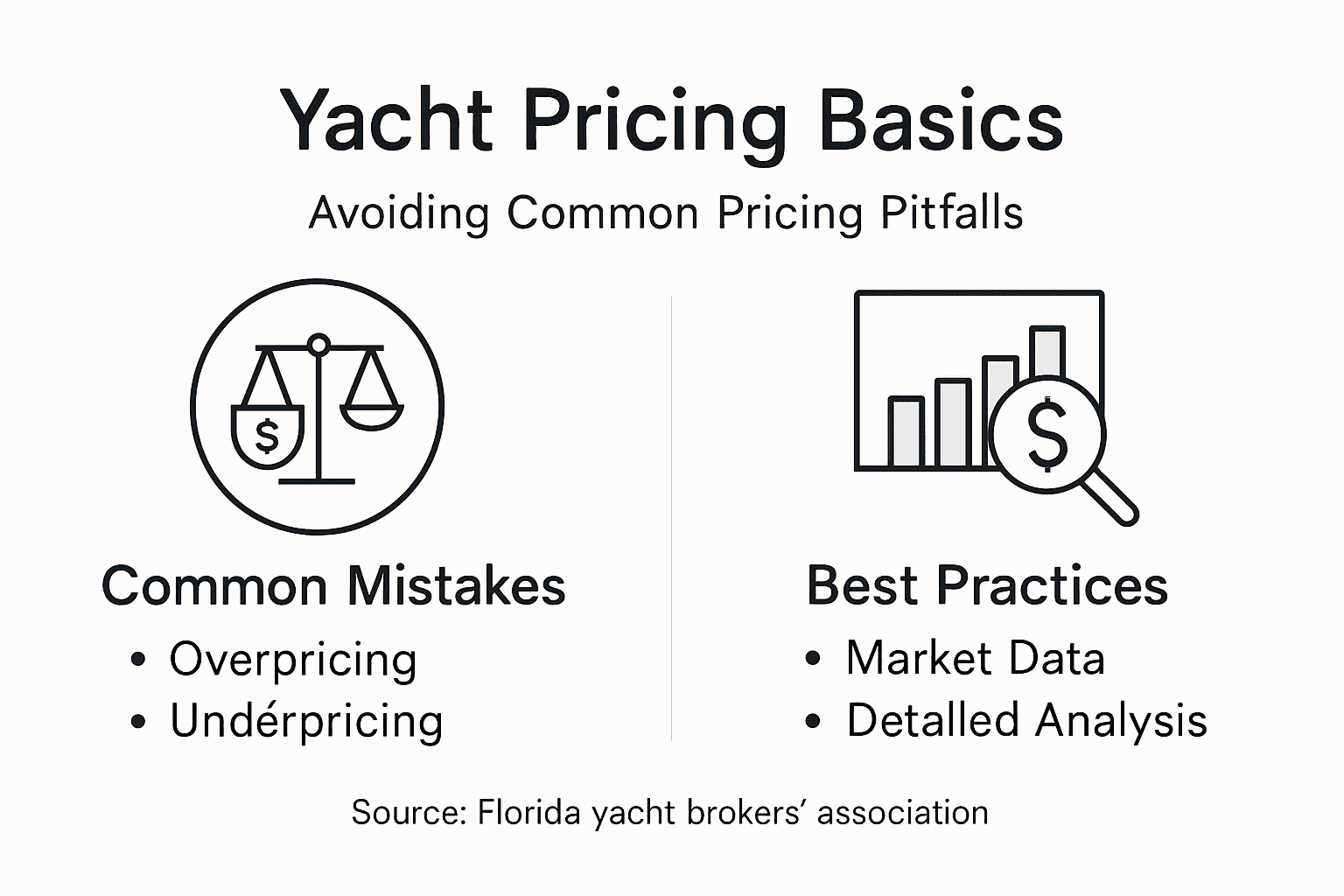
Underpricing by just 50,000 dollars costs you permanently. Overpricing by 25,000 dollars means months of unsold inventory and eventual price reductions that signal desperation to buyers.
Professional yacht brokers conduct thorough market analysis to establish accurate valuations based on comparable sales and current market conditions.
Demand a detailed broker analysis showing recent sales prices for similar vessels. Ask how they arrived at their recommended price. Vague explanations signal insufficient market research.
Presentation and Marketing Impact
How you present your yacht directly affects buyer perception and offers. Poor photos, vague descriptions, and delayed online listings guarantee lower prices.
Invest in professional marketing:
- High-quality photography from multiple angles
- Detailed specifications and system descriptions
- Video walkthroughs showing layout and condition
- Strategic online placement across broker networks
- Targeted advertising reaching qualified buyers
A well-marketed 45-foot boat often sells faster than an identical boat with mediocre presentation. Speed translates to money—quick sales prevent price erosion from extended market time.
Condition and Pre-Sale Preparation
Your vessel’s actual condition determines buyer confidence and final offers. Buyers always commission professional surveys. Surprises revealed during surveys destroy negotiating leverage.
Completing your own survey before listing reveals problems you can address proactively. Fixing mechanical issues, addressing cosmetic damage, and documenting recent maintenance strengthens your position dramatically.
A 10,000 dollar investment in pre-sale repairs often returns 25,000 to 40,000 dollars in higher offers and faster sales.
Negotiation Strategy and Deal Closure
Effective negotiation maximizes price while keeping deals alive. Rigid positions kill sales that flexibility closes. Understanding buyer motivation helps you negotiate smartly.
Certified yacht brokers develop negotiation skills through professional training emphasizing legal standards and market knowledge that optimize sale outcomes.
Your broker’s experience matters enormously here. They know which requests are reasonable, which offers indicate serious buyers, and when to stand firm versus compromise.
Documentation and Legal Compliance
Missing or incorrect paperwork delays closings and creates liability exposure. Title transfers, registration changes, and bill of sale documents must all be accurate.
Your broker should manage documentation timelines rigorously. Missing a single deadline cascades into closing delays that frustrate buyers and damage deals.
Brokers with professional training avoid costly mistakes through systematic process management and thorough attention to legal and transactional details.
Verify all documents before your broker submits them. Catching errors early prevents expensive corrections later.
Working With the Right Broker
Your broker selection directly impacts your return. Experienced, professional brokers with market expertise close deals faster and at higher prices.
Seek brokers who:
- Show recent sales history in your vessel category
- Explain their pricing methodology transparently
- Coordinate comprehensive marketing strategies
- Communicate regularly with transparent updates
- Manage timelines and documentation systematically
Pro tip: Request references from three recent clients in your vessel class and ask specifically about final sale prices versus asking prices—that gap reveals your broker’s true negotiation effectiveness.
Maximize Your Yacht Sale with Expert Brokerage Services
Understanding yacht brokerage can be complex and overwhelming. Key challenges include navigating pricing strategies, managing negotiations, and ensuring full legal compliance to protect your investment and maximize your return. You want a broker who delivers market intelligence, professional representation, and unwavering support every step of the way. Our team at Yachting Experts is dedicated to providing that personalized service so you never feel alone in the process.

Discover how our passionate professionals make your yacht selling experience simpler and more profitable. Visit Uncategorized – Jason to learn about our approach and meet the experts who guide you confidently through the entire process. Ready to get the best price and value for your boat? Take the next step now by connecting with us at Yachting Experts and see why our attention to detail and client-first focus make all the difference. Learn more about our team on our New Team Member – Jason page and start your journey toward a successful sale today.
Frequently Asked Questions
What does a yacht broker do?
A yacht broker acts as a licensed professional who represents buyers, sellers, or both in vessel transactions. They evaluate a yacht’s market value, create marketing strategies, handle negotiations, and manage all related paperwork.
How can I maximize my return when selling my yacht?
To maximize your return, price your yacht based on thorough market analysis, present it well with professional photos and descriptions, and conduct pre-sale repairs. Additionally, select an experienced broker who understands local market trends.
What are the different types of yacht brokers?
There are three main types of yacht brokers: listing brokers, who represent the seller; selling brokers, who represent the buyer; and specialist buyer’s agents, who work exclusively for buyers to help find suitable vessels and negotiate terms.
Why is it important to choose the right yacht broker?
Choosing the right yacht broker can significantly impact your return on investment. An experienced broker can offer market expertise, handle the complexities of yacht transactions, and implement effective marketing strategies to sell your yacht faster and at a higher price.
Recommended
Request A Call
Featured Listings

2027 Canados
100
Miami Florida

2015 Maiora
$3,750,000
90
Miami Florida

2027 Canados
57
Miami Florida

2019 Silent-Yachts Fair Dinkum
$1,599,000
55
Fort Lauderdale Florida

2026 Canados
49
Miami Florida

2026 Buddy Davis
47
Miami Florida

2020 Grady-White No Name
$610,000
45
Hallandale Beach Florida

2020 Viking Huckleberry
$1,495,000
44
Fort Lauderdale Florida

2027 Canados
43
Miami Florida

2021 Intrepid Dream Faster
$730,000
40
Coral Gables Florida

2016 Edgewater
$299,000
37
Miami, Florida

2022 Avid
$56,900
23
Stuart Florida
Get your yacht value Estimate
"*" indicates required fields