

Sportfishing is defined as the practice of catching fish with rods and reels for recreation, challenge, and personal satisfaction rather than commercial profit. Unlike subsistence or commercial fishing, sportfishing emphasizes skill, technique, and the thrill of the fight. The sport spans everything from offshore billfish tournaments to inshore flats fishing, and it draws millions of anglers to the water every year. NOAA recognizes recreational fishing as a major national pastime with deep economic and cultural roots across American coastal communities.
What is sportfishing and how does it differ from other fishing?
Sportfishing is recreational fishing with a deliberate focus on technique, gear selection, and the challenge of targeting specific game fish species. The standard industry term is “recreational angling,” though sportfishing is widely used to describe the more competitive and skill-intensive end of that spectrum. Commercial fishing prioritizes volume and profit. Subsistence fishing feeds families. Sportfishing is about the experience, the skill, and often the release. That distinction shapes every decision an angler makes, from the rod they pick to the waters they choose.
The sport also carries real cultural weight. Coastal towns from Montauk to Cabo San Lucas have built entire identities around sportfishing tournaments, charter fleets, and the lifestyle that surrounds them. For many anglers, it is not just a hobby. It is a way of life.
What are the main sportfishing techniques and how do they work?
Sportfishing techniques range from passive trolling setups to highly reactive pitch-baiting. Each method suits a different species, sea condition, and skill level. Understanding how they work gives you a real edge on the water.
-
Trolling. The most common offshore method, trolling involves dragging lures or live bait behind a moving boat. Trolling at 5–9 knots mimics wounded prey and triggers aggressive strikes from billfish like marlin and sailfish. Lure color matters more than most beginners expect. Sailfish respond to lighter colors like blue, white, and pink, while marlin favor darker shades like black and purple.
-
Pitch-baiting. This technique keeps a live bait rigged on a monofilament rod, ready for a fast, close-range cast when a fish appears near the boat. Pitch-baiting is especially effective for billfish and large pelagics that have been teased to the surface. The monofilament absorbs the shock of a hard strike, which improves hookup rates significantly.
-
Kite fishing. A specialized technique that uses a fishing kite and electric reels with precise clip releases to suspend live bait just at the surface. The bait splashes and struggles naturally, drawing explosive surface strikes. Improper clip placement causes tangled lines and lost bait, so this technique rewards practice.
-
Teaser strategies. Teasers are unarmed lures or bait dragged behind the boat to attract fish close to the stern. Once a fish commits to the teaser, the angler pitches a baited hook. Teasers minimize harm and maximize catch efficiency by drawing fish into the strike zone before any hook is involved.
Pro Tip: Fish one hour before sunrise and after 4:00 PM for the best results. Cooler temperatures and lower boat traffic increase predator activity during these windows.
Which fish species are prime sportfishing targets?
Game fish are selected for their speed, power, and the fight they put up. The species below represent the core targets in offshore and nearshore sportfishing across North American and Caribbean waters.
| Species | Fight Characteristics | Top Locations |
|---|---|---|
| Blue Marlin | Explosive runs, deep dives, aerial jumps | Gulf of Mexico, Hawaii, Bahamas |
| Sailfish | Fast surface runs, dramatic bill-slashing leaps | Florida, Costa Rica, Mexico |
| Yellowfin Tuna | Relentless deep-water power, endurance fights | Gulf of Mexico, Pacific Coast |
| Mahi-Mahi | Acrobatic jumps, vivid color changes, fast runs | Caribbean, Florida Keys |
| Wahoo | Blistering speed, sharp teeth, short intense runs | Bahamas, Gulf Stream, Bermuda |
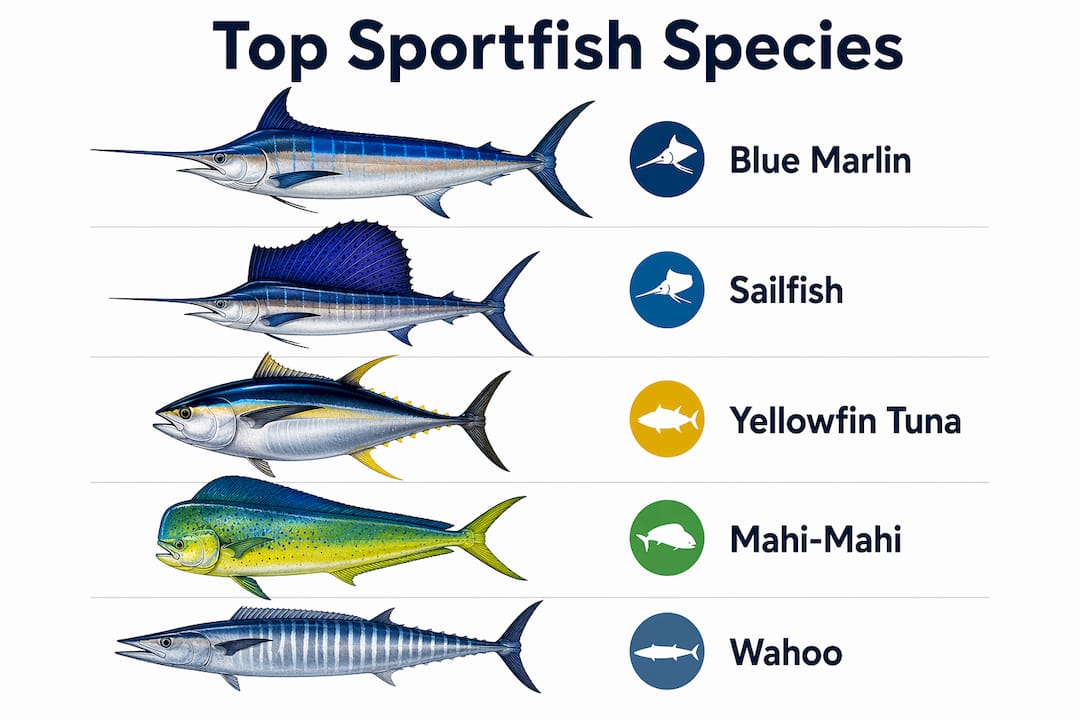
Marlin and sailfish top most anglers’ bucket lists because of their size and aerial acrobatics. Tuna demand pure endurance. Mahi-mahi are popular with beginners because they are aggressive biters and found close to floating debris lines. Wahoo are the sprinters of the ocean, capable of speeds that test even experienced anglers. Species behavior directly shapes technique choice. Fast, surface-oriented fish like sailfish respond well to kite fishing. Deep-running tuna demand heavy conventional gear and strong drag settings.
Knowing where these fish live also matters. Guided boat tours in productive offshore regions give newer anglers a fast education in reading water, current lines, and temperature breaks that concentrate game fish.
What essential gear do anglers use for sportfishing?
The right gear does not guarantee a catch, but the wrong gear guarantees a loss. Sportfishing demands matched equipment across every component.
- Rods. Heavy conventional rods in the 50–130 lb class handle offshore billfish and tuna. Lighter spinning rods in the 20–30 lb class work well for mahi-mahi and inshore species. Rod length and action affect casting distance and fight control.
- Reels. Two-speed conventional reels give anglers the ability to switch between high-speed retrieves and low-gear power when a fish digs deep. Electric reels are standard for kite fishing setups.
- Line. A hybrid braided main line with a 200–300 yard monofilament top shot is the preferred setup for pitch-baiting big pelagics. The braid provides sensitivity and low stretch. The mono top shot absorbs shock during explosive strikes.
- Leaders. Fluorocarbon leaders are nearly invisible underwater and resist abrasion from a fish’s bill or teeth. Wire leaders are used for wahoo and other toothy species.
- Teasers and kites. Teasers come in daisy chains, bird rigs, and squid spreader bars. Kites require dedicated kite rods, release clips, and electric reels for precise bait placement.
- Hooks. Circle hooks are standard for catch-and-release fishing because they lodge in the corner of the mouth and cause minimal internal injury.
Pro Tip: Rinse all reels and rod guides with fresh water after every offshore trip. Salt corrosion is the single biggest cause of gear failure, and a two-minute rinse extends equipment life by years.
For anglers ready to invest in a purpose-built platform, a custom sportfisher design integrates rod holders, live wells, outriggers, and fighting chairs into a single cohesive system.
How does sportfishing contribute to economic value and fisheries management?
Sportfishing is not just a personal pursuit. It is a major economic force and an active part of fisheries conservation.
Recreational saltwater angling supports $78.4 billion in U.S. GDP and sustains hundreds of thousands of jobs in coastal communities. That figure reflects charter captains, tackle shops, boat manufacturers, fuel docks, and the entire supply chain that serves recreational anglers.
Beyond the dollars, anglers function as on-the-water data collectors. Sportfishing represents a social-ecological system where anglers collaborate with fishery managers to provide real-time catch data used in stock assessments. That data shapes regulations, bag limits, and protected zones. Catch-and-release practices, now standard in most offshore tournaments, reduce mortality rates for billfish and allow populations to recover. The sport has evolved from pure recreation to a conservation-minded activity where anglers are genuine stakeholders in the health of the fishery.
This shift matters for every angler. The fish you release today is the fish someone else catches next season, and the data you report helps managers make smarter decisions for the long term.
Key Takeaways
Sportfishing combines specialized technique, matched gear, and conservation awareness to deliver both personal challenge and measurable economic value to coastal communities.
| Point | Details |
|---|---|
| Core definition | Sportfishing is recreational angling focused on skill, technique, and the challenge of targeting game fish. |
| Top techniques | Trolling at 5–9 knots, pitch-baiting, kite fishing, and teaser strategies each suit different species and conditions. |
| Essential gear | Match rod, reel, and line class to target species; use circle hooks and mono top shots for catch-and-release success. |
| Economic impact | Recreational saltwater fishing contributes $78.4 billion to U.S. GDP and supports hundreds of thousands of coastal jobs. |
| Conservation role | Anglers provide real-time stock data and practice catch-and-release, making them active partners in fishery management. |
Why sportfishing keeps pulling me back to the water
I have spent enough time on the water to know that sportfishing is one of those activities that looks simple from the dock and reveals its depth the moment you are offshore. The first time I watched a sailfish light up behind a teaser and then explode on a pitch bait, I understood why people organize their entire lives around this sport.
What surprises most newcomers is how technical it gets, fast. Lure color, trolling speed, line class, time of day. Every variable compounds. Recreational angling demands specific skill levels and gear choices that separate it from casual fishing, and that challenge is exactly what makes it addictive.
The conservation side has also changed how I fish. I release almost everything now, not because regulations require it, but because I have seen what healthy billfish populations look like and I want that to continue. The anglers I respect most treat the ocean like a resource they are personally responsible for. That mindset is spreading through the sportfishing community, and it is the best development the sport has seen in decades.
If you are just starting out, hire a guide for your first few trips. Watch how they read the water, set the spread, and work the teasers. You will learn more in one day on the water with a skilled captain than in months of reading about it.
— Jason
Your next step on the water starts with the right boat
Sportfishing rewards preparation, and nothing shapes your experience more than the vessel you fish from. A purpose-built sportfishing boat gives you the outriggers, live wells, fighting chair, and deck space that turn a good day into a great one.

At Yachtingexperts, we help anglers find the right platform for their fishing goals, whether that means a center console for inshore work or a full-tower sportfisher for offshore billfish. Our team brings real market knowledge and a personalized approach to every search. Check out our sportfishing boat buying guide to understand what features matter most, or visit our main listings page to see what is available right now. When you are ready to make a move, we are ready to help you get it right.
FAQ
What is sportfishing in simple terms?
Sportfishing is recreational fishing that uses rods, reels, and specialized techniques to catch game fish for enjoyment and challenge rather than food or profit.
Is sportfishing the same as recreational fishing?
Sportfishing is a subset of recreational fishing that emphasizes skill, technique, and targeting specific game fish species, often with a competitive or catch-and-release focus.
What are the best locations for sportfishing in the U.S.?
Florida, Hawaii, and the Gulf of Mexico are top destinations, offering access to billfish, tuna, mahi-mahi, and wahoo in productive offshore waters.
Do sportfishing anglers practice catch and release?
Most offshore sportfishing tournaments require catch-and-release for billfish, and circle hooks are standard gear to minimize injury and improve survival rates after release.
What gear do beginners need to start sportfishing?
A medium-heavy spinning rod, a quality reel with smooth drag, 30 lb braided line with a monofilament leader, and a selection of lures matched to local species covers the basics for most beginners.
Recommended
Request A Call
Featured Listings

2027 Canados
100
Miami Florida

2015 Maiora
$3,750,000
90
Miami Florida

2027 Canados
57
Miami Florida

2019 Silent-Yachts Fair Dinkum
$1,599,000
55
Fort Lauderdale Florida

2026 Canados
49
Miami Florida

2026 Buddy Davis
47
Miami Florida

2020 Grady-White No Name
$610,000
45
Hallandale Beach Florida

2020 Viking Huckleberry
$1,495,000
44
Fort Lauderdale Florida

2027 Canados
43
Miami Florida

2021 Intrepid Dream Faster
$730,000
40
Coral Gables Florida

2016 Edgewater
$299,000
37
Miami, Florida

2022 Avid
$56,900
23
Stuart Florida
Get your yacht value Estimate
"*" indicates required fields