

Coastal cruising is defined as navigating by boat along shorelines, bays, sounds, and nearshore passages with manageable daily legs between anchorages or harbors. In the sailing world, the recognized industry term is “coastal passage-making,” and it sits squarely between daysailing and blue-water offshore cruising. Typical vessels run 25–35 feet, and the focus is on frequent stops, accessible harbors, and steady progress rather than long open-ocean endurance. Whether you are eyeing the U.S. Intracoastal Waterway, the Florida Keys, or the fjords of Norway, coastal cruising rewards preparation and situational awareness in equal measure.
What is coastal cruising vs. offshore sailing?
Coastal cruising and offshore sailing look similar on a chart but demand very different skills. The core distinction is proximity to land and the nature of the challenges that come with it.
| Feature | Coastal cruising | Offshore (blue-water) sailing |
|---|---|---|
| Distance from shore | Nearshore, frequent harbor access | Open ocean, days from land |
| Typical vessel size | 25–35 feet | 40+ feet preferred |
| Primary challenge | Traffic, tides, narrow channels | Endurance, self-sufficiency |
| Navigation style | Continuous position checking | Watch-based, celestial backup |
| Weather exposure | Local phenomena dominate | Sustained systems, routing |
Coastal sailing demands constant judgment and frequent maneuvering near shore due to traffic, variable weather, and narrow channels. Offshore sailing tests endurance and self-sufficiency over days or weeks. The two disciplines build on each other, but coastal passage-making is where most sailors develop their real-world seamanship.
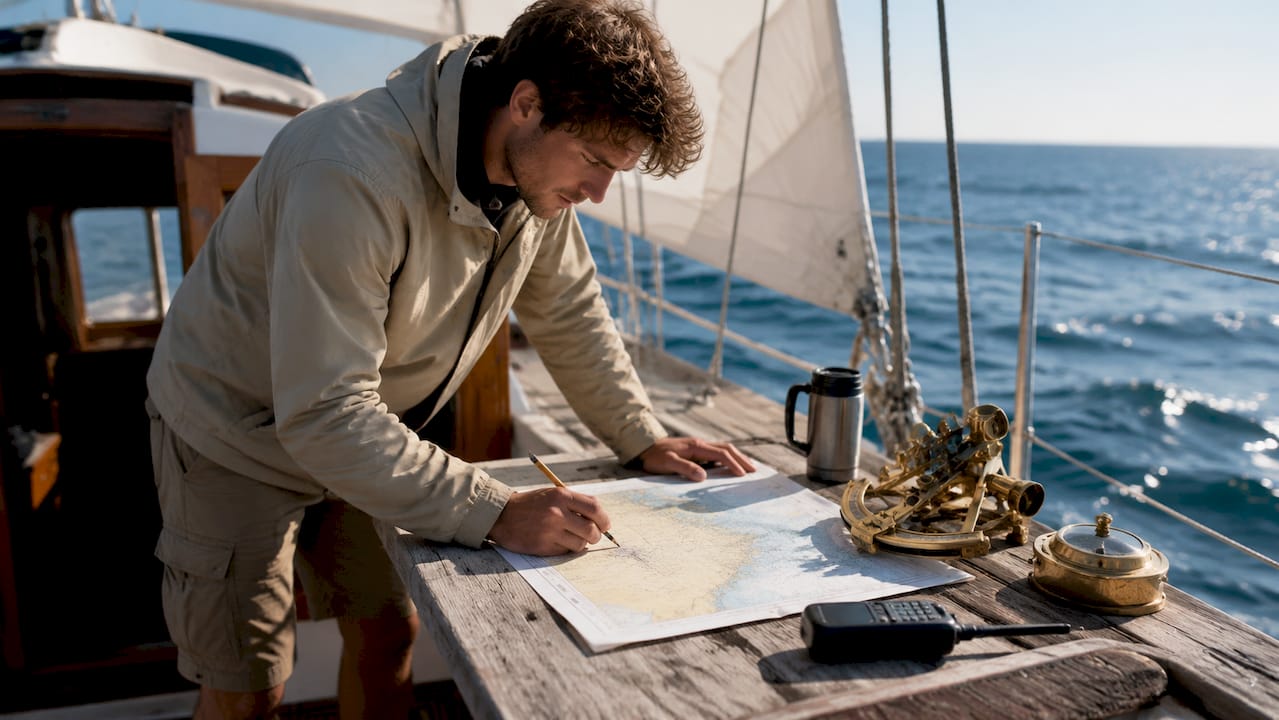
Vessel choice reflects these differences directly. A 28-foot sloop with a reliable auxiliary engine, good ground tackle, and a shallow draft handles most coastal routes well. Offshore boats prioritize watermaker capacity, storm sails, and offshore life-raft certification. You do not need a bluewater-spec boat to cruise the Atlantic coast or the Pacific Northwest. You do need one that is well-maintained, properly insured, and matched to the conditions you plan to meet.
Essential skills and certifications for coastal cruising
The ASA 103 Coastal Cruising certification is the most widely recognized credential for sailors who want to skipper a 25–35-foot boat independently on multi-day coastal passages. It covers coastal navigation, boat systems, anchoring, sail trim in moderate conditions up to 20 knots, and auxiliary engine operation. Completing ASA 103 signals that you can handle the full decision-making cycle of a coastal voyage, not just steer a boat in fair weather.
Beyond certification, the practical skills that matter most are:
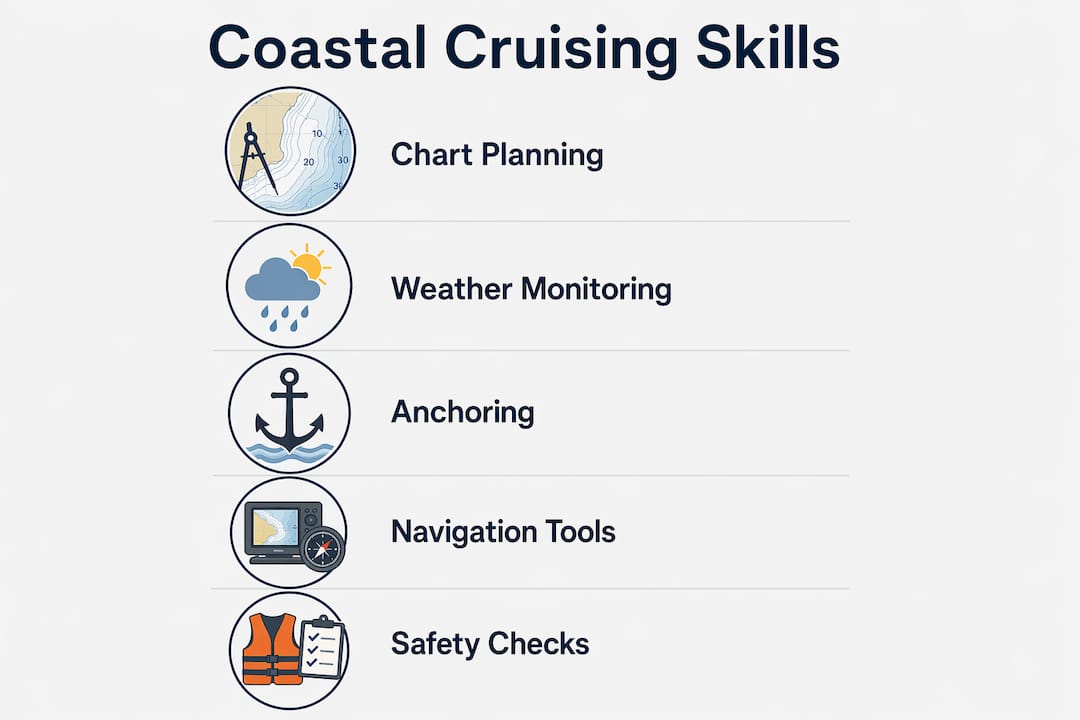
- Coastal navigation: Reading charts, understanding tidal ranges, and plotting courses around shoals and shipping lanes.
- Anchoring: Selecting a protected anchorage, setting the hook correctly, and monitoring for drag overnight.
- Weather reading: Interpreting VHF forecasts, NOAA marine weather, and local phenomena like sea breezes.
- Auxiliary engine operation: Knowing how to troubleshoot your engine in a tight harbor entrance is not optional.
- Route planning: Factoring in fuel range, provisioning stops, tidal windows, and bail-out harbors before you leave the dock.
Digital tools like Navionics and ActiveCaptain have transformed route planning. Manual chart plotting alongside GPS remains the professional standard, because digital tools carry latency and can fail. Sailors who rely exclusively on a chartplotter are one dead battery away from a serious problem.
Pro Tip: When anchoring in coastal waters, use a minimum scope ratio of 5:1 and allow the anchor to settle naturally before backing down hard. Soft mud bottoms, common throughout the ICW and Gulf Coast, require patience before the anchor achieves a solid set.
What are the best coastal cruise destinations?
The world’s best coastal cruising routes share one quality: they offer a mix of protected passages, interesting stops, and manageable weather windows for most of the year. Here are the standout options.
United States
- U.S. Intracoastal Waterway (ICW): Runs roughly 3,000 miles from Norfolk, Virginia, to Brownsville, Texas. The ICW offers protected sailing through sounds, rivers, and bays, making it the most popular coastal route in North America for cruisers heading south for winter.
- Florida Keys: The Keys chain from Key Largo to Key West gives sailors a string of anchorages with consistent trade winds, clear water, and excellent provisioning. The Gulf side offers calmer conditions; the Atlantic side delivers more wind.
- Pacific Coast: From Puget Sound in Washington down through Oregon and California to San Diego, the Pacific coast is more demanding. Prevailing northwesterly winds and significant swells require careful timing and a well-found boat.
- Maine and New England: The Maine coast is a coastal sailing adventure in its own right, with hundreds of islands, dramatic tides, and lobster-boat traffic that keeps you sharp.
Norway
Norway’s coastal routes run from Bergen north to Kirkenes with an Arctic Circle passage and winter Northern Lights opportunities. Structured itineraries with frequent port stops and scenic fjord sailing attract travelers who want exploration combined with comfort. Pricing for multi-day Norwegian coastal trips runs from €1,500 to €4,000 depending on vessel and itinerary. The Bergen to Kirkenes route is among the most celebrated coastal sailing adventures in the world.
| Route | Best season | Character |
|---|---|---|
| U.S. ICW | october to april | Protected, varied, long-distance |
| Florida Keys | november to may | Warm, trade winds, island hopping |
| Maine coast | june to september | Dramatic, tidal, island-rich |
| Norway fjords | june to august (summer) | Spectacular scenery, cold water |
| Pacific Coast U.S. | july to september | Challenging, demanding, rewarding |
The best coastal cruises reward flexibility. Locking yourself into a rigid schedule is the fastest way to make a coastal passage stressful.
Practical tips for safe and enjoyable coastal cruising
Safe coastal passage-making comes down to a handful of habits that experienced sailors practice without thinking. New cruisers need to build these deliberately.
Harbor hopping reduces stress by letting you wait for favorable weather windows instead of forcing exposed passages or dangerous bar crossings. Plan your route with multiple bail-out options. If the weather turns, you want a protected anchorage within reach, not a 40-mile slog to the next harbor.
On waterways like the ICW, plan fuel and provisioning stops every 30–50 miles because shoaling and unexpected shallow depths can limit your options without warning. Running low on fuel in a remote stretch of the ICW is an avoidable problem. Carry a paper chart backup for every section you plan to transit.
Land and sea breeze patterns are strongest in spring and summer and directly affect the timing of harbor entries and departures. Sea breezes build during the day; land breezes develop at night. Timing your departure to work with a morning land breeze and arriving before the afternoon sea breeze peaks can make the difference between a pleasant passage and a rough one.
Pro Tip: Before any coastal passage, check the NOAA marine forecast for your specific zone, not just the general area. Coastal weather can vary dramatically over 20 miles, especially near inlets, headlands, and river mouths where tidal currents and wind interact.
Additional habits worth building:
- File a float plan with someone ashore before every passage.
- Carry a handheld VHF radio as a backup to your fixed-mount unit.
- Check your anchor light every evening at anchor. It is required by law and saves lives.
- Log your position every hour underway, even with a chartplotter running.
Key takeaways
Coastal cruising is the most accessible and rewarding entry point into serious passage-making, combining real seamanship demands with the safety net of frequent harbors and manageable daily distances.
| Point | Details |
|---|---|
| Core definition | Coastal cruising means navigating nearshore passages with short daily legs between harbors or anchorages. |
| Certification matters | ASA 103 prepares sailors to skipper 25–35-foot boats independently on multi-day coastal passages. |
| Navigation discipline | Combine digital tools like Navionics with manual chart plotting to maintain full situational awareness. |
| Anchoring technique | Use a 5:1 scope ratio and allow natural settling before backing down, especially in soft mud. |
| Route flexibility | Harbor hopping with built-in bail-out options is the safest and least stressful way to cruise coastally. |
Why coastal cruising changed how I think about seamanship
I spent years assuming offshore sailing was the real test of a sailor. Blue water, long watches, self-sufficiency. That framing is not wrong, but it misses something. Coastal passage-making is where your judgment gets sharpened daily. You are reading tides, managing traffic, watching for weather shifts, and making decisions every few hours rather than every few days.
The first time I transited a tricky inlet on the East Coast with a building sea behind me and a tidal current running against the swell, I understood what experienced sailors mean when they say coastal sailing tests judgment more than endurance. Offshore passages give you time to think. Coastal passages demand that you already know.
My strongest advice for anyone starting out: take the ASA 103 course, then go sailing with someone who has done the route you want to do. Books and apps teach you the theory. Watching a seasoned skipper read a harbor entrance in 20 knots of breeze teaches you the instinct. The two together are what make a confident coastal cruiser.
Protect your investment from the start. If you are cruising Florida waters, Florida yacht insurance is not a formality. It is the foundation of responsible ownership. The boat you love deserves the coverage that matches the waters you sail.
— Jason
Ready to find your perfect coastal cruising setup?
At Yachtingexperts, we work with sailors and power cruisers at every stage of their coastal adventures. Whether you are buying your first 30-foot cruiser or trading up to a vessel that can handle the ICW and beyond, our team brings personalized market insight and hands-on guidance to every conversation.

We know that choosing the right boat for coastal passage-making is one of the most exciting and consequential decisions you will make. Our coastal cruising setup guide walks you through vessel selection, equipment priorities, and route planning considerations tailored to your goals. If you are ready to make your coastal cruising vision a reality, we are ready to help you get there with confidence. Reach out to the Yachtingexperts team today.
FAQ
What is coastal cruising in simple terms?
Coastal cruising is traveling by boat along shorelines and nearshore passages with frequent stops at harbors or anchorages, typically on daily legs rather than long open-ocean passages.
What size boat do I need for coastal cruising?
Vessels in the 25–35-foot range are the standard for coastal passage-making, offering a balance of comfort, maneuverability, and range for multi-day trips.
Do I need a certification to coastal cruise?
No certification is legally required in most U.S. waters, but the ASA 103 Coastal Cruising course is the recognized standard for building the skills to skipper a boat safely on independent multi-day passages.
What are the most popular coastal cruise routes in the U.S.?
The U.S. Intracoastal Waterway, the Florida Keys, the Maine coast, and the Pacific Coast from Puget Sound to San Diego are the most traveled and well-documented coastal cruising routes in the country.
How do I handle anchoring safely on a coastal cruise?
Use a minimum scope ratio of 5:1 and allow the anchor to settle naturally before backing down, particularly in the soft mud bottoms common throughout the ICW and Gulf Coast anchorages.
Recommended
Request A Call
Featured Listings

2027 Canados
100
Miami Florida

2015 Maiora
$3,750,000
90
Miami Florida

2027 Canados
57
Miami Florida

2019 Silent-Yachts Fair Dinkum
$1,599,000
55
Fort Lauderdale Florida

2026 Canados
49
Miami Florida

2026 Buddy Davis
47
Miami Florida

2020 Grady-White No Name
$610,000
45
Hallandale Beach Florida

2020 Viking Huckleberry
$1,495,000
44
Fort Lauderdale Florida

2027 Canados
43
Miami Florida

2021 Intrepid Dream Faster
$730,000
40
Coral Gables Florida

2016 Edgewater
$299,000
37
Miami, Florida

2022 Avid
$56,900
23
Stuart Florida
Get your yacht value Estimate
"*" indicates required fields