

A sea trial is the process of taking a yacht out on the water to test its performance, handling, safety features, and mechanical systems before you commit to buying. Think of it as a test drive, except the stakes are considerably higher and the vehicle costs more than most houses. Skipping this step is one of the most expensive mistakes a yacht buyer can make. A dock inspection tells you how a boat looks. A sea trial tells you how it actually works.
What is a sea trial and what does it test?
A sea trial is a real-world operational test that confirms a yacht’s systems perform as designed under actual sailing conditions. The industry term you will hear from brokers and surveyors is “sea trial,” though some buyers write it as “seatrial.” Both refer to the same process. No amount of dockside inspection replicates what happens when the engine is under load, the hull is moving through water, and every system is running simultaneously.
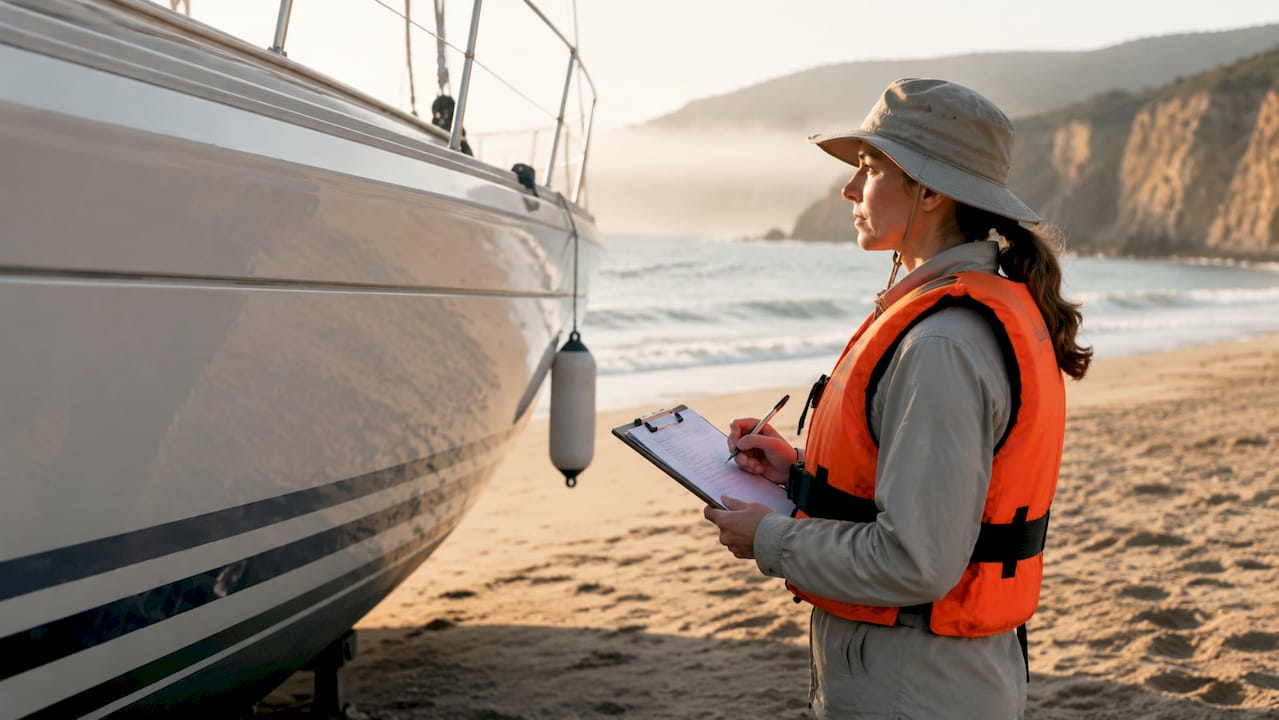
During a typical sea trial, the vessel goes through speed runs, turning maneuvers, and full equipment checks to confirm that design and operational specifications are met. You are watching propulsion, steering, navigation electronics, fuel consumption, exhaust quality, and safety equipment all at once. The goal is to verify that what the seller is claiming about the boat matches what the boat actually does.
Here is what a thorough sea trial covers:
- Propulsion system: Engine startup, throttle response, top speed, and cruising speed under load
- Steering: Responsiveness at various speeds, tracking in a straight line, and ease of maneuvering
- Navigation electronics: GPS, chartplotter, radar, VHF radio, and depth sounder functionality
- Fuel system: Consumption rate, fuel flow, and any signs of leaks or irregularities
- Exhaust: Color, smell, and volume of exhaust smoke under acceleration and at cruise
- Safety equipment: Bilge pumps, fire suppression systems, life raft releases, and emergency signals
- Structural integrity: Hull flex, unusual vibrations, water intrusion, and hatch seals under way
- Onboard systems: Air conditioning, generator, watermaker, and electrical panel behavior
Pro Tip: Bring a notepad or use your phone to record observations in real time. Memory fades fast once you are back at the dock, and written notes become your negotiation record.
For new yachts, a sea trial confirms the builder delivered what was promised. For used yachts, it reveals what years of use have done to the systems. The two experiences are very different, and the used yacht trial demands sharper attention.
Why sea trials matter more for used yacht buyers
Skipping a sea trial on a used boat creates serious financial risk because hidden mechanical defects almost never show up at the dock. An engine can look clean and start smoothly while tied up, then vibrate badly at 2,500 RPM or overheat after 20 minutes of running. You will not know until you are underway.
The types of problems that only appear on the water include propeller shaft misalignment, transmission slippage, steering play at speed, and electronics that malfunction under vibration. These are not cosmetic issues. Repairs for any one of them can run into tens of thousands of dollars. A sea trial is your one opportunity to catch these problems before they become your financial responsibility.
“Sea trials are arguably more important for used vessels due to wear on engines and electronics, which are only revealed under active operating conditions.” — RightBoat Blog
The combination of a sea trial with a professional marine survey on the same day is the gold standard for used yacht evaluation. The surveyor can observe live mechanical loads, vibration patterns, and alignment issues that are physically impossible to detect when the boat is sitting still. Scheduling both on the same day maximizes what you learn and minimizes the time the seller’s vessel is out of service.
Pro Tip: Ask your marine surveyor to be aboard for the entire sea trial, not just the dockside inspection. A qualified marine surveyor watching the engine instruments during a speed run will catch things you would never notice on your own.
The financial protection a sea trial provides is real. Buyers who skip it often discover expensive problems after closing, with no legal recourse and no negotiating leverage. Buyers who conduct thorough trials either walk away from bad deals or negotiate price reductions that reflect the actual condition of the vessel.
How to prepare for a sea trial: checklist and best practices
Preparation separates a productive sea trial from a wasted afternoon on the water. The goal is to arrive ready to evaluate, not to learn the process as you go. Your pre-purchase inspection checklist should include the sea trial as a formal step with its own preparation requirements.
Follow these steps before and during the trial:
- Schedule with weather in mind. A flat-calm day hides motion sickness, hull flex, and rough-water handling. Request conditions with at least a light chop if possible. Calm conditions are fine for electronics checks but insufficient for a full structural evaluation.
- Bring a licensed marine surveyor. This is not optional for a used yacht purchase. The surveyor’s report becomes your negotiation document and your protection if problems emerge post-sale.
- Review the vessel’s maintenance records beforehand. Know the engine hours, service history, and any prior repairs. This context helps you interpret what you observe during the trial.
- Prepare a written checklist. A comprehensive sea trial checklist covers handling, engine noise, electronic instruments, steering responsiveness, and safety equipment functionality. Print it and bring it aboard.
- Document everything in real time. Take photos and video of instrument readings, exhaust, and any unusual behavior. Experienced yacht brokers stress that documenting all faults during the trial is the foundation of post-trial negotiation.
- Ask the seller or captain to run the boat hard. A polite seller may baby the throttle to avoid revealing problems. You need to see the vessel at full throttle, in tight turns, and at idle for extended periods.
- Test every switch, button, and system. Air conditioning, entertainment systems, navigation lights, windlass, and bow thruster all need to work. If it is on the boat, it should function.
- Note your personal comfort. Visibility from the helm, noise levels in the salon, and ease of movement on deck all affect how much you will enjoy owning this boat.
Pro Tip: If the seller refuses to allow a full-throttle run or restricts what systems you can test, treat that as a serious red flag. A seller with nothing to hide welcomes a thorough trial.
How sea trial duration and scope vary by yacht type
Sea trial length and complexity scale directly with vessel size and system complexity. A 30-foot cruising sailboat and a 120-foot motor yacht require fundamentally different evaluation processes. Understanding this helps you set realistic expectations before you arrive at the dock.
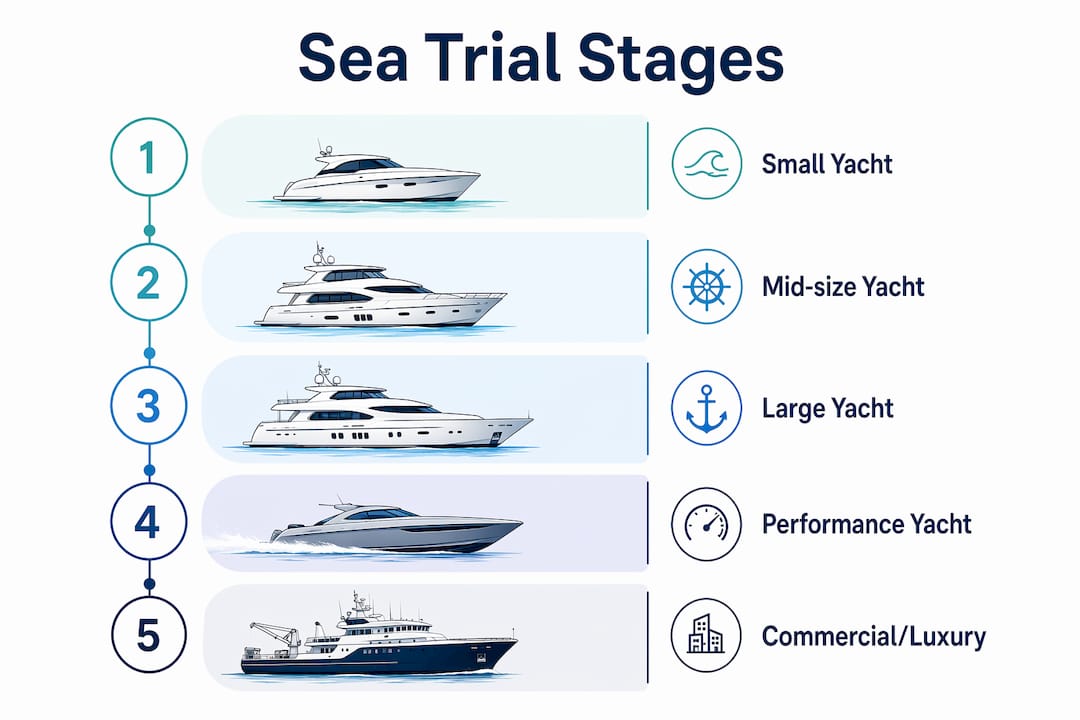
Smaller yachts are typically tested in 30–60 minutes, while large commercial and luxury vessels require 12–24 hours of continuous testing. That extended window allows engineers to run every system under sustained load, monitor temperatures and pressures over time, and conduct maneuvers like 180-degree turns that reveal handling characteristics impossible to assess in a short run.
| Vessel type | Typical trial duration | Key focus areas |
|---|---|---|
| Small cruising yacht (under 40 ft) | 30–60 minutes | Engine, steering, basic electronics |
| Mid-size performance yacht (40–60 ft) | 2–4 hours | Propulsion, navigation systems, generator |
| Large cruising yacht (60–100 ft) | 4–8 hours | All systems, stabilizers, crew systems |
| Luxury or commercial vessel (100+ ft) | 12–24 hours | Full engineering review, all redundant systems |
Performance yachts need speed runs at multiple throttle settings to verify hull design claims. Cruising yachts need extended runs to confirm fuel consumption matches the seller’s stated range. Large luxury vessels need time to test stabilizers, watermakers, generators, and complex electrical systems that simply cannot be evaluated in a short outing.
The 12–24 hour requirement for large vessels also includes maneuverability tests, propulsion checks under sustained load, and safety system verification. For buyers of larger yachts, this is not an inconvenience. It is the minimum standard for responsible due diligence.
Key Takeaways
A sea trial is the single most important step in verifying a yacht’s true condition before purchase, and skipping it on a used vessel creates financial risk that no inspection alone can prevent.
| Point | Details |
|---|---|
| Sea trial definition | A real-world operational test of a yacht’s systems, handling, and performance conducted on the water before purchase. |
| Used yacht priority | Hidden defects like engine vibration and propulsion underperformance only appear under active load, not at the dock. |
| Same-day surveyor | Schedule your marine surveyor and sea trial on the same day to catch defects impossible to detect dockside. |
| Document everything | Record faults, instrument readings, and observations in real time to build negotiation leverage after the trial. |
| Duration by size | Small yachts need 30–60 minutes; large luxury vessels require 12–24 hours for a complete systems evaluation. |
What I have learned after years of sea trials
I have been on more sea trials than I can count, and the one thing that still surprises me is how many buyers treat them as a formality. They show up, take a short ride, nod along, and sign the paperwork. That approach is how you end up with a six-figure repair bill three months after closing.
The most revealing sea trial I ever witnessed involved a beautifully maintained 58-foot motor yacht. Dockside, it was flawless. The engine room was spotless. The electronics were current. But 20 minutes into the trial at full throttle, the port engine developed a vibration that the surveyor immediately flagged as a shaft alignment issue. The repair estimate came in at $18,000. The buyer used that figure to negotiate a price reduction that more than covered the fix.
My honest advice: never skip the sea trial, even on a brand-new boat. Builders make mistakes. Systems get installed incorrectly. A new vessel with a warranty is still a vessel that needs to be tested before you accept delivery. The sea trial process for buyers is your last line of defense before the money changes hands.
Bring your surveyor. Bring your checklist. Ask hard questions. And if anything feels off on the water, trust that instinct. The right boat will pass a thorough trial with confidence.
— Jason
How Yachtingexperts can guide you through the sea trial process
Buying a yacht is one of the largest investments you will make, and the sea trial is the moment that protects that investment. At Yachtingexperts, we have guided buyers through this exact process countless times, and we know what to look for, what questions to ask, and when to walk away.

Our team connects you with trusted marine surveyors, coordinates sea trial scheduling, and stands beside you through every step of the yacht buying process. We review findings with you after the trial, help you interpret what the surveyor found, and use documented faults as negotiation tools to protect your investment. Whether you are buying your first yacht or trading up to something larger, Yachtingexperts brings the expertise and personal attention that makes this process exciting rather than stressful. Reach out to our team and let us help you find the right vessel with complete confidence.
FAQ
What is the definition of a sea trial?
A sea trial is a real-world test conducted on the water to evaluate a yacht’s propulsion, steering, navigation, and safety systems before purchase. It confirms that the vessel performs as described and reveals defects invisible during dockside inspection.
How long does a sea trial take?
Duration depends on vessel size. Smaller yachts typically require 30–60 minutes, while large luxury or commercial vessels need 12–24 hours of continuous testing to evaluate all systems under load.
Do I need a sea trial for a new yacht?
Yes. Even new yachts can have installation errors, misaligned components, or systems that underperform. A sea trial before accepting delivery is the buyer’s best protection regardless of the vessel’s age.
What should I bring to a sea trial?
Bring a licensed marine surveyor, a written checklist covering all major systems, and a way to document observations through photos and video. Written records of any faults become your negotiation leverage after the trial.
Can a sea trial be combined with a marine survey?
Scheduling both on the same day is the recommended approach. The surveyor can observe live mechanical loads and vibration patterns during the trial, revealing defects that a static inspection alone cannot detect.
Recommended
Request A Call
Featured Listings

2027 Canados
100
Miami Florida

2015 Maiora
$3,750,000
90
Miami Florida

2027 Canados
57
Miami Florida

2019 Silent-Yachts Fair Dinkum
$1,599,000
55
Fort Lauderdale Florida

2026 Canados
49
Miami Florida

2026 Buddy Davis
47
Miami Florida

2020 Grady-White No Name
$610,000
45
Hallandale Beach Florida

2020 Viking Huckleberry
$1,495,000
44
Fort Lauderdale Florida

2027 Canados
43
Miami Florida

2021 Intrepid Dream Faster
$730,000
40
Coral Gables Florida

2016 Edgewater
$299,000
37
Miami, Florida

2022 Avid
$56,900
23
Stuart Florida
Get your yacht value Estimate
"*" indicates required fields