

A marine survey is a detailed technical inspection performed by a qualified professional to evaluate the condition, safety, and market value of a boat or yacht before purchase or sale. Think of it as the nautical equivalent of a home inspection. Survey reports typically span 15–30+ pages, packed with photos, documented findings, and maintenance recommendations. Buyers use them to negotiate price, meet insurance requirements, and avoid costly surprises. Sellers use them to price confidently and build buyer trust. Whether you are stepping aboard your first yacht or trading up to something bigger, understanding the marine survey process is one of the smartest moves you can make.
What is a marine survey, and why does it matter?
A marine survey is defined as a professional, independent inspection of a vessel’s physical condition, structural integrity, and safety systems. The industry also refers to this process as a “vessel survey” or “boat survey,” depending on context. Marine surveys serve multiple purposes including purchase negotiation, insurance underwriting, damage assessment, and refit planning. The type of survey you commission defines how deep the inspection goes.
The marine survey importance cannot be overstated for high-value transactions. Lenders and insurers routinely require a current survey before approving financing or coverage. A survey gives you an objective, third-party view of exactly what you are buying or selling. That objectivity is what makes it so powerful at the negotiating table.

Marine surveying as a practice protects the interests of buyers, sellers, insurers, and lenders alike. It reduces disputes, supports insurance claims, and creates a documented record of a vessel’s condition at a specific point in time. For anyone making a six or seven-figure purchase, that documentation is not optional. It is the foundation of a sound transaction.
What are the main types of marine surveys?
Types of marine surveys fall into four primary categories, each serving a distinct purpose and requiring a different inspection scope.
| Survey type | Purpose | Typical use case | Report depth |
|---|---|---|---|
| Pre-purchase | Full condition and value assessment | Buying a used vessel | Most thorough, 15–30+ pages |
| Insurance/condition appraisal | Risk and value assessment for underwriting | Renewing or obtaining coverage | Moderate depth |
| Damage survey | Document and assess specific damage | Insurance claims, accident recovery | Focused on damage area |
| Class/statutory compliance | Verify regulatory and classification standards | Commercial vessels, flag state compliance | Technical and regulatory |
The pre-purchase survey is the most comprehensive option. It covers hull structure, mechanical systems, electrical systems, safety gear, and documentation. An insurance survey focuses primarily on current market value and safety risk, so it covers less ground. A damage survey zeroes in on a specific incident and is usually commissioned by an insurer. Class and statutory surveys apply mainly to commercial vessels and confirm compliance with flag state or classification society rules.
Pro Tip: Always tell your surveyor the exact purpose of the survey before they begin. A surveyor briefed for an insurance renewal will inspect differently than one briefed for a pre-purchase evaluation. Getting the brief right upfront saves time and prevents gaps in the report.
What does a typical marine survey inspection cover?
A thorough pre-purchase survey covers every major system on the vessel. Hull and deck integrity checks use moisture meters and percussion tests to detect delamination, osmotic blistering, and hidden damage. Surveyors tap the hull and deck with a hammer and listen for changes in tone that signal voids or soft spots. This technique catches problems that look fine to the naked eye.
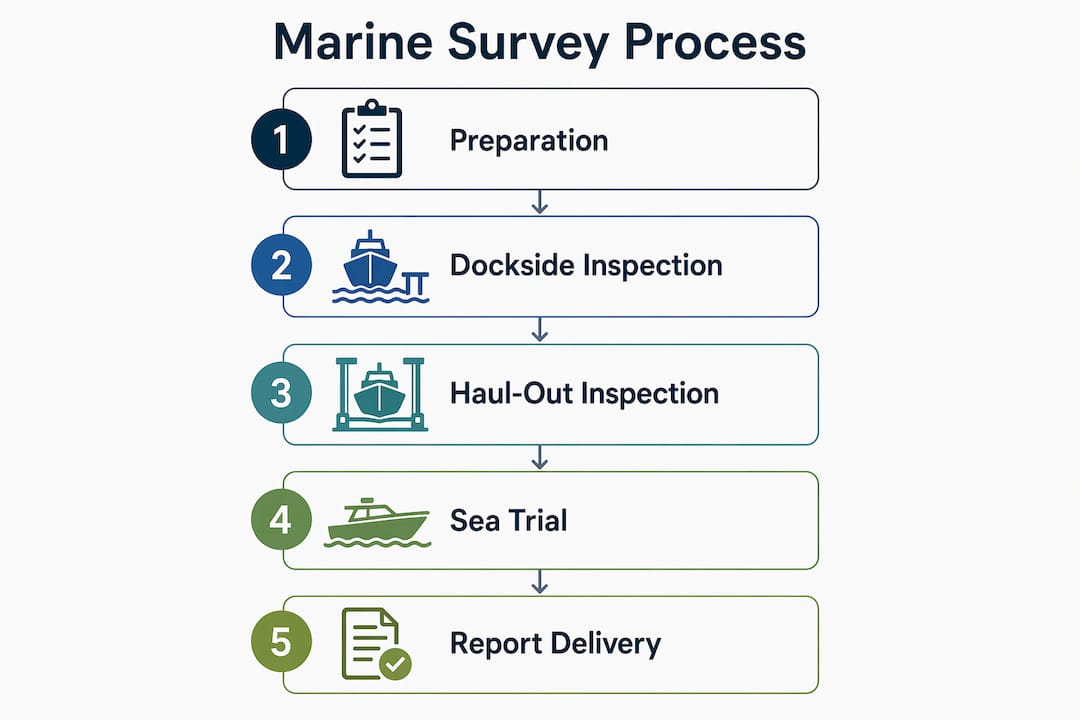
The inspection also covers propulsion and running gear, including the shaft, propeller, rudder, and cutlass bearing. Electrical systems, plumbing, bilge pumps, through-hulls, and safety equipment all get reviewed. The surveyor verifies documentation such as the hull identification number, title, and any existing liens. Navigation electronics and fire suppression systems are checked for proper installation and function.
A complete pre-purchase survey runs through three distinct phases:
- Dockside inspection: The surveyor examines the vessel while it is in the water, checking above-waterline systems, interior spaces, and all accessible equipment.
- Haul-out: The boat is lifted from the water so the surveyor can inspect the hull bottom, keel attachment, through-hulls, and running gear directly.
- Sea trial: The vessel is run under power to test propulsion, steering, electronics, and overall performance at operating loads.
Your marine survey checklist should confirm that all three phases are included before you sign the engagement letter. Many buyers skip the haul-out to save money and later regret it when osmotic blistering or a cracked keel shows up after closing.
Pro Tip: Be present for all three phases. Real-time explanation by the surveyor during the inspection gives you context and nuance that no written report can fully capture. You will leave with a much clearer picture of the vessel’s actual condition.
One important clarification: surveyors are generally not mechanics. Engine compression tests and detailed mechanical evaluations require a certified marine mechanic. Your surveyor will flag engine concerns and recommend a separate mechanical inspection when needed. Budget for that additional service on any vessel with older or high-hour engines.
How can marine survey reports be used by buyers and sellers?
Survey reports act as maintenance roadmaps and powerful negotiating tools. Experienced buyers do not treat them as simple pass/fail checklists. They treat them as a prioritized list of leverage points and future maintenance costs.
Here is how buyers and sellers each benefit from a completed survey:
- Price negotiation: Buyers use documented deficiencies to request a price reduction or ask the seller to complete repairs before closing. A $3,000 bottom job or a failed bilge pump becomes a concrete, documented item rather than a verbal complaint.
- Insurance and financing: Most marine lenders and insurers require a survey completed within the past 12 to 24 months. A clean survey accelerates approval and can lower your insurance premium.
- Maintenance planning: The report gives new owners a prioritized list of items to address in year one, year two, and beyond. That roadmap prevents deferred maintenance from compounding into major failures.
- Seller preparation: Sellers who commission a pre-listing survey can price their vessel accurately, address known issues proactively, and present buyers with documentation that builds confidence.
- Risk reduction: Knowing the vessel’s condition before you own it eliminates the most common source of post-purchase disputes and buyer’s remorse.
The role of a surveyor in boat buying extends well beyond writing a report. The surveyor’s findings shape the entire final negotiation. Buyers who understand how to read and use that report walk into closing with a clear advantage.
What do marine surveyors cost, and how do you hire the right one?
Marine surveys cost approximately $20 to $25 per foot of vessel length for a pre-purchase inspection. That means a 50-foot yacht typically runs $1,000 to $1,250 for the survey alone, before haul-out and sea trial fees. Insurance surveys cost significantly less because they cover less ground.
The marine surveying profession is largely unregulated, which means surveyor quality varies widely. Professional accreditation from organizations like the Society of Accredited Marine Surveyors (SAMS) or the National Association of Marine Surveyors (NAMS) is the clearest quality indicator available. Always verify credentials before hiring.
Key factors to confirm before engaging a surveyor:
- Accreditation: Look for SAMS or NAMS membership as a baseline credential.
- Errors and omissions insurance: This confirms the surveyor carries professional liability coverage. It protects you if the report misses something significant.
- Vessel type experience: A surveyor who specializes in fiberglass monohulls may not be the right choice for a steel-hulled motor yacht or a multihull.
- Survey scope in writing: Get a written engagement letter that specifies which phases are included and what systems will be covered.
- Engine testing clarity: Confirm upfront whether engine testing is included or whether you need to hire a separate marine mechanic.
Pro Tip: Ask the surveyor directly: “Do you carry errors and omissions insurance?” A qualified professional will answer yes without hesitation. If they hesitate or deflect, keep looking.
The Florida buyer’s guide to yacht surveys covers regional considerations that affect surveyor selection and haul-out logistics, particularly for buyers shopping in warm-water markets where osmotic blistering is more common.
Key takeaways
A marine survey is the single most important due diligence step in any boat or yacht transaction, covering condition, safety, value, and negotiation leverage in one professional report.
| Point | Details |
|---|---|
| Marine survey definition | A professional inspection assessing vessel condition, safety, and market value before purchase or sale. |
| Four survey types | Pre-purchase, insurance, damage, and class surveys each serve a different purpose and scope. |
| Three inspection phases | Dockside, haul-out, and sea trial phases together give the most complete picture of a vessel. |
| Reports as negotiating tools | Use documented deficiencies to adjust price, request repairs, or plan post-purchase maintenance. |
| Verify surveyor credentials | Confirm SAMS or NAMS accreditation and errors and omissions insurance before hiring anyone. |
Why I tell every buyer to read the survey before the price
Here is something I have seen play out more times than I can count: a buyer gets the survey report, skims it for a pass/fail signal, and misses the three items on page 14 that would have saved them $15,000 in year one. The report is not a verdict. It is a conversation starter.
The most valuable thing a survey does is give you language. Suddenly you are not haggling over feelings about the boat. You are pointing to a documented finding on page 8 and asking the seller to address it. That shift in dynamic is enormous. Sellers who have done their own pre-listing survey are equally prepared, and those deals tend to close faster and cleaner because both sides are working from the same facts.
I also think buyers underestimate the value of being physically present during the haul-out. Standing under a 50-foot hull while a surveyor points to a stress crack near the keel is a completely different experience from reading about it later. You ask better questions. You understand the severity. You leave with judgment, not just data.
Using a yacht expert in Florida means having someone in your corner who knows how to read a survey, interpret the findings in the context of current market conditions, and use that information to protect your investment. That combination of survey knowledge and market knowledge is where real value gets created.
— Jason
How Yachtingexperts helps you use surveys to buy and sell smarter
At Yachtingexperts, we work with buyers and sellers every day who have a survey report in hand and are not sure what to do with it next. That is exactly where our team adds the most value.

We help you interpret survey findings in the context of current market pricing, build a negotiation strategy around documented deficiencies, and connect you with accredited surveyors who specialize in your vessel type. Whether you are buying your first yacht or maximizing your return on a sale, our personalized approach means you never face that process alone. Our team brings the market insight and transaction experience to turn a survey report into a real financial advantage. Reach out to Yachtingexperts and let us help you make your next move with confidence.
FAQ
What is a marine survey in simple terms?
A marine survey is a professional inspection of a boat or yacht that evaluates its condition, safety, and market value. It is typically required for insurance, financing, and pre-purchase due diligence.
How long does a marine survey take?
A full pre-purchase survey including dockside inspection, haul-out, and sea trial typically takes one full day for a mid-size vessel. Larger yachts may require two days.
Do I need a marine survey to get boat insurance?
Most insurers require a current survey, typically completed within the past 12 to 24 months, before issuing or renewing a policy on a vessel above a certain value or age.
Can a seller use a marine survey to help sell their boat?
Yes. A pre-listing survey lets sellers price accurately, address known issues proactively, and present buyers with documented evidence of the vessel’s condition, which builds buyer confidence and speeds up closing.
What is the difference between a pre-purchase and an insurance survey?
A pre-purchase survey is the most thorough type, covering all systems, structure, and documentation in detail. An insurance survey focuses primarily on current market value and safety risk, and costs significantly less because it covers less ground.
Recommended
Request A Call
Featured Listings

2027 Canados
100
Miami Florida

2015 Maiora
$3,750,000
90
Miami Florida

2027 Canados
57
Miami Florida

2019 Silent-Yachts Fair Dinkum
$1,599,000
55
Fort Lauderdale Florida

2026 Canados
49
Miami Florida

2026 Buddy Davis
47
Miami Florida

2020 Grady-White No Name
$610,000
45
Hallandale Beach Florida

2020 Viking Huckleberry
$1,495,000
44
Fort Lauderdale Florida

2027 Canados
43
Miami Florida

2021 Intrepid Dream Faster
$730,000
40
Coral Gables Florida

2016 Edgewater
$299,000
37
Miami, Florida

2022 Avid
$56,900
23
Stuart Florida
Get your yacht value Estimate
"*" indicates required fields