

A day yacht is defined as a recreational vessel under 40 feet designed for short daytime outings of 4 to 10 hours, focused on leisure activities like swimming, sightseeing, and socializing. Most day yachts measure between 19 and 30 feet, though some day-charter vessels reach up to 40 feet. The industry term most professionals use is “day cruiser,” and you will hear both terms used interchangeably on the water. If you have been wondering what is a day yacht and whether one fits your lifestyle, the answer comes down to one thing: you want the water, without the overnight commitment.
What is a day yacht, and how is it defined?
A day yacht, or day cruiser, is a boat built specifically for short, self-contained outings. It carries no expectation of overnight stays and no need for a full galley or sleeping quarters. Day cruisers typically range from 19 to 28 feet, while cabin cruisers, which are designed for overnight comfort, usually measure 25 to 35 feet. That size difference matters because it shapes everything from handling to cost.
The defining characteristic is intentional simplicity. A day yacht is designed to get you on the water fast, keep you comfortable for a full day, and get you home without drama. That philosophy shapes every design decision, from the open deck layout to the minimal below-deck space.
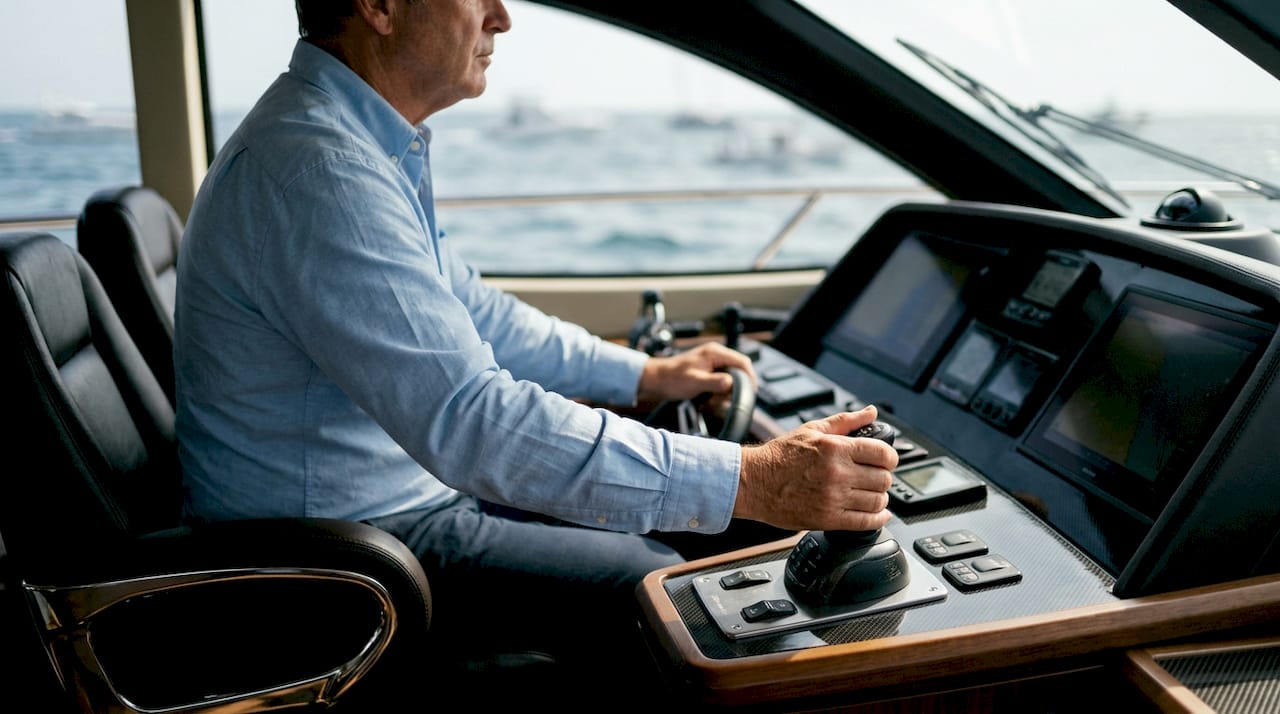
How day yachts differ from cabin cruisers
Day cruisers have a small cabin for changing or short naps, but they are not built for overnight comfort the way cabin cruisers are. Cabin cruisers include full sleeping berths, a proper galley, and a head with a shower. Day yachts skip most of that in favor of more deck space, better sun exposure, and easier single-handed operation.
Choosing between the two comes down to one honest question: do you ever plan to sleep aboard? If the answer is rarely or never, a day yacht gives you more usable space for the money.
What features do day yachts typically include?
Day yachts prioritize deck space and comfort for active use. The layout centers on passengers, not crew quarters or storage. Here is what you will find on most models:
- Open or semi-open hull design with wraparound seating and a sun deck
- A small cuddy cabin for shade, changing, or a quick rest
- A helm station designed for easy solo or minimal-crew operation
- Built-in coolers or a small wet bar for day-use entertaining
- Swim platforms and boarding ladders for easy water access
- Rod holders and storage on fishing-oriented models
Pro Tip: Look for a model with a walk-around deck. It makes moving from bow to stern safer and easier, especially when anchoring solo.
The design of day yachts optimizes for single-handed operation, which means joystick docking systems, bow thrusters, and simple engine controls are common on newer models. That accessibility is a major reason first-time boat owners gravitate toward this category.
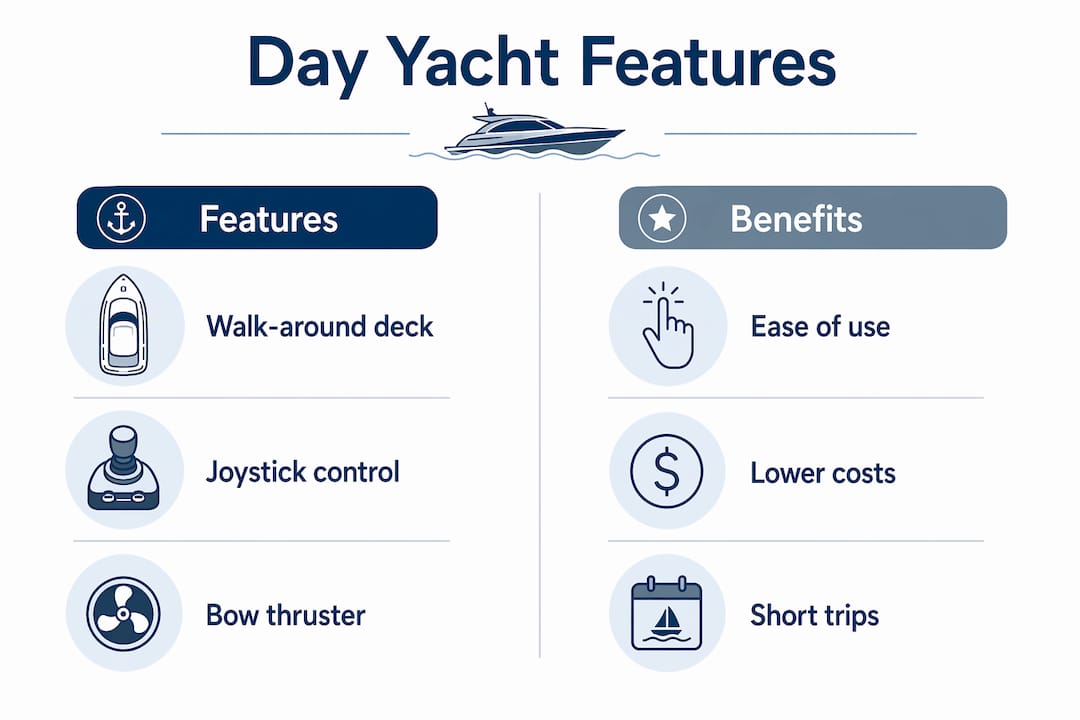
Size and layout variations
Day yachts come in a wide range of configurations depending on their primary purpose.
| Style | Typical Length | Best For |
|---|---|---|
| Open bowrider | 19–24 feet | Watersports, family outings |
| Center console | 20–28 feet | Fishing, coastal cruising |
| Cuddy cabin cruiser | 22–28 feet | Day trips with shade and storage |
| Express cruiser | 28–40 feet | Longer day runs, entertaining |
Each style trades off differently between speed, comfort, and capacity. A bowrider maximizes seating. A center console maximizes fishability. An express cruiser maximizes range and onboard comfort for a full day at sea.
What are the benefits of owning or renting a day yacht?
Day yachts emphasize simplicity and spontaneity, allowing owners to leave the dock immediately without the logistical planning that overnight cruises demand. That immediacy is the core appeal. You decide at 9 AM that you want to be on the water by noon, and you can make that happen.
“Day yachts represent a lifestyle choice prioritizing immediacy, joy, and ease on the water, appealing to those who prefer short, simple outings over complex cruising.”
The practical benefits stack up quickly:
- Lower operating costs compared to larger yachts, since fuel burn scales directly with size and weight
- Easier maintenance because smaller vessels have fewer systems to service and inspect
- Accessible storage at most marinas, with more slip availability for sub-30-foot boats
- Solo or two-person operation without needing a hired captain for most outings
- Flexibility to trailer the boat if you want to explore different waterways
Maintenance and operating costs rise disproportionately with yacht size. A day yacht in the 22 to 28-foot range keeps those costs predictable and manageable, which is why this category attracts both first-time buyers and experienced boaters who want a low-effort second vessel.
How to choose, rent, or buy a day yacht
Choosing the right day yacht starts with honest self-assessment about how you plan to use it. Rental is the smartest first step for anyone who has not owned a boat before. It lets you test different hull styles and sizes before committing to a purchase.
Rental cost expectations
Day charter rentals in the 12 to 25-meter range cost $2,500 to $25,000 for 6 to 10-hour charters that include crew, fuel, and basic beverages. Smaller, non-crewed day boats rent for $300 to $450 per day in most markets. Understanding day charters versus week charters helps you decide whether a single-day experience or a longer trip better suits your goals.
Pro Tip: Charter a boat in the size range you are considering buying. One full day on the water reveals handling quirks, space limitations, and comfort levels that no showroom visit can replicate.
Buying process: what to know before you sign
Follow these steps when purchasing a day yacht:
- Set your budget including all costs. Purchase price is only the beginning. Factor in slip fees, insurance, maintenance, and fuel.
- Secure marina slip availability before you buy. Slip availability is a critical, often-overlooked factor in owning a day yacht. Confirm dock space before you close the deal.
- Choose a size that fits your actual use. First-time buyers often overestimate required size; choosing a vessel 5 to 10 feet smaller tends to increase satisfaction and reduce costs.
- Commission a professional marine survey. Marine surveys cost $25 to $35 per foot and confirm structural and mechanical integrity. Always make your offer conditional on a survey and sea trial.
- Use an accredited surveyor. SAMS or NAMS-accredited surveyors are recommended over seller-recommended inspectors to avoid conflicts of interest. Learn more about why surveys matter before you commit.
- Arrange financing early. Yacht financing typically requires a 10 to 20% down payment with loan terms of 10 to 20 years. Review your marine financing options before you make an offer.
Day charters are optimized for short, event-driven experiences rather than extended vacations. If you find yourself chartering more than six times a year, the economics of ownership start to make sense.
What can you do on a day yacht outing?
A typical day yacht outing runs 4 to 8 hours and covers a mix of cruising, anchoring, and water activities. The format is flexible by design. You set the pace.
Popular activities on day yacht outings include:
- Swimming and snorkeling at anchor in calm coves or near sandbars
- Watersports including tubing, wakeboarding, and paddleboarding off the swim platform
- Coastal sightseeing along shorelines, inlets, and waterfront communities
- Picnicking and entertaining with friends or family in a private, open-air setting
- Fishing on center-console models rigged for inshore or nearshore use
- Sunset cruises that turn a late afternoon into a full social event
The social dynamic on a day yacht differs sharply from a week-long charter. There is no adjustment period, no cabin assignments, and no schedule to negotiate. Everyone arrives, the lines come off, and the day begins. That simplicity creates a relaxed, high-energy atmosphere that longer charters rarely match in the first 24 hours.
Day yacht outings work especially well for milestone celebrations, corporate outings, and family reunions where the goal is shared experience rather than destination. The boat becomes the venue, and the water does the rest.
Key Takeaways
A day yacht is the most accessible entry point into recreational boating, combining manageable size, lower costs, and immediate usability for anyone who wants the water without the complexity of overnight cruising.
| Point | Details |
|---|---|
| Core definition | A day yacht is a recreational vessel under 40 feet built for 4 to 10-hour leisure outings. |
| Size sweet spot | Most day yachts measure 19 to 30 feet, balancing comfort, cost, and easy handling. |
| Rental before buying | Day charters from $300 to $450 per day let you test hull styles before committing to purchase. |
| Survey before signing | Always commission a SAMS or NAMS-accredited marine survey before finalizing any purchase. |
| Size discipline pays off | Choosing a vessel 5 to 10 feet smaller than you think you need typically increases satisfaction and cuts costs. |
Why day yachts are the most underrated choice in boating
I have watched a lot of first-time buyers walk into the process convinced they need a 40-foot express cruiser with a full cabin, a generator, and a watermaker. Six months later, half of them tell me the same thing: they use the boat for day trips, and the extra size just means extra bills.
The day yacht category gets overlooked because it does not photograph as dramatically as a superyacht. But the people who own them tend to use them constantly, and that is the real measure of a good boat. A vessel you take out every weekend beats a vessel you take out twice a year every time.
What I find genuinely exciting about this category right now is how much the design has improved. Modern day yachts in the 25 to 35-foot range offer joystick docking, digital switching, and sun deck layouts that rival boats twice their size from a decade ago. You get real comfort without real complexity.
My honest advice: if you are new to boating, start with a day yacht. If you are an experienced boater who wants a second vessel for spontaneous use, a day yacht is almost always the right answer. The water is better when getting there is easy.
— Jason
Ready to find the right day yacht for you?
At Yachtingexperts, we work with buyers at every stage, from first-time renters trying to figure out what size feels right, to experienced boaters ready to move up. Our team handles vessel sourcing, private viewings, survey coordination, and financing introductions so you never feel like you are figuring it out alone.

Whether you want to charter a day yacht before committing to a purchase, or you are ready to start the buying process today, we are here to make it straightforward. Reach out to our team at Yachtingexperts for a personalized consultation. We will match you with the right vessel, at the right price, with zero guesswork on your end.
FAQ
What is the standard size of a day yacht?
Most day yachts measure between 19 and 30 feet, though day-charter vessels can reach up to 40 feet. Size depends on intended use, passenger capacity, and whether you plan to trailer or keep the boat at a marina slip.
How much does it cost to rent a day yacht?
Smaller, non-crewed day boats rent for $300 to $450 per day in most markets. Larger crewed day charters in the 12 to 25-meter range cost $2,500 to $25,000 for a 6 to 10-hour outing including crew, fuel, and beverages.
What is the difference between a day yacht and a cabin cruiser?
A day yacht has a small cuddy cabin for changing or napping but is not designed for overnight stays. A cabin cruiser includes full sleeping berths, a galley, and a head, making it suited for multi-day trips.
Do I need a captain’s license to operate a day yacht?
Licensing requirements vary by state and vessel size. Many day yachts under 26 feet can be operated without a captain’s license in U.S. waters, but a boating safety certification is recommended and required in several states.
Is a day yacht a good first boat to buy?
A day yacht is one of the best first purchases in recreational boating. Smaller size means lower maintenance costs, easier handling, and more available marina slips, all of which reduce the learning curve for new owners.
Recommended
Request A Call
Featured Listings

2027 Canados
100
Miami Florida

2015 Maiora
$3,750,000
90
Miami Florida

2027 Canados
57
Miami Florida

2019 Silent-Yachts Fair Dinkum
$1,599,000
55
Fort Lauderdale Florida

2026 Canados
49
Miami Florida

2026 Buddy Davis
47
Miami Florida

2020 Grady-White No Name
$610,000
45
Hallandale Beach Florida

2020 Viking Huckleberry
$1,495,000
44
Fort Lauderdale Florida

2027 Canados
43
Miami Florida

2021 Intrepid Dream Faster
$730,000
40
Coral Gables Florida

2016 Edgewater
$299,000
37
Miami, Florida

2022 Avid
$56,900
23
Stuart Florida
Get your yacht value Estimate
"*" indicates required fields