

A custom sportfisher is a purpose-built, high-performance fishing yacht designed from the keel up to match one owner’s exact fishing style, performance expectations, and lifestyle preferences. Unlike production models rolled off an assembly line, these vessels are handcrafted by specialist builders like Jarrett Bay Boatworks, where performance, layout, and structural integrity are treated as a single unified system rather than separate checkboxes. The result is a boat that feels like an extension of the angler who commissioned it. If you’ve ever wondered what separates a truly elite offshore fishing machine from a capable but generic production boat, the answer starts here.
What is a custom sportfisher and how is it defined?
A custom sportfisher is the industry’s term for a one-off or semi-custom fishing yacht built to an individual owner’s specifications, typically in the 50- to 90-foot range. The phrase “custom sportfisher” and the broader category of “custom sportfish yacht” are used interchangeably by builders, brokers, and serious anglers throughout the American offshore fishing world.
What separates this category from everything else is the degree of owner involvement in the design process. You don’t pick from a brochure. You work directly with a naval architect and the build team to determine hull length, propulsion configuration, cockpit layout, cabin arrangement, electronics placement, and finish materials. Every decision traces back to how you fish and where you fish. Builders like Jarrett Bay have built their entire reputation on this philosophy, producing vessels that combine performance and craftsmanship as a single engineered outcome rather than a compromise between the two.
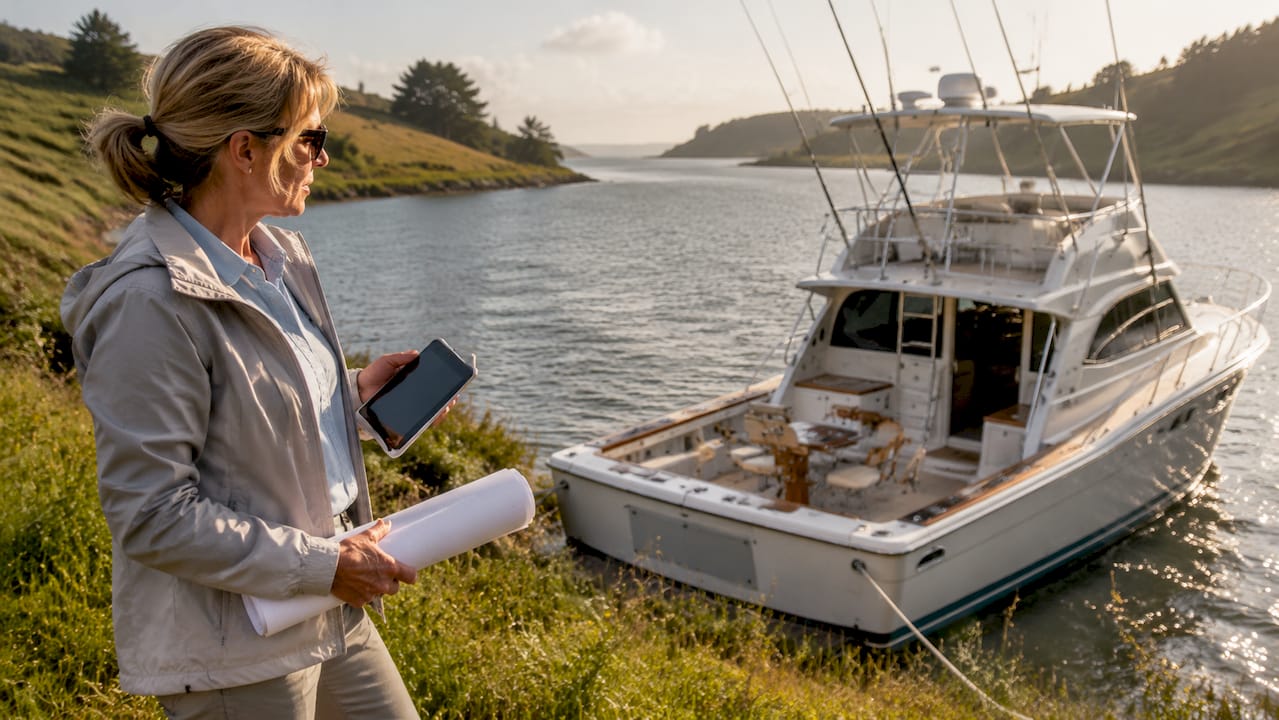
What are the distinctive features and design elements of a custom sportfisher?
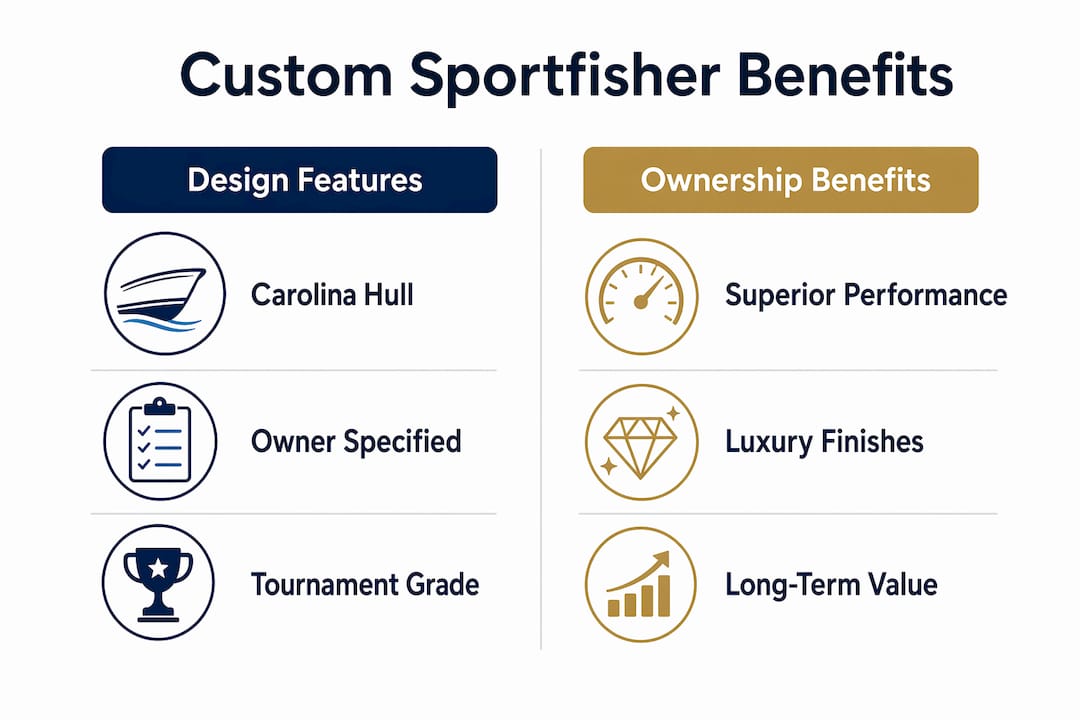
The defining physical characteristic of most American custom sportfishers is the Carolina hull. This deep-V design with a sharp entry and flared bow cuts through offshore chop efficiently, delivering a drier, more controlled ride at speed. It’s the reason boats built in North Carolina’s Outer Banks region became the gold standard for blue-water fishing.
Construction method matters just as much as hull shape. Cold-molded epoxy composite construction layers marine plywood, epoxy resin, and fiberglass sheathing to create a hull that is both lighter and stiffer than conventional fiberglass layup. Less weight means faster acceleration, better fuel efficiency, and more responsive handling in following seas. These are not marginal gains. They translate directly into more fishing hours and safer offshore passages.
Custom sportfisher features that owners typically specify include:
- Cockpit configuration: Rod holders, live wells, fish boxes, outrigger placement, and fighting chair positioning are all owner-specified
- Cabin layout: Stateroom count, galley size, salon arrangement, and head placement are designed around the owner’s crew and hospitality preferences
- Electronics and helm: Garmin, Furuno, or Simrad multifunction displays, radar, sonar, and autopilot systems are integrated into a custom helm station built for the owner’s workflow
- Propulsion: Twin or triple diesel inboards, shaft drives, or pod drives are selected based on range, speed targets, and docking preferences
- Luxury finishes: Teak joinery, custom upholstery, climate control, and entertainment systems bring superyacht-level comfort to an offshore fishing platform
The Jarrett Bay 68’ Renegade is a textbook example. It combines luxury finishes with tournament-grade fishing systems, supporting both long-range expeditions and owner hospitality without sacrificing cockpit functionality.
Pro Tip: When specifying your cockpit layout, think in terms of fishing scenarios first. Map out exactly where you stand during a blue marlin fight, where your mate needs to move, and where the gaffs live. Build the cockpit around that choreography, not around what looks good in a rendering.
How does a custom sportfisher compare to production sportfishing boats?
The gap between a custom sportfisher and a production sportfishing boat is wider than most buyers expect before they’ve stood on both. Here’s how the two categories stack up across the factors that matter most to serious anglers.
| Factor | Custom sportfisher | Production sportfisher |
|---|---|---|
| Hull construction | Cold-molded epoxy composite, owner-specified layup | Standard fiberglass layup, manufacturer-standardized |
| Weight and speed | Lighter hull, cruise speeds of 35 to 40 knots and top speeds exceeding 40 knots | Heavier construction, typically 28 to 34 knots cruise |
| Layout flexibility | Fully owner-driven from day one | Choose from 2 to 4 pre-set floor plans |
| Build timeline | 18 to 36 months from contract to delivery | 3 to 12 months, often from inventory |
| Resale value | Strong retention due to craftsmanship and rarity | Depreciation follows production boat norms |
| Entry cost | $1.5M to $8M+ depending on size and spec | $300K to $2M for comparable LOA |
Production boats built by Viking Yachts or Hatteras Yachts are genuinely capable offshore platforms. The honest distinction is that production models tend to be heavier, which affects fuel burn and acceleration in ways that matter on a 60-mile offshore run. A custom boat built to your weight budget and speed target simply performs differently. That performance gap widens as sea conditions deteriorate.
What are the main benefits of owning a custom sportfisher?
The benefits of custom sportfishers go well beyond bragging rights. Owners who have made the transition from production to custom boats consistently point to the same advantages.
- Fishing performance matched to your style. Custom sportfish boats can be tailored for offshore big game, inshore species, or mixed-use fishing, with rod storage, live well capacity, and deck space optimized for the species you actually target.
- Extended offshore range and confidence. With cruise speeds in the mid-to-high 30-knot range, you reach the canyon faster, spend more time on the water, and get home ahead of weather. That speed advantage is a genuine safety asset.
- Superior build longevity. Cold-molded construction produces a hull that resists osmotic blistering and fatigue cracking better than standard fiberglass over a 20-plus-year ownership cycle.
- Owner-driven layout. You decide where every element is tailored, from cockpit arrangement to electronics placement. No compromises forced by a production mold.
- Pride of ownership and lifestyle value. A custom sportfisher is a statement about how seriously you take offshore fishing. It attracts fishing partners, tournament invitations, and a community of like-minded owners that production boat ownership rarely generates.
For buyers who also want to understand the full spectrum of sportfishing options before committing, the sportfishing boat buying guide at Yachtingexperts covers the decision framework in detail.
What to consider when designing and ordering a custom sportfisher
Ordering a custom sportfisher is one of the most rewarding purchases you can make. It is also one of the most complex. Getting the design right requires honest answers to questions most buyers haven’t thought through before the first meeting with a builder.
Key considerations include:
- Hull length and range: A 58-footer fishes the Gulf Stream comfortably. A 72-footer opens up Bermuda runs and extended Caribbean seasons. Choose length based on where you actually fish, not where you hope to fish someday.
- Propulsion system: Triple 1,800-horsepower diesels deliver exhilarating speed but carry significant fuel burn and maintenance costs. Twin 1,350-horsepower engines often hit the same practical fishing speeds with lower operating overhead.
- Builder expertise and lifecycle support: Full lifecycle support from builders is a critical factor. These yachts must be serviced by specialists to maintain peak performance. Ask every builder candidate how they support boats five and ten years after delivery.
- Luxury versus function balance: Owners should weigh the tradeoff between luxury finishes and rugged fishing functionality carefully. A teak cockpit sole looks spectacular at the dock. It requires refinishing every season and becomes slippery when wet. Non-skid composite may serve you better.
- Electronics and systems integration: Specify your electronics package early. Retrofitting a custom helm station with additional displays or a new sonar system after delivery is expensive and disruptive.
- Hidden operating costs: Advanced equipment like gyro stabilizers and watermakers requires expert servicing. Annual upkeep costs can be substantial beyond the purchase price. Budget for these before you sign the build contract.
Pro Tip: Visit the builder’s yard during an active build, not just during a boat show appearance. Watch how the team works, ask about their quality control process, and talk to owners of boats they delivered three to five years ago. That conversation will tell you more than any brochure.
For buyers drawn to the lifestyle dimension of custom sportfisher ownership, waterfront living on Amelia Island offers a compelling example of how prime coastal real estate and serious sportfishing culture intersect.
How to maintain and support a custom sportfisher during ownership
Owning a custom sportfisher is not a passive experience. These vessels demand attentive, expert-level maintenance to preserve both performance and value. The systems aboard a 65-foot custom sportfisher, including precision diesel engines, gyro stabilizers, watermakers, advanced electronics, and climate control, are more complex than anything found on a production boat of comparable size.
Builder relationship matters enormously here. Jarrett Bay Boatworks, for example, structures its business around specialized service and builder support throughout the vessel’s lifespan. That ongoing relationship means the people who built your boat are also the people diagnosing problems and sourcing solutions. That continuity has real value when a stabilizer controller fails 200 miles offshore.
Hidden operating expenses, including maintenance on precision engines, advanced electronics, and stabilizers, can surpass initial expectations. A realistic annual maintenance budget for a 60-foot custom sportfisher runs between 10% and 15% of the vessel’s replacement value. Plan for that number before you take delivery, not after your first haul-out bill arrives.
The practical advice here is straightforward. Choose a builder with a documented service infrastructure, not just a talented build team. Confirm that parts for your propulsion and stabilization systems are available domestically. And schedule preventive maintenance on a fixed calendar rather than waiting for symptoms to appear.
Key takeaways
A custom sportfisher delivers superior offshore performance, owner-specific design, and long-term build quality that production boats cannot replicate, but it demands serious financial planning and a committed builder relationship to own successfully.
| Point | Details |
|---|---|
| Definition and category | A custom sportfisher is a one-off fishing yacht built to individual owner specifications, not a production model. |
| Construction advantage | Cold-molded epoxy composite hulls are lighter and stiffer, enabling cruise speeds of 35 to 40 knots. |
| Customization depth | Every element from cockpit layout to electronics placement is owner-specified to match fishing style and range goals. |
| Ownership cost reality | Annual maintenance can reach 10 to 15% of replacement value; budget for this before signing a build contract. |
| Builder relationship | Full lifecycle support from the original builder is the single most important factor in long-term ownership satisfaction. |
Why a custom sportfisher is the most honest fishing investment you can make
I’ve spent years working with buyers at every level of the sportfishing market, from first-time 35-foot center console purchases to multi-million-dollar custom builds. The buyers who end up most satisfied are almost always the ones who went custom, but not for the reasons you might expect.
It’s not the speed, though the speed is genuinely thrilling. It’s not the finishes, though a well-appointed custom interior is hard to walk away from. The real satisfaction comes from the process itself. When you sit down with a builder and work through every decision, you develop a relationship with your boat before it’s even built. You understand why every system is where it is. You know the tradeoffs you made and why you made them.
The caution I always share is this: never judge a custom sportfisher by promotional materials alone. True value is measured by offshore handling in 8-foot seas, fuel efficiency on a 120-mile run, and how quickly your builder answers the phone two years after delivery. I’ve seen beautiful boats that fell apart on that last test. The builders who earn long-term loyalty are the ones who treat the delivery date as the beginning of the relationship, not the end of it.
Customization transforms fishing from a hobby into a deeply personal lifestyle. That’s not marketing language. It’s what I hear from owners who’ve done it.
— Jason
Ready to find your custom sportfisher?
At Yachtingexperts, we work with serious anglers and luxury yacht buyers who want more than a transaction. We hold your hand through every stage of the custom sportfisher process, from identifying the right builder and reviewing build contracts to sea trials and delivery.

Whether you’re commissioning your first custom build or trading up from a production boat, our team brings the market insight and personal attention your investment deserves. Explore our premium yacht services to see how we match buyers with the right vessel and the right builder. This is your moment to own a boat built exactly for you.
FAQ
What is a custom sportfisher?
A custom sportfisher is a high-performance fishing yacht built to an individual owner’s specifications, covering hull design, layout, propulsion, and amenities. Unlike production models, every element is tailored to the owner’s fishing style and cruising profile.
How fast does a custom sportfisher go?
Custom sportfishers commonly cruise at 35 to 40 knots and exceed 40 knots at top speed, thanks to lightweight cold-molded construction and owner-specified propulsion systems.
How much does a custom sportfisher cost to maintain?
Annual maintenance for a custom sportfisher typically runs 10 to 15% of the vessel’s replacement value, with advanced systems like gyro stabilizers and watermakers requiring specialist servicing that adds to operating costs.
How does a custom sportfisher differ from a production boat?
Custom sportfishers are lighter, faster, and fully owner-specified, while production boats offer standardized layouts and shorter delivery timelines at a lower entry price point.
Which builders are known for custom sportfishers?
Jarrett Bay Boatworks is one of the most respected names in American custom sportfisher construction, known for integrating performance, craftsmanship, and full lifecycle support into every vessel they build.
Recommended
Request A Call
Featured Listings

2027 Canados
100
Miami Florida

2015 Maiora
$3,750,000
90
Miami Florida

2027 Canados
57
Miami Florida

2019 Silent-Yachts Fair Dinkum
$1,599,000
55
Fort Lauderdale Florida

2026 Canados
49
Miami Florida

2026 Buddy Davis
47
Miami Florida

2020 Grady-White No Name
$610,000
45
Hallandale Beach Florida

2020 Viking Huckleberry
$1,495,000
44
Fort Lauderdale Florida

2027 Canados
43
Miami Florida

2021 Intrepid Dream Faster
$730,000
40
Coral Gables Florida

2016 Edgewater
$299,000
37
Miami, Florida

2022 Avid
$56,900
23
Stuart Florida
Get your yacht value Estimate
"*" indicates required fields