

A center console boat is an open-hull vessel) with the helm station positioned in the center of the deck, typically ranging from 18 to 40 feet in length. That single design choice changes everything. It creates a full walkaround deck with no cabin blocking your path, giving you 360-degree access to every inch of the boat. Whether you are chasing redfish in shallow flats, running offshore for mahi, or taking the family out for a weekend cruise, center consoles handle it all with confidence. Brands like Boston Whaler, Grady-White, and Robalo have built entire reputations on this layout because it works.
What is a center console boat and what makes it unique?
A center console, in industry terms, refers specifically to the layout where the steering station sits amidships on an open deck. No cabin. No windshield wall splitting the boat in half. Just clear, unobstructed deck space wrapping all the way around the helm.
The defining features that separate center consoles from other boat types include:
- Central helm station: The console houses the steering wheel, throttle controls, electronics, and often a built-in cooler or livewell below deck.
- Open walkaround deck: Crew members can move freely from bow to stern without climbing over anything.
- Outboard motor setup: Center consoles typically run outboards), ranging from a single engine on smaller models to five engines on the largest offshore builds.
- T-Top or hard top options: Many owners add a T-Top for shade and rod holders without sacrificing the open feel.
- Fiberglass construction: Most production models use fiberglass hulls with a deep-V or modified-V shape for offshore stability.
The outboard motor placement is worth noting. Because the engines mount on the transom rather than inside the hull, you get a completely flat, usable deck. That extra space is not a small thing when you are fighting a fish or loading gear.
How do center consoles perform across different activities?
The 360-degree fishability of a center console is its single biggest performance advantage. Every angler on board can cast, fight a fish, and follow it around the boat without tangling lines or climbing over a cabin. That is simply not possible on a dual console or a bowrider.
Here is how center consoles perform across the most common use cases:
- Offshore fishing: Deep-V hulls cut through chop and handle 3-to-4-foot seas well. Models like the Grady-White Canyon 336 are built specifically for blue-water runs.
- Inshore and flats fishing: Smaller center consoles in the 18–24 foot range run shallow and pole quietly. They are not as shallow-drafted as dedicated bay boats, but they cover most inshore scenarios.
- Family outings and watersports: Modern center consoles from brands like Robalo and Mako include cushioned bow seating, Bluetooth speakers, and ski tow eyes. They double as recreational boats without apology.
- Cruising: Longer runs are comfortable on a well-rigged center console, though you will feel wind and spray more than you would on a cuddy cabin or express cruiser.
The one real limitation is weather protection. Center consoles prioritize deck space over shelter, so a sudden afternoon storm means you are getting wet. A T-Top helps with sun and light rain, but it is not a cabin. Buyers who spend long days offshore in unpredictable weather should weigh that trade-off honestly.
What does proper center console boat maintenance involve?
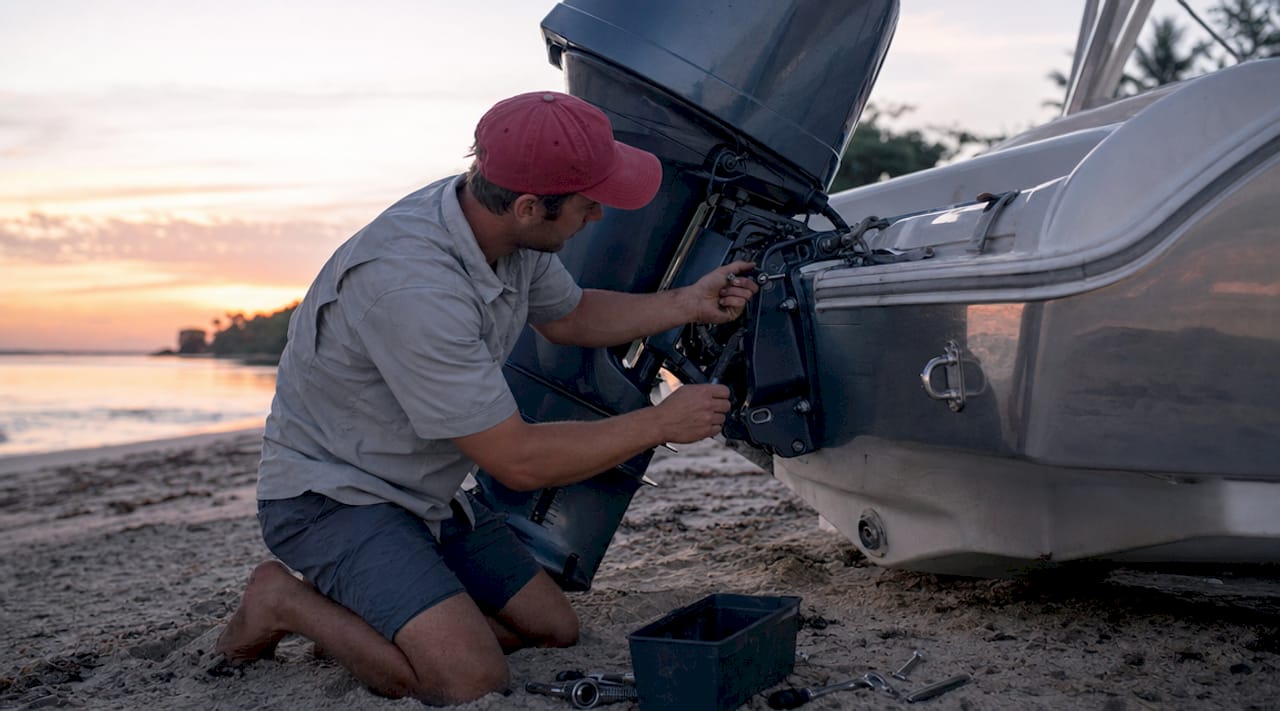
Proper maintenance is the single biggest factor in preserving both performance and resale value. Center consoles used in saltwater face constant exposure to UV rays, salt, and humidity. Skipping routine care turns a $60,000 boat into a $35,000 restoration project faster than most owners expect.
Follow this maintenance sequence to keep your boat in top condition:
- Rinse with fresh water after every saltwater trip. Salt crystals embed into gelcoat pores within hours of exposure. A thorough rinse from bow to stern, including the bilge and engine cowlings, stops that process cold.
- Flush the engine for at least 10 minutes. Engine flushing after saltwater trips prevents corrosion inside the cooling channels where you cannot see it. Connect a fresh water hose to the flush port and let it run while the engine idles.
- Wax or seal the gelcoat every 2–3 months in saltwater environments. Gelcoat protection at this frequency blocks UV oxidation and keeps the hull looking sharp. Freshwater boaters can extend that interval to every 3–4 months.
- Clean vinyl seating monthly. Mildew sets into marine vinyl quickly in humid climates. Use a dedicated marine vinyl cleaner like Star Brite or 303 Aerospace Protectant. Neglected vinyl is one of the top reasons center consoles lose resale value.
- Inspect hardware, wiring, and bilge pumps before each season. Stainless steel fittings corrode from the inside out in saltwater. A pre-season inspection by a certified marine technician catches problems before they become expensive.
Pro Tip: Never use standard dish soap to wash your boat. Dish soap strips marine wax and leaves the gelcoat exposed to UV damage and oxidation. Use a dedicated marine wash like Star Brite Boat Wash or Meguiar’s Marine/RV Cleaner every time.
For Florida owners specifically, the combination of intense sun and saltwater makes this maintenance schedule non-negotiable. Our yacht maintenance guide for Florida owners covers additional care routines specific to that climate.
Center console vs. bay boat vs. dual console: which is right for you?
Buyers often confuse center consoles with bay boats and dual consoles because all three are open, outboard-powered boats. The differences matter a great deal depending on how and where you boat.
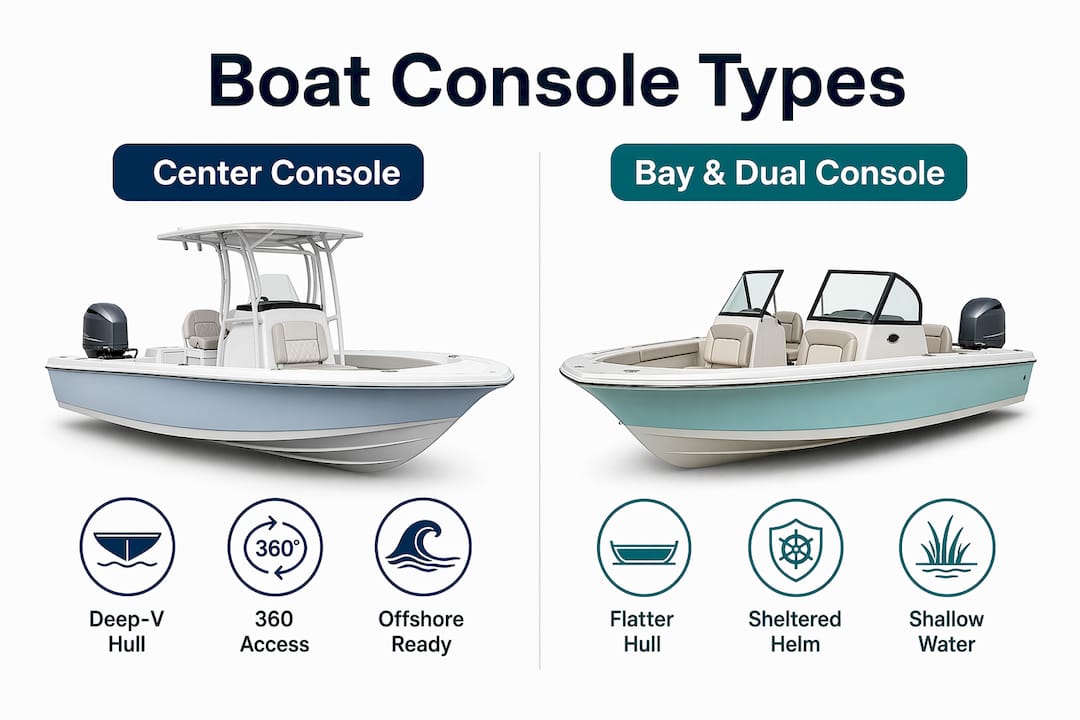
| Feature | Center Console | Bay Boat | Dual Console |
|---|---|---|---|
| Hull design | Deep-V, offshore capable | Flat or shallow-V, shallow water | Modified-V, moderate conditions |
| Deck access | Full 360-degree walkaround | Open but narrower beam | Split by passenger console |
| Fishing performance | Excellent, all-around | Best in shallow flats | Good, recreational focus |
| Weather protection | T-Top only | Minimal | Windshield and passenger console |
| Passenger comfort | Moderate | Lower | Higher |
| Ideal buyer | Versatile angler or family | Dedicated inshore angler | Family with occasional fishing |
Bay boats have flatter, shallower hulls designed specifically for skinny water access. A Mako Pro Skiff or a Ranger 2080 Bay will float in 10 inches of water where a center console cannot follow. Center consoles trade that shallow-water ability for offshore capability and more usable deck space.
Dual consoles split the helm area with a passenger console on the opposite side. That gives you a windshield, a grab handle for rough water, and a more car-like feel for families. What you lose is the full walkaround deck. Following a fish around the bow becomes awkward when a second console is in the way.
The center console wins for buyers who want one boat that fishes well, handles offshore conditions, and still works for family days on the water.
Key takeaways
A center console boat is the most versatile open-water platform available, combining 360-degree deck access, offshore-capable hulls, and straightforward maintenance into a single boat type that works for fishing, cruising, and family use.
| Point | Details |
|---|---|
| Core design | Helm sits centrally on an open deck, giving full walkaround access from bow to stern. |
| Size and power | Models range from 18 to 40 feet and run one to five outboard engines depending on size. |
| Best use case | Ideal for anglers and families who want one boat that handles inshore, offshore, and recreational use. |
| Maintenance priority | Rinse with fresh water after every saltwater trip and wax gelcoat every 2–3 months to protect value. |
| Buying decision | Choose a center console over a bay boat for offshore range, and over a dual console for full fishing access. |
Why i think center consoles are the smartest first boat for serious buyers
After years of working with boat buyers at Yachtingexperts, I keep coming back to the same observation: the buyers who regret their purchase almost always chose a more specialized boat too early. They bought a dedicated bay boat and then wanted to run offshore. They bought a cabin cruiser and then missed the open deck for fishing.
The center console solves that problem before it starts. It is not the absolute best at any single thing, but it is genuinely excellent at everything. A Boston Whaler 270 Dauntless will fish, cruise, and tow a tube on the same Saturday. That kind of flexibility has real financial value too. When it is time to sell your center console and trade up, a well-maintained center console holds its value better than almost any other boat category.
My honest advice for first-time buyers: do not skip the maintenance routine. The buyers I see getting the best resale returns are not the ones who bought the most expensive boat. They are the ones who rinsed, waxed, and flushed consistently. A boat that looks and runs like new at year five sells itself.
If weather protection is a genuine concern for your boating style, look at a 30-foot-plus center console with a full hard top and side curtains. Brands like Contender and Yellowfin build models that address that limitation without giving up the open deck. That is the configuration I would choose for serious offshore work in Florida or the Carolinas.
— Jason
Ready to find your perfect center console?
Yachtingexperts specializes in connecting buyers with center console boats that match their exact boating style and budget. Whether you are stepping into your first 22-footer or ready to move up to a serious offshore build, our team brings the market knowledge and personal attention to make the process straightforward and exciting.

✅ Browse our center console listings and find models from top builders ready for your next adventure.
✅ Get personalized guidance from our team on specifications, pricing, and what to look for during a sea trial.
✅ Already own a center console and thinking about trading up? We help you maximize your return when it is time to move on.
Reach out to Yachtingexperts today and let us match you with the right boat.
FAQ
What is a center console boat used for?
A center console boat is used for offshore fishing, inshore fishing, family cruising, and watersports. Its open deck and 360-degree access make it one of the most versatile boat layouts available.
What size center console boat should i buy?
Boats in the 22–28 foot range cover most inshore and nearshore needs, while 30-foot-plus models handle offshore conditions more comfortably. Your intended use and home waters should drive that decision.
Do center console boats require a boating license?
Operating a motorized center console legally requires a boating license or completion of an approved safety course in most U.S. states. Requirements vary by state and operator age.
How often should i maintain a center console boat?
Rinse the hull and flush the engine after every saltwater outing, clean vinyl seating monthly, and wax the gelcoat every 2–3 months for saltwater use. Pre-season inspections by a certified marine technician are also recommended.
Are center console boats good for families?
Modern center consoles from brands like Robalo, Mako, and Boston Whaler include bow seating, Bluetooth audio, and swim platforms that make them genuinely family-friendly. The trade-off is less weather protection compared to dual console or cabin boats.
Recommended
Request A Call
Featured Listings

2027 Canados
100
Miami Florida

2015 Maiora
$3,750,000
90
Miami Florida

2027 Canados
57
Miami Florida
2019 Silent-Yachts Fair Dinkum
$1,599,000
55
Fort Lauderdale Florida

2026 Canados
49
Miami Florida

2026 Buddy Davis
47
Miami Florida
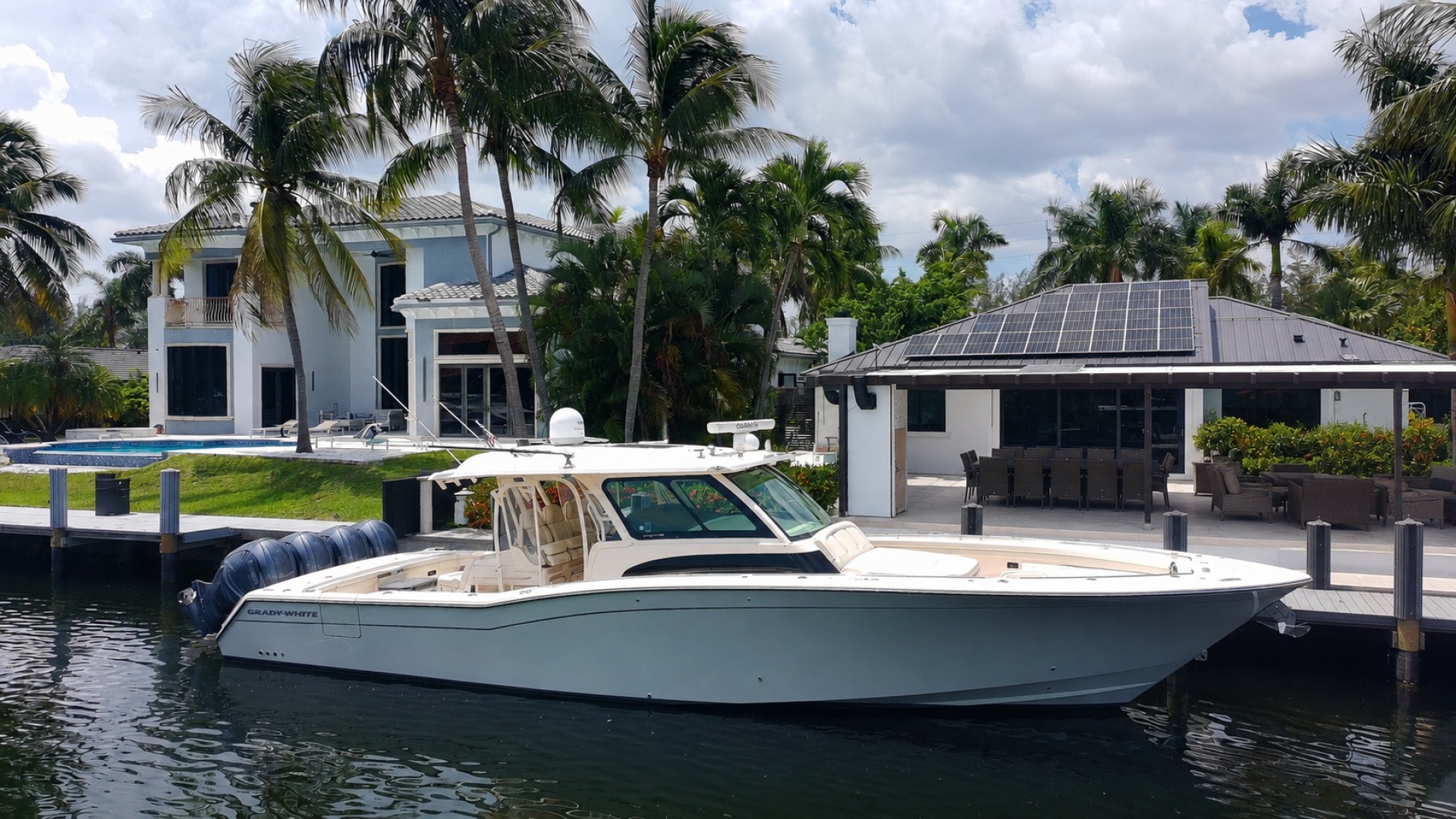
2020 Grady-White No Name
$610,000
45
Hallandale Beach Florida
2020 Viking Huckleberry
$1,495,000
44
Fort Lauderdale Florida

2027 Canados
43
Miami Florida
2021 Intrepid Dream Faster
$730,000
40
Coral Gables Florida

2016 Edgewater
$299,000
37
Miami, Florida

2022 Avid
$56,900
23
Stuart Florida
Get your yacht value Estimate
"*" indicates required fields