

A superyacht is defined as a luxury vessel measuring 24 meters (79 feet) or longer and operated by a professional crew under commercial maritime regulations. That single length threshold separates a superyacht from every recreational boat you’ve ever rented for a weekend. The distinction goes far beyond size, though. Superyacht status triggers specific regulatory codes, crew certification requirements, and a service standard that transforms a vessel into something closer to a floating five-star hotel. Understanding what defines a superyacht matters whether you’re exploring ownership, planning a charter, or simply trying to decode the marketing language brokers use.
What defines a superyacht: size thresholds and crewing standards
The 24-meter mark is the universally accepted starting point for superyacht classification in the maritime industry. Cross that line and everything changes, from the regulatory framework governing your vessel to the size of the team required to run it safely.
The industry organizes luxury yachts into four clear size brackets:
- Yacht: under 24 meters, operated recreationally with minimal crew
- Superyacht: 24m–60m, requiring 5–20 professional crew depending on vessel complexity
- Megayacht: above 60 meters, typically requiring 20–60+ crew members
- Gigayacht: exceeding 100 meters, with 50+ crew and operating costs that can reach $400M–$600M+ annually
That crew scaling is not arbitrary. A 40-meter superyacht needs engineers, deckhands, a captain, and hospitality staff working around the clock. The crew profile typically includes specialists in navigation, engineering, and guest services, none of whom are optional once you cross the 24-meter threshold.
Professional crewing also affects your insurance and liability profile directly. Insurers treat superyachts as commercial-grade vessels, which means higher premiums but also far more rigorous safety oversight. If you’re comparing a 22-meter pleasure yacht to a 26-meter superyacht, the difference in annual operating cost and legal responsibility is significant, even though the physical size gap looks modest on paper.
Pro Tip: When evaluating a vessel near the 24-meter boundary, always confirm its registered length and classification. A vessel listed at “23.9 meters” may be marketed to avoid superyacht regulatory costs, which affects resale value and charter licensing.
What luxury features and design set superyachts apart
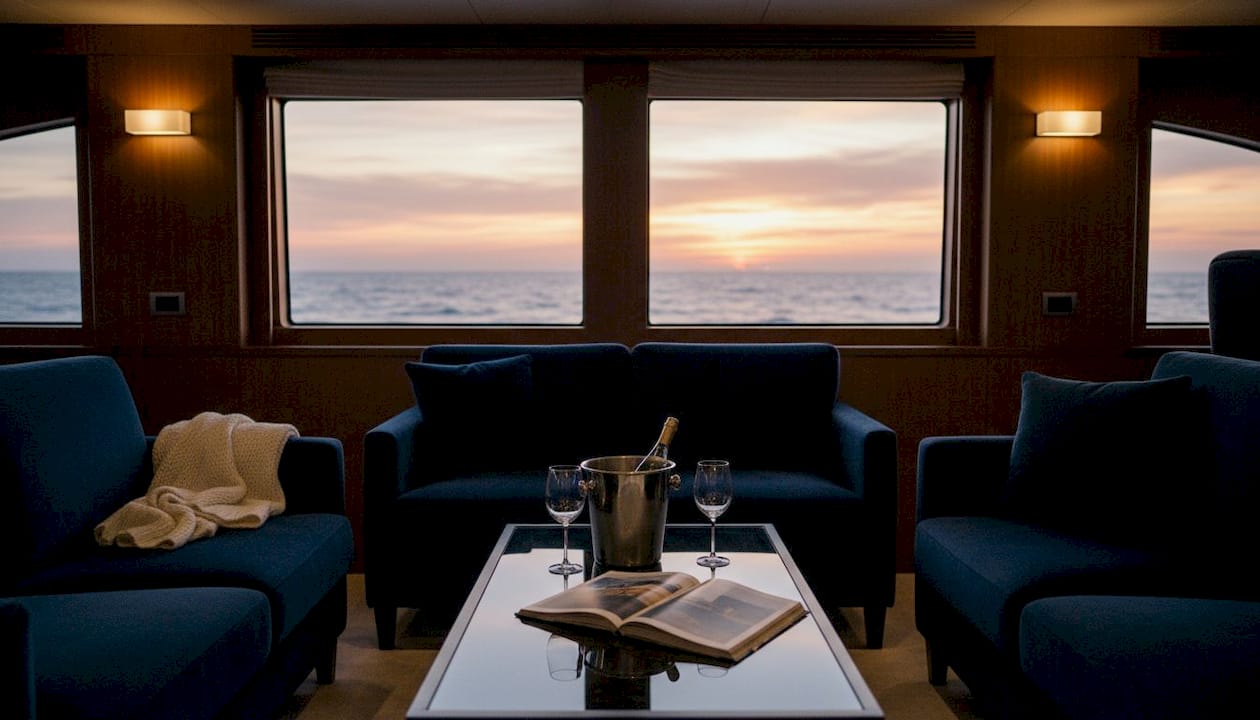
Size earns a vessel the superyacht label. Luxury features are what make that label worth having. The defining amenities found on superyachts go well beyond what you’d find on a standard production yacht.
Typical superyacht features include:
- Full-beam master suites occupying the entire width of the vessel on a dedicated deck
- Spa and wellness facilities including steam rooms, treatment rooms, and gyms
- Beach clubs at the stern with direct water access and tender storage
- Multiple guest cabins with private en-suite bathrooms, often accommodating 8–12 guests
- Separate crew quarters completely isolated from guest areas for privacy
- Swim platforms and water toy garages housing jet skis, paddleboards, and dive equipment
- Stabilization systems that reduce roll at anchor and underway for guest comfort
The separation of crew and guest spaces deserves special attention. On a well-designed superyacht, guests rarely see crew except when service is being delivered. Crew corridors, separate dining areas, and dedicated access points make this possible. That level of privacy is an engineering achievement, not just a design preference.
Specialized engineering systems also define the category. Superyachts carry advanced power management systems, watermakers, and climate control infrastructure that smaller yachts simply don’t need. The onboard power requirements for a vessel running multiple air conditioning zones, a spa, and a full galley simultaneously are substantial. Modern superyachts increasingly use lithium battery banks alongside generator systems to manage this load efficiently.
Pro Tip: Ask for the vessel’s technical specifications sheet before any viewing. A superyacht’s engineering systems, stabilizer type, and power capacity reveal far more about its real comfort level than the interior photos do.
How do superyachts, megayachts, and gigayachts differ?
The terms “superyacht,” “megayacht,” and “gigayacht” overlap constantly in marketing materials. Understanding where one ends and another begins saves you from serious misalignment between expectations and reality.
| Category | Length | Typical Crew | Defining Characteristics |
|---|---|---|---|
| Superyacht | 24m–60m | 5–20 | Professional crew, LY3 compliance, luxury amenities |
| Megayacht | 60m–100m | 20–60+ | Helipads, multiple tenders, advanced engineering |
| Gigayacht | 100m+ | 50+ | Onboard hospitals, submarines, industrial-scale management |
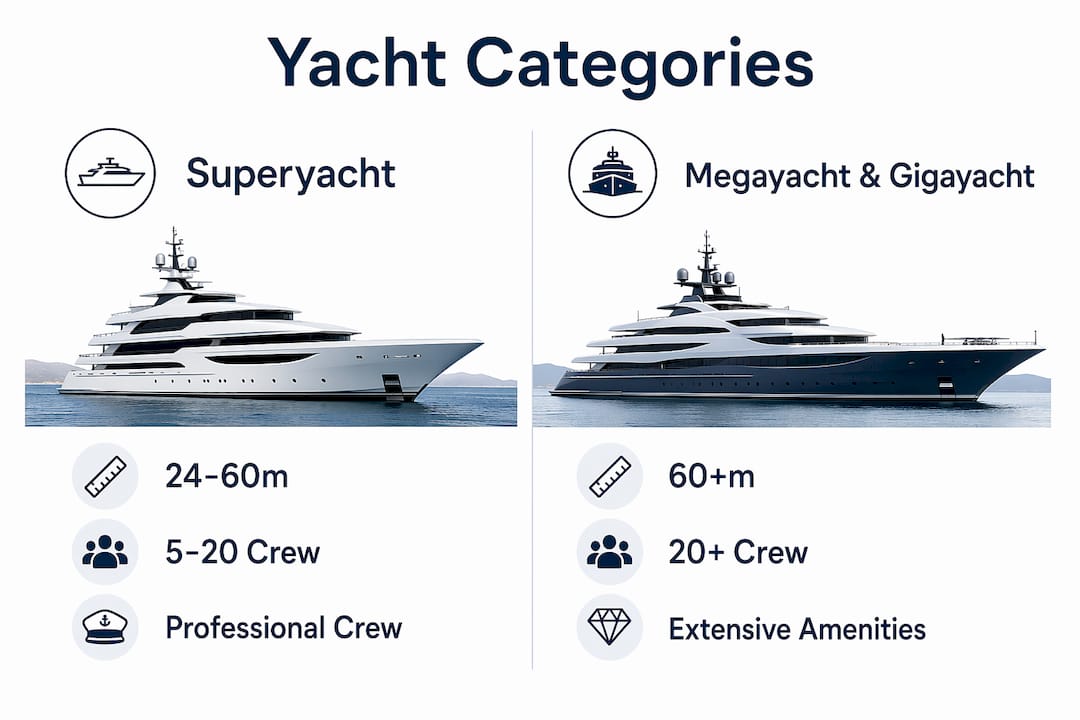
The megayacht category is largely informal and marketing-driven. No single regulatory body mandates the term. What it signals in practice is a shift in operational complexity. A 70-meter vessel may carry a helipad, an onboard hospital, and a dedicated tender garage housing multiple chase boats. That is not a scaled-up superyacht. It is a fundamentally different operational challenge.
The gigayacht category represents something else entirely. These vessels function as floating ecosystems requiring industrial-scale management, dedicated shore teams, and logistics infrastructure that rivals a small hotel chain. For buyers exploring the superyacht category, understanding where that escalation begins helps set realistic expectations about what ownership actually involves.
For charter clients, the practical difference between a 35-meter superyacht and a 65-meter megayacht is the experience level. The larger vessel offers more space, more amenities, and a larger crew. It also costs significantly more per week. Knowing the correct terminology when speaking with brokers helps you align your budget with the right vessel class from the start.
What regulations govern superyacht ownership and operation?
Crossing the 24-meter threshold subjects your vessel to the Large Yacht Code (LY3 or LY2 depending on flag state and operational area). This regulatory framework is the backbone of superyacht safety and commercial operation.
The key compliance requirements under LY3 include:
- Life raft capacity evaluated against vessel tonnage and maximum persons on board
- Fire suppression systems meeting commercial maritime standards throughout the vessel
- Navigation redundancy requiring backup systems for GPS, radar, and communication
- Crew certification mandating STCW (Standards of Training, Certification, and Watchkeeping) qualifications for all officers
- Stability documentation verified by a recognized classification society such as Lloyd’s Register or Bureau Veritas
These are not optional upgrades. Regulatory compliance affects your insurance terms, your ability to charter commercially, and your liability exposure if an incident occurs. A vessel that fails an LY3 inspection cannot legally carry paying guests, which eliminates charter revenue and complicates resale.
Operational costs scale with these requirements. A 60-meter vessel can cost 5–8 times more annually to operate than a 30-meter vessel, not because of a linear increase in fuel or crew, but because costs grow disproportionately with size and complexity. Insurance premiums, crew salaries, port fees, and maintenance contracts all escalate faster than the vessel’s length would suggest.
Pro Tip: Request a full compliance audit from a certified marine surveyor before purchasing any superyacht. An LY3 gap analysis reveals hidden costs that can easily add six figures to your first year of ownership.
Understanding yacht management in Florida and similar high-traffic superyacht markets also means knowing which flag states and classification societies are most accepted in your primary cruising area. Some flag states offer lighter regulatory burdens but create complications when entering US or EU waters.
Key Takeaways
A superyacht is defined by its 24-meter minimum length, professional crew requirement, and mandatory compliance with Large Yacht Code regulations, making it a fundamentally different category from recreational yachts.
| Point | Details |
|---|---|
| Size threshold | 24 meters (79 feet) is the accepted industry minimum for superyacht classification. |
| Crew requirement | Superyachts require 5–20 professional crew, scaling with vessel length and complexity. |
| Regulatory compliance | LY3/LY2 codes mandate life rafts, fire suppression, navigation redundancy, and STCW-certified officers. |
| Luxury features | Full-beam suites, beach clubs, spas, and separate crew quarters define the superyacht experience. |
| Cost scaling | A 60-meter vessel costs 5–8 times more annually to operate than a 30-meter vessel. |
Why the definition matters more than the marketing
Here is something I’ve seen trip up buyers repeatedly: they fall in love with the word “superyacht” before they understand what it actually commits them to. The term carries real weight in maritime law, not just in glossy brochures.
I’ve worked with clients who assumed that any large, beautiful vessel qualified. One buyer was seriously considering a 22-meter vessel marketed aggressively as a “superyacht-style” build. It was a gorgeous boat. But it sat below the 24-meter threshold, which meant no LY3 compliance, no professional crew structure, and no commercial charter licensing. His plan to offset ownership costs through charter revenue was dead before the ink dried.
The flip side is also true. Some buyers hear “superyacht” and immediately assume they need something 50 meters long. A well-specified 28-meter vessel with a professional crew of six, a proper beach club, and full LY3 compliance delivers an extraordinary experience. Bigger is not always better. Right-sized for your actual use pattern is always better.
My honest advice: use correct terminology when speaking with brokers from your first conversation. Tell them the length range you’re considering, how many guests you’ll typically host, and whether you plan to charter. That information lets a good broker match you to the right vessel class immediately, rather than showing you everything from a 20-meter cruiser to a 45-meter explorer just because they all technically qualify as “luxury.”
The regulatory and operational reality of superyacht ownership is not a burden. It’s a framework that protects your investment, your guests, and your crew. Understanding it upfront is the clearest sign that you’re approaching this purchase seriously.
— Jason
Ready to find the right superyacht for your needs?
At Yachtingexperts, we work exclusively with buyers and owners who want the full picture before they commit. We know that stepping into the superyacht category is one of the most significant investments you’ll make, and we treat it that way.

Our team provides personalized vessel sourcing, private viewings, and detailed market insight across the full superyacht spectrum from 24-meter cruisers to 60-meter expedition vessels. We handle the technical due diligence, compliance checks, and negotiation so you can focus on the experience ahead. Whether you’re buying your first superyacht or trading up to a larger vessel, we’re ready to guide you through every step. Connect with our brokerage team today and let’s find the vessel that fits your vision.
FAQ
What is the minimum size for a superyacht?
A superyacht is defined as a vessel measuring at least 24 meters (approximately 79 feet) in length. This threshold is the widely accepted maritime industry standard and triggers professional crew and regulatory requirements.
What regulations apply to superyachts?
Superyachts operating commercially must comply with the Large Yacht Code (LY3 or LY2), which mandates life raft capacity, fire suppression systems, navigation redundancy, and STCW-certified crew. Compliance directly affects insurance terms and charter licensing.
What is the difference between a superyacht and a megayacht?
Industry professionals classify superyachts as vessels between 24 and 60 meters, while megayachts exceed 60 meters. The megayacht category is largely informal but signals a significant increase in crew size, engineering complexity, and operational cost.
How many crew does a superyacht need?
Crew size ranges from 5 to 20 for most superyachts, scaling with vessel length and the level of guest service provided. Crew typically includes a captain, engineers, deckhands, and hospitality staff.
Does a superyacht have to be available for charter?
No. A superyacht can be privately owned and operated without any charter activity. However, owners who want to charter commercially must meet LY3 compliance standards and obtain the appropriate licensing from their flag state authority.
Recommended
Request A Call
Featured Listings

2027 Canados
100
Miami Florida

2015 Maiora
$3,750,000
90
Miami Florida

2027 Canados
57
Miami Florida

2019 Silent-Yachts Fair Dinkum
$1,599,000
55
Fort Lauderdale Florida

2026 Canados
49
Miami Florida

2026 Buddy Davis
47
Miami Florida

2020 Grady-White No Name
$610,000
45
Hallandale Beach Florida

2020 Viking Huckleberry
$1,495,000
44
Fort Lauderdale Florida

2027 Canados
43
Miami Florida

2021 Intrepid Dream Faster
$730,000
40
Coral Gables Florida

2016 Edgewater
$299,000
37
Miami, Florida

2022 Avid
$56,900
23
Stuart Florida
Get your yacht value Estimate
"*" indicates required fields