

Florida is home to over 1 million registered vessels and a boating industry worth $31.3 billion, making it the undisputed capital of American boating. With used boat sales outnumbering new sales three to one, the secondary market is intensely competitive. Most owners assume any sunny day is a fine time to list. The reality is that timing your sale strategically can mean thousands of extra dollars in your pocket. This guide breaks down exactly when to sell, what economic and seasonal forces to watch, and how to avoid the costly mistakes that leave money on the table.
Table of Contents
- Why timing is critical in Florida’s boat sales market
- Seasonal trends: When to sell for maximum value
- Economic climate and market factors affecting boat sales
- Timing mistakes to avoid: Common pitfalls and smarter strategies
- The real value of timing: Beyond conventional wisdom
- Ready to sell smarter? Expert help is a click away
- Frequently asked questions
Key Takeaways
| Point | Details |
|---|---|
| Timing creates value | Selling during peak demand months results in faster deals and better prices. |
| Know the market drivers | Events like boat shows and snowbird migration directly impact how quickly and profitably you’ll sell. |
| Adapt to economic cycles | Watch interest rates and market signals to choose the most profitable listing window. |
| Avoid common pitfalls | Missing Florida’s prime selling season or under-prepping your boat can mean leaving money on the table. |
Why timing is critical in Florida’s boat sales market
Florida’s boat market is massive, and that scale cuts both ways. As a seller, you have access to the largest pool of motivated buyers in the country. But you’re also competing against an enormous inventory of used vessels at any given moment. That tension between opportunity and competition is precisely why timing matters so much.
The Florida boating industry’s $31.3B impact signals robust demand, but demand isn’t evenly distributed across the calendar. Buyers surge into the market during specific windows, and the sellers who recognize those windows consistently walk away with better outcomes. Sellers who ignore them often sit on listings for months, then end up cutting their asking price out of frustration.
Here’s what drives demand cycles in Florida’s used boat market:
- Snowbird migration: Thousands of northern retirees and seasonal residents arrive in Florida each winter, bringing cash and a genuine appetite to purchase waterfront toys.
- Fishing seasons: Offshore and inshore fishing peaks in fall and spring, driving demand for fishing vessels in particular.
- Major boat shows: Events like the Fort Lauderdale International Boat Show create concentrated buyer energy that spills into private sales nearby.
- Economic sentiment: Consumer confidence, interest rates, and even the local real estate market push buyers toward or away from big-ticket purchases.
- Hurricane season: June through November carries weather-related anxiety that suppresses listings and buyer activity.
Understanding selling best practices in this context isn’t optional. It’s the difference between a fast, profitable sale and a frustrating experience. Our team has watched too many capable owners price well but list at the wrong time, stalling a sale that should have been smooth.
Market insight: Supply and demand in Florida’s used boat sector shift dramatically month to month. Sellers who study these rhythms instead of guessing almost always outperform those who don’t.
The good news is that once you understand the patterns, selling in Florida becomes a far more confident, rewarding process.
Seasonal trends: When to sell for maximum value
With a clear view of Florida’s unique market, the next step is mastering its seasons to make the sale. Not every month offers equal opportunity, and knowing which windows deliver peak buyer activity is genuinely powerful information.

| Season | Buyer demand | Key driver | Seller advantage |
|---|---|---|---|
| November to March | Very high | Snowbirds, boat shows | Strong pricing power |
| April to May | Moderate to high | Spring fishing, weather | Good listing window |
| June to August | Low | Heat, hurricane anxiety | Slower, price pressure |
| September to October | Moderate | Fall fishing spike | Improving momentum |
The winter window is the crown jewel. Snowbird influx and boat shows drive buyer demand to its annual peak between November and March. Buyers are present, motivated, and often pre-qualified financially. Major shows like the Fort Lauderdale International Boat Show in late October and November electrify the broader market for weeks before and after the event.
Here’s how to position yourself to win during peak season:
- List ahead of the wave. Get your vessel on the market in mid-to-late October so it has visibility when snowbird buyers arrive in earnest.
- Polish your presentation. Clean, detailed photos and a thorough description attract serious inquiries when competition is fierce.
- Price confidently. Peak demand supports your asking price. Don’t discount preemptively when buyers are actively searching.
- Attend or monitor boat shows. Buyer sentiment generated at shows creates a halo effect on private sales listings in the same period.
- Avoid hurricane season listings. Listing between June and September nearly always extends your time on market and invites lower offers.
Pro Tip: List your boat 4 to 6 weeks before the peak demand window opens. Early visibility means your listing is already generating inquiries when serious buyers flood the market, giving you a natural pricing advantage over latecomers.
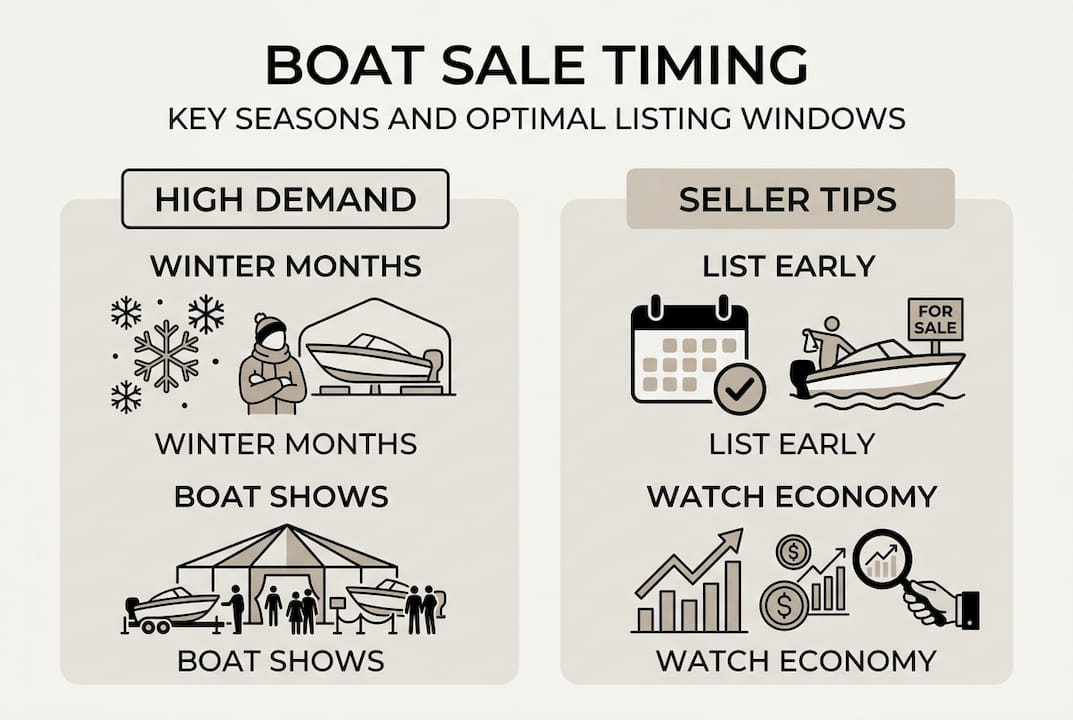
Using timing tips for fast ROI alongside a clear sales process guide means you walk into peak season fully prepared, not scrambling.
Economic climate and market factors affecting boat sales
Seasonal strategies are key, but economic forces can’t be overlooked. Even the best-timed listing can underperform if broader conditions are working against you.
Interest rates have an outsized effect on big-ticket recreational purchases. When rates rise, monthly payments on financed vessels become less attractive, shrinking the buyer pool. When rates ease, more buyers qualify, competition for well-priced boats intensifies, and sellers gain leverage. Interest rates easing have historically created noticeable spikes in fall boat sales as buyers rush to lock in favorable terms.
Here are the economic factors every Florida seller should monitor:
- Federal Reserve rate decisions: Changes cascade quickly into marine lending products. Even a 0.5% shift affects what buyers can afford.
- Florida real estate market: When property values are strong and homeowners feel wealthy, discretionary spending on boats rises. A softening housing market has the opposite effect.
- Insurance market conditions: Rising boat insurance rates in Florida have made total ownership cost a real conversation with buyers. Sellers who can demonstrate low historical insurance costs gain a subtle but real edge.
- Consumer confidence indexes: These are reliable leading indicators of whether buyers are in a spending or saving mindset.
A soft market is when demand is flat or declining and inventory is high. It doesn’t mean you can’t sell well. It means you need to be smarter about insurance market trends and sharper on negotiation strategies. In a soft market, condition and competitive pricing are your two most powerful tools.
Pro Tip: Check Federal Reserve meeting dates and rate forecasts before you commit to a listing timeline. If a rate cut is anticipated in the next 60 days, waiting to list may mean more qualified buyers when your boat goes live.
Timing mistakes to avoid: Common pitfalls and smarter strategies
Knowing the economic and seasonal patterns, let’s focus on what to avoid and get timing right. Even well-informed sellers make avoidable errors that cost them time and money.
- Listing in the off-peak window. Placing your boat on the market in June or July means you’re competing for a shrinking pool of buyers during hurricane season. Demand is at its lowest, and you’ll feel the pressure to drop your price.
- Skipping preparation in favor of speed. Rushing to list without addressing cosmetic issues or gathering documentation signals poor maintenance to buyers, especially in a competitive market where used boats outnumber new 3:1.
- Inflexible pricing in a shifting market. Sellers who anchor too hard to an initial price while the market softens lose weeks of momentum. Flexibility isn’t weakness. It’s strategy.
- Ignoring buyer behavior signals. A spike in inquiries, a nearby boat show, or a local fishing tournament are real-time triggers. Sellers who aren’t paying attention miss opportunities to accelerate a deal.
- Failing to use best practices for sellers. Preparation, documentation, and presentation matter as much as timing. A beautifully timed listing on a poorly presented boat still underperforms.
Pro Tip: Add major Florida boat shows and the snowbird arrival window to your calendar right now. Set reminders for 6 weeks before each event to begin your listing preparation. This simple habit puts you ahead of the majority of competing sellers.
Remember: In Florida’s used boat market, the sellers who win aren’t necessarily the ones with the nicest boats. They’re the ones who show up at the right time, prepared, and priced intelligently.
The real value of timing: Beyond conventional wisdom
Here’s what years of working the Florida market have taught us: waiting passively for the “perfect season” is not a strategy. It’s wishful thinking. The sellers who consistently outperform don’t just pick November and hope. They actively monitor the market in real time, using ROI-maximizing strategies that most owners never consider.
Micro-timing triggers are where real money is made. A local boat show announcement, a sudden spike in social media buyer inquiries, or a Fed rate cut decision can shift buyer sentiment overnight. The sellers positioned to move quickly when those moments arrive always outperform those waiting for a calendar date.
Conventional wisdom says “sell in winter.” That’s true, but incomplete. The top sellers we’ve worked with treat timing as an ongoing practice, not a one-time decision. They update their listings with fresh photos, adjust pricing based on real-time comparable sales, and stay plugged into local boating communities where buyer demand surfaces first. That proactive posture is what separates a great outcome from an average one.
Ready to sell smarter? Expert help is a click away
You now have a timing playbook that most Florida boat owners never see. The next step is putting it to work with a team that lives and breathes this market every day.

At Yachting Experts, we provide a personalized, high-touch experience designed to help you sell at the right time for the best possible return. From reviewing Florida selling best practices to helping you boost your boat’s value before listing, our team handles every detail so you don’t have to. Whether you’re ready to list today or just planning ahead, our expert sales support team is here to guide you from first inquiry to final handshake with confidence and clarity. This is your moment. Let’s make it count.
Frequently asked questions
Which months are best for selling a boat in Florida?
Prime months are November through March, when snowbird influx and boat shows drive buyer interest to its annual peak, giving sellers strong pricing power.
How does Florida’s weather impact boat sale timing?
Hurricane season and summer heat create significant off-peak lulls. Weather patterns including hurricanes suppress buyer activity from June through September, making cool and dry months far more productive for sellers.
Does the economy affect the timing of boat sales?
Absolutely. Interest rates and economic climate directly affect buyer financing ability and consumer confidence, making economic awareness a critical part of your timing strategy.
How important is boat condition when selling in a soft market?
Condition is everything in a soft market. A soft market rewards competitive pricing and presentation, so a well-prepared vessel will close faster and attract meaningfully stronger offers than one that’s been neglected.
Recommended
Request A Call
Featured Listings

2027 Canados
100
Miami Florida

2015 Maiora
$3,750,000
90
Miami Florida

2027 Canados
57
Miami Florida

2019 Silent-Yachts Fair Dinkum
$1,599,000
55
Fort Lauderdale Florida

2026 Canados
49
Miami Florida

2026 Buddy Davis
47
Miami Florida

2020 Grady-White No Name
$610,000
45
Hallandale Beach Florida

2020 Viking Huckleberry
$1,495,000
44
Fort Lauderdale Florida

2027 Canados
43
Miami Florida

2021 Intrepid Dream Faster
$730,000
40
Coral Gables Florida

2016 Edgewater
$299,000
37
Miami, Florida

2022 Avid
$56,900
23
Stuart Florida
Get your yacht value Estimate
"*" indicates required fields