

Most people picture a superyacht captain standing at the helm, guiding a gleaming vessel through turquoise waters. That image captures maybe 10% of the reality. The role of a superyacht captain is one of the most demanding leadership positions in any industry, combining the technical precision of maritime command with the interpersonal finesse of a hotel general manager and the legal accountability of a ship owner. If you are considering this career or simply want to understand what keeps these extraordinary vessels running, you are about to get the full picture.
Table of Contents
- Key takeaways
- The role of a superyacht captain: core responsibilities
- Essential skills and qualifications for superyacht captains
- Day-to-day operations and challenges superyacht captains face
- Delivering exceptional guest experience and crew leadership
- My take on what this role really demands in 2026
- Ready to explore the world of superyachting?
- FAQ
Key takeaways
| Point | Details |
|---|---|
| Command is total accountability | The captain is legally and operationally responsible for every person, decision, and document onboard. |
| Skills go far beyond navigation | Leadership, financial oversight, guest relations, and regulatory compliance are daily requirements. |
| 2026 brought new qualification pathways | The MCA’s Yacht Unlimited Certificate of Competency offers a more direct route to command. |
| Crew size shapes the role | Superyachts carry 8 to 80 crew, so the captain’s leadership scope varies dramatically by vessel. |
| Guest experience is a captain’s KPI | Charter success and yacht reputation depend directly on how well a captain leads the crew and satisfies guests. |
The role of a superyacht captain: core responsibilities
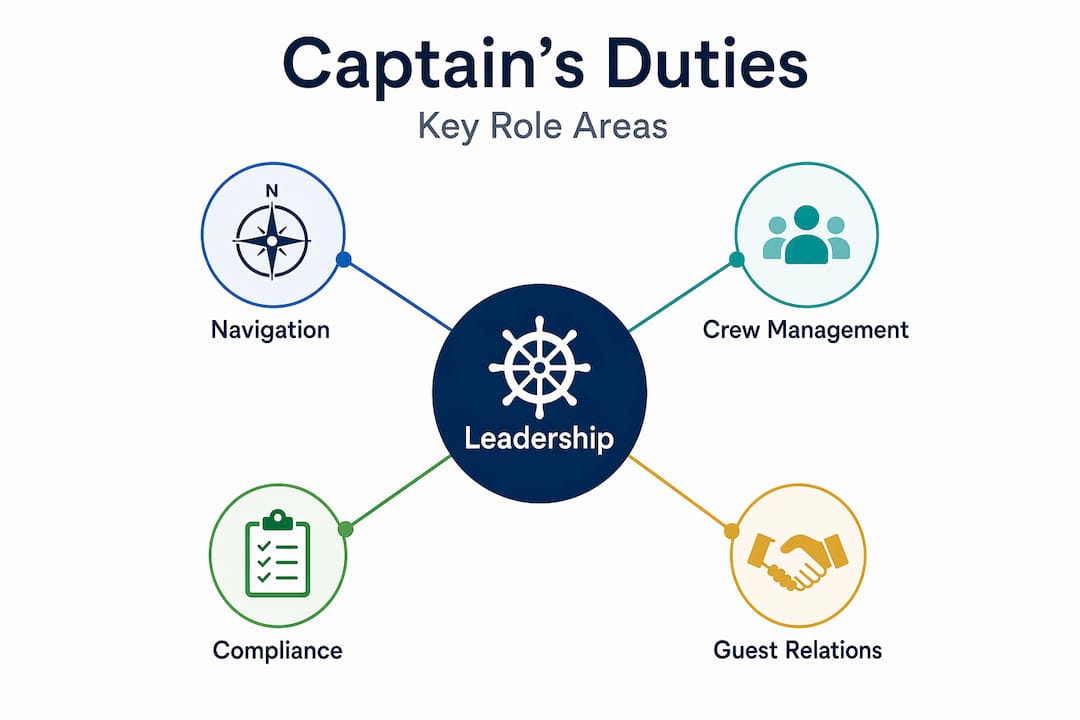
The phrase “ultimate responsibility” gets used so often it loses its weight. For a superyacht captain, it is not a metaphor. The captain is accountable for safe operation, navigation, crew leadership, voyage planning, and compliance with international maritime law. Every person onboard, from the owner to the newest deckhand, operates under the captain’s authority and within the safety framework the captain sets.
Here is what that actually looks like in practice:
- Safe navigation and vessel operation: Planning passages, monitoring weather windows, managing bridge watch schedules, and making real-time decisions that protect the vessel and everyone aboard.
- Crew leadership across all departments: A superyacht’s crew spans deck, engineering, interior, and galley. The captain does not manage every team member directly but sets the culture, standards, and expectations that each department head enforces.
- Voyage and itinerary planning: Working with owners or charter guests to plan routes, port stops, and special experiences while accounting for customs requirements, environmental restrictions, and seasonal conditions.
- Safety protocols and emergency preparedness: Captains lead emergency drills and enforce safety procedures so the crew is ready for anything from a man-overboard situation to a fire onboard.
- Legal, regulatory, and documentation compliance: Keeping certifications current and adhering to international maritime laws, customs regulations, and environmental permits is an ongoing daily duty, not a once-a-year task.
- Financial oversight: On many vessels, the captain controls provisioning budgets, manages vendor relationships, and coordinates refit expenditures.
Pro Tip: The best captains do not try to personally handle every issue. Effective command means setting procedures and trusting specialists to execute them correctly, intervening only when command-level decisions are required.
What separates great captains from good ones is the ability to hold all of these responsibilities simultaneously without dropping a single thread. That is a rare skill set, and the industry compensates for it accordingly.
Essential skills and qualifications for superyacht captains
Aspiring captains often ask what the minimum qualifications are. That is the wrong question. The right question is: what does it take to be trusted with a $50 million asset and 30 lives? Here is the honest answer.
- Technical navigation competence: Modern superyacht navigation is not about reading charts by hand. Captains must evaluate ECDIS passage plans with contingency planning, interpreting complex electronic data and making management-level decisions from it. This is the standard the MCA tests at command level.
- Leadership and communication skills: A captain communicates with the yacht owner about itinerary preferences, with port authorities about clearance, and with a junior deckhand about safety protocol, often within the same hour. The range of communication contexts is extraordinary.
- Regulatory certifications: The STCW framework governs maritime certification globally. In 2026, the MCA launched the Yacht Unlimited Certificate of Competency, a significant development that allows progression to command without the merchant vessel training previously required. Aspiring captains should check the latest certification pathways regularly, since 2026 regulatory updates have changed what is required.
- Career progression: The typical path runs from deck cadet or deckhand to bosun, mate, chief mate, and finally master. Each step builds the seamanship, watchkeeping hours, and command experience examiners look for.
- Financial and operational management: Larger yachts require captains to handle budgeting, crew contracts, health and safety documentation, and refit project management at a level that resembles running a small business.
Pro Tip: If you are already working on deck, start logging sea time meticulously from day one. The hours you accumulate now directly determine when you qualify for your next certificate, and gaps in your logbook can delay your career by months.
The qualifications are not just checkboxes. They represent a structured progression of experience and judgment that the industry and regulators have designed to protect everyone at sea.
Day-to-day operations and challenges superyacht captains face
Knowing the responsibilities on paper is one thing. Living them at 0600 with a weather system developing to the west and a charter guest who changed their lunch location overnight is another. The daily duties of a captain include navigation, crew management, guest liaison, operational oversight, and regulatory compliance, often all before noon.
The challenges faced by superyacht captains cluster around a few recurring themes:
- Unpredictable conditions: Weather windows close faster than itineraries change. A captain’s decision to divert course or delay departure is always a judgment call that balances guest satisfaction against genuine safety risk.
- Cross-department coordination: Deck, engineering, and interior teams have different priorities and communication styles. The captain must create conditions where those teams collaborate rather than conflict, particularly during a busy charter.
- Equipment failures at sea: A generator fault in the middle of the Mediterranean does not wait for a convenient moment. Captains must respond to emergencies with calm authority, directing engineers while managing guest expectations simultaneously.
- Legal compliance in multiple jurisdictions: A single Mediterranean season might take a yacht through six countries, each with its own customs process, environmental rules, and port requirements. The captain owns all of it.
- Workload variation by vessel size: On a 40-meter yacht, the captain may be hands-on with deck operations. On a larger vessel, the role shifts toward administration, strategic planning, and managing department heads rather than direct seamanship.
The Yachtingexperts team regularly speaks with yacht management professionals who confirm that the gap between expectation and reality catches many early-career mariners off guard. The operational tempo on a working superyacht has no real parallel in other industries.
Delivering exceptional guest experience and crew leadership
Here is something that surprises most people outside the industry. On a charter superyacht, the captain is often the most important factor in whether a client books again. Not the size of the vessel. Not the interior design. The captain.
“Direct captain engagement with guests and crew elevates charter performance and yacht reputation more than almost any other single factor.” — Boat International
The captain is the primary liaison between the owner, charter guests, and the crew. That means shaping itineraries around what guests actually want, not what looked good on paper during the booking process. It means reading the room at dinner and knowing when a spontaneous anchorage change will delight rather than disrupt.
Crew morale sits entirely within the captain’s sphere of influence. A high-performing captain builds a crew culture where people take pride in their work, communicate openly, and resolve conflicts before they become problems. That culture directly affects service quality, which directly affects client satisfaction and therefore the yacht’s reputation and charter bookings.
Privacy and discretion are non-negotiable at this level. Owners and high-profile charter guests expect their preferences, schedules, and personal details to stay onboard. Captains who earn a reputation for discretion and attentiveness become genuinely irreplaceable. That is not a soft skill. It is a career-defining professional quality.
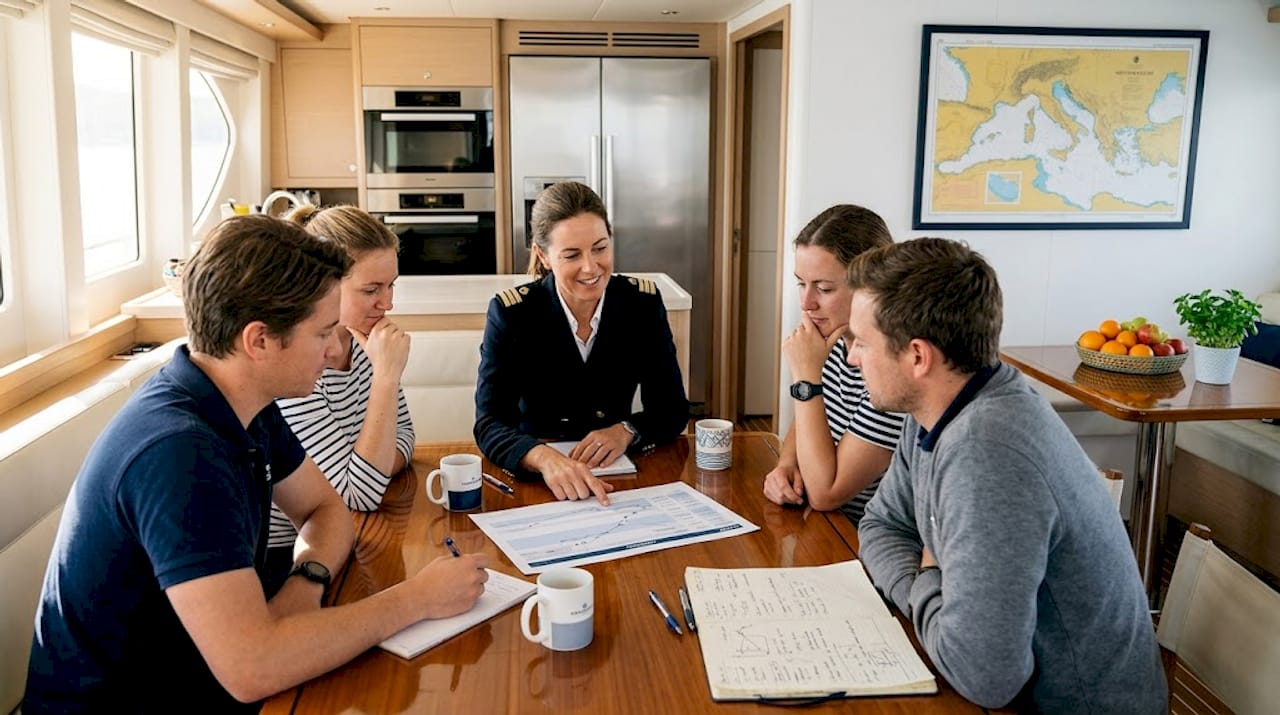
The link between strong crew management practices and charter success is well established in the industry. Captains who invest in their crew’s development, wellbeing, and clarity of role consistently outperform those who focus exclusively on the technical side of the job.
My take on what this role really demands in 2026
I have spent enough time around this industry to say with confidence that the captain’s role is the most misunderstood position in luxury yachting. People on the outside see the uniform and the authority. What they do not see is the weight of it.
What I have found is that the captains who thrive are not the ones with the most sea miles. They are the ones who can hold technical excellence, genuine leadership, and calm under pressure in the same hand at the same time. Technology has made navigation more powerful, but it has also raised expectations. Owners and guests expect precision itinerary execution and spontaneous adaptability. Holding both requires more than seamanship.
The 2026 MCA certification changes are a real opportunity for aspiring captains. The Yacht Unlimited pathway removes friction from a career route that previously required merchant vessel experience many yacht-focused mariners never needed. My advice: do not wait to understand these changes. Check the current requirements now, because career progression timelines can shift significantly when certification rules change.
The captains I most respect treat their role as a craft. They study leadership the way they study meteorology. They ask hard questions of themselves after difficult passages. They recognize that the authority they hold is a product of trust, not rank, and they protect that trust fiercely.
— Jason
Ready to explore the world of superyachting?
Whether you are considering a career in superyacht command or looking to make the most of your yacht investment, having the right team alongside you makes every difference. At Yachtingexperts, we combine genuine passion for yachting with deep industry knowledge to help you make the best decisions, whether that means understanding crew dynamics, maximizing your charter return, or finding the right vessel for your lifestyle.

Our guides cover everything from crew management to investment strategy, and our team is ready to give you the personalized guidance that generic resources simply cannot. If you are serious about yachting at this level, we would love to hear from you. Connect with the Yachtingexperts team today and start your yachting journey with experts who genuinely care about getting it right.
FAQ
What does a superyacht captain do on a daily basis?
A superyacht captain manages navigation, crew, guests, and compliance on a daily basis. Duties shift constantly depending on vessel size, whether the yacht is in port or at sea, and whether the owner or charter guests are onboard.
What qualifications do you need to become a superyacht captain?
You need STCW certification and a recognized certificate of competency at master level. In 2026, the MCA introduced the Yacht Unlimited Certificate of Competency, which creates a more direct qualification pathway without requiring prior merchant vessel training.
How many crew does a superyacht captain manage?
Superyacht crews range from 8 to 80 people depending on vessel size, covering deck, engineering, interior, galley, and support departments. On larger vessels, the captain manages department heads who in turn manage their own teams.
How does the captain influence charter success?
Captains directly shape the guest experience through itinerary decisions, crew standards, and personal engagement with charter clients. Guest satisfaction and repeat bookings are closely tied to captain performance.
Does the captain’s role change based on yacht size?
Yes, significantly. On smaller superyachts, the captain is hands-on with deck operations. On larger vessels, the role becomes more administrative and strategic, focused on managing department heads, overseeing budgets, and coordinating refit planning rather than direct seamanship.
Recommended
Request A Call
Featured Listings

2027 Canados
100
Miami Florida

2015 Maiora
$3,750,000
90
Miami Florida

2027 Canados
57
Miami Florida

2019 Silent-Yachts Fair Dinkum
$1,599,000
55
Fort Lauderdale Florida

2026 Canados
49
Miami Florida

2026 Buddy Davis
47
Miami Florida

2020 Grady-White No Name
$610,000
45
Hallandale Beach Florida

2020 Viking Huckleberry
$1,495,000
44
Fort Lauderdale Florida

2027 Canados
43
Miami Florida

2021 Intrepid Dream Faster
$730,000
40
Coral Gables Florida

2016 Edgewater
$299,000
37
Miami, Florida

2022 Avid
$56,900
23
Stuart Florida
Get your yacht value Estimate
"*" indicates required fields