

Picking the right sportfishing boat is one of the most exciting, and genuinely complex, purchases you will ever make. This sportfishing boat buying guide cuts through the noise so you can match the right vessel to your fishing style, your offshore ambitions, and your budget. We’re talking about center consoles, sportfish convertibles, and express fishermen — the recognized industry categories that cover everything from nearshore flounder trips to deep-canyon swordfishing runs. The wrong choice costs you money, comfort, and fish. The right one changes your weekends forever.
Table of Contents
- Key Takeaways
- Your sportfishing boat buying guide starts here
- How to inspect new and used boats thoroughly
- Choosing the right model for your fishing needs
- Understanding total cost of ownership
- Sea trials and final purchase checklist
- My honest take on buying a sportfishing boat
- Ready to find your perfect sportfishing boat?
- FAQ
Key Takeaways
| Point | Details |
|---|---|
| Match boat to fishing range | Define whether you fish nearshore, offshore, or canyon before comparing any models. |
| Budget beyond sticker price | Electronics, trim tabs, and rigging often must be added post-purchase, raising your real cost. |
| Inspect before you commit | Check wiring, hull integrity, bilge access, and gunwale height on every boat you consider. |
| Sea trial every candidate | Test planing speed, fuel economy, and handling before signing anything. |
| Use feature gaps to negotiate | Missing fishing-ready equipment gives you real leverage to lower the asking price. |
Your sportfishing boat buying guide starts here
Before you step aboard a single vessel, do your homework. Every seasoned angler who has made a costly mistake will tell you the same thing: the purchase that felt exciting in the showroom stung within six months. The fix is preparation.
Start by defining your fishing style with specificity. Are you running 10 miles offshore for snapper, or are you pushing 80 miles to the canyon for tuna and mahi? Will you bring clients, family, or just a couple of serious fishing buddies? The answers shape every decision that follows, from hull length to cockpit configuration to horsepower requirements.
Here is what you need to nail down before you even browse listings:
- Fishing range: Nearshore (under 20 miles), offshore (20 to 60 miles), or long-range canyon runs (60 miles and beyond)
- Crew size: How many people regularly fish with you, and do any of them need comfort-focused amenities?
- Budget ceiling: Include your boat loan, insurance, slip fees, fuel, and a realistic maintenance reserve
- Must-have fishing features: Livewells, rod holders, outrigger options, fishboxes, and bait prep stations vary dramatically by model
- Trailer vs. slip: Some boats require a slip; others can be trailered, which affects your annual cost substantially
Set a budget that accounts for what the boat will actually cost to own, not just to buy. Third-party boat reviews on platforms like BoatTEST offer thousands of real-world video tests and factory tours that give you performance data no brochure will share. Use them.
Pro Tip: Write down your three most common fishing trips and build your spec list from those situations. Buying a boat for your fantasy fishing trip instead of your actual fishing trips is the single most common mistake we see.
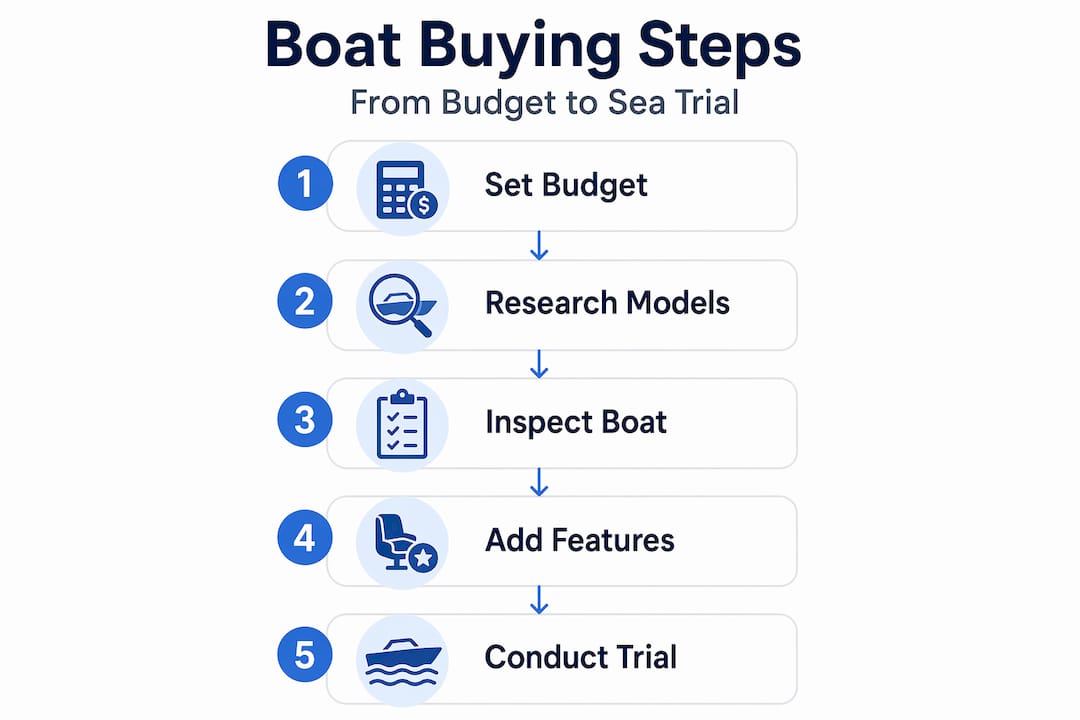
How to inspect new and used boats thoroughly
Whether you’re looking at a fresh build or a three-year-old pre-owned center console, a structured inspection is non-negotiable. Missing this step is how buyers end up with boats that need $15,000 in remediation before their first offshore trip.
On new boats, start with the electrical system. Neat, secure wiring in the bilge and throughout the console is a strong signal of quality construction. Loose connections and bundled wire chaos are red flags regardless of how clean the gelcoat looks. Open the lazarette and confirm bilge pump access is practical and seacock placement makes sense.
Next, measure cockpit and walkway dimensions in person. Photos lie. A cockpit that looks spacious in a listing can feel cramped the moment you put four people in it with rods out. Offshore gunwales should reach at least 24 inches in height to keep anglers dry and stable in rough conditions. This is one of those details that buyers feel on their fourth trip, not their first.
For used sportfishing boats, the inspection checklist gets more serious:
- Hull inspection: Look for stress cracks, osmotic blisters, and fading that signals UV neglect. Pay close attention to the transom, which takes the most structural stress over time.
- Engine check: Start the engine and listen carefully for knocking, rough idle, or excessive smoke. Request full service records and repair history.
- Bilge and stringers: Signs of standing water in the bilge or soft spots in stringers signal potential structural compromise.
- Documentation: Confirm title is clean, registration is current, and there are no outstanding liens.
- Safety gear audit: Check flares, fire extinguishers, and life jackets for expiration and condition.
Pro Tip: Hire a certified marine surveyor for any used boat purchase over $30,000. A survey typically costs $15 to $25 per foot of vessel length and can save you multiples of that in avoided repairs.
For a detailed walkthrough of what to look for, our yacht inspection checklist guide covers the full process for Florida buyers.
| Inspection Area | New Boats | Used Boats |
|---|---|---|
| Wiring & electrical | Check for neat routing and secure connections | Inspect for corrosion, splices, and amateur repairs |
| Hull condition | Verify gelcoat finish and construction quality | Check for cracks, blisters, and transom softness |
| Engine | Confirm warranty and run hours | Start and listen; request full service records |
| Cockpit & gunwales | Measure dimensions and gunwale height | Check for wear, non-skid degradation, and hardware |
Choosing the right model for your fishing needs
This is where the best sportfishing boats earn their reputations, and where buyers often get lost comparing spec sheets instead of matching models to real-world fishing plans.
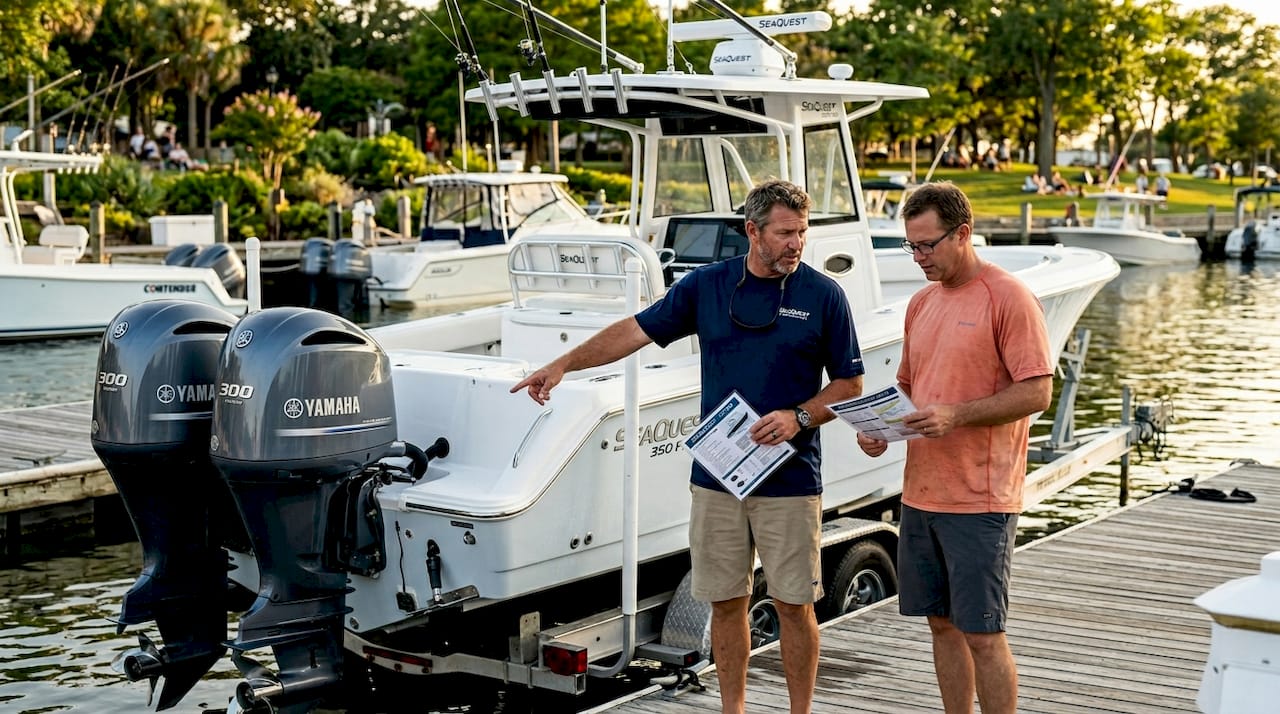
The Sea Hunt Gamefish lineup is one of the best studied examples for how boat size directly correlates to fishing range and capability. The Gamefish 25 starts around $152,000 and excels as a nearshore platform. The Gamefish 27, around $185,000, handles versatile offshore duty. Step up to the Gamefish 28 at approximately $225,000 and you have a boat capable of canyon runs. The Gamefish 30, near $276,000, is built for serious long-range offshore work.
These price points reflect base configurations. Options will move that number up, sometimes significantly.
Here is how to map your needs to the right model category:
- Nearshore and inshore anglers: Look at 22 to 25-foot center consoles with shallow draft, agile handling, and efficient single-engine setups. If you want to try the category before committing, a fishing boat rental in your target size range is worth the investment.
- Day-trip offshore anglers: The 25 to 28-foot range offers the balance of fuel capacity, cockpit space, and rough-water capability most weekend anglers need.
- Tournament and canyon fishermen: 28 feet and above with twin-engine configurations, large livewells, and significant fishbox capacity are the standard here.
- Family-oriented buyers: Look for models that offer comfortable seating forward, enclosed heads, and shade solutions without sacrificing cockpit fishing space.
Top sportfishing brands like Sea Hunt, Contender, Yellowfin, Grady-White, and Pursuit each have distinct design philosophies. Reading sportfishing boat reviews for the specific models you are considering will reveal handling nuances no spec sheet captures.
Understanding total cost of ownership
Sticker price is a starting point, not the finish line. This is where many first-time buyers get an unpleasant surprise three months after the sale.
Features like trim tabs, electronics, and outriggers are frequently not included in base pricing. A new center console listed at $185,000 can easily reach $215,000 or more by the time you add a chartplotter, VHF radio, outriggers, a quality fishfinder, and proper rigging. This is not deceptive on the dealer’s part. It is the normal structure of boat pricing. But you need to know it before you negotiate.
Use those feature gaps as leverage. If the boat you want is missing trim tabs and a complete electronics package, you have a documented, quantifiable gap between the listed price and the true fishing-ready cost. That gap is your negotiation starting point.
Ongoing costs to budget annually include:
- Engine service: Outboard service intervals typically run every 100 hours or annually, at $500 to $1,500 per engine depending on size
- Bottom paint: Annual haul-out and antifouling paint for a kept-in-slip boat runs $1,500 to $3,500 depending on vessel size
- Insurance: Offshore sportfishers typically cost 1.5% to 2.5% of hull value annually
- Electronics upgrades: Technology evolves fast; budget for periodic updates to your chartplotter and fishfinder systems
Pro Tip: Build a spreadsheet with three columns: base price, fishing-ready additions, and annual ownership costs. Total all three before comparing boats. A $10,000 difference in sticker price often disappears when you account for what each boat still needs.
Understanding how fishing features affect resale value is also worth your time before you buy.
Sea trials and final purchase checklist
Never skip the sea trial. Not for a new boat, not for a used one. This is your one real opportunity to confirm that what looked great on the dock performs the way it should on the water.
Follow this sequence for an effective sea trial:
- Idle and low-speed handling: Move the boat slowly in tight quarters to check steering response and prop wash behavior.
- Holeshot and planing: Accelerate to confirm the boat gets on plane cleanly without excessive porpoising or list.
- Cruising rpm economy: Assess fuel burn at cruising speed (typically 3,500 to 4,500 rpm) to confirm manufacturer claims.
- Wide-open throttle run: Verify top speed and that the engine reaches rated rpm without strain.
- Handling in a turn: Hard turns at speed should feel controlled, not alarming.
- Trim behavior: Test trim tabs through their range and confirm they correct list and bow angle as expected.
- Comfort in chop: If conditions allow, run the boat into some wave action and feel how the hull handles it.
After the sea trial, complete your final checklist before signing:
- Confirm all warranties in writing, including engine and hull coverage
- Verify the title is clean and the HIN matches the documentation
- Walk through every piece of included equipment and confirm it is operational
- Get any dealer commitments about accessories or rigging in the purchase agreement
- Confirm your slip or trailer situation is ready before the delivery date
My honest take on buying a sportfishing boat
I have watched a lot of buyers make this decision, and the pattern is consistent. The ones who are most satisfied a year later are the ones who bought for their actual fishing life, not their aspirational one.
The most common mistake I see? Buying too much boat. A 30-foot offshore machine sounds amazing until you realize you fish nearshore 90% of the time, your fuel bills are punishing, and docking feels stressful every single trip. Match the boat to the fishing, not to the ego.
The second most common mistake is ignoring the hidden cost of missing features. A boat that looks affordable on paper can become frustrating quickly when you are writing checks for electronics, rigging, and trim tabs that should have been priced into the deal from the start. Feature absences hit your budget just as hard as the features that are there.
My advice: be patient. The right boat is out there, and walking away from a decent deal to wait for a great one is almost always the correct call. I have never met anyone who regretted a thorough inspection. I have met plenty who regretted skipping one.
— Jason
Ready to find your perfect sportfishing boat?
At Yachtingexperts, we work alongside serious anglers and first-time buyers with the same level of commitment. We know the market, we know the boats, and we know how to protect your investment from day one.

Whether you are buying your first center console or upgrading to an offshore sportfisher, our team provides personalized yacht buying support that takes the uncertainty out of one of your biggest purchases. We handle vessel sourcing, private viewings, and negotiation so you walk away confident. When you are ready to trade up someday, we will help you maximize your boat’s sale value too. Reach out to our team and let’s get started.
FAQ
What size sportfishing boat do I need for offshore fishing?
For offshore fishing beyond 20 miles, a center console or sportfish of at least 25 feet is the practical starting point. Boats in the 27 to 30-foot range offer more fuel capacity, cockpit space, and rough-water stability for extended offshore trips.
How much does a new sportfishing boat cost?
New sportfishing boats range from roughly $80,000 for a basic 22-foot center console to over $276,000 for a fully capable 30-foot offshore platform. Final cost depends heavily on added electronics, rigging, and fishing equipment not included in the base price.
Should I buy a new or used sportfishing boat?
Used boats offer significant savings but require a thorough hull and engine condition inspection and a certified marine survey. New boats carry warranties and allow custom configurations, but the depreciation in the first few years is steep.
What features should I look for in a sportfishing boat?
Prioritize livewell capacity, fishbox size, gunwale height for offshore safety, rod holder count, and quality of the electrical system. Cockpit and walkway space are critical for safe and comfortable fishing with a crew.
Can I negotiate the price of a sportfishing boat?
Yes, and you should. Use any missing fishing-ready features like trim tabs and electronics as documented leverage. On used boats, findings from your marine survey give you a fact-based case for price reduction or seller-funded repairs.
Recommended
Request A Call
Featured Listings

2027 Canados
100
Miami Florida

2015 Maiora
$3,750,000
90
Miami Florida

2027 Canados
57
Miami Florida

2019 Silent-Yachts Fair Dinkum
$1,599,000
55
Fort Lauderdale Florida

2026 Canados
49
Miami Florida

2026 Buddy Davis
47
Miami Florida

2020 Grady-White No Name
$610,000
45
Hallandale Beach Florida

2020 Viking Huckleberry
$1,495,000
44
Fort Lauderdale Florida

2027 Canados
43
Miami Florida

2021 Intrepid Dream Faster
$730,000
40
Coral Gables Florida

2016 Edgewater
$299,000
37
Miami, Florida

2022 Avid
$56,900
23
Stuart Florida
Get your yacht value Estimate
"*" indicates required fields