

Selling a boat is not like selling a car. The paperwork is different, the buyer pool is smaller, and the stakes are higher. Without a clear selling your boat checklist in hand, it’s easy to miss steps that cost you time, money, or both. We’ve watched sellers lose thousands simply because they skipped a few prep items or trusted a verbal agreement during a sea trial. This guide gives you a structured, practical checklist for selling a boat that covers everything from pricing and documentation to staging, listing, and closing the deal with confidence.
Table of Contents
- Key Takeaways
- 1. Your selling your boat checklist starts with clear goals
- 2. Gather all your documents before anything else
- 3. Research comparable boats to price it right
- 4. Deep clean and address every small defect
- 5. Stage the boat for photos and showings
- 6. Build a listing with the right visuals and copy
- 7. Screen buyers before sharing sensitive details
- 8. Prepare a formal sea trial agreement
- 9. Negotiate with a firm floor and honest claims
- 10. Close the sale with the right paperwork and payment
- My honest take on what sellers consistently get wrong
- Ready to sell smarter? Yachtingexperts has your back
- FAQ
Key Takeaways
| Point | Details |
|---|---|
| Price with commission in mind | Broker fees run about 10%, so build that into your asking price from day one. |
| Presentation changes perception | A clean, organized helm signals mechanical care to buyers even before they ask a single question. |
| Documentation speeds up closing | Having your title, registration, and lien release ready in advance prevents delays at the finish line. |
| Screen buyers before sea trials | Require signed agreements and a refundable deposit before any stranger takes your vessel out on the water. |
| Accurate claims protect your price | Honest performance specs build trust and reduce the chance of last-minute renegotiation. |
1. Your selling your boat checklist starts with clear goals
Before you post a single photo, sit down and define what a successful sale looks like for you. What is your minimum acceptable price? What is your ideal timeline? Are you open to a broker, or do you prefer a private sale?
These decisions shape everything that follows. Professional boat brokers typically charge around 10% commission on the final sale price, which means if you want to net $250,000, your list price should open at roughly $275,000. Knowing this math upfront prevents painful surprises at closing.
Pro Tip: Write your walk-away number on a piece of paper and keep it somewhere visible during negotiations. Emotional moments happen fast, and a written number keeps you grounded.
Setting your method of sale early also determines how much prep work falls on your plate. A private sale gives you full control and full profit, but it demands more of your time and energy. A broker handles inquiries, negotiations, and paperwork in exchange for that commission. Neither path is wrong. They just require different levels of involvement from you.
2. Gather all your documents before anything else
Nothing stalls a boat sale faster than missing paperwork. Buyers get nervous, deals fall apart, and you lose momentum. Pull all of this together before your boat goes live anywhere.
- Certificate of title (or manufacturer’s certificate of origin for newer vessels)
- Current registration documents
- Lien release or payoff letter if the boat carries a loan
- Bill of sale template ready to customize for the buyer
- Maintenance logs and service records
- Warranty documents for any installed equipment
- Documentation from the U.S. Coast Guard if federally documented
Confirm your ownership status and lien situation immediately. If a lienholder is involved, contact them now to understand the payoff process and timeline. This is one of the most overlooked steps in the boat selling process, and it can delay closing by weeks if left until the last minute.
3. Research comparable boats to price it right
Pricing too high kills buyer interest. Pricing too low leaves money on the table. Evaluating your boat’s value accurately requires real market research, not gut feelings.
Search active listings for boats with the same make, model, year, engine hours, and condition. Pay attention to how long similar boats have been sitting unsold. If a comparable vessel has been listed for six months, that asking price is probably too high for current demand.
Factor in your region, your boat’s unique upgrades, and whether a trailer is included. A trailer can meaningfully increase perceived value for trailerable boats, especially for buyers who don’t have slip access. Pricing with precision from the start attracts serious buyers and gives you less room for aggressive lowball offers.
4. Deep clean and address every small defect
Boat preparation is less about showroom perfection and more about eliminating buyer doubts from easy fixes. A buyer who spots a dead navigation bulb or a sticky latch starts mentally cataloging everything else that might be wrong. Small problems become big question marks.
Here is what to cover during your physical boat sale preparation:
- Scrub the hull, deck, and transom thoroughly
- Clean the bilge and remove any standing water or odor
- Wipe down the engine compartment and check fluid levels
- Shampoo upholstery, clean all cushions, and remove mildew
- Replace any burned-out bulbs and fix sticky or broken latches
- Remove all personal items and accessories not included in the sale
- Organize storage compartments so they look spacious, not cramped
Fixing small items like navigation bulbs or sticky latches prevents buyers from speculating about much bigger issues. It signals that the boat has been well cared for by someone who pays attention. That perception directly protects your asking price.
5. Stage the boat for photos and showings
Staging is not decoration. It is strategy. Buyers form strong first impressions in seconds, and most of those impressions come from photos before they ever set foot on the boat.
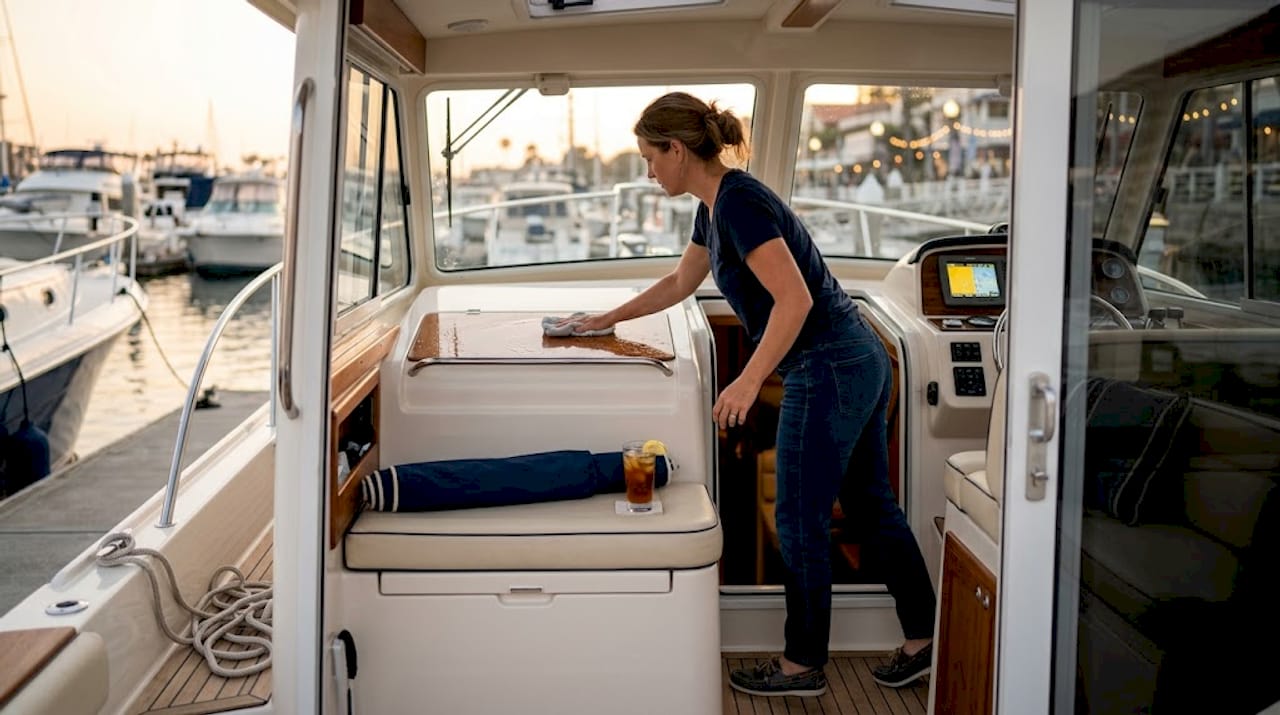
Photos of a cluttered helm with soda cans and salt residue on the dash lower buyer perception regardless of the actual mechanical condition. A clean, organized helm tells a completely different story. It communicates pride of ownership.
Pro Tip: Shoot your photos on an overcast day or in soft morning light. Harsh midday sun creates harsh glare on fiberglass and makes interiors look dark and uninviting.
Remove anything that is not part of the sale. Neutral scents matter too. Avoid heavy air fresheners, which buyers associate with masking odors. A simply aired-out, clean boat smells like a boat that has been taken care of.
6. Build a listing with the right visuals and copy
Your boat listing is your first conversation with a buyer. Make it count. Weak listings with blurry photos and vague descriptions attract low offers and tire-kickers. Strong listings attract qualified buyers who are ready to move.
Effective boat listing essentials include:
- Photos: Aim for 20 to 35 high-quality images covering hull sides, transom, helm, engine bay, bilge, upholstery, and the HIN plate
- Video: A walkaround video adds massive credibility and dramatically reduces unqualified inquiries
- Ad copy: Include year, make, model, engine hours, recent service history, upgrades, and trailer status
- Condition notes: Be specific and honest. “Minor gelcoat scuff on port stern” is better than vague language that makes buyers wonder what you are hiding
Here is a quick comparison of popular listing platforms and their costs:
| Platform | Listing Cost Range | Notes |
|---|---|---|
| Boat Trader | $69 to $399 | Largest audience, tiered packages |
| BoatCrazy | $19 to $69 | Budget-friendly, smaller reach |
| eBay Motors | Fees plus commissions | Broad general audience |
Budget for listing fees as part of your sale costs. Even at the higher end, a quality listing on a high-traffic platform pays for itself many times over in buyer quality.
7. Screen buyers before sharing sensitive details
Not every inquiry comes from a genuine buyer. Protect yourself from the start. Screen buyers early and be cautious about sharing sensitive information like your HIN number or home address until you have verified someone is serious.
A buyer who refuses to answer basic qualification questions is a red flag. Ask about their experience operating a similar vessel, their financing status, and their intended use. This conversation filters out joyriders fast and helps you focus your time on people who can actually close.
8. Prepare a formal sea trial agreement
Sea trials are non-negotiable for most buyers. They are also your biggest liability exposure before the sale closes. Protect yourself with a written agreement before the engine starts.
Sea trial agreements should cover liability in case of damage, fuel costs, operating restrictions, and what happens if something breaks during the trial. Require a refundable deposit and proof of funds before the sea trial happens. This one step separates genuine buyers from people who just want a free afternoon on the water.
Pro Tip: Stay on board during the sea trial. You know your boat better than anyone, and being present helps you answer questions in real time and catch any misuse early.
9. Negotiate with a firm floor and honest claims
Inaccurate performance claims are one of the fastest ways to lose a deal or get hit with a post-sale dispute. If your boat cruises comfortably at 28 knots but tops out at 34, say exactly that. Buyers who feel misled start pulling on every loose thread they can find.
Go into every negotiation knowing your walk-away number. Buyers will push, especially after a survey or sea trial. Know in advance which concessions you are willing to make and which ones you are not. Agreeing to fix a legitimately identified issue is fair. Caving to invented problems because you feel pressured is not.
10. Close the sale with the right paperwork and payment
Safe payment and a clean title transfer are the final steps of the boat selling process. Do not shortcut either one.
- Accept payment by wire transfer or certified funds only. Personal checks are a significant fraud risk.
- Be cautious of overpayment scams where a “buyer” sends more than the agreed price and asks for a refund of the difference.
- Sign the title over to the buyer only after funds have fully cleared.
- Provide a signed bill of sale that includes the purchase price, HIN, and both parties’ information.
- If a lien is involved, coordinate with your lender to release the title directly to the buyer or their lender.
- Advise the buyer on how to register the vessel in their name and which documents they will need.
A clean, well-documented closing protects you legally and leaves the buyer with confidence that they made the right decision.
My honest take on what sellers consistently get wrong
I’ve worked with a lot of boat sellers over the years, and the pattern I see most often is this: people overinvest in cosmetic improvements while ignoring the documentation side of the sale entirely.
In my experience, a buyer who finds a clear title, organized service records, and a signed sea trial agreement in hand feels far more confident than one who sees a freshly detailed boat with no paperwork to back it up. The paperwork communicates trust. The detailing communicates effort. You need both, but most sellers only focus on one.
What I’ve also learned is that sellers who set firm, written walk-away numbers before negotiations start consistently close at better prices. Pressure in the moment is real. A number written down before the pressure starts keeps you from agreeing to something you’ll regret.
The other thing I’ll say plainly: do not ignore minor repairs because you think buyers won’t notice. They notice. And when they do, they assume the worst about everything they can’t see. Small fixes signal responsible ownership and reduce buyer suspicion about what might be lurking below the waterline.
— Jason
Ready to sell smarter? Yachtingexperts has your back
At Yachtingexperts, we specialize in helping boat owners get the best possible return on their sale, without the stress or guesswork.

Whether you need guidance on preparing your yacht for sale or want a professional team to handle the entire boat selling workflow from listing to closing, we bring the market knowledge, personal attention, and proven process to maximize your ROI. Florida boat owners can also tap into our Florida-specific selling tips designed for our local market. When you are ready to take the next step, our team at Yachtingexperts is here to make the process feel less like a transaction and more like a handoff to someone who genuinely cares about your outcome.
FAQ
How much does it cost to list a boat for sale?
Listing fees range from $19 to $399 depending on the platform, with Boat Trader being the most expensive and most trafficked. Budget for listing costs as part of your total sale expenses.
What documents do I need to sell my boat?
You need the certificate of title, current registration, a bill of sale, and any lien release documents if the vessel carries a loan. Having these ready before listing prevents delays at closing.
Do I have to offer a sea trial?
Most serious buyers expect one. Protect yourself by requiring a signed sea trial agreement, a refundable deposit, and proof of funds before anyone takes your boat out on the water.
What is the safest way to accept payment when selling a boat?
Wire transfer or certified funds are the safest options. Avoid personal checks and be alert to overpayment scams, which are a known fraud tactic in private boat sales.
Should I use a broker or sell my boat privately?
A broker typically charges around 10% of the sale price but handles marketing, negotiations, and paperwork. A private sale keeps more money in your pocket but requires significantly more time and expertise from you.
Recommended
Request A Call
Featured Listings

2027 Canados
100
Miami Florida

2015 Maiora
$3,750,000
90
Miami Florida

2027 Canados
57
Miami Florida

2019 Silent-Yachts Fair Dinkum
$1,599,000
55
Fort Lauderdale Florida

2026 Canados
49
Miami Florida

2026 Buddy Davis
47
Miami Florida

2020 Grady-White No Name
$610,000
45
Hallandale Beach Florida

2020 Viking Huckleberry
$1,495,000
44
Fort Lauderdale Florida

2027 Canados
43
Miami Florida

2021 Intrepid Dream Faster
$730,000
40
Coral Gables Florida

2016 Edgewater
$299,000
37
Miami, Florida

2022 Avid
$56,900
23
Stuart Florida
Get your yacht value Estimate
"*" indicates required fields