

If you think the listing price on a Florida yacht is the final price, you’re leaving serious money on the table. Buyers and sellers in this market rarely settle at face value. In fact, negotiation ranges vary significantly by yacht size, condition, and season, with offers routinely coming in 5 to 20% below asking. This guide walks you through every phase of the negotiation process, from initial contact to closing, so you can approach your next deal with confidence, clarity, and a real edge.
Table of Contents
- How yacht price negotiations work in Florida
- Setting the stage: Preparation for buyers and sellers
- What’s negotiable? Price ranges and leverage factors
- Expert tactics: Strategies for successful negotiation
- Florida specifics: Seasonality, location, and market nuances
- Our perspective: Negotiation myths and real-world wisdom
- Unlock more value with Florida’s top yacht advisors
- Frequently asked questions
Key Takeaways
| Point | Details |
|---|---|
| Negotiations are the norm | Rarely does anyone pay or receive the listing price in Florida yacht deals. |
| Preparation drives results | Buyers and sellers improve their outcomes with research, documentation, and realistic budgets. |
| Know your leverage | Factors like market timing, yacht survey findings, and location can shift negotiation power in your favor. |
| Use proven tactics | Effective strategies like anchoring, strategic concessions, and professional broker support can maximize ROI. |
How yacht price negotiations work in Florida
Negotiation in the Florida yacht market is not a single conversation. It’s a structured, multi-phase process with clear steps and responsibilities on both sides. Understanding the sequence before you start protects you from costly missteps.
Here’s how a typical yacht negotiation unfolds:
- Initial contact and offer. The buyer submits a written offer through a broker or directly to the seller. This is your opening position, so it matters.
- Counteroffer exchange. The seller responds with a counteroffer. Several rounds are normal. Expect back-and-forth before landing on a number both sides accept.
- Survey and sea trial. Once a price is tentatively agreed upon, the buyer arranges an independent marine survey and sea trial. This step is non-negotiable if you want to protect your investment.
- Post-survey negotiation. Survey findings often reopen price discussions. Defects discovered during inspection can justify further reductions or seller-funded repairs.
- Final offer and closing. Both parties agree on a final price, terms, and closing date. Funds are typically held in escrow until the transaction is complete.
The yacht sales process in Florida follows maritime law and standard brokerage agreements, which means there are formal documents at every step. This structure actually works in your favor because it creates clear checkpoints where negotiation is expected.
“The key negotiation process involves initial contact, survey, formal offer, and counteroffers. Each phase gives both parties defined leverage points.”
As a buyer, your job is to stay calm and methodical at each stage. As a seller, your job is to respond promptly and professionally. Understanding how yacht deals work before you sit down at the table is one of the smartest advantages you can give yourself.
Setting the stage: Preparation for buyers and sellers
Understanding the negotiation stages is useful, but success often comes down to preparation. The most prepared party almost always walks away with the better deal.
For buyers, preparation means:
- Setting a firm maximum budget that includes purchase price, taxes, insurance, docking fees, fuel, and maintenance
- Researching comparable listings in Florida to understand fair market value
- Getting pre-approved financing so you can move quickly when the right vessel appears
- Identifying your must-haves versus nice-to-haves before you tour any yacht
For sellers, preparation means:
- Gathering maintenance logs, service records, and any recent surveys
- Completing minor repairs before listing to avoid giving buyers easy ammunition
- Pricing the vessel based on current market data, not what you paid or what you need
- Having a clear bottom line in mind before the first offer arrives
Pro Tip: Buyers should always calculate the total cost of ownership, not just the asking price. A yacht priced $50,000 below market could cost you far more in deferred maintenance within the first year.
The Florida yachting guide is a strong resource for understanding what ownership actually costs in this state, from hurricane insurance to marina rates. Knowing those numbers before you negotiate puts you in a much stronger position.
Sellers who arrive with complete documentation signal professionalism and confidence. That alone can discourage lowball offers. Buyers who come in with solid research signal seriousness, which often motivates sellers to engage more openly. Preparation is the foundation of every successful deal, and the Florida yacht buying tips that experienced brokers share consistently point back to this truth.
Statistic: Buyers who calculate full ownership costs upfront are significantly less likely to experience buyer’s remorse or financial strain in the first two years of ownership.
What’s negotiable? Price ranges and leverage factors
Once you’re prepared, it’s important to know what a realistic negotiation looks like in current Florida conditions. Not every yacht negotiates the same way, and walking in with unrealistic expectations can derail a deal fast.

| Yacht size | Typical asking price range | Common negotiation range |
|---|---|---|
| Under 30 ft | $30,000 to $150,000 | 5 to 10% below asking |
| 30 to 50 ft | $150,000 to $600,000 | 8 to 15% below asking |
| 50 to 80 ft | $600,000 to $3,000,000 | 10 to 20% below asking |
| Over 80 ft | $3,000,000 and above | 10 to 20%+ depending on condition |
As a general rule, Florida negotiation ranges show that offers typically start 5 to 20% below the asking price, with larger and older vessels allowing more room to move. Newer yachts in high demand may see much tighter margins.
Several factors shift your leverage during negotiation:
- Days on market. A vessel listed for 90 days or more gives buyers significantly more room to negotiate.
- Survey findings. Every defect documented in an independent marine survey is a legitimate reason to revisit price.
- Seller motivation. A seller facing a life change, upgrade, or financial pressure is often more flexible.
- Market inventory. When similar yachts are plentiful, buyers gain leverage. When inventory is tight, sellers hold the cards.
“Inspections and surveys are not just due diligence. They are negotiation tools.”
This is why skipping the survey is one of the costliest mistakes a buyer can make. Beyond protecting you from hidden defects, the survey report gives you documented, professional justification to request a price reduction. Explore our yacht negotiation strategies for a deeper breakdown of how to use survey findings effectively.
Expert tactics: Strategies for successful negotiation
Knowing the numbers is half the battle. Now let’s examine the tactics the pros use to secure the best deal.
Top negotiation tactics used by experienced yacht brokers:
- Anchoring. Start with a lower offer than your target price. This sets the psychological reference point for the entire negotiation and gives you room to move up while still landing where you want.
- Strategic concessions. Never give something without getting something in return. If you move on price, ask for included equipment, extended warranties, or a faster closing.
- Timing your offer. Submitting an offer at the end of the selling season or just before the seller’s listing agreement expires can significantly increase your leverage.
- Using a broker. A skilled broker removes emotion from the process, knows market norms, and can negotiate terms you might not even think to ask for.
Pro Tip: If you’re negotiating directly without a broker, be careful about revealing your true budget or timeline. Sellers and their agents are trained to use that information to their advantage.
The yacht broker role in Florida is genuinely valuable, not just as a transaction facilitator but as a strategic partner. Brokers understand Florida yacht commission structures and can often negotiate terms that more than offset their fee.
The biggest mistakes buyers and sellers make include rushing to close, ignoring full ownership costs, and skipping the survey entirely. Each of these shortcuts tends to cost far more than the time or money saved. Anchoring, strategic concessions, and timing are the core tools that experienced negotiators rely on, and they work because they are grounded in market reality, not wishful thinking.
Florida specifics: Seasonality, location, and market nuances
Beyond negotiation tactics, Florida’s local market and environment create additional factors you need to understand before making or accepting any offer.
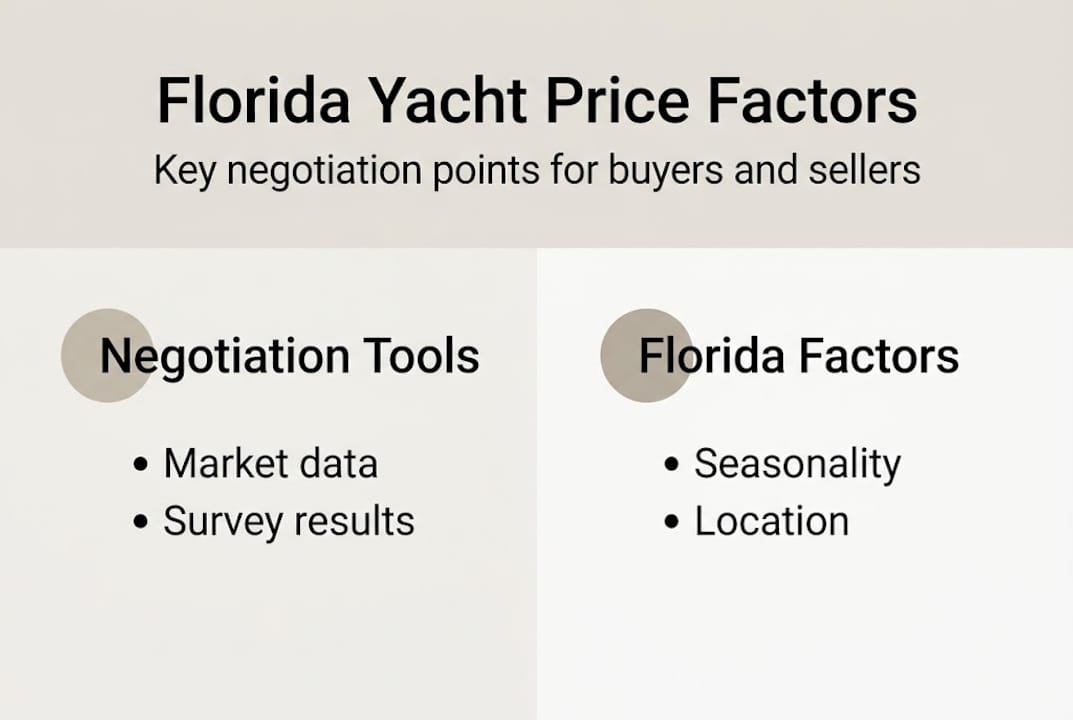
Seasonal impact on negotiating power:
| Season | Market dynamic | Who benefits |
|---|---|---|
| November to March | Peak selling season, high demand | Sellers |
| April to June | Transitional, balanced market | Neutral |
| July to September | Slower activity, more inventory | Buyers |
| October | Pre-season pickup begins | Sellers gain momentum |
Seasonality shifts negotiating power in ways that most first-time buyers and sellers underestimate. If you’re buying, summer is your window. If you’re selling, listing in late fall positions you to capture peak demand.
Florida-specific factors that affect value and negotiation:
- Saltwater exposure. Florida’s saltwater environment accelerates corrosion on engines, fittings, and hull hardware. This is a legitimate and often significant negotiation factor.
- Miami’s global market. Miami attracts international buyers who often pay closer to asking price, which can make negotiations tighter in that market than in, say, Tampa or Jacksonville.
- Hurricane history. A vessel with any documented storm damage, even repaired, carries a stigma that affects resale value and gives buyers real leverage.
- Storage and slip costs. Premium marina locations in South Florida command higher costs, which affects the overall value proposition for buyers.
Our boat selling tips for Florida sellers go deeper on how to position your vessel to minimize the impact of these local factors on your final sale price.
Our perspective: Negotiation myths and real-world wisdom
With the facts and strategies in hand, it’s worth considering what most guides leave unsaid about negotiating boat prices.
The biggest myth we see repeated is that the buyer who gets the lowest price wins. That framing misses the point entirely. We’ve watched buyers win on price only to lose on terms, timing, or post-sale surprises that a more thorough process would have caught. The real goal is not the lowest number. It’s the best overall deal.
Professionalism and preparation consistently outperform aggressive tactics. Sellers respond better to serious, well-prepared buyers. Buyers get more honest disclosures from sellers who feel respected. The market rewards patience and expertise far more reliably than hardball negotiation.
Year after year, what we see is this: the clients who invest time in understanding yacht investment ROI before they negotiate are the ones who walk away genuinely satisfied. They know what they’re buying, they know what it’s worth, and they make decisions from a position of strength rather than urgency. That is the real edge.
Unlock more value with Florida’s top yacht advisors
You now have a clear picture of how Florida yacht negotiations actually work. Putting that knowledge into action is where we come in.

At Yachting Experts, we guide buyers and sellers through every phase of the complete yacht sales process with personalized, hands-on support. Whether you’re submitting your first offer or preparing to list a vessel, our team brings real market insight and genuine passion to every deal. Work with a yacht broker who knows the Florida market inside and out, and you’ll negotiate from a position of real strength. Ready to maximize sale ROI or find the right vessel at the right price? Let’s make it happen together.
Frequently asked questions
How much can you negotiate off the asking price of a yacht in Florida?
Depending on yacht size, buyers typically negotiate 5 to 20% below the asking price in Florida, with larger and older vessels offering more room to move.
Are surveys essential when negotiating yacht price?
Absolutely. Survey findings provide documented, professional justification to request price reductions and protect you from costly hidden defects.
What is the biggest negotiation mistake for yacht buyers?
Rushing the process or ignoring full ownership costs leads to poor deals. Skipping these steps almost always results in higher long-term expenses than any short-term savings.
Does selling in summer or winter affect yacht price negotiations in Florida?
Yes. Winter selling favors sellers and supports higher prices, while summer gives buyers more inventory to choose from and more room to negotiate.
Recommended
Request A Call
Featured Listings

2027 Canados
100
Miami Florida

2015 Maiora
$3,750,000
90
Miami Florida

2027 Canados
57
Miami Florida

2019 Silent-Yachts Fair Dinkum
$1,599,000
55
Fort Lauderdale Florida

2026 Canados
49
Miami Florida

2026 Buddy Davis
47
Miami Florida

2020 Grady-White No Name
$610,000
45
Hallandale Beach Florida

2020 Viking Huckleberry
$1,495,000
44
Fort Lauderdale Florida

2027 Canados
43
Miami Florida

2021 Intrepid Dream Faster
$730,000
40
Coral Gables Florida

2016 Edgewater
$299,000
37
Miami, Florida

2022 Avid
$56,900
23
Stuart Florida
Get your yacht value Estimate
"*" indicates required fields