

Choosing a luxury yacht in Florida is one of the most exciting decisions you’ll ever make, but it’s also one of the most complex. The Sunshine State’s year-round boating season, demanding salt air, and busy coastal waterways create a unique set of requirements that go far beyond aesthetics. The right features protect your safety, elevate every hour on the water, and defend your investment when resale time comes. Get it wrong, and a beautiful vessel can become an expensive liability. This guide gives you a practical, expert-backed framework to cut through the noise and identify exactly which features matter most for Florida luxury yacht ownership.
Table of Contents
- How to evaluate must-have yacht features
- Top must-have mechanical and safety features
- Electrical systems: Redundancy and safety for Florida yachts
- Comfort and autonomy: Cutting-edge convenience features
- Comparing must-have features: Investment and lifestyle benefits
- The uncomfortable truth about must-have features
- Ready for a smarter Florida yacht investment?
- Frequently asked questions
Key Takeaways
| Point | Details |
|---|---|
| Safety features first | Reliable seacocks, redundant systems, and regular diagnostics are non-negotiables for security and value. |
| Electrical redundancy matters | Backup power and waterproof, well-grounded installs are must-haves for Florida’s challenging climate. |
| Comfort boosts investment | Features like watermakers and smart automation increase both onboard enjoyment and resale appeal. |
| Expert inspections pay off | Certified surveys reveal issues basic checklists miss, protecting your purchase and long-term investment. |
| Choose for Florida realities | Salt, humidity, and year-round use mean prioritizing durable, low-maintenance materials and systems. |
How to evaluate must-have yacht features
Before examining the essential feature list, it’s important to know how to assess what will matter for your Florida yachting lifestyle. Not every upgrade deserves the same urgency, and knowing how to separate a true must-have from an attractive add-on will save you both money and frustration.
A must-have feature is anything that directly affects safety, operational reliability, regulatory compliance, or long-term resale value. A nice-to-have is anything that enhances comfort or style without materially changing those four pillars. That distinction sounds simple, but it gets complicated fast when you’re standing aboard a stunning vessel with a list of impressive options.
Florida’s yachting environment makes this evaluation even more specific. The combination of high humidity, intense UV exposure, saltwater, and heavy summer storm activity means that systems built for occasional fair-weather use simply won’t hold up. When you’re reviewing 2026 luxury yacht feature trends, you’ll notice that durability and redundancy consistently top the priority list for experienced Florida buyers.
Key criteria for separating must-haves from nice-to-haves:
- Does the feature directly affect safety or emergency response capability?
- Does it protect against Florida’s specific environmental stressors?
- Will it be expected by future buyers in the Florida luxury market?
- Does it reduce operating costs or maintenance complexity over time?
- Is it covered or required under industry standards for yacht features?
Buyers who review yacht amenities examples often focus on interiors and entertainment, but our team consistently sees that the most satisfied long-term owners prioritize systems reliability first and luxury finishes second. As top buyers confirm, must-have themes include efficient propulsion, reliable stabilization, easy operation, and redundancy in key systems.
“The single most common regret we hear from yacht buyers is not inspecting mechanical and electrical systems thoroughly enough before purchase. A beautiful galley won’t matter if the engine room isn’t reliable.”
Pro Tip: Before you fall in love with a specific vessel, write down your top three use cases. Weekend entertaining, extended coastal cruising, and offshore fishing each demand different feature priorities. Build your must-have list around those use cases first.
Top must-have mechanical and safety features
Once your evaluation criteria are set, the first critical area is onboard safety and mechanical robustness. This is where investment value and personal safety intersect most directly.
Florida’s waterways are unforgiving when mechanical systems fail. Thunderstorms can develop within minutes, and being caught offshore with compromised systems is a genuine risk. Here are the core mechanical and safety features every Florida luxury yacht should have:
-
Seacocks and through-hull fittings: These are the single most critical safety components below the waterline. Seacock failures are a primary flooding cause and must be inspected, operable, and made of appropriate corrosion-resistant materials. Always verify they turn freely and are properly bonded.
-
Redundant propulsion or emergency steering: A backup power or steering option ensures you can maneuver safely if the primary system fails.
-
Liferafts and EPIRB systems: Coast Guard-approved liferafts and a registered Emergency Position Indicating Radio Beacon (EPIRB) are non-negotiable for offshore use in Florida.
-
Automatic fire suppression: Engine room and galley fire suppression systems dramatically reduce catastrophic risk, especially in enclosed spaces where fuel and heat meet.
-
Emergency generator or backup power: A generator sized for essential loads keeps navigation, communications, and bilge pumps running during primary power failures.
A critical nuance that many buyers overlook: survey checklists are a starting point, not a finish line. Real diagnostics mean running systems under load, using ultrasonic thickness testing on the hull, and having a qualified marine surveyor evaluate the actual condition of components, not just their presence. A box checked on a form does not mean a system is ready to perform.
Review the yacht inspection for safety process carefully before committing to any purchase. We also strongly recommend scheduling essential yacht maintenance evaluations as part of your pre-purchase process.
| Safety feature | Risk if absent | Investment impact |
|---|---|---|
| Seacocks and through-hulls | Catastrophic flooding | Very high |
| Fire suppression system | Total vessel loss | High |
| EPIRB and liferaft | Loss of life offshore | High |
| Redundant steering | Loss of control at sea | Medium-high |
| Emergency generator | Navigation/bilge failure | Medium |
“Think of mechanical safety features as the foundation of the house. Everything else sits on top of them. If the foundation cracks, it doesn’t matter how beautiful the interior is.”
Pro Tip: Ask for maintenance logs and service records going back at least three years. A well-maintained vessel with documented service history commands a premium on resale and signals a conscientious previous owner.
Review luxury charter safety amenities to understand how professional operators set the standard for safety equipment on high-end vessels.
Electrical systems: Redundancy and safety for Florida yachts
Mechanical and safety essentials set the foundation; the next pillar is an equally robust, regulation-compliant electrical system. In Florida, this pillar is especially important because of the state’s extreme humidity, frequent lightning exposure, and year-round usage patterns that accelerate corrosion.
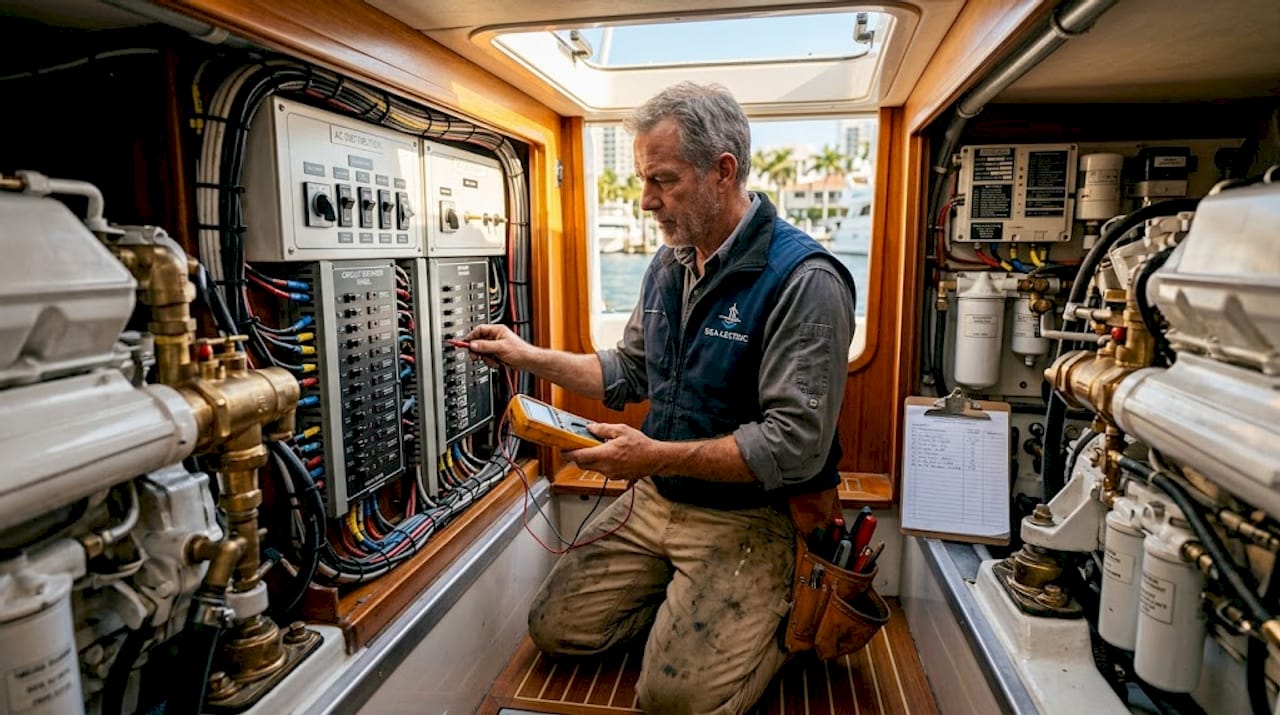
Federal regulations recognize this reality. Vital electrical loads must be capable of being powered from two independent sources, including navigation, communications, and emergency systems. This isn’t just a regulatory box to check; it’s a genuine safety architecture that keeps you informed and in control when the primary system fails.
Additionally, electrical installation standards require equipment to be designed and installed in ways that minimize ignition risk and electrical hazards. For Florida buyers, this means looking for vessels where every connection point is watertight, wiring is properly routed away from fuel systems, and shore power inlets are rated for the Florida marina environment.
Electrical must-haves for Florida luxury yachts:
- Dual shore power connections: Allows simultaneous use of high-draw appliances without overloading a single circuit.
- Marine-grade corrosion-resistant wiring: Tinned copper wire is the standard; avoid aluminum wiring in saltwater-exposed environments.
- Proper grounding and bonding system: Protects against galvanic corrosion, which is one of the most expensive silent threats in Florida marinas.
- Smart monitoring panels: Allow real-time tracking of battery state, shore power draw, and generator load from a tablet or helm display.
- Waterproof junction boxes and breaker panels: Essential for Florida’s frequent spray and high humidity.
Keeping accurate yacht electrical system records is equally important. Documentation of upgrades, inspections, and compliance certifications directly supports resale value.
| Electrical feature | Florida-specific need | Compliance level |
|---|---|---|
| Dual power sources for vital systems | High (storms/outages) | Federal requirement |
| Tinned copper wiring | High (corrosion risk) | Industry best practice |
| Galvanic isolator | High (marina dockage) | Strongly recommended |
| Smart monitoring system | Medium | Buyer preference |
| Watertight breaker panels | High (humidity/spray) | Industry standard |
Understanding yacht maintenance in Florida also means building a schedule that includes annual electrical inspections, since oxidation and connection degradation happen faster in Florida’s climate than nearly anywhere else in the country.
Comfort and autonomy: Cutting-edge convenience features
Beyond technical resilience, must-have comfort and autonomy features determine how your yacht feels and functions daily. Florida’s vast coastline, the Florida Keys, and accessible Bahamas runs mean that extended cruising is not just possible but genuinely exciting. The right features make those journeys seamless.
Top comfort and autonomy features for Florida luxury yachts:
- Watermaker (reverse osmosis system): For extended cruising, a water purification system means independence from marina water sources. Modern systems with automation and monitoring make this a practical daily feature, not just emergency backup.
- Gyroscopic stabilizers: Active stabilization transforms the underway experience in Florida’s often choppy Gulf Stream and coastal waters. This is consistently one of the top buyer priorities for long-range comfort.
- Automated climate control: Florida’s summer heat demands serious HVAC capacity. Smart zoning systems that adjust cabin by cabin reduce energy draw while keeping every space comfortable.
- Remote monitoring and diagnostics: Systems that allow you to check bilge levels, battery status, HVAC, and security from your phone give peace of mind between voyages.
- Flexible deck layouts: Shaded aft decks, flybridge configurations, and convertible interior spaces extend year-round usability across Florida’s varied seasons.
Luxury yacht examples from leading builders show how these comfort features are increasingly integrated as standard rather than optional, reflecting a market-wide shift in expectations. If you’re building out your vision for Florida ownership, the Florida luxury yachting guide offers excellent context on how these features translate to real on-water enjoyment.
Review luxury charter amenities to benchmark your vessel’s comfort features against the highest professional standards in the industry.
Pro Tip: A watermaker paired with a large freshwater holding tank gives you true independence on multi-day Bahamas runs without relying on island marinas that may have limited or inconsistent water quality.
Comparing must-have features: Investment and lifestyle benefits
Understanding each feature’s benefit is made clearer with a direct lifestyle and value comparison. Not every must-have feature carries equal weight across both pillars, and knowing that helps you prioritize budget.
| Feature | Investment value impact | Lifestyle value impact |
|---|---|---|
| Seacocks and through-hulls | Very high | High |
| Gyroscopic stabilization | High | Very high |
| Dual electrical power sources | High | Medium |
| Watermaker | Medium-high | Very high |
| Smart monitoring system | Medium | High |
| Fire suppression | High | Medium |
| Automated climate control | Medium | Very high |
| Emergency generator | High | High |
As industry research confirms, efficient propulsion, reliable stabilization, and system redundancy are the features that move markets. Buyers who plan to eventually sell or trade up will find these features command consistent premiums in the Florida resale market.
Feature combinations for different yachting goals:
- Weekend entertainer: Prioritize stabilization, climate control, and deck layout. Safety systems are still mandatory.
- Extended coastal cruiser: Add watermaker, smart monitoring, and redundant propulsion.
- Offshore adventurer: All of the above, plus EPIRB, liferaft, and long-range fuel capacity.
The smartest buyers balance backup systems with modern amenities rather than treating them as separate budgets. A well-specified vessel with both dependable safety systems and contemporary comfort features appeals to the widest pool of future buyers.
The uncomfortable truth about must-have features
Here’s what most feature guides won’t tell you: the list matters far less than the quality of installation and the integrity of the maintenance record behind it. We’ve seen vessels with every box checked on a feature list that were genuinely unsafe because the installation was poor or the components had been neglected in Florida’s aggressive environment.
Florida’s combination of year-round boating, salt, heat, and humidity is genuinely punishing. Electrical systems that were perfectly adequate in a Pacific Northwest climate deteriorate measurably faster here. The same is true for mechanical systems. What looks pristine cosmetically can hide serious corrosion or fatigue under the surface.
This is why we push every client toward a professional Florida yacht survey that goes beyond a visual checklist. A real diagnostic involves moisture meters, thermal imaging on electrical panels, engine load tests, and hands-on operation of every through-hull and seacock. It’s not glamorous, but it is the single most valuable step you can take before purchase.
The second uncomfortable truth is about material choices. Stainless steel hardware, for example, varies enormously in grade quality. 316-grade stainless is appropriate for saltwater exposure; lower grades pit and corrode surprisingly quickly in Florida. The same logic applies to electrical connectors, hose clamps, and mechanical fasteners throughout the vessel. These aren’t the features that appear in brochures, but they determine whether your must-haves actually perform.
Thorough yacht documentation of upgrades, material specifications, and service history is the paper trail that proves a yacht was maintained to a real standard, not just a checkmark standard.
Ready for a smarter Florida yacht investment?
At Yachting Experts, we’ve guided Florida luxury buyers through the full spectrum of vessel sourcing, feature evaluation, and long-term investment planning. We know exactly which features hold value in this market and how to spot the ones that look impressive but don’t deliver.

Our team offers hands-on support from your very first viewing through to closing, and well beyond. Whether you’re evaluating a vessel’s mechanical systems, planning a feature upgrade, or optimizing your Florida yacht management strategy, we bring real expertise to every step. When you’re ready to trade up to your next yacht, we’ll position your current vessel to achieve maximum return. We also specialize in helping owners boost resale value in Florida with targeted preparation strategies. This is your moment to own the right yacht, built around the right features, for the Florida lifestyle you deserve.
Frequently asked questions
Which yacht features are most important for long-term resale value in Florida?
Redundancy, stabilization, and safety systems are the top investment drivers, along with properly maintained seacocks and through-hulls that protect against flooding risk and signal careful ownership.
How does Florida’s climate affect must-have yacht features?
Year-round use and constant salt exposure make corrosion-resistant electrical and mechanical systems essential, as Florida’s environment accelerates degradation far faster than most other boating regions in the U.S.
Are watermakers really necessary for Florida yachts?
For extended cruising toward the Keys or the Bahamas, a modern watermaker adds real independence and daily comfort, especially where marina water is limited or unreliable.
How can I verify mechanical safety features before purchase?
A professional survey with advanced diagnostics, including thermal imaging and load testing, will reveal issues that a basic checklist simply cannot detect on its own.
Why is redundant power supply recommended for yachts?
Federal regulations require that vital electrical systems be energizable from two independent sources, ensuring navigation, communications, and emergency equipment remain functional even during a primary power failure.
Recommended
Request A Call
Featured Listings

2027 Canados
100
Miami Florida

2015 Maiora
$3,750,000
90
Miami Florida

2027 Canados
57
Miami Florida

2019 Silent-Yachts Fair Dinkum
$1,599,000
55
Fort Lauderdale Florida

2026 Canados
49
Miami Florida

2026 Buddy Davis
47
Miami Florida

2020 Grady-White No Name
$610,000
45
Hallandale Beach Florida

2020 Viking Huckleberry
$1,495,000
44
Fort Lauderdale Florida

2027 Canados
43
Miami Florida

2021 Intrepid Dream Faster
$730,000
40
Coral Gables Florida

2016 Edgewater
$299,000
37
Miami, Florida

2022 Avid
$56,900
23
Stuart Florida
Get your yacht value Estimate
"*" indicates required fields