

Selling your boat without a clear strategy is one of the most expensive mistakes you can make. Maximizing boat resale value is not about luck or timing alone. It comes down to preparation, presentation, pricing, and knowing exactly what today’s buyers want. Too many sellers lose thousands of dollars simply because they skipped routine maintenance, priced emotionally, or posted blurry photos on a listing. This guide breaks down every step you need to take before, during, and after listing your boat so you walk away with the best possible return on your investment.
Table of Contents
- Key takeaways
- Understanding boat depreciation and resale value
- Maintenance and cosmetic prep that actually moves the needle
- Pricing strategies that attract buyers without leaving money behind
- Presentation and documentation that builds buyer confidence
- Timing and execution for the strongest offers
- My take on selling smart in the 2026 market
- Let Yachtingexperts help you get the most from your sale
- FAQ
Key takeaways
| Point | Details |
|---|---|
| Maintenance pays back big | Spending $1,500 to $3,000 annually on upkeep can yield $5,000 to $15,000 more at the time of sale. |
| Visual condition drives buyer perception | Gel coat gloss, clean bilge, and polished hardware shape buyer trust more than engine hours alone. |
| Price strategically, not emotionally | Use market comparables and build in a 3 to 7% negotiation buffer above your bottom line. |
| Documentation adds measurable value | An organized maintenance binder can increase your sale price by 10 to 20% over boats without records. |
| Spring listings sell at a premium | Listing in early spring captures peak demand and lets you hold your asking price longer. |
Understanding boat depreciation and resale value
Every boat depreciates. That is unavoidable. But how fast it loses value and how much you recover at resale is entirely within your control once you understand the curve.
Depreciation rates vary significantly by vessel type. Pontoon boats and fishing boats, for example, typically lose 25 to 30% of their value within the first one to two years of ownership. Larger yachts tend to depreciate more slowly, especially when they are well maintained and hold strong brand equity. Knowing where your vessel sits on this curve tells you how aggressively you need to prepare it for sale.
Here is what buyers actually scrutinize when they walk onto your boat:
- Overall cosmetic condition: Gel coat oxidation, faded surfaces, and stained upholstery signal neglect instantly.
- Mechanical transparency: Buyers want service records, not just a verbal assurance that everything works.
- Odor and cleanliness: A musty bilge or mildew smell can kill a deal faster than a mechanical issue.
- Upgrades and electronics: Modern chartplotters, updated safety gear, and quality sound systems add perceived value.
- Structural integrity: Hull blisters, soft spots on deck, or canvas tears create negotiating leverage for the buyer, not you.
One misconception sellers carry into every deal is that the price they paid plus their upgrades should determine the asking price. The market does not care what you spent. What matters is comparable sales in your area and condition category.
| Boat type | Typical first-year depreciation | Value recovery potential |
|---|---|---|
| Pontoon boat | 25 to 30% | Moderate with good upkeep |
| Fishing/center console | 20 to 28% | High with service records |
| Sailboat | 10 to 20% | Strong with documented care |
| Luxury yacht (50ft+) | 8 to 15% | Excellent with professional prep |
Buyers in 2026 are more patient and value-conscious than in previous years. They are doing their research, comparing listings carefully, and walking away from anything that feels overpriced or under-presented.
Maintenance and cosmetic prep that actually moves the needle
This is where sellers either win big or leave money on the table. Annual maintenance investment of $1,500 to $3,000 per year correlates with $5,000 to $15,000 more at the point of sale. That is not a coincidence. It is the direct result of a well-maintained boat walking into the market in a condition that commands full asking price.
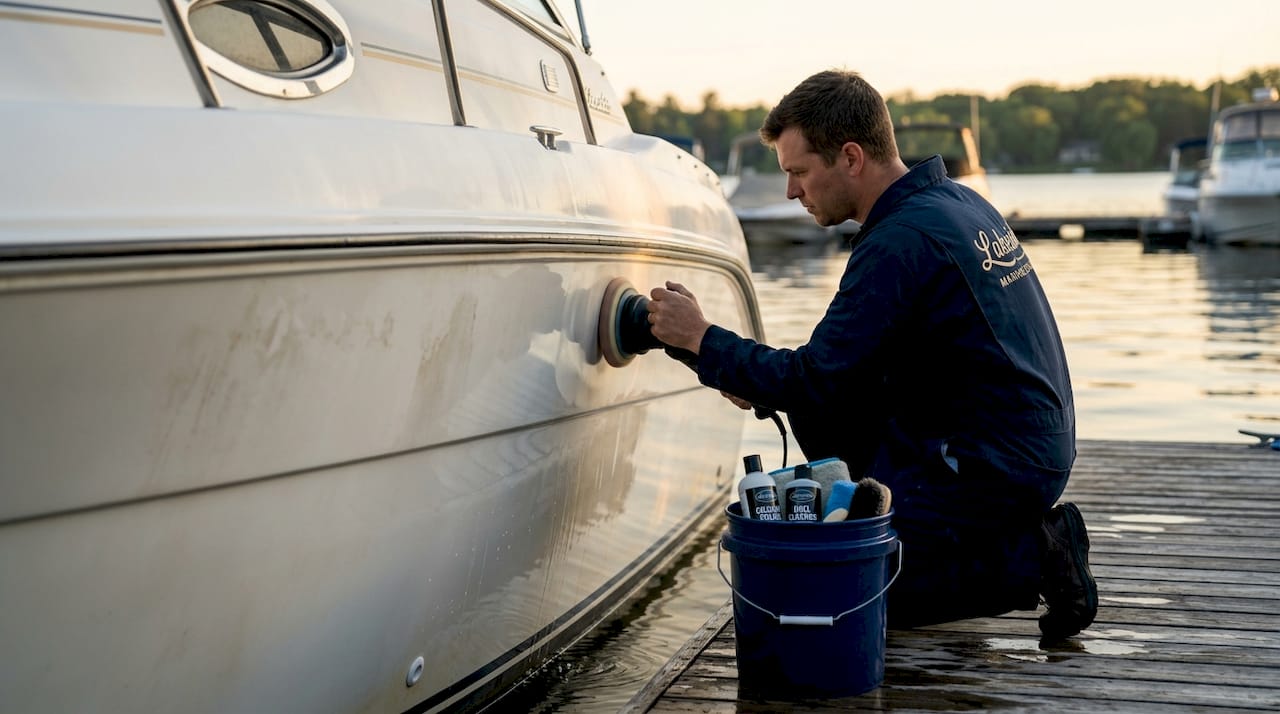
Start with the hull. Hull compound and polish to remove oxidation provides the greatest visual boost of any preparation step. Buyers use visual cues to estimate how well a boat has been mechanically maintained. A gleaming hull signals discipline. A chalky, oxidized hull screams “what else has been ignored?”
Here is a prioritized maintenance checklist for maximum impact:
- Hull compound and wax: Remove oxidation, apply a quality marine wax or ceramic coat for protection and shine.
- Non-skid surfaces: Scrub non-skid decking with specialized cleaners and treat with a UV protectant to restore color.
- Metal hardware: Polish stainless steel cleats, grab rails, and hinges to remove rust staining and restore brightness.
- Canvas and isinglass: Clean canvas thoroughly, treat with a protectant, and replace or repair any panels with visible cracking or tears.
- Bilge cleaning: A clean, dry bilge with no oil sheen is worth real dollars. Buyers open that hatch every time.
- Upholstery: Clean marine vinyl with the right product; replace cracked or torn cushions if the cost makes sense relative to asking price.
- Engine compartment: Wipe down the engine bay, replace worn belts, and address any visible fluid leaks before showing the boat.
Professional detailing costs between $800 and $3,000 but can increase your final sale price by $3,000 to $10,000 and reduce your time on market by 30 to 50%. That math is hard to argue with. If you are serious about getting top dollar, professional detailing is not optional.
Pro Tip: Have a detailer treat your gelcoat before listing rather than waiting until a buyer raises the issue. A shiny boat in photos generates more inquiries before anyone even steps aboard.
Pricing strategies that attract buyers without leaving money behind
Emotion has no place in your asking price. The sellers who get the best offers are the ones who price based on data, not sentiment.
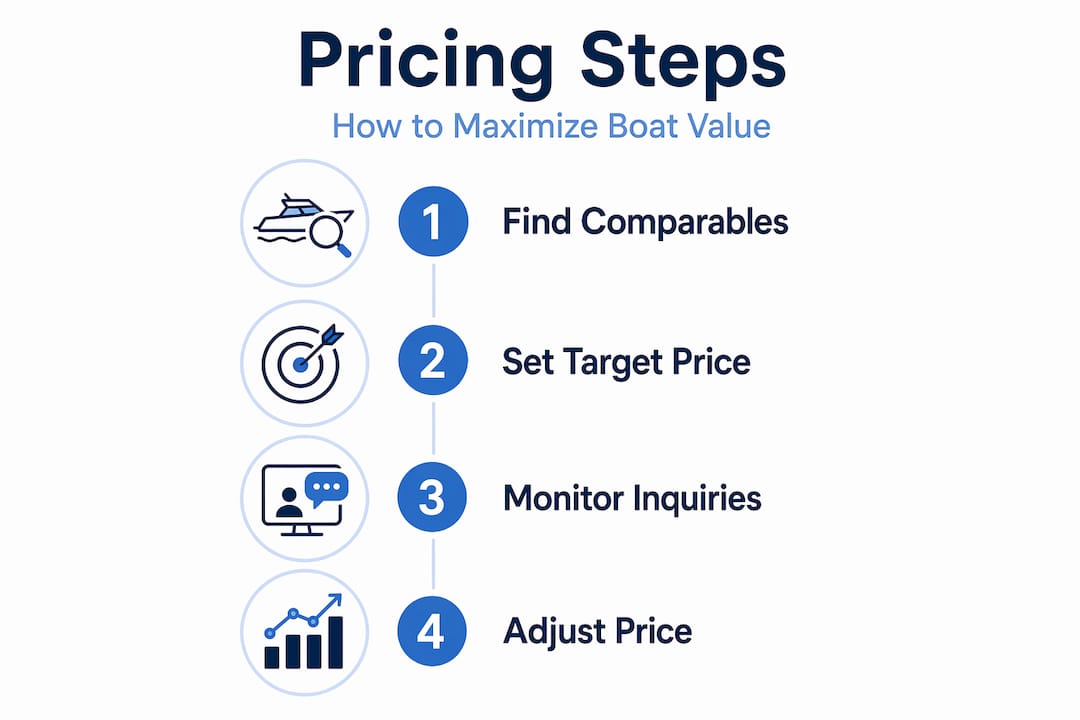
Start by pulling real market comparables. Search listings for boats of the same make, model, year, and condition in your region. Identify where the market is actually trading, not where sellers are hoping to trade. Professional dealers consistently stress pricing by actual market comparables rather than personal financial needs to avoid overpriced, stale listings.
Once you have your number, build in a negotiation buffer. Asking price should include a 3 to 7% padding above your true bottom line. This gives buyers the psychological satisfaction of negotiating a deal while protecting your real number.
Here is a practical pricing process:
- Research at least five comparable sold listings, not just active ones.
- Adjust for condition, age, hours, and major upgrades.
- Set your baseline fair-market value.
- Add 3 to 7% for negotiation room.
- Confirm your price does not land just above a common threshold.
That last point matters more than most sellers realize. Pricing above common thresholds reduces listing visibility and shrinks your buyer pool. For example, pricing at $51,000 instead of $49,900 can cost you dozens of search impressions from buyers filtering under $50,000. The difference in net result is often significant.
| Pricing mistake | What it costs you |
|---|---|
| Pricing above a threshold | Fewer searches, less buyer traffic |
| Emotional pricing | Overpriced listing, slower sale |
| No negotiation buffer | No room to close, frustrated buyers |
| Ignoring seasonal demand | Lower offers in off-peak months |
Pro Tip: Check listings every two weeks after going live. If inquiries are slow, a 5% price adjustment in the first 30 days is far less painful than six months of carrying costs on a stale listing.
Presentation and documentation that builds buyer confidence
A buyer making a six-figure decision wants certainty. Your job is to give them every reason to say yes and no excuse to say “let me think about it.”
Start with yacht staging before photography. Remove personal items, clutter, and anything that makes the space feel smaller than it is. Think of it the same way real estate agents stage a home. An uncluttered helm, clean salon, and organized cabin photographs like a premium product.
Then get your photos right. Hire a marine photographer or at minimum shoot on a bright, partly cloudy day with good light on the water. Wide-angle shots of the interior, close-ups of updated electronics, and an exterior shot with the boat in its natural setting all matter.
On documentation:
- Compile all service records into a single organized binder, sorted by date.
- Include receipts for major repairs, upgrades, and annual surveys.
- Add your owner’s manual and any warranty documentation for onboard equipment.
- Note recent replacements such as batteries, impellers, zincs, and belts.
An organized maintenance binder can boost your final sale price by 10 to 20% compared to boats without supporting documentation. Buyers simply pay more when they feel confident in what they are buying.
Pro Tip: Do not hide minor known issues. Disclosing them upfront with documentation of when they were addressed tells a buyer that you are trustworthy. It neutralizes their biggest fear: what is this seller not telling me?
Timing and execution for the strongest offers
When you list matters almost as much as how you list. Early spring listings give sellers access to peak buyer demand and allow you to hold your asking price longer because buyers are motivated and competition is fresh.
Avoid listing in late fall or winter unless your market is a year-round warm-weather region. Boats listed in the off-season attract bargain hunters, not buyers who are emotionally ready to close at full price.
Once your listing is live, execution becomes the priority:
- Respond to every inquiry within a few hours. Patient buyers in 2026 will simply move on to the next listing if you are slow to reply.
- Have your boat clean and ready for a showing at short notice. A rushed, dirty showing costs you offers.
- Know your walk-away number before any negotiation begins.
- Consider reasonable offers seriously. The right timing to sell varies, but holding out for a perfect offer in a softening market often results in lower returns, not higher ones.
- Use feedback from showings. If three buyers mention the same concern, address it.
My take on selling smart in the 2026 market
I have worked with enough sellers to say this clearly: the biggest mistakes I see are not bad boats. They are impatient sellers who priced on hope and skipped the prep work.
The boats that sell fast and at asking price are never the newest or the most expensive. They are the ones that walk into the market looking like someone genuinely cared about them. A clean, detailed vessel with a thick maintenance binder and honest listing photos signals to every buyer that there is nothing to be afraid of. That confidence closes deals.
What surprises most sellers is the documentation effect. I have seen a binder full of service records add $8,000 to a final offer on a boat that was otherwise middle-of-the-market. The buyer’s reasoning was simple: they did not have to worry. They could see the history.
My advice: start your preparation at least three months before you plan to list. Not three weeks. Three months. That timeline lets you address real maintenance issues without rushing, detail properly, photograph on a good day, and enter the market in peak season with a confident price. Last-minute fixes show, and buyers know.
— Jason
Let Yachtingexperts help you get the most from your sale
If you are serious about getting top dollar, working with a team that knows the market is one of the smartest moves you can make. At Yachtingexperts, we bring personalized guidance to every step of the selling process, from pricing and preparation to marketing and negotiation.

We help you prepare your yacht for sale with a detailed strategy built around your specific vessel and goals. Our team handles professional staging, high-quality listing presentation, and access to a broad network of qualified buyers who are actively looking. We also bring proven boat selling best practices that reduce your time on market and protect your asking price during negotiation. Whether you are selling a center console or a 60-foot yacht, we treat every transaction with the same attention to detail. This is your investment. Let us make sure you get every dollar it deserves.
FAQ
What maintenance has the highest return before selling a boat?
Professional detailing is the single highest-return preparation step, costing $800 to $3,000 but potentially increasing your sale price by $3,000 to $10,000 while cutting market time by up to 50%.
How much negotiation room should I build into my asking price?
Build a 3 to 7% buffer above your true bottom line so buyers can negotiate without pushing you below what the boat is actually worth.
When is the best time of year to list a boat for sale?
Early spring is the optimal listing window, when buyer demand peaks and sellers can hold asking prices longer before competition increases.
Does a maintenance binder really affect the sale price?
Yes. An organized service record binder can increase your final sale price by 10 to 20% compared to boats sold without documentation, because it directly reduces buyer anxiety.
How do I price my boat competitively in 2026?
Research at least five comparable sold listings, adjust for condition and hours, then set your price based on market data rather than personal investment. Price just below common search thresholds to maximize listing visibility and buyer reach.
Recommended
Request A Call
Featured Listings

2027 Canados
100
Miami Florida

2015 Maiora
$3,750,000
90
Miami Florida

2027 Canados
57
Miami Florida

2019 Silent-Yachts Fair Dinkum
$1,599,000
55
Fort Lauderdale Florida

2026 Canados
49
Miami Florida

2026 Buddy Davis
47
Miami Florida

2020 Grady-White No Name
$610,000
45
Hallandale Beach Florida

2020 Viking Huckleberry
$1,495,000
44
Fort Lauderdale Florida

2027 Canados
43
Miami Florida

2021 Intrepid Dream Faster
$730,000
40
Coral Gables Florida

2016 Edgewater
$299,000
37
Miami, Florida

2022 Avid
$56,900
23
Stuart Florida
Get your yacht value Estimate
"*" indicates required fields