

Luxury yacht bridge systems are defined as integrated control platforms that unify navigation, communication, propulsion management, and safety monitoring into a single operational environment. The standard term used across the superyacht industry is the Integrated Bridge System, or IBS. Modern IBS architecture on vessels over 50 meters now requires dual redundant bridge setups as standard practice, providing a physical backup when one station or environment becomes impaired. Manufacturers like Rolls-Royce Power Systems are pushing further, implementing Bridge-to-Propeller strategies that link the bridge, propulsion, and energy management into one unified system through 2029. Professional installation and certification are not optional extras. They are the foundation of a reliable, safe, and warranty-compliant vessel.
What are the core components of luxury yacht bridge systems?
A modern IBS is not a single device. It is a carefully engineered collection of hardware and software that works together to give the captain complete situational awareness and control.
Navigation and display hardware:
- Multifunction displays (MFDs): These are the central interfaces at the helm. A quality MFD integrates chart plotting, radar overlay, AIS vessel tracking, depth data, and engine telemetry on one screen. Most premium installations use two or more MFDs at the primary helm station.
- Radar systems: Solid-state Doppler radar has replaced magnetron units on most luxury builds. Solid-state radar offers faster target acquisition, lower power draw, and superior performance in rain clutter. Target tracking functions allow the system to monitor multiple vessels simultaneously.
- Autopilot systems: Advanced autopilots use adaptive algorithms that learn a vessel’s handling characteristics over time. They integrate with GPS, wind sensors, and heading sensors to maintain course with minimal crew input.
- Forward-looking sonar and depth sounders: Forward-looking sonar gives the captain a real-time underwater picture ahead of the bow. This is critical when entering unfamiliar anchorages or shallow coastal waters.
Communication and connectivity:
- VHF and satellite communications: DSC-enabled VHF radios, satellite phones, and VSAT systems form the communication backbone. AIS transceivers broadcast the vessel’s position and receive data from surrounding traffic.
- Connectivity infrastructure: Premium vessels now run blended data routing that combines satellite internet, 4G/LTE cellular, and marina Wi-Fi. The system automatically selects the strongest available signal. A properly designed Ethernet backbone connects all navigation and communication devices.
Monitoring and onboard integration:
- Engine and electrical monitoring: Dedicated monitoring systems track fuel consumption, engine hours, battery state, bilge levels, and generator load. Alerts appear directly on the helm displays.
- Entertainment and AV integration: High-end builds integrate audio, video, lighting, and climate control into the same network architecture. The captain and crew can manage the entire vessel from a single touchscreen panel.
How does integration enhance operation and safety aboard a luxury yacht?
The core value of an IBS is not any single component. The value comes from how those components communicate with each other. The shift to integration-first architectures reduces crew cognitive load and dramatically lowers the chance of human error during complex maneuvers.
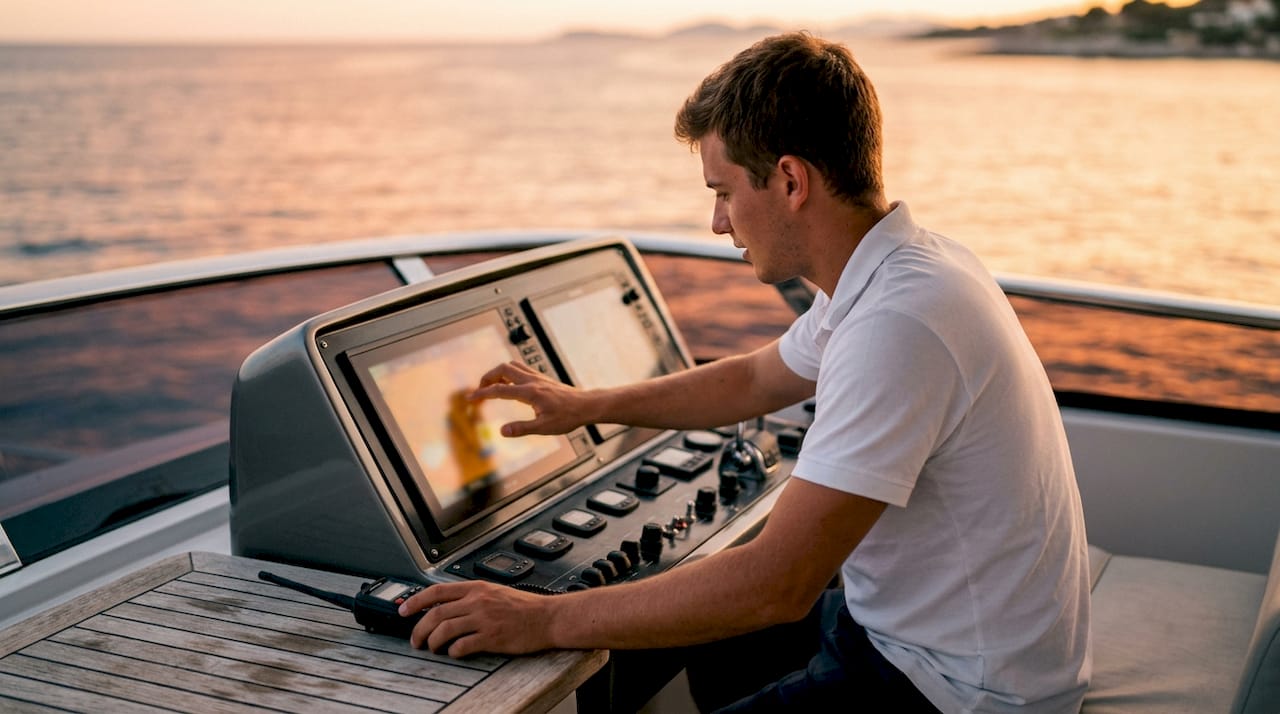
Consolidated displays are the most visible benefit. When radar data overlays directly onto the chart plotter, the captain sees vessel traffic, depth contours, and waypoints in one view. That single view replaces the mental effort of cross-referencing three separate screens. The result is faster, more confident decision-making.
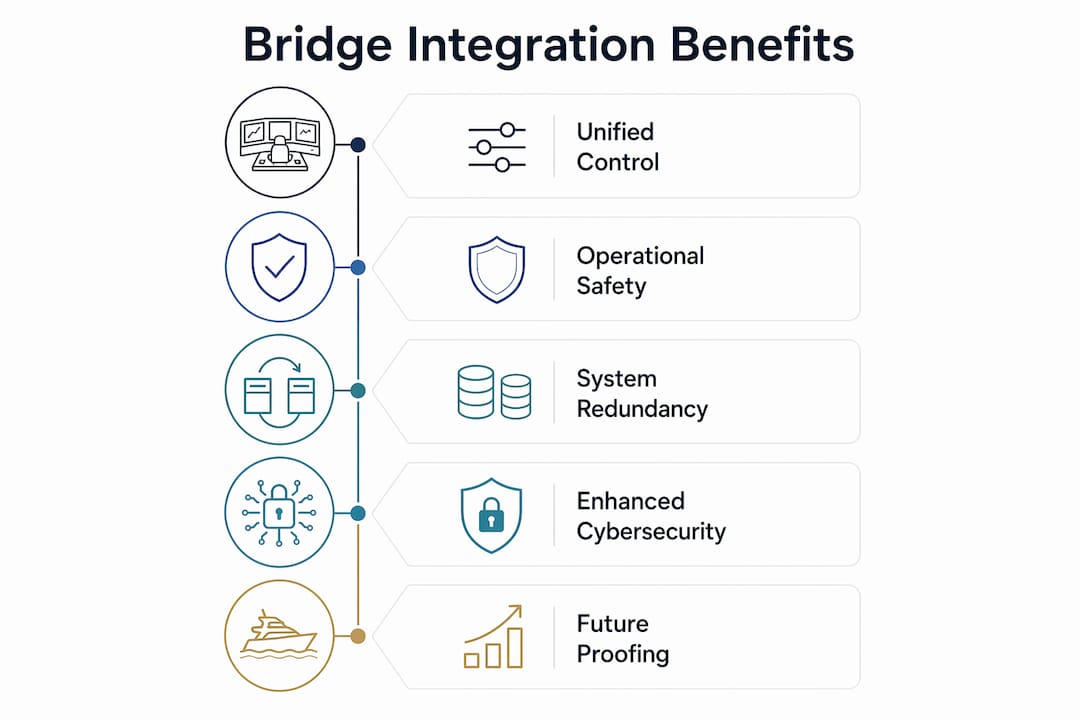
System redundancy is the safety argument for integration. Dual redundant bridges on vessels over 50 meters mean that a failure at the primary helm station does not stop the vessel. The secondary station carries a full copy of all navigation and control functions. This architecture is now an industry standard, not a luxury upgrade.
Network protocol quality determines whether integration actually works. Undersized NMEA 2000 backbones cause slow chart refreshes and system freezes during critical operations. A properly designed NMEA 2000 and high-speed Ethernet network prevents data bottlenecks that could compromise navigation displays at the worst possible moment.
Cybersecurity is a design requirement, not an afterthought. VLAN segmentation between guest Wi-Fi and operational navigation networks prevents unauthorized access to critical systems. Networking and cybersecurity must be treated as core design pillars from the first planning conversation.
Pro Tip: Ask your installer to provide a full network diagram before any equipment is ordered. If they cannot produce one, find a different installer.
Modular architecture makes future upgrades practical. Reserving cable pathways and spare network ports during the initial build means adding night vision cameras or a new satellite system later does not require tearing apart the helm station.
What are best practices for installing and maintaining yacht bridge systems?
Professional installation is the single biggest factor in long-term system reliability. Improper DIY installs void warranties within 12–24 months due to electrical issues, corrosion, and improper grounding. The cost of a professional installation is always less than the cost of a failed refit.
Follow this process for a reliable outcome:
- Document all legacy wiring before touching anything. Poor legacy documentation is the leading cause of downtime during bridge refits. A professional installer will photograph, label, and map every existing circuit before removing a single connector.
- Engage ABYC-certified marine electricians and NMEA-certified technicians. These certifications confirm that the installer understands marine-specific grounding, bonding, and network design requirements. General electricians do not qualify.
- Plan the helm layout before ordering equipment. Screen size, viewing angles, glare, and ergonomics all affect how well the system performs in real conditions. A well-designed helm reduces fatigue on long passages.
- Size antennas, transducers, and autopilot drives correctly for the vessel. An undersized autopilot drive on a 60-meter yacht will hunt and fail under load. Correct sizing is a calculation, not a guess.
- Commission, calibrate, and validate every system before departure. Calibration includes compass deviation correction, autopilot sea trials, radar target verification, and AIS transponder confirmation. This step is non-negotiable.
- Schedule regular software updates and annual maintenance checks. Manufacturers release firmware updates that fix bugs and add features. Skipping updates leaves known vulnerabilities in place.
- Plan for spare capacity in network bandwidth and power. Owners who overlook future needs face expensive and disruptive upgrades later. Reserve 20–30% of network and power capacity for systems you have not yet installed.
A well-executed yacht refit checklist covers all of these steps in sequence, which is why working with experienced professionals from the planning stage pays off.
What emerging trends are shaping yacht bridge systems in 2026?
The bridge of a luxury yacht in 2026 looks and behaves very differently from one built five years ago. Several clear trends define where the technology is heading.
- Integration-first design: Buyers and builders now prioritize how systems communicate over which individual features a device offers. A chart plotter that does not share data cleanly with the autopilot and radar is no longer acceptable on a premium vessel.
- AI-assisted navigation: AI systems reduce crew fatigue by handling routine course corrections, collision avoidance alerts, and docking assistance. These tools are designed to support captain decision-making, not replace it. The captain remains the final authority.
- Multi-source adaptive connectivity: Fixed VSAT contracts are giving way to systems that blend satellite, cellular, and Wi-Fi automatically. The vessel always uses the best available signal without crew intervention.
- Centralized vessel control platforms: Lighting, audio, climate, security cameras, and navigation now share a single control interface. Owners can manage the entire vessel from a tablet or fixed touchscreen.
- Intelligent docking and station keeping: Dynamic positioning systems, originally developed for offshore vessels, are now appearing on large luxury yachts. These systems hold position automatically using GPS, thrusters, and real-time environmental data.
- Modular and scalable architecture: Builders are designing bridges with future upgrades in mind. Cable runs, network ports, and power circuits are pre-installed for systems that will be added later.
- Cybersecurity as a core specification: Network segmentation, encrypted communications, and regular security audits are now part of the bridge system specification on serious builds.
The most significant shift in luxury yacht bridge technology is not any single device. It is the move from a collection of standalone instruments to a fully connected vessel operating system. Owners who understand this shift make better purchasing decisions and get more value from their investment.
How to choose the right luxury yacht bridge system for your vessel?
Choosing the right system starts with an honest assessment of your vessel, your crew, and how you actually use the yacht. The table below maps key decision factors to the right approach.
| Decision factor | Smaller vessels (under 50 m) | Larger vessels (50 m and above) |
|---|---|---|
| Bridge redundancy | Single helm station with backup displays | Dual redundant bridge stations required |
| Network architecture | NMEA 2000 backbone with Ethernet | High-speed Ethernet with NMEA 2000 integration |
| Autopilot specification | Mid-range adaptive autopilot | Heavy-duty commercial-grade autopilot drive |
| Connectivity | Blended satellite and cellular | Full VSAT with multi-source adaptive routing |
| Installation standard | NMEA-certified technician | ABYC-certified electrician plus NMEA technician |
| Future capacity planning | Reserve 20% network and power | Reserve 30% network and power for expansion |
Cruising area matters as much as vessel size. A yacht that stays in well-charted coastal waters has different radar and sonar requirements than one crossing oceans. Match the system to the actual mission, not the most impressive specification sheet.
Operator training is a factor that owners consistently underestimate. A bridge loaded with advanced features delivers no benefit if the crew cannot use them confidently. Budget for formal training as part of the system installation cost. The yacht management value of a well-trained crew operating a properly integrated bridge is measurable in both safety outcomes and resale price.
Proprietary versus open-standard ecosystems is a long-term decision. Proprietary systems often offer tighter integration within a single brand’s product line. Open-standard systems using NMEA 2000 and standard Ethernet give you more flexibility to mix brands and upgrade individual components. Neither approach is universally better. The right choice depends on your upgrade timeline and your installer’s expertise.
Proper power management is the foundation that all bridge electronics depend on. A bridge system with unreliable power is a liability, not an asset.
Key Takeaways
A fully integrated bridge system is the single most important technology investment on a luxury yacht, and professional installation determines whether that investment performs or fails.
| Point | Details |
|---|---|
| Dual redundancy is standard | Yachts over 50 meters require dual redundant bridge stations for continuous safe operation. |
| Network quality drives performance | Undersized NMEA 2000 or Ethernet design causes system freezes during critical maneuvers. |
| Professional installation protects warranties | DIY installs void warranties within 12–24 months due to corrosion and electrical failures. |
| Plan for future capacity | Reserve 20–30% of network and power capacity to avoid costly refits when upgrading. |
| Cybersecurity requires VLAN segmentation | Guest Wi-Fi and navigation systems must run on separate networks to protect operational data. |
Why I think most owners underinvest in their bridge from the start
After years of working with yacht owners at Yachtingexperts, the pattern I see most often is this: an owner spends serious money on the hull, the interior, and the engines, then treats the bridge as a line item to trim. That decision costs more in the long run than any other single choice on the vessel.
The bridge is where every critical decision gets made. A poorly integrated system means the captain is mentally juggling three screens instead of reading the water ahead. I have seen that cognitive overload contribute to close calls that a properly designed IBS would have prevented entirely.
The cybersecurity conversation is the one that surprises owners most. People accept that their home network needs protection. They do not always connect that logic to the yacht. A guest streaming video on the same network as the navigation system is a real vulnerability. VLAN segmentation is a simple fix, but only if it is designed in from the start.
My honest advice is to treat the bridge system as the brain of the vessel. Spend the money there first. Get certified professionals. Document everything. And build in spare capacity, because the technology will keep advancing and you will want to upgrade. A well-built bridge adds genuine value when you sell, and Yachtingexperts sees that reflected in resale prices consistently.
— Jason
Yachtingexperts and your bridge system upgrade
At Yachtingexperts, we work with yacht owners who want their vessel to perform at the highest level, and that starts with the bridge.

Whether you are commissioning a new build, planning a full refit, or adding specific systems to an existing vessel, our team connects you with ABYC-certified marine electricians and NMEA-certified technicians who specialize in luxury vessel control. We handle the planning, the documentation, and the coordination so you do not have to. Our professional setup services cover everything from initial system design through commissioning and crew training. We also help you think ahead, so your bridge is built to grow with your needs. Reach out to the Yachtingexperts team and let us help you get this right the first time.
FAQ
What is an integrated bridge system on a luxury yacht?
An integrated bridge system (IBS) is a unified platform that connects navigation, communication, propulsion monitoring, and safety systems into one operational environment. It gives the captain consolidated situational awareness and reduces the need to cross-reference multiple standalone devices.
What size yacht requires dual redundant bridge stations?
Industry standards require dual redundant bridge setups on yachts 50 meters and longer. This ensures continuous safe operation if the primary helm station becomes impaired.
Why does professional installation matter for yacht bridge systems?
Improper DIY installs void manufacturer warranties within 12–24 months due to corrosion, grounding errors, and network failures. ABYC-certified marine electricians and NMEA-certified technicians deliver installations that hold up long-term.
What is NMEA 2000 and why does it matter?
NMEA 2000 is the standard communication protocol that allows marine electronics from different manufacturers to share data. A properly sized NMEA 2000 backbone prevents the data bottlenecks that cause navigation display slowdowns during critical maneuvers.
How do I future-proof my yacht’s bridge system?
Reserve 20–30% of network bandwidth and electrical capacity during the initial installation. Pre-run cable pathways for systems you plan to add later. This approach avoids the invasive and expensive refits that owners face when they upgrade without planning ahead.
Recommended
Request A Call
Featured Listings

2027 Canados
100
Miami Florida

2015 Maiora
$3,750,000
90
Miami Florida

2027 Canados
57
Miami Florida

2019 Silent-Yachts Fair Dinkum
$1,599,000
55
Fort Lauderdale Florida

2026 Canados
49
Miami Florida

2026 Buddy Davis
47
Miami Florida

2020 Grady-White No Name
$610,000
45
Hallandale Beach Florida

2020 Viking Huckleberry
$1,495,000
44
Fort Lauderdale Florida

2027 Canados
43
Miami Florida

2021 Intrepid Dream Faster
$730,000
40
Coral Gables Florida

2016 Edgewater
$299,000
37
Miami, Florida

2022 Avid
$56,900
23
Stuart Florida
Get your yacht value Estimate
"*" indicates required fields