

A luxury boating checklist is a structured inventory of safety equipment, maintenance tasks, and guest amenities designed to keep premium yachts compliant, seaworthy, and genuinely enjoyable on the water. Unlike a basic boating essentials checklist, the luxury version operates on three layers: legal compliance with U.S. Coast Guard standards, preventive maintenance calibrated to your vessel and environment, and curated comfort provisions that define the upscale experience. Whether you own a 40-foot sportfisher or a 100-foot motor yacht, this checklist framework applies. Get it right before you leave the dock, and everything else takes care of itself.
1. What safety equipment must every luxury boater carry?
Safety is the non-negotiable foundation of any boating essentials checklist, and luxury yachts face higher expectations than recreational day boats. U.S. Coast Guard-approved life jackets, one per person, must be accessible and in serviceable condition before departure. Type I, II, III, and V PFDs each serve different conditions, and a well-prepared yacht carries a mix suited to the voyage profile.
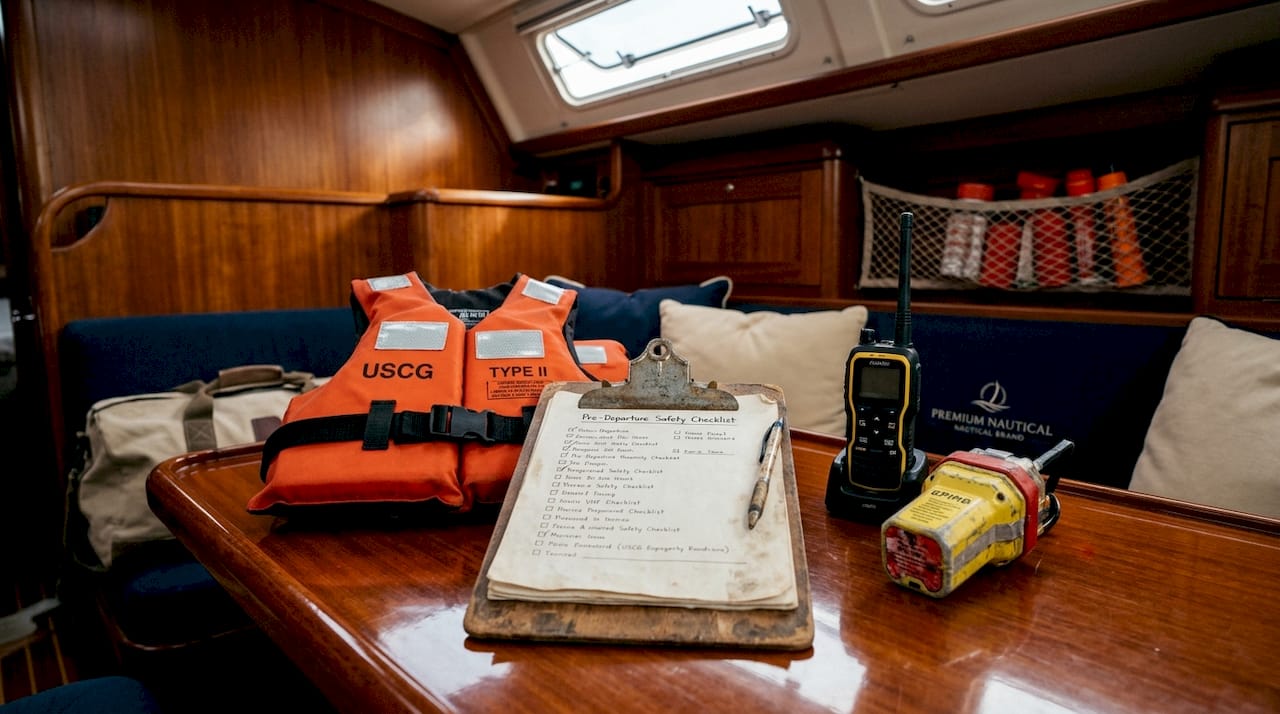
Beyond PFDs, boats 16 feet and longer must carry visual distress signals for both day and night use. That means at least three pyrotechnic or non-pyrotechnic devices per category, all unexpired and within reach. Inspectors check expiration dates at point of use, not just in the log, so verify the dates physically before every trip.
Here is the core safety equipment list every luxury yacht should carry:
- PFDs: One Coast Guard-approved life jacket per person, sized and fitted correctly
- Visual distress signals: Day and night signals, pyrotechnic and non-pyrotechnic, unexpired
- Fire extinguishers: Properly rated and mounted near engine compartments and galley
- Sound-producing devices: Horn or whistle meeting federal requirements for your vessel’s length
- Navigation lights: Operational from sunset to sunrise; EPIRBs and PLBs registered, tested monthly, and on a battery replacement schedule
- VHF radio: Charged, programmed to Channel 16, and tested before departure
- First aid kit: Stocked for the number of guests and duration of the voyage
Pro Tip: Brief every guest on safety equipment locations within the first 15 minutes aboard. Familiarity with where PFDs and fire extinguishers are stored reduces panic response time significantly during an actual emergency.
Effective luxury yacht safety uses a two-layer approach: compliance with carriage minimums plus guest-experience readiness. The second layer is what separates a well-run yacht from a merely legal one.
2. How to structure a maintenance checklist for your luxury yacht
Yacht maintenance follows a schedule from daily tasks all the way to multi-year intervals, and skipping any tier creates compounding risk. The industry term for this approach is a preventive maintenance program, and it is the backbone of any serious yacht maintenance checklist. Think of it as a living document, not a one-time exercise.
Here is how maintenance tasks break down by frequency:
| Frequency | Key Tasks |
|---|---|
| Daily | Engine oil check, bilge pump test, visual hull inspection, battery voltage check |
| Weekly | Electrical systems review, freshwater tank levels, safety gear condition check |
| Monthly | EPIRB self-test, navigation light function, fuel system inspection, zinc anode check |
| Semi-annual | Fire suppression system service, through-hull fitting inspection, bottom paint assessment |
| Annual | Full engine service, standing rigging inspection, safety gear replacement review, documentation renewal |
| Multi-year | Hull blasting and repainting, keel bolt inspection, EPIRB battery replacement |
A formal technician handover takes 30 to 60 minutes and covers hull condition, safety equipment, engines, and electronics with photo documentation and a condition sign-off form. This process is not optional for charter yachts and is strongly recommended for private owners taking delivery of a new or pre-owned vessel. It eliminates the unknown quirks that cause expensive surprises offshore.
Maintenance scheduling is integral to risk management, and the environment matters as much as the calendar. Saltwater and heat accelerate corrosion and overheating in ways that freshwater inland boating does not. A Florida-based yacht needs more frequent zinc anode replacement and cooling system checks than the same vessel kept in the Great Lakes.
Pro Tip: Align your maintenance calendar with your itinerary. If you are planning an extended Bahamas crossing in May, schedule your semi-annual engine service in April, not June. Timing preventive care before high-use periods protects both safety and resale value.
For a deeper look at year-round maintenance scheduling, Yachtingexperts has built out a full framework tailored to luxury vessels.
3. What amenities and comfort features belong on a luxury yacht packing list
Guest comfort is what transforms a safe, well-maintained vessel into a genuine luxury boating experience. Charter hosts typically supply basics like fresh water, soft drinks, and ice, but a truly elevated yacht packing list goes well beyond the minimum. The distinction between a good charter and an exceptional one often comes down to the details guests did not expect.
Amenities break cleanly into three tiers:
Safety and compliance comfort:
- Prescription medications and personal medical supplies
- Sunscreen (SPF 50 or higher), lip balm, and UV-protective clothing
- Non-slip footwear for all guests
- Motion sickness remedies (Dramamine, Bonine, or prescription patches)
Practical convenience:
- Dry bags and waterproof cases for electronics
- Extra towels beyond what the vessel provides
- Reusable water bottles and insulated tumblers
- Layered clothing for temperature changes after sunset
Luxury add-ons that define the experience:
- Premium linens and monogrammed robes for overnight voyages
- Curated entertainment systems with Bluetooth audio and satellite connectivity
- Gourmet provisioning: charcuterie, fresh seafood, and locally sourced produce
- Snorkeling and water sports equipment matched to the destination
For a full breakdown of high-end onboard amenities, Yachtingexperts covers everything from spa-grade bath products to custom cocktail menus.
Pro Tip: Ask guests about dietary restrictions, preferred beverages, and any celebrations before departure. A personalized welcome basket costs almost nothing extra and creates a first impression that sets the tone for the entire trip.
4. How to customize your checklist by vessel type and voyage profile
Safety equipment requirements vary by boat length and area of operation, and local laws add further variations on top of federal minimums. A 25-foot center console day boat and a 65-foot motor yacht operate under different legal frameworks, and their checklists should reflect that. Treating every vessel the same is how owners get caught unprepared.
Use this comparison to calibrate your checklist to your specific situation:
| Voyage Profile | Checklist Priority Adjustments |
|---|---|
| Day trip, coastal, under 26 feet | Basic PFDs, horn, fire extinguisher, VHF radio, first aid kit |
| Day trip, coastal, over 26 feet | Add visual distress signals, additional fire extinguishers, EPIRB |
| Multi-day offshore passage | Full safety suite, spare parts kit, satellite phone, detailed weather briefing |
| Extended charter with guests | Formal handover documentation, guest safety briefing, provisioning for full duration |
| Inland freshwater cruising | Reduced corrosion maintenance, adjusted zinc schedule, lighter provisioning |
Beyond legal requirements, voyage length and guest skill level shape the emergency procedure briefing. A crew of experienced sailors needs a different safety orientation than a group of first-time charter guests. Customize the briefing to the audience, not just the vessel.
For multi-day offshore passages, the pre-season launch checklist approach applies even mid-season: inspect the hull for cracks and wear, service the engine and fuel system, test all navigation electronics, and conduct a full crew safety briefing before departure. Treat every extended voyage as a mini-season opener.
Short day trips allow for a leaner checklist, but never strip out safety gear to save space. The items most tempting to leave behind, like the EPIRB or the offshore flare kit, are exactly the ones that matter when conditions change unexpectedly. Pair your charter readiness review with this framework to make sure nothing gets overlooked.
Key takeaways
A complete luxury boating checklist requires safety compliance, scheduled preventive maintenance, and personalized guest amenities working together as one system.
| Point | Details |
|---|---|
| Safety is the non-negotiable layer | Carry Coast Guard-approved PFDs, unexpired distress signals, and a registered EPIRB on every voyage. |
| Maintenance must follow a tiered schedule | Daily through multi-year tasks protect engines, hull, and safety systems from preventable failures. |
| Amenities define the luxury difference | Gourmet provisioning, premium linens, and personalized touches separate a good trip from a memorable one. |
| Customize by vessel size and voyage type | Legal requirements and checklist priorities shift based on boat length, water type, and trip duration. |
| Technician handovers prevent costly surprises | A formal 30 to 60-minute walk-through with photo documentation protects owners before every new voyage. |
What most luxury boating checklists get wrong
I have been around enough high-end yachts to notice a pattern: owners invest heavily in the vessel and almost nothing in the system that keeps it running well. The checklist gets treated as a box-checking exercise rather than a living operational tool. That mindset is where most problems start.
The biggest oversight I see is the gap between legal minimums and actual readiness. A yacht can carry every required piece of safety equipment and still have guests who have no idea where any of it is stored. That is not safety. That is compliance theater. The two-layer approach, legal carriage plus guest orientation, is what actually reduces risk.
The second issue is maintenance timing. Most owners schedule service reactively, after something breaks or after the season ends. Aligning your maintenance calendar with your itinerary, specifically before high-use periods and extended passages, is the single change that prevents the most expensive repairs. I have seen owners skip a $400 impeller replacement and end up with a $14,000 engine overhaul offshore.
Digitizing your checklist is worth doing in 2026. Apps like Helm or Dockwa allow you to build custom maintenance schedules, log completed tasks, and share documentation with crew and technicians. Paper logs get wet, lost, and ignored. A digital record that travels with the vessel protects your investment and your insurance position.
The luxury boating checklist is not a formality. It is the operating system for your vessel. Treat it that way.
— Jason
Ready to take your yacht prep to the next level?
At Yachtingexperts, we know that a well-prepared yacht is a better investment, a safer vessel, and a more enjoyable experience for everyone aboard. Our team works directly with luxury yacht owners to build personalized maintenance programs, conduct formal inspection walk-throughs, and prepare vessels for charter or resale.

Whether you are getting ready for the 2026 boating season or preparing your yacht for sale, our yacht maintenance checklists and services give you the structure and expert oversight to protect what you have built. We also help owners maximize ROI before selling by ensuring every system is documented, serviced, and presented at its best. Reach out to our team and let us make your next voyage your best one yet.
FAQ
What is included in a luxury boating checklist?
A luxury boating checklist covers three categories: safety equipment (PFDs, distress signals, fire extinguishers, EPIRB), scheduled maintenance tasks (from daily engine checks to annual hull inspections), and guest amenities (provisioning, linens, entertainment, and comfort supplies).
How often should a luxury yacht be serviced?
Yacht maintenance follows intervals from daily checks to multi-year tasks. Engine oil and bilge pumps require daily attention, while fire suppression systems and bottom paint are semi-annual or annual priorities.
What safety gear is legally required on a luxury yacht?
Required safety equipment varies by vessel length and operating area, but federal minimums include Coast Guard-approved PFDs, visual distress signals, fire extinguishers, and sound-producing devices. Vessels over 16 feet must carry both day and night distress signals.
What should guests pack for a luxury yacht charter?
Guests should bring sunscreen, non-slip footwear, layered clothing, motion sickness remedies, and dry bags for electronics. Charter hosts typically supply water, ice, and soft drinks, while luxury add-ons like gourmet provisioning and premium linens are often included in upscale charters.
How do I customize my boating checklist for different trip types?
Adjust your checklist based on vessel length, water type, and voyage duration. Day trips on coastal waters under 26 feet require a leaner kit, while multi-day offshore passages demand a full safety suite, spare parts, satellite communication, and a detailed guest safety briefing.
Recommended
Request A Call
Featured Listings

2027 Canados
100
Miami Florida

2015 Maiora
$3,750,000
90
Miami Florida

2027 Canados
57
Miami Florida

2019 Silent-Yachts Fair Dinkum
$1,599,000
55
Fort Lauderdale Florida

2026 Canados
49
Miami Florida

2026 Buddy Davis
47
Miami Florida

2020 Grady-White No Name
$610,000
45
Hallandale Beach Florida

2020 Viking Huckleberry
$1,495,000
44
Fort Lauderdale Florida

2027 Canados
43
Miami Florida

2021 Intrepid Dream Faster
$730,000
40
Coral Gables Florida

2016 Edgewater
$299,000
37
Miami, Florida

2022 Avid
$56,900
23
Stuart Florida
Get your yacht value Estimate
"*" indicates required fields