

Upgrading to a larger or more luxurious vessel is one of the most exciting moves you can make as a yacht owner. But here’s the reality: many owners lose 10% or more on the transition simply because they didn’t time the sale correctly, overlooked key costs, or rushed the process out of enthusiasm. The difference between a seamless, profitable trade-up and a costly mistake is preparation, disciplined execution, and knowing exactly where the pitfalls are. This guide gives you every tool you need to protect your investment, maximize your current yacht’s value, and step aboard your dream vessel without unnecessary financial sacrifice.
Table of Contents
- Understanding the yacht trade-up process
- Preparation: Assessing your current yacht and setting goals
- Executing the trade-up: step-by-step process
- Avoiding common mistakes and maximizing return
- Expert perspective: Why conventional yacht upgrades leave value on the table
- Get expert help trading up and protecting yacht value
- Frequently asked questions
Key Takeaways
| Point | Details |
|---|---|
| Assess costs upfront | Calculate holding and refit costs, plus depreciation, before committing to an upgrade. |
| Plan for optimal timing | Maximize value by aligning your sale and purchase with market cycles and personal goals. |
| Expert guidance matters | Engaging a specialist can help avoid costly mistakes and streamline your upgrade. |
| Avoid rushed auctions | Only use auctions if immediate sale is essential, as they typically lower your return. |
Understanding the yacht trade-up process
Trading up means selling or leveraging your current yacht to fund the acquisition of a larger or more luxurious vessel. It sounds simple on the surface, but the mechanics involve market timing, cost management, financing strategy, and negotiation skill. Understanding these layers upfront is the foundation of a successful transition.
Owners consider trading up for a wide range of reasons. More space for family and guests is a common driver. Others seek advanced navigation systems, upgraded interiors, extended range, or enhanced crew accommodations. And for many, it’s about prestige and the natural progression of their yachting lifestyle. These are all valid motivations, and they become even more powerful when you align them with a sound financial strategy.
Why do so many owners leave money on the table? Because they focus entirely on the new vessel they want, without treating the sale of their current yacht as a serious financial event. Understanding yacht investment returns before you list helps you set realistic expectations and identify where you can squeeze maximum value from your existing asset.
A critical element that too many owners underestimate is the cost of holding. Holding costs can run 9-25% annually, which means every month your yacht sits unsold, you’re bleeding real money. Auctions can accelerate a sale for distressed or fast-timeline scenarios, but they typically return less than a well-managed brokerage listing. Knowing which option fits your situation is essential.
Here’s a quick overview of the key factors you need to evaluate before making any move:
| Consideration | What to evaluate | Why it matters |
|---|---|---|
| Current yacht value | Recent comparables, condition, age | Sets your trade-up budget |
| Holding costs | Slip fees, insurance, maintenance | Affects urgency of sale |
| Refit thresholds | Cost vs. return on repairs/upgrades | Avoid over-investing |
| Liquidity needs | Cash flow, bridge financing | Prevents forced sales |
| Sale method | Brokerage vs. auction | Impacts final return |
Key motivations for trading up:
- More interior space and guest capacity
- Advanced electronics and navigation technology
- Extended ocean range and blue-water capability
- Enhanced crew quarters and operational systems
- Greater prestige and brand recognition in the market
Preparation: Assessing your current yacht and setting goals
With a clear understanding of the process, you’re ready for the crucial groundwork: evaluating your yacht and aligning your objectives with the realities of trading up. Skipping this phase is where most owners make their first and most expensive mistake.
Start with a professional appraisal. An expert appraiser will assess your yacht’s current market value based on condition, age, recent sales comparables, equipment upgrades, and maintenance history. This isn’t the moment for optimism; you need an honest, data-driven number that reflects what buyers will actually pay in today’s market. A realistic starting point protects you from overpricing and the extended time-on-market that follows.
Gather your documentation. Before you list, compile everything a serious buyer will request. This includes:
- Clear title and proof of ownership
- Full maintenance and service history logs
- Current loan or lien status documentation
- Survey reports from previous years
- Equipment inventory and warranty records
- Insurance history
Having these documents organized and ready signals professionalism to buyers and removes friction from due diligence. Gaps in paperwork, even innocent ones, create doubt and cost you negotiating leverage.
Define your upgrade goals. What does your ideal vessel actually look like? Be specific. Size matters, but so do range, deck layout, engine configuration, and whether you plan to charter. Write down your non-negotiables and your nice-to-haves. This list becomes your filter when evaluating candidates for purchase and prevents you from getting emotionally swept up in a vessel that doesn’t actually serve your goals.
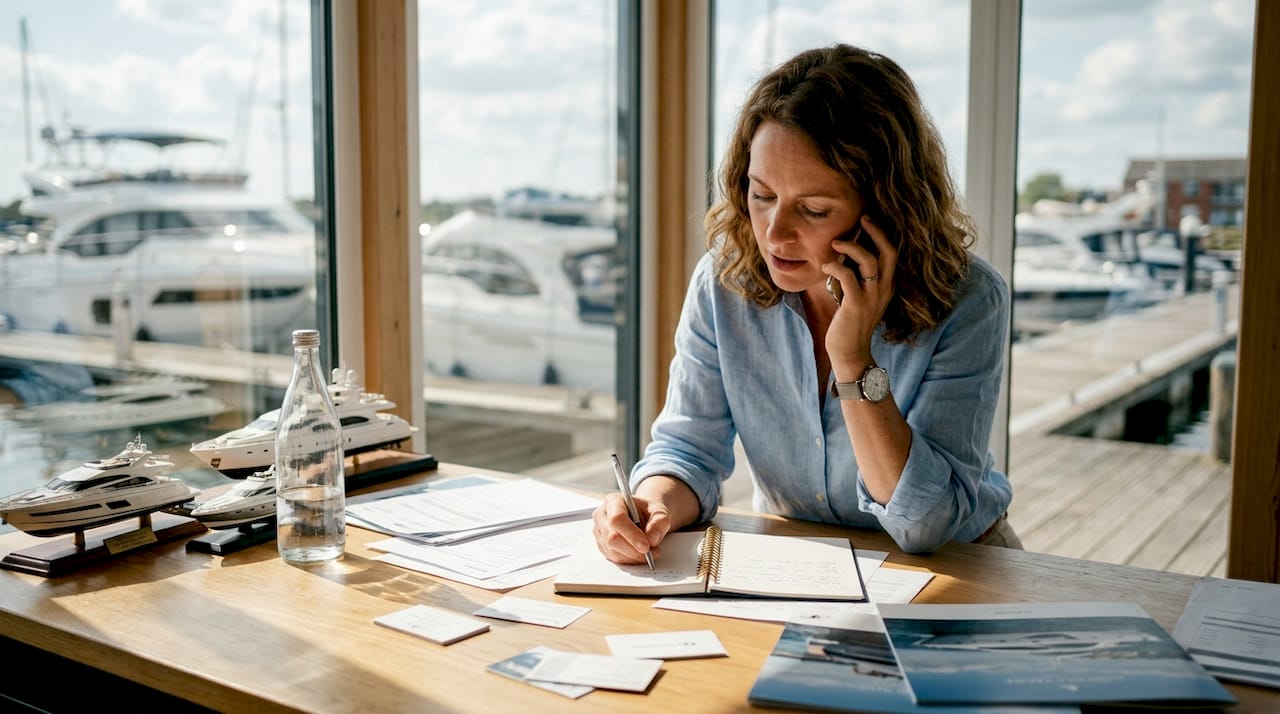
Smart yacht management value tips can make a meaningful difference in your final sale price. Simple maintenance upgrades, professional detailing, and addressing minor deficiencies before listing all contribute to a stronger first impression and better offers. For a deeper look at preparation strategies, the maximizing yacht value guide covers this in excellent detail.
Pro Tip: Calculate your true yearly ownership cost before committing to a larger vessel. Add up slip fees, insurance, crew costs, fuel, maintenance, and refit reserves. Owners frequently underestimate how significantly these costs scale with vessel size, and discovering that reality after the purchase creates serious financial stress.
Executing the trade-up: step-by-step process
Armed with a clear plan, here’s how to execute each phase of the transaction and ensure optimal results. This sequence is designed to protect your margin, reduce risk, and keep your timeline on track.
-
Prepare your current yacht for sale. Address any outstanding maintenance items, complete cosmetic repairs, and have the vessel professionally cleaned and staged. A pre-sale survey can be a smart investment because it identifies issues before a buyer’s surveyor does, giving you time to remedy them on your terms rather than being forced into last-minute price concessions.
-
List with an experienced broker. A reputable broker brings market access, qualified buyer relationships, and negotiating expertise that consistently outperform private sales for yachts at meaningful price points. They know how to position your vessel competitively, manage showings, and handle the back-and-forth of offers professionally. If your situation is distressed or your timeline is extremely tight, auction becomes a viable alternative, but understand you will typically accept lower sale prices in exchange for speed.
-
Negotiate and finalize the sale. Don’t accept the first offer as final. Counter strategically, and be willing to negotiate on terms like sea trial conditions, closing timelines, and included equipment rather than just price. A well-structured deal often recovers value that a hasty acceptance leaves behind.
-
Identify upgrade candidates. With a sale in motion or closed, activate your search for the new vessel. Use your defined goals as your filter. Work with your broker to access listings that match your criteria, including private listings that never hit public marketplaces. This is where having an expert network pays enormous dividends.
-
Inspect, negotiate, and coordinate the purchase. Commission a professional survey and sea trial on your target vessel. Negotiate from the survey findings. Coordinate your closing timelines to minimize the gap between your sale proceeds and your purchase commitment. Misaligned timing is one of the most common sources of unnecessary cost and stress in the trade-up process.
Here’s a step-by-step summary of the full process:
| Step | Action | Responsible party | Timeframe | Key pitfall |
|---|---|---|---|---|
| 1 | Prepare yacht for sale | Owner and broker | 2-4 weeks | Skipping repairs lowers offers |
| 2 | List and market the yacht | Broker | Ongoing | Poor listing quality reduces inquiries |
| 3 | Negotiate and close sale | Owner, broker, lawyers | 2-6 weeks | Accepting first offer without countering |
| 4 | Identify upgrade candidates | Broker and owner | Concurrent | Letting emotions override criteria |
| 5 | Survey, negotiate, and close purchase | Owner, broker, surveyor | 3-8 weeks | Misaligned timing creates cash flow gaps |
To avoid the buyer-side mistakes that can cost you just as much as a poor sale, review the guidance on how to avoid buyer mistakes during the purchase phase.
Pro Tip: Auction sales can expedite upgrades, but they typically fetch lower returns. Use auction only when speed genuinely outweighs margin, such as when holding costs are escalating rapidly or a compelling purchase opportunity has a hard deadline.
Avoiding common mistakes and maximizing return
The process is straightforward in theory, but real-world results hinge on avoiding these all-too-common pitfalls. Experienced owners who have traded up multiple times consistently point to the same set of mistakes as the source of unnecessary losses.
The most common trade-up mistakes:
- Underestimating holding and refit costs. Every month a yacht sits unsold costs money. Every repair you defer becomes a negotiating chip for the buyer. Entering the process with an accurate cost model is not optional.
- Mistimed sales. Listing in the off-season, flooding a regional market, or selling at the wrong phase of the demand cycle can significantly suppress your final price. Market timing is a real factor with real dollar consequences.
- Emotional overreach on the new purchase. Falling in love with a vessel before due diligence is complete is a leading cause of overpaying and discovering costly surprises after closing. Stay disciplined until the survey clears.
- Skipping professional support. Owners who try to manage both a sale and a purchase simultaneously, without expert guidance, frequently get their timing wrong, mismanage negotiations, or miss opportunities altogether.
- Opaque maintenance records. Buyers pay premiums for documented, well-maintained vessels. If your service history is incomplete, expect buyers to discount aggressively to cover their perceived risk.
Prevention strategies that protect your return:
- Maintain transparent, organized maintenance logs throughout your ownership period
- Benchmark your asking price against recent comparable sales, not wishful thinking
- Work exclusively with brokers who specialize in your vessel’s segment and price range
- Avoid listing during regional off-seasons unless market conditions specifically support it
- Identify your upgrade target before finalizing your sale so you can move quickly when the right opportunity appears
Knowing how to maximize yacht sale ROI is the single most impactful step you can take before entering the market.
“Holding costs can eat 9-25% of your vessel’s value annually. A rushed sale executed purely to fund an upgrade can transform what should be a strategic move into a genuinely costly mistake. The discipline to wait for the right market moment, combined with an accurate cost model, is what separates profitable trade-ups from regrettable ones.”
This reality check matters. The owners who come out ahead are those who treat the sale of their current vessel with the same seriousness as the purchase of the new one.
Expert perspective: Why conventional yacht upgrades leave value on the table
We’ve guided a lot of yacht owners through trade-ups, and here’s what we consistently observe: the losses rarely happen because of bad luck. They happen because of a mindset problem.
The “bigger is better” instinct is powerful in yachting culture. There’s nothing wrong with wanting to move up. But when that desire creates urgency that overrides investment discipline, the result is predictable. You sell too fast, accept less than your yacht is worth, overpay for the upgrade, and then spend the first two years of ownership managing costs that were entirely foreseeable.
The real advantage in yacht investment comes from knowing three things: when to hold and refit rather than sell, when market conditions genuinely favor a move, and when expert guidance changes the outcome in ways that more than justify the cost.
Here’s the insight that most conventional advice misses: a delayed, well-timed trade-up almost always outperforms an impulsive one, even accounting for the frustration of waiting. Owners who wait six months for a better selling window, stage their vessel properly, and enter the purchase market with clear criteria routinely close transitions that look completely different financially from those who rush.
Holding costs at 9-25% annually are not abstract numbers. On a $500,000 vessel, that’s $45,000 to $125,000 per year in real costs. The decision to refit versus sell is not emotional; it’s a calculation. And the calculation requires accurate inputs, not optimism.
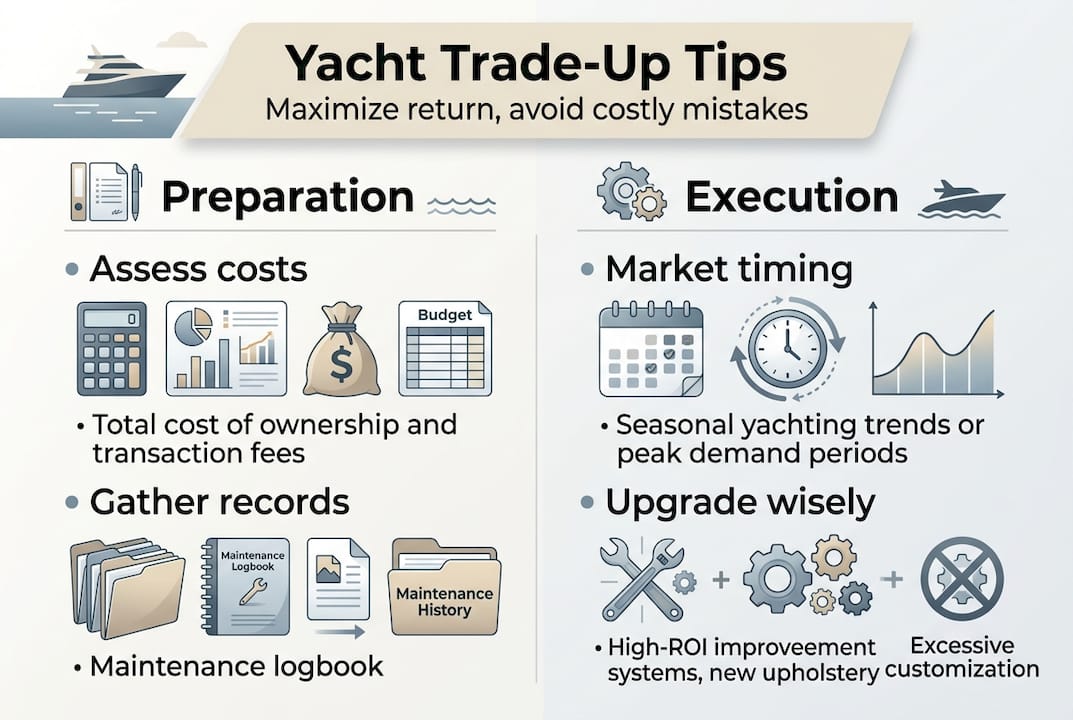
Emotional decisions in yachting turn luxury into liability faster than almost any other factor. We’ve seen it happen repeatedly. The antidote is building your process around data, experienced advisors, and clearly defined goals. Not urgency. Not ego. Not the neighbor who just upgraded.
Get expert help trading up and protecting yacht value
If you want every edge in your favor, it pays to work with professionals who focus exclusively on maximizing yacht investment value.

At Yachting Experts, we specialize in exactly this kind of high-stakes, high-reward transition. We handle the staging, timing, marketing, and negotiation of your current vessel’s sale while simultaneously sourcing the best upgrade opportunities matched to your personal goals. Our clients don’t navigate this alone. We develop a personalized upgrade strategy tailored to your vessel, your timeline, and your financial objectives. To get ahead of the competition, start by exploring how to maximize your yacht sale value before you list. And when you’re ready to understand the full scope of what a dedicated specialist brings to the table, our guide to yacht broker advantages explains the difference expert representation makes in your final outcome.
Frequently asked questions
How long does it take to trade up a yacht?
Trading up typically takes anywhere from several weeks to a few months, depending on market demand, the condition and price point of your vessel, and how prepared you are before listing. A well-prepared yacht in a strong market can sell in weeks; a poorly timed listing can drag on for months, accumulating holding costs throughout.
Is selling at auction a good idea for trading up quickly?
Yacht auctions deliver faster results but usually at a lower price, making them best suited for distressed situations or scenarios where meeting a specific purchase deadline genuinely outweighs recovering maximum value from the sale.
What costs should I consider before upgrading?
Holding costs of 9-25% annually, refit thresholds, brokerage fees, closing costs, and financing for the new vessel are all essential inputs. Owners who model these costs accurately before moving forward consistently make better decisions about timing and vessel selection.
Should I refit my yacht before selling?
Targeted refit investments can meaningfully improve your sale price when they address visible deficiencies or bring critical systems up to current standards, but major upgrades rarely generate a full return. Focus repairs on high-impact, buyer-visible items rather than complete system overhauls.
Recommended
Request A Call
Featured Listings

2027 Canados
100
Miami Florida

2015 Maiora
$3,750,000
90
Miami Florida

2027 Canados
57
Miami Florida
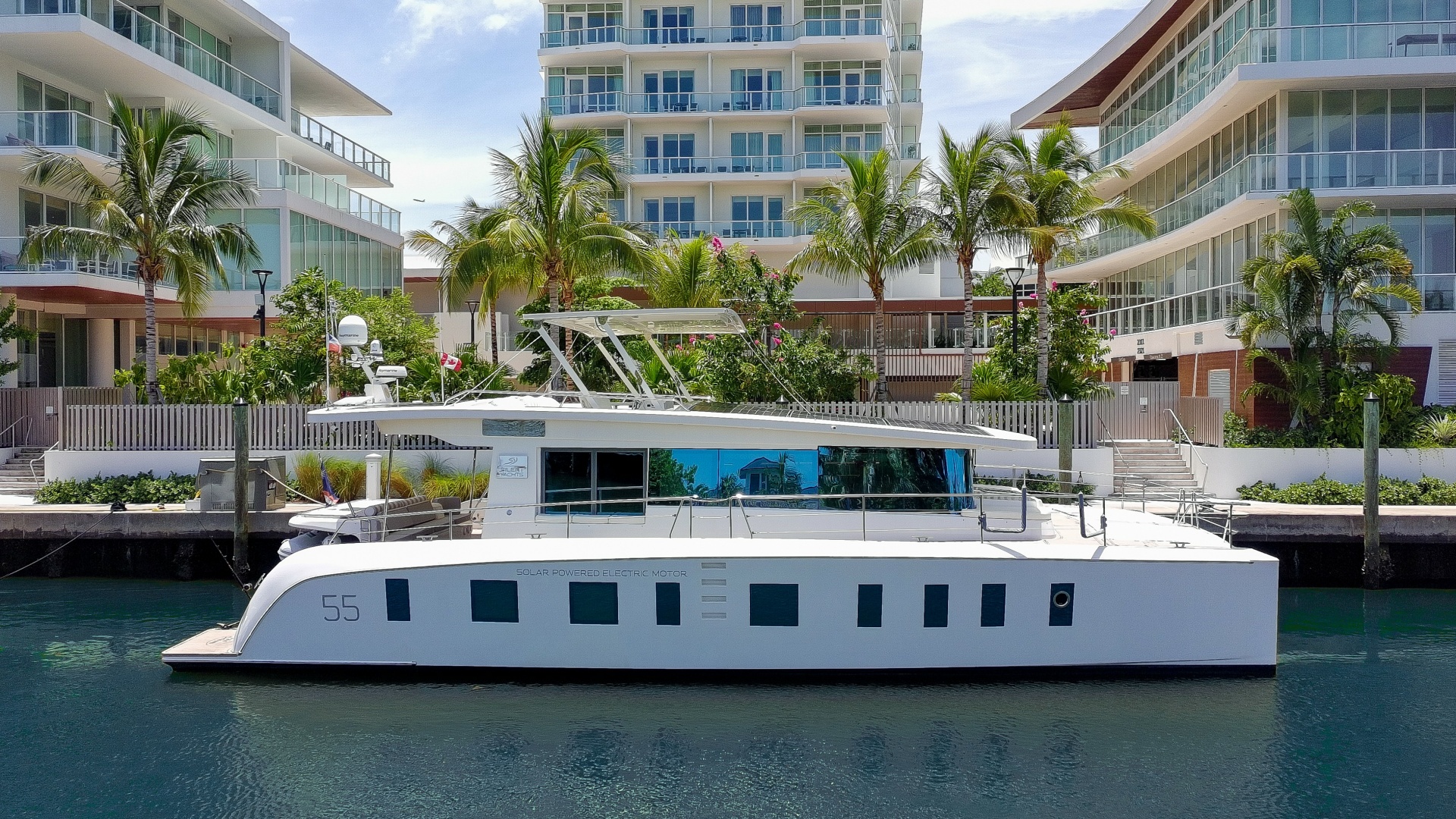
2019 Silent-Yachts Fair Dinkum
$1,599,000
55
Fort Lauderdale Florida

2026 Canados
49
Miami Florida

2026 Buddy Davis
47
Miami Florida
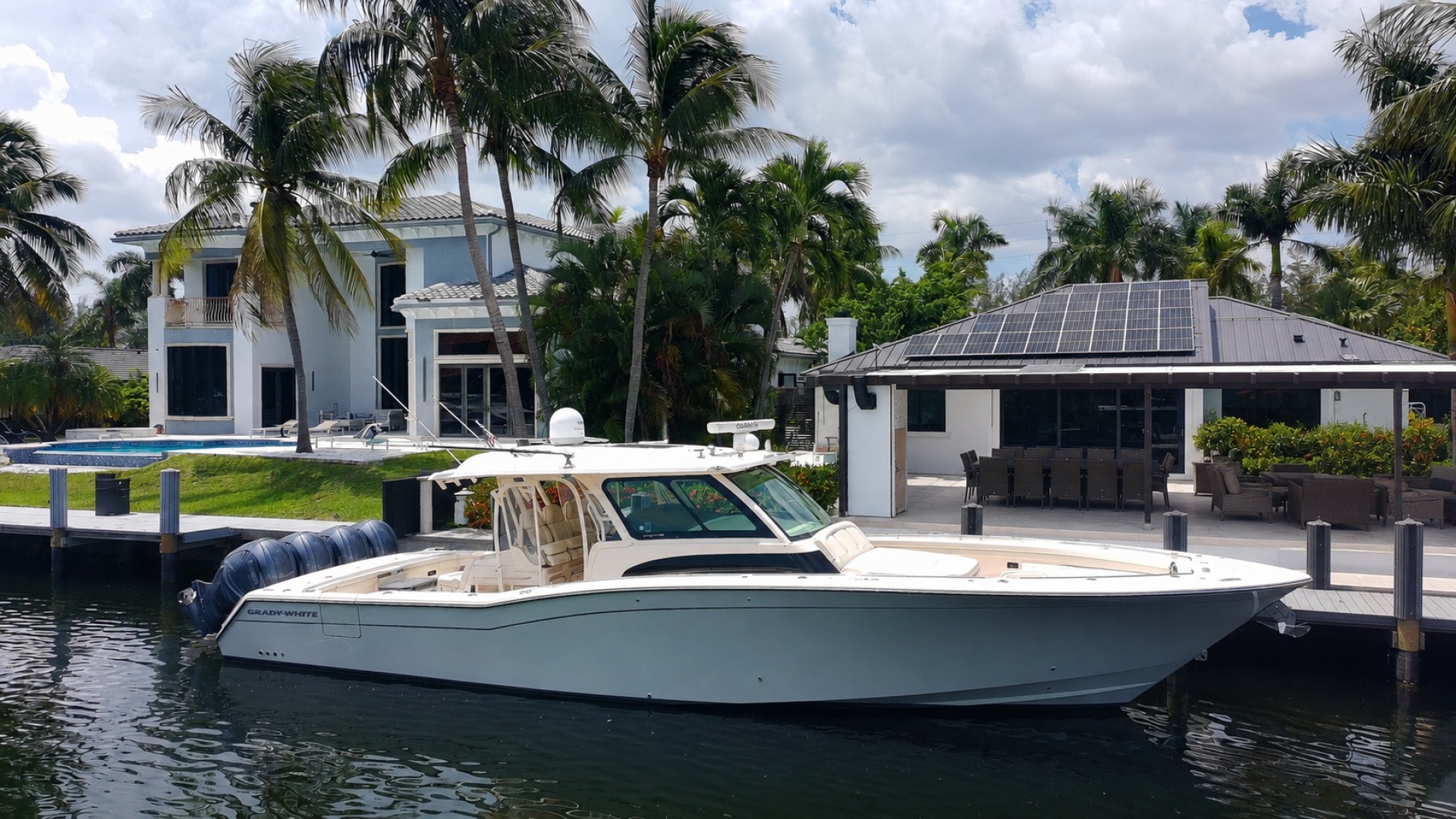
2020 Grady-White No Name
$610,000
45
Hallandale Beach Florida
2020 Viking Huckleberry
$1,495,000
44
Fort Lauderdale Florida

2027 Canados
43
Miami Florida
2021 Intrepid Dream Faster
$730,000
40
Coral Gables Florida

2016 Edgewater
$299,000
37
Miami, Florida

2022 Avid
$56,900
23
Stuart Florida
Get your yacht value Estimate
"*" indicates required fields