

Selling your luxury yacht in Florida brings both opportunity and challenge, where every detail matters to maximize your return on investment. The difference between a quick, profitable sale and a vessel lingering on the market often comes down to expert preparation and strategic presentation. By following the standards recognized by the Yacht Brokers Association of America and applying industry best practices, you position your yacht for top-dollar results in this competitive market.
Table of Contents
- Step 1: Prepare Your Yacht for Market
- Step 2: Set the Right Asking Price
- Step 3: List and Market Your Yacht Effectively
- Step 4: Negotiate Offers and Handle Paperwork
- Step 5: Verify Sale and Ensure Smooth Transfer
Quick Summary
| Key Point | Explanation |
|---|---|
| 1. Prepare Yacht Thoroughly | Conduct a detailed inspection, repairs, and cleaning to maximize market value and buyer interest. |
| 2. Set Competitive Pricing | Analyze recent comparable sales to establish a fair asking price, enhancing your yacht’s attractiveness to buyers. |
| 3. Create Effective Listings | Use high-quality images and compelling descriptions to make a strong first impression on prospective buyers. |
| 4. Manage Negotiations Strategically | Be prepared with your minimum acceptable price and respond thoughtfully to buyer offers to ensure favorable outcomes. |
| 5. Ensure Smooth Documentation Transfer | Organize all requisite documents for a clear title transfer to facilitate a seamless sale process. |
Step 1: Prepare Your Yacht for Market
Your yacht’s condition directly impacts its market value and how quickly it sells. Taking time to prepare it properly positions you for success from day one.
Start by conducting a thorough inspection from bow to stern. Check the engine, mechanical systems, electrical systems, and hull condition. Look for any visible damage, corrosion, or wear that buyers will notice immediately.
Clean everything. Pressure wash the exterior, detail the interior, and ensure all surfaces shine. A spotless yacht feels newer and more valuable than the same vessel in average condition. Pay special attention to the galley, bathrooms, and sleeping quarters where buyers spend time imagining their experiences.
Address minor repairs and maintenance issues:
- Top off all fluids and perform routine servicing
- Replace worn cushions, canvas, or upholstery
- Fix leaks, loose fittings, or broken equipment
- Update paint and varnish where needed
- Service air conditioning and heating systems
Document everything. Keep records of all maintenance, upgrades, and repairs. Professional brokers following industry-recognized standards expect detailed documentation that reassures buyers about the yacht’s care history.
A well-maintained yacht can command 10-15% higher prices than comparable vessels requiring significant repairs.
Consider hiring professionals for deep cleaning and detailing. The cost is minimal compared to the return on investment. A professionally detailed yacht appeals to more buyers and justifies premium pricing.
Here’s how professional versus DIY yacht preparation compares:
| Aspect | DIY Approach | Professional Services |
|---|---|---|
| Time Investment | High, requires personal hours | Low, managed by experts |
| Cost | Lower upfront expenses | Higher upfront, better ROI |
| Quality of Finish | Varies by skill level | Consistently high standard |
| Buyer Impression | Average to good | Strong, premium appeal |
| Impact on Sale Price | May not maximize value | Higher likelihood of top price |
Gather all documentation including registration, warranty information, service records, and manufacturer manuals. This transparency builds buyer confidence and speeds up the sales process.
Pro tip: Have a marine surveyor inspect your yacht before listing it—knowing exactly what buyers will find eliminates surprises and allows you to address issues proactively rather than negotiate from a defensive position.
Step 2: Set the Right Asking Price
Pricing your yacht correctly is one of the most critical decisions in the selling process. Too high, and buyers pass it by. Too low, and you leave money on the table.
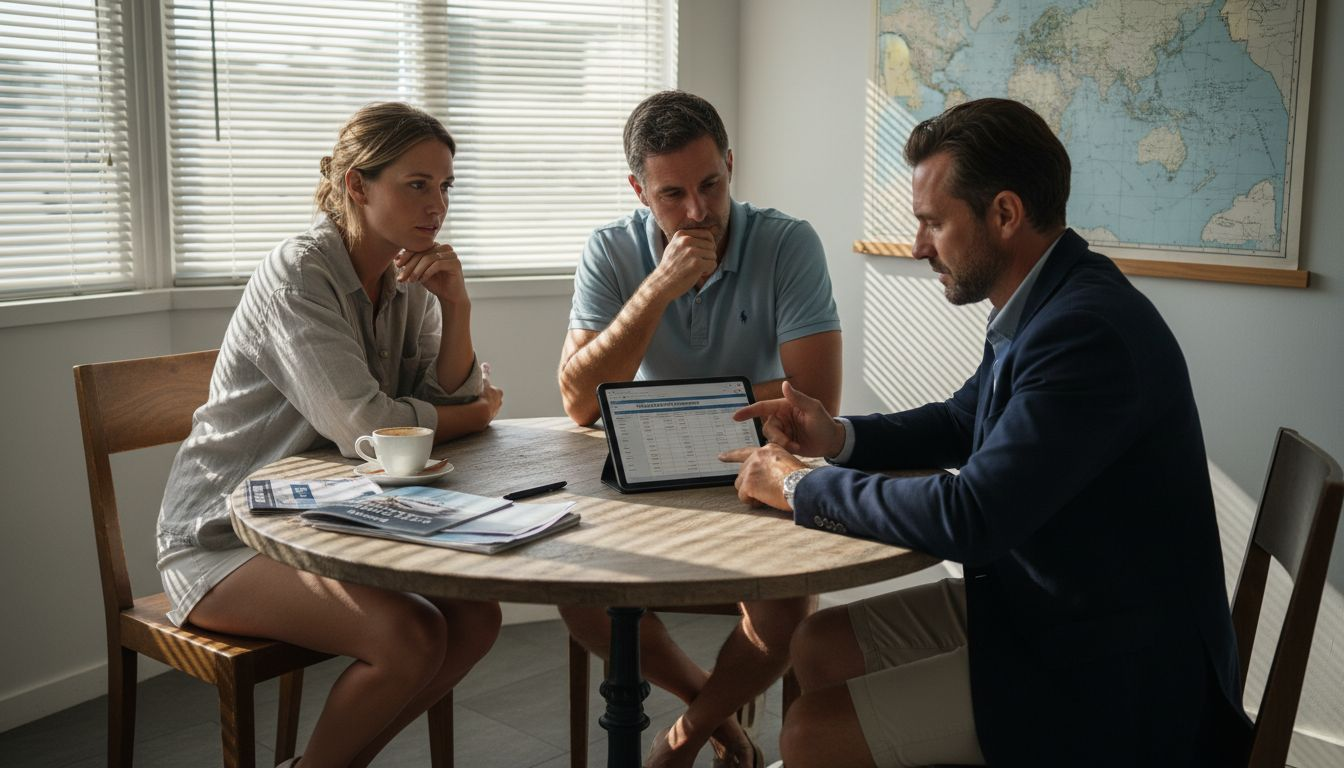
Start by researching comparable sales in your market. Look at similar yachts that sold in the past 6-12 months. Pay attention to age, condition, size, engine hours, and features. Florida’s yacht market moves quickly, so recent sales data matters more than older listings.
Gather pricing data from multiple sources:
- Marine databases and listing platforms
- Broker market reports and recent transactions
- Yacht valuation guides for your model and year
- Professional appraisals from marine surveyors
Understanding current market conditions and comparable vessels helps you position your yacht competitively while maximizing value. Professional brokers analyze these factors to recommend optimal pricing strategies.
The first 30 days on market are critical—overpriced yachts lose momentum and become harder to sell at any price.
Consider the total package. A well-maintained yacht with recent upgrades and lower engine hours commands premium pricing. Factor in your yacht’s unique features, customizations, and any recent improvements you’ve made.
Build in negotiation room. Most serious buyers expect to negotiate, so price slightly above your target. This gives you flexibility during discussions without sacrificing your bottom line.
Get professional guidance. A yacht broker with deep market knowledge can recommend the optimal price based on current demand, seasonality, and buyer behavior. Their expertise often results in faster sales and better final prices.
Pro tip: Price aggressively at launch—many buyers make their decision within the first week of listing, and a competitive opening price generates more showings and bidding momentum than a slow start.
Step 3: List and Market Your Yacht Effectively
A great listing combined with smart marketing strategies gets your yacht in front of the right buyers. Your listing is your yacht’s first impression, so make it count.
Create a compelling listing description that highlights what makes your yacht special. Focus on unique features, recent upgrades, maintenance history, and lifestyle benefits. Use high-quality photography from multiple angles and in good lighting. Professional photos increase buyer interest and justify premium pricing.
When selecting marketing channels, measuring marketing effectiveness across awareness, consideration, and decision stages helps you reach qualified buyers. Digital platforms, broker networks, and yacht-specific listing sites attract different buyer segments.
Develop a targeted marketing approach:
- List on major yacht marketplaces and broker networks
- Use professional photography and videography
- Create detailed descriptions highlighting unique selling points
- Leverage social media and digital advertising
- Distribute to brokers in target markets
Quality marketing reaches serious buyers faster and generates competitive bidding that drives prices up.
Track which channels produce the most qualified inquiries. Some platforms attract serious buyers while others generate tire kickers. Focus your budget on channels delivering real leads.
Your marketing strategy should align with your target audience and unique selling proposition. Different buyer profiles respond to different messaging. A family buyer cares about safety and comfort. A captain-operated buyer cares about performance and cruising range.
Consider working with a broker who handles the marketing heavy lifting. Professional brokers have established buyer networks and proven marketing systems that get results faster than DIY approaches.
Pro tip: Schedule private viewings strategically during peak buying season (typically fall through spring in Florida) and stack showings on weekends when qualified buyers have time to visit multiple vessels.
Step 4: Negotiate Offers and Handle Paperwork
Once serious buyers emerge, you’ll enter the negotiation phase where deals are won and lost. Stay organized, professional, and strategic throughout this critical stage.
When the first offer arrives, resist the urge to accept immediately. Review it carefully with your broker or legal advisor. Consider the offer amount, contingencies, inspection terms, and closing timeline. Strong offers typically include financing pre-approval and limited contingencies.
Approach negotiations with a clear strategy:
- Know your minimum acceptable price beforehand
- Review all offer terms, not just the price
- Respond promptly but never hastily
- Use ethical negotiation processes with agreed deadlines to guide discussions toward mutually beneficial outcomes
- Document all communications and counteroffers
Multiple offers create favorable conditions. When several qualified buyers are interested, you gain leverage and can be more selective about terms. Don’t feel pressured to accept the first offer if better options exist.
The best deals happen when both parties feel they’ve achieved their objectives, not when one side dominates the negotiation.
Handle paperwork meticulously. Coordinate with your broker and legal team to prepare the purchase agreement, disclosure documents, and vessel history reports. Buyers need documentation proving maintenance, repairs, and ownership history.
Assemble required documents including the original title or registration, service records, warranty information, insurance history, and any outstanding liens or mortgages. Complete transparency builds buyer confidence and prevents last-minute deal killers.
Set clear timelines for inspections, surveys, and financing approval. Define which party handles specific tasks. Specify the closing date and what condition the yacht must be in at delivery.
Pro tip: Have a marine attorney review all paperwork before signing to protect yourself from hidden liabilities, undisclosed issues, or unfavorable terms that could haunt you after closing.
Step 5: Verify Sale and Ensure Smooth Transfer
You’re in the final stretch. This step ensures the buyer gets clear title and you complete the transaction legally and safely.
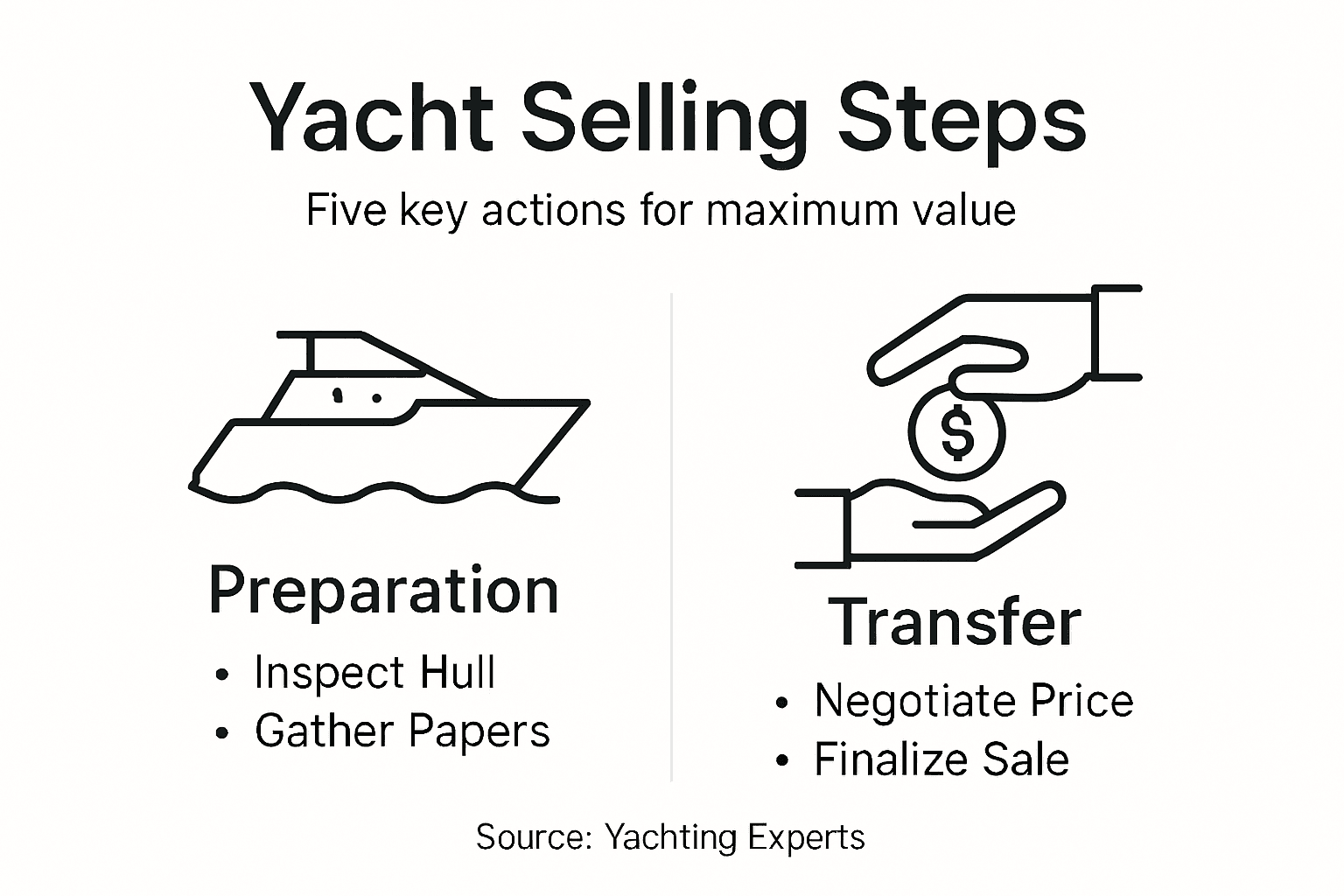
Coordinate with your broker and attorney to finalize all documentation. The buyer’s lender will require a clear title before releasing funds. Any liens, mortgages, or outstanding debts must be resolved before closing.
Prepare essential transfer documents:
Summary of essential closing documents and their roles:
| Document | Purpose | Who Provides It |
|---|---|---|
| Certificate of Title | Proves legal ownership | Seller/lender |
| Bill of Sale | Records transaction details | Seller |
| Registration Certificate | Confirms vessel registration | Seller |
| Lien Release | Shows debts are cleared | Lender |
| Insurance Transfer Form | Transfers policy to buyer | Insurer |
- Certificate of Title showing clear ownership
- Bill of Sale with complete transaction details
- Registration Certificate and assignment forms
- Lien release documentation if applicable
- Insurance transfer and cancellation forms
Verify that all liens are satisfied. Contact your lender to obtain a lien release document that will be provided at closing. Any outstanding loans must be paid from closing proceeds before title transfers.
Clear title is non-negotiable. A single unreleased lien can delay or derail closing entirely.
Compliance with state registration and titling requirements is critical. Follow proper procedures for title assignment and registration according to your state’s requirements. Florida’s Department of Motor Vehicles handles yacht titling, and the buyer will need to register the vessel in their name.
Arrange a final walk-through inspection with the buyer. Confirm the yacht is in the agreed-upon condition. Address any last-minute concerns before funds transfer. Have your broker or attorney present to document the transfer.
Schedule closing with your lender and escrow company. Bring all signed documents, identification, and any required notarizations. Verify that payoff amounts are correct and that funds will be distributed properly.
Pro tip: Request a certified statement of no liens from your lender at least one week before closing to prevent surprises, and have your attorney verify that the bill of sale accurately reflects all agreed-upon terms.
Maximize Your Yacht Sale with Expert Guidance
Selling a yacht for maximum value involves more than just listing it on the market. This article highlights challenges like setting the right asking price, ensuring meticulous preparation, and crafting compelling marketing strategies. If you want to avoid common pitfalls such as undervaluing your vessel, missing critical paperwork, or missing the prime sales window, personalized support is key. At Yachting Experts, we understand these pain points and help you navigate every detail—from pricing and negotiations to smooth title transfers—with confidence and ease.
Experience a high-touch, personalized process designed around your unique goals and yacht dreams. Whether you face challenges with documentation, pricing strategies, or buyer negotiations, our dedicated team offers meticulous attention to detail and proven expertise. Learn how our passion and commitment set us apart in providing a seamless selling experience by exploring our insights in Uncategorized – Jason and meet our dedicated New Team Member – Jason.

Ready to turn your yacht sale into a success story? Visit Yachting Experts now to start your journey toward maximum return on investment. Get personalized advice and make selling your yacht simpler and more rewarding today.
Frequently Asked Questions
How do I prepare my yacht for sale to maximize its value?
To prepare your yacht for sale and maximize its value, start with a thorough inspection and cleaning. Address minor repairs, document all maintenance records, and consider hiring professionals for deep cleaning to enhance its appeal.
What factors should I consider when setting the asking price for my yacht?
When setting the asking price for your yacht, research comparable sales and consider the yacht’s age, condition, size, and features. Price your yacht slightly above your minimum acceptable price to leave room for negotiation while attracting serious buyers.
How can I create a compelling listing for my yacht?
To create a compelling listing for your yacht, highlight unique features, recent upgrades, and include high-quality photographs from multiple angles. Ensure your description showcases the lifestyle benefits of owning the yacht to attract potential buyers.
What should I expect during the negotiation process?
During the negotiation process, review all offers carefully and respond promptly without haste. Be clear about your minimum acceptable price and approach discussions ethically to achieve mutually beneficial outcomes.
How do I ensure a smooth transfer of ownership after selling my yacht?
To ensure a smooth transfer of ownership, coordinate with your broker and attorney to finalize all necessary documentation. Verify that there are no outstanding liens and prepare essential transfer documents well in advance of the closing date.
What documentation do I need to provide when selling my yacht?
When selling your yacht, you need to provide essential documents like the Certificate of Title, Bill of Sale, and registration certificate. Make sure all maintenance and repair records are also ready to build buyer confidence.
Recommended
Request A Call
Featured Listings

2027 Canados
100
Miami Florida

2015 Maiora
$3,750,000
90
Miami Florida

2027 Canados
57
Miami Florida

2019 Silent-Yachts Fair Dinkum
$1,599,000
55
Fort Lauderdale Florida

2026 Canados
49
Miami Florida

2026 Buddy Davis
47
Miami Florida

2020 Grady-White No Name
$610,000
45
Hallandale Beach Florida

2020 Viking Huckleberry
$1,495,000
44
Fort Lauderdale Florida

2027 Canados
43
Miami Florida

2021 Intrepid Dream Faster
$730,000
40
Coral Gables Florida

2016 Edgewater
$299,000
37
Miami, Florida

2022 Avid
$56,900
23
Stuart Florida
Get your yacht value Estimate
"*" indicates required fields