

Florida yacht ownership is one of life’s great pleasures, but when it’s time to sell, the financial stakes are real and the clock is already ticking. Saltwater accelerates depreciation by 20% beyond national averages, and Florida’s competitive market means buyers have plenty of options to choose from. The good news is that with the right preparation, targeted upgrades, and expert strategies, you can protect your investment and walk away with significantly more money in your pocket. This guide walks you through every step, from understanding depreciation to closing the deal confidently.
Table of Contents
- Understand depreciation and market forces in Florida
- Prepare your yacht for sale: Inspections, upgrades, and presentation
- Market your yacht effectively: Strategies for Florida’s market
- Avoid common mistakes and verify your results
- A Florida expert’s take: Value protection is about precision, not luck
- Get expert support for your Florida yacht resale
- Frequently asked questions
Key Takeaways
| Point | Details |
|---|---|
| Saltwater accelerates depreciation | Florida yachts lose value faster, so proactive maintenance is essential to protect returns. |
| Documented care boosts value | Maintenance records can lift resale value by 10-20% above undocumented yachts. |
| Strategic upgrades pay off | Small investments in detailing and key features yield strong ROI when selling. |
| Expert marketing draws better buyers | Using Florida-specific marketing tactics attracts serious buyers and maximizes offers. |
Understand depreciation and market forces in Florida
Once you recognize the financial risk of rapid depreciation, you can take targeted steps to protect your investment.
Depreciation is the single biggest financial threat to any yacht owner planning to sell. Nationally, yachts lose 15-25% of their value in year one alone, then continue shedding 8-12% annually through years two to five. In Florida, saltwater exposure compounds this problem considerably. The warm, saline environment accelerates corrosion on hull fittings, engine components, and electrical systems faster than freshwater environments. That means a yacht sitting in a Florida marina without meticulous upkeep can lose value at a pace that surprises even experienced owners.
The silver lining? Well-maintained boats hold 10-20% more value than neglected ones at resale. That gap represents real dollars, often tens of thousands on a mid-range vessel. Our team has seen firsthand how a documented, consistent maintenance history transforms buyer confidence and drives competing offers.
Saltwater vs. freshwater depreciation comparison
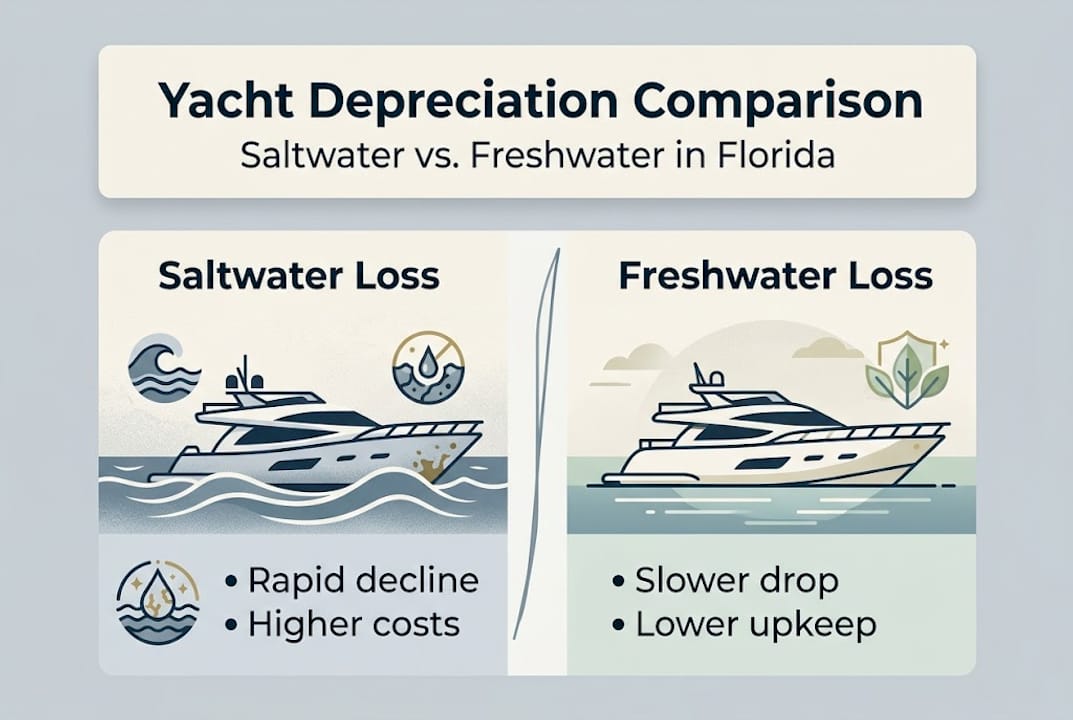
| Factor | Freshwater market | Florida saltwater market |
|---|---|---|
| Year 1 depreciation | 15-20% | 18-25% |
| Years 2-5 annual loss | 8-10% | 10-12% |
| Hull corrosion rate | Low | High |
| Engine wear acceleration | Moderate | Significant |
| Value retention with maintenance | Strong | Strong (if documented) |
Florida’s market also has unique forces beyond just the environment. Understanding them gives you a real competitive edge when you’re ready to list. Key market factors specific to Florida include:
- Seasonal demand spikes: Buyer activity peaks from October through March, when snowbirds and seasonal residents are actively shopping.
- Hurricane history sensitivity: Buyers scrutinize storm damage disclosures carefully. A clean hurricane history is a genuine selling point.
- High broker competition: Florida has one of the densest concentrations of yacht brokers in the country, meaning your listing needs to stand out immediately.
- Tax and title nuances: Florida’s sales tax structure on vessel purchases affects buyer calculations and can influence offer amounts.
- Dockage and marina access: Buyers value vessels with established slip agreements or easy access to premium marinas.
Pro Tip: Start a detailed maintenance log today if you haven’t already. A well-organized binder or digital record of every service, repair, and inspection adds immediate credibility with buyers and can meaningfully boost your asking price. Our yacht management tips resource shows you exactly how to set this up.
Understanding maintenance detailing value impact is also critical. Regular professional detailing is not just cosmetic. It protects surfaces, slows oxidation, and signals to buyers that the vessel has been cared for at every level. Pair that with smart yacht investment returns planning, and you position yourself to recover far more of your original purchase price.
Prepare your yacht for sale: Inspections, upgrades, and presentation
Knowing what drives value, your next move is to present your yacht in the best possible light for discerning Florida buyers.
Preparation is where most sellers either win or lose thousands of dollars before a single buyer ever steps aboard. A thorough, methodical approach to inspection, upgrades, and presentation separates listings that sell quickly at top dollar from those that linger on the market and attract lowball offers.
Step-by-step pre-sale inspection checklist
- Hull inspection: Hire a certified marine surveyor to assess the hull for osmotic blistering, stress cracks, and antifouling paint condition. Address any issues before listing.
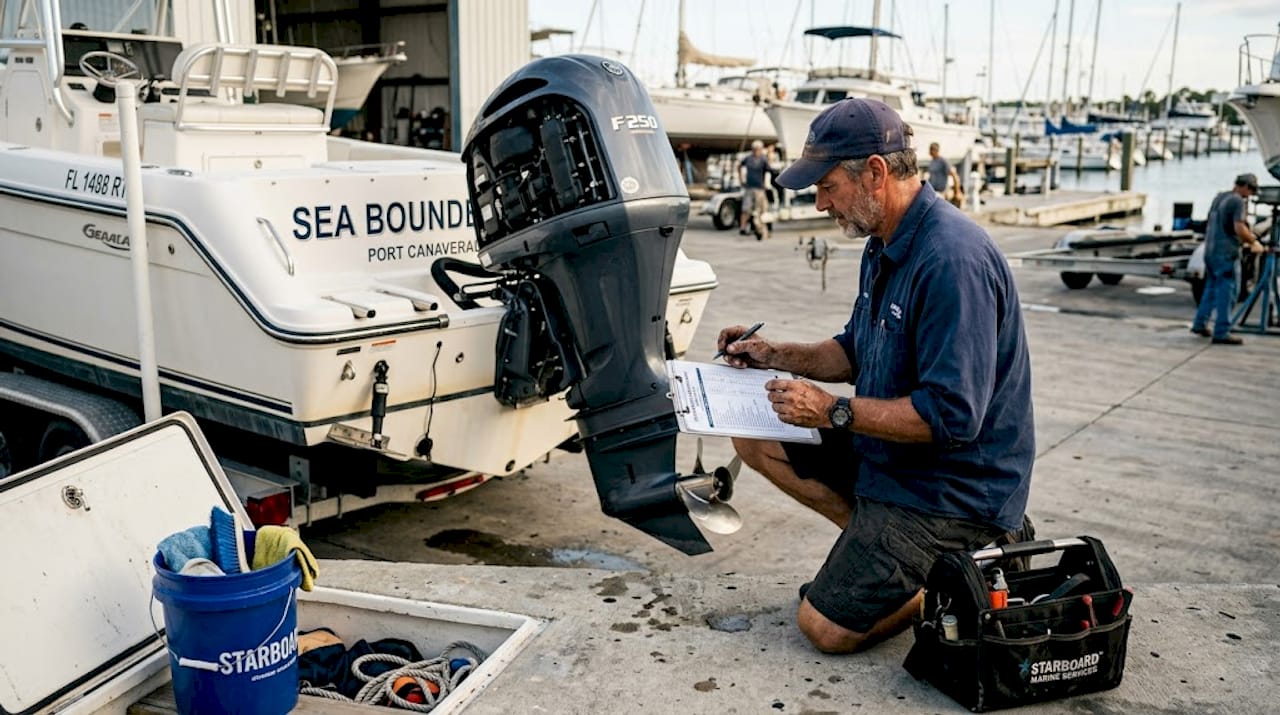
- Engine and mechanical systems: Service all engines, check impellers, belts, zincs, and fuel systems. Fresh service records are gold to buyers.
- Electronics and navigation: Verify that chartplotters, VHF radios, autopilot, and AIS systems are fully functional. Outdated or malfunctioning electronics are immediate negotiating leverage for buyers.
- Electrical systems: Inspect shore power connections, battery banks, inverters, and bilge pumps. Faulty wiring is a red flag during surveys.
- Interior condition: Deep clean all upholstery, replace worn or stained fabrics, and address any mold or mildew odors. First impressions inside the cabin are powerful.
- Safety equipment: Confirm that life rafts, flares, fire extinguishers, and EPIRBs are current and certified.
- Documentation review: Gather title, registration, insurance history, and all service records into one organized package.
Following yacht maintenance best practices throughout ownership makes this checklist far less daunting when sale time arrives.
Upgrade ROI comparison for Florida sellers
| Upgrade | Estimated cost | Potential value added | ROI |
|---|---|---|---|
| Professional detailing and hull polish | $800-$1,500 | $3,000-$6,000 | 300-400% |
| Upholstery refresh | $1,500-$3,000 | $4,000-$8,000 | 200-300% |
| Updated navigation electronics | $3,000-$6,000 | $5,000-$9,000 | 100-150% |
| A/C system service or replacement | $2,000-$5,000 | $4,000-$7,000 | 80-140% |
| Fresh bottom paint | $1,200-$2,500 | $2,500-$5,000 | 100-200% |
As well-maintained boats hold 10-20% more value, even modest investments in presentation pay back multiples. Our full selling your yacht step by step guide covers each of these areas in greater detail.
Pro Tip: Don’t underestimate the power of professional photography and staging. A yacht that looks stunning in listing photos generates dramatically more inquiries. Hire a marine photographer and stage the interior with fresh linens, clean countertops, and good lighting. Buyers often make emotional decisions before they ever schedule a showing.
Market your yacht effectively: Strategies for Florida’s market
With your yacht fully prepped, the next step is reaching the right buyers and presenting it with strategies tailored to the Florida market.
Florida’s yacht market is active, but it’s also crowded. Reaching qualified buyers requires more than a basic online listing. You need a targeted, multi-channel strategy that puts your vessel in front of people who are ready and able to buy. The fact that saltwater accelerates depreciation by 20% in Florida is something serious buyers already know, which is why your marketing must proactively address condition and maintenance history at every touchpoint.
Effective online marketing steps for Florida yacht sellers
- Professional photos and video: High-resolution images from every angle, plus a polished video walkthrough, are non-negotiable for premium listings.
- Drone footage: Aerial shots showing the vessel on the water or at a scenic marina create aspirational appeal and set your listing apart.
- Detailed, accurate descriptions: Include engine hours, recent service dates, upgrade history, and any hurricane-proofing features. Florida buyers read listings carefully.
- Multi-platform listing: Post on YachtWorld, Boat Trader, and local Florida brokerage networks simultaneously for maximum exposure.
- Social media promotion: Targeted posts on Facebook Marketplace and Instagram, with location tags for Florida marinas, reach buyers who aren’t actively browsing listing sites.
- Broker network leverage: An experienced Florida broker has relationships with qualified buyers and can generate private showings before a listing even goes public.
When it comes to negotiation, Florida-specific knowledge matters enormously. Understand that buyers here are often aware of seasonal pricing patterns. A listing that goes live in September, just before the peak October-March season, attracts more urgency and higher offers than one posted in the summer slowdown. Florida’s documentary stamp tax on vessel sales also affects net proceeds, so factor this into your pricing strategy from the start.
Our Florida boat selling tips resource and best practices for boat selling guide both offer localized strategies that go well beyond generic advice.
Pro Tip: A well-timed listing just before peak boating season fetches higher offers. If your yacht will be ready in August, hold the listing until late September when buyer energy is building. That timing decision alone can add thousands to your final sale price.
Avoid common mistakes and verify your results
To close strong and avoid any last-minute pitfalls, you’ll want to heed common warnings and verify your sale price stacks up.
Even sellers who prepare diligently can stumble in the final stretch. Knowing the most common mistakes ahead of time lets you sidestep them entirely and arrive at closing with confidence.
The 5 most common yacht resale mistakes in Florida
-
Underdocumented maintenance history: Buyers and surveyors will ask for records. If you can’t produce them, they assume the worst and negotiate aggressively downward. Fix it: Compile every receipt, invoice, and service note you have. Even incomplete records are better than none.
-
Overpricing relative to market comps: Emotional attachment to your vessel is natural, but overpricing drives qualified buyers away and leads to price reductions that signal desperation. Fix it: Use online appraisal tools and request a broker’s comparative market analysis before setting your asking price.
-
Ignoring cosmetic repairs: Scuffed gelcoat, faded upholstery, and corroded hardware all tell buyers the vessel has been neglected. Fix it: Budget for cosmetic touch-ups before listing. The return on these small investments is exceptional.
-
Poor showing preparation: A cluttered, dirty, or odorous vessel during showings kills deals instantly. Fix it: Treat every showing like a formal open house. Clean, ventilate, and stage the vessel the morning of every appointment.
-
Unclear title or ownership documentation: Title issues discovered at closing can collapse a deal entirely. Fix it: Resolve any liens, co-ownership complications, or registration discrepancies well before you list.
“Well-maintained boats hold 10-20% more value at resale. In Florida’s saltwater environment, consistent, documented maintenance isn’t just a best practice. It’s the single most powerful financial decision a yacht owner can make before selling.”
To verify that your sale price reflects true market value, use tools like NADA Guides for marine vessels and BUCValu to benchmark your asking price against comparable Florida listings. Request opinions from two or three independent brokers. If their estimates cluster around a similar number, you have a reliable baseline. Our luxury yacht resale expert guide walks through this verification process in detail.
Closing document checklist
- ✅ Bill of sale signed by all parties
- ✅ Certificate of title transferred correctly
- ✅ USCG documentation (if applicable) updated
- ✅ Sales tax obligations confirmed with a Florida tax professional
- ✅ Survey and sea trial results reviewed and accepted
- ✅ All liens formally released before funds transfer
- ✅ Escrow funds confirmed and disbursement schedule agreed upon
A Florida expert’s take: Value protection is about precision, not luck
Here is something we see consistently in this market: sellers who treat maintenance documentation as an afterthought are leaving real money on the table, often without ever realizing it. Most guides tell you to “keep good records.” We want to be more direct. In Florida’s saltwater environment, traceable, timestamped, professional maintenance records are not optional if you want top dollar. They are the foundation of your entire resale case.
The compounding effect of documentation is something most owners underestimate. A buyer looking at two similar vessels will almost always pay more for the one with a complete service history, even if the asking price is slightly higher. Why? Because they’re buying certainty. They know what they’re getting. In a market where saltwater damage can hide behind fresh paint, that certainty is worth a premium.
We’ve also seen sellers convinced that seasonal timing is the magic variable. Timing matters, yes. But it’s a multiplier, not the base. If your vessel isn’t in excellent documented condition, listing it in October instead of July won’t save you. The buyers who show up during peak season are often the most sophisticated. They will find every flaw during the survey, and they will use it.
The real differentiator we see among sellers who achieve exceptional returns is their commitment to process. They work with experienced yacht management professionals throughout ownership, not just at sale time. They treat their vessel like the significant financial asset it is. And when it’s time to sell, they have the documentation, condition, and expert support to command the best price the market will bear.
Cutting corners feels tempting when you’re preparing to sell. Skipping the professional survey, skipping the detailing, skipping the upholstery refresh. Each shortcut seems to save money in the moment. But experienced brokers and surveyors spot these gaps immediately, and buyers use them to negotiate far more than the cost of the repair itself. Every dollar you don’t spend on preparation often costs you three or four at closing.
Get expert support for your Florida yacht resale
Armed with smart strategies and local know-how, it’s time to partner with the professionals who deliver results.
At Yachting Experts, we’ve built our reputation on one thing: getting Florida yacht owners the best possible return on their vessels, with far less stress than going it alone. Our team combines deep market knowledge, hands-on preparation support, and a network of qualified buyers that most sellers simply can’t access independently.

Whether you’re ready to list today or still planning your timeline, our yacht sales process guide gives you a clear, step-by-step roadmap built specifically for Florida owners. Explore why selling your yacht for ROI makes strategic sense right now, and discover the real advantages of yacht brokerage when you work with a team that genuinely cares about your outcome. Reach out today for a personalized market analysis, and let’s make your next move your best one yet. 🚤
Frequently asked questions
How fast does a yacht lose value in Florida?
Florida yachts lose 15-25% in year one, and saltwater exposure accelerates overall depreciation by an additional 20% compared to freshwater markets, making proactive maintenance essential.
Which upgrades give the best ROI for resale?
Professional detailing, upholstery refresh, and updated navigation electronics consistently yield the highest returns, with well-maintained boats holding 10-20% more value at resale than neglected ones.
Does maintenance documentation increase my yacht’s value?
Absolutely. Detailed service records can add 10-20% to resale value by giving buyers confidence in the vessel’s condition, which is especially critical in Florida’s corrosive saltwater environment.
When is the best time to sell a yacht in Florida?
Listing just before peak boating season, ideally in late September or early October, captures the surge in buyer demand from October through March when activity and offer prices are at their highest.
What is the biggest resale mistake yacht owners make?
Neglecting maintenance and failing to document it properly is the most costly error. Well-maintained boats hold 10-20% more value, so gaps in your service history directly translate to lower offers and harder negotiations.
Recommended
Request A Call
Featured Listings

2027 Canados
100
Miami Florida

2015 Maiora
$3,750,000
90
Miami Florida

2027 Canados
57
Miami Florida

2019 Silent-Yachts Fair Dinkum
$1,599,000
55
Fort Lauderdale Florida

2026 Canados
49
Miami Florida

2026 Buddy Davis
47
Miami Florida

2020 Grady-White No Name
$610,000
45
Hallandale Beach Florida

2020 Viking Huckleberry
$1,495,000
44
Fort Lauderdale Florida

2027 Canados
43
Miami Florida

2021 Intrepid Dream Faster
$730,000
40
Coral Gables Florida

2016 Edgewater
$299,000
37
Miami, Florida

2022 Avid
$56,900
23
Stuart Florida
Get your yacht value Estimate
"*" indicates required fields