

Budgeting your first yacht purchase means knowing the full financial picture before you ever set foot on a dock. The purchase price is only the beginning. Marine lenders, accredited surveyors certified by SAMS (Society of Accredited Marine Surveyors) or NAMS (National Association of Marine Surveyors), and annual operating costs running 10–15% of the vessel’s value all factor into your real number. First-time buyers who treat this as a structured financial exercise, not an emotional one, end up with boats they love and budgets they can sustain.
How to budget your first yacht purchase: setting a realistic number
The single biggest mistake first-time buyers make is falling in love with a yacht before running the numbers. Your budget must come first. The yacht comes second.
Start with a personal financial assessment. List your monthly take-home income, fixed debts, and how much you can realistically save each month. A widely used rule of thumb in marine financial planning is that total boat-related expenses should not exceed 10–15% of your monthly income. That figure covers your loan payment, insurance, dockage, and fuel combined.

Pro Tip: Build your budget worksheet before you browse listings. Once you see the boat you want, your objectivity disappears fast.
Match the yacht size and type to how you actually plan to use it. A 45-foot sailing yacht for weekend coastal cruising has a very different cost profile than a 60-foot motor yacht for extended offshore passages. Crew requirements, fuel consumption, and slip size all scale with length. Buying more boat than your usage demands is the fastest way to blow a budget.
A simple budget worksheet helps you see the full picture at a glance:
| Budget category | Estimated monthly cost |
|---|---|
| Loan payment | Varies by loan amount and term |
| Insurance premium | 1%–2.5% of vessel value annually |
| Dockage or slip fee | $200–$1,250+ per month |
| Fuel and maintenance | Varies by size and usage |
| Reserve fund | 5%–10% of monthly boat budget |
The reserve fund row is the one most buyers skip. Do not skip it. Unexpected repairs, haul-outs, and equipment replacements are not rare events in yacht ownership. They are certainties.
What financing options work for first-time yacht buyers?
Marine loan financing follows a structure most first-time buyers find familiar once they understand the basics. Down payments typically run 10–20%, and loan terms span 5–20 years depending on the vessel’s age, condition, and the buyer’s credit profile. That range matters because a 20-year term on a $300,000 yacht produces a very different monthly payment than a 10-year term on the same amount.
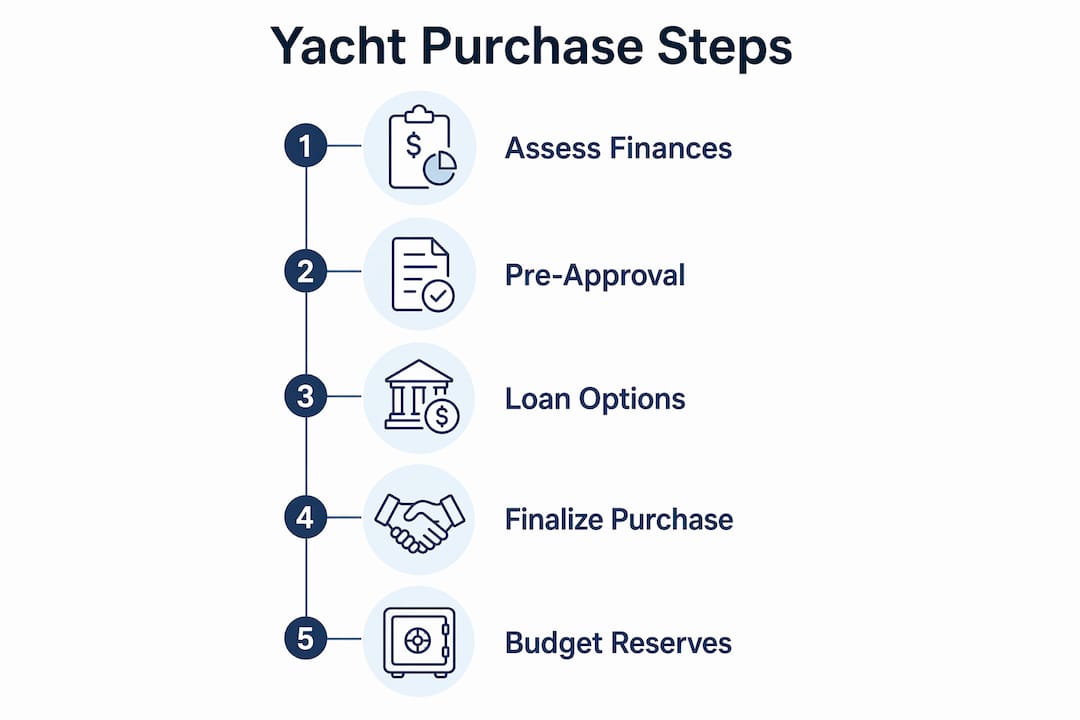
Lender requirements vary significantly. Marine lenders, credit unions with boat loan programs, and manufacturer financing programs all evaluate the vessel’s age and condition alongside your credit score and debt-to-income ratio. Older vessels often require larger down payments or shorter terms. Knowing this before you shop prevents you from falling for a boat your financing won’t support.
Pre-approval is the step most first-time buyers skip, and it costs them. Formal pre-approval not only clarifies your true budget but also strengthens your offer to sellers. A pre-approval letter signals that your financing is secured. It reduces the seller’s risk and gives you a real advantage over competing buyers who are still figuring out their numbers.
Here is the order that works:
- Pull your credit report and resolve any errors before applying.
- Gather income documentation, tax returns, and a list of current debts.
- Contact two or three marine lenders or credit unions for pre-approval quotes.
- Compare APR, loan term, and prepayment terms across offers.
- Secure your pre-approval letter before attending any private viewings or making offers.
Pro Tip: Pre-approval is a tactical asset in negotiations. A seller facing two similar offers will almost always favor the buyer with confirmed financing.
What acquisition costs should you budget beyond the sticker price?
The purchase price on a listing is not your final cost. Acquisition costs add 5–12% to the purchase price once you account for surveys, registration, taxes, insurance setup, and delivery. On a $250,000 yacht, that means budgeting an additional $12,500 to $30,000 before you cast off.
Key acquisition costs to plan for:
- Marine survey: Certified surveyors charge $25–$35 per foot of vessel length. A 50-foot yacht survey runs $1,250–$1,750. Always hire an independent surveyor with SAMS or NAMS credentials. Never use a surveyor recommended by the seller.
- Sea trial: Often bundled with the survey, but fuel costs and captain fees may be separate.
- Sales and use tax: Rates vary by state and jurisdiction. Florida, for example, caps sales tax on vessels at $18,000. Other states have no cap.
- Documentation and registration: Federal documentation through the U.S. Coast Guard costs $26 annually. State registration fees vary.
- Insurance: Annual premiums run 1%–2.5% of the vessel’s value. Budget for the first year’s premium at closing.
- Slip or mooring deposit: Many marinas require a deposit equal to one or two months of dockage at the time of reservation.
| Acquisition cost category | Typical range (% of purchase price) |
|---|---|
| Marine survey and sea trial | 0.5%–1% |
| Sales and use tax | 0%–7%+ (varies by state) |
| Documentation and registration | Under 0.5% |
| First-year insurance premium | 1%–2.5% |
| Slip deposit and setup fees | 0.5%–1% |
| Total additional acquisition costs | 5%–12% |
How do you plan for ongoing yacht ownership costs?
Annual operating costs for a yacht typically run 10–15% of the vessel’s value each year. On a $300,000 yacht, that is $30,000–$45,000 annually before any major repairs or upgrades. This figure surprises almost every first-time buyer who focused only on the purchase price and loan payment.
Recurring costs to build into your annual ownership budget include:
- Dockage and mooring: Costs range from a few hundred dollars to over $15,000 annually depending on location and marina quality. Premium marinas in Miami or Newport command top rates.
- Fuel: A 50-foot motor yacht burning 30–50 gallons per hour at cruise speed makes fuel a major line item. Sailors pay far less, but still budget for diesel for the engine and generator.
- Routine maintenance: Bottom paint, engine servicing, zincs, and rigging inspections are annual non-negotiables.
- Winter storage or haul-out: In northern climates, haul-out and storage can run $3,000–$8,000 per season.
- Crew salaries: If you plan to hire a captain or crew, factor in wages, benefits, and training costs.
Over-specifying a yacht upfront is one of the most common and costly mistakes in first-time buying. Buyers load up on electronics packages, watermakers, and generator upgrades before they know how they actually use the boat. The smarter move is to buy a well-maintained vessel at a fair price, spend one full season learning your real usage patterns, and then invest in targeted upgrades.
Pro Tip: Reserve 10% of your annual operating budget specifically for upgrades and unexpected repairs. Spending that money on the right improvements after a season of real use delivers far more value than pre-purchase over-specification.
Key takeaways
Disciplined yacht purchase financial planning, from pre-approval through annual operating reserves, is the single most reliable path to sustainable and enjoyable first-time ownership.
| Point | Details |
|---|---|
| Budget before browsing | Set your total cost ceiling before viewing any listings to protect your financial objectivity. |
| Acquisition costs add 5–12% | Budget an additional 5–12% beyond the purchase price for surveys, taxes, insurance, and fees. |
| Get pre-approved early | Pre-approval clarifies your real budget and gives you a negotiating edge over competing buyers. |
| Annual costs run 10–15% | Plan to spend 10–15% of the vessel’s value each year on operating and maintenance expenses. |
| Avoid over-specification | Buy a solid base vessel and upgrade after your first season based on actual usage needs. |
What I’ve learned from watching buyers get this right and wrong
Stepping aboard your first yacht should feel like the start of something genuinely exciting. After working with dozens of first-time buyers, the pattern is clear. Buyers who treat the purchase as a financial exercise first and an emotional experience second are the ones who call us two years later still thrilled with their decision. The ones who let excitement drive the process tend to call us with a different kind of problem.
The buyers who get it right share a few habits. They build their budget before they build their wish list. They hire independent SAMS or NAMS certified surveyors without exception. They work with a tax advisor to understand their state’s sales and use tax exposure before signing anything. And they resist the urge to buy the biggest, most loaded vessel they can technically afford.
The over-specification trap is real. I have seen buyers spend $40,000 on electronics and systems upgrades on a yacht they ended up using six times in the first year. A simpler boat used often is a far better investment than a complex one that sits at the dock because it feels like too much work to take out.
Patience is the most underrated skill in yacht buying. The right vessel at the right price exists. A good broker, a certified surveyor, and a pre-approved financing package give you the tools to recognize it and act decisively when it appears.
— Jason
Ready to make your first yacht purchase with confidence?
Buying your first yacht is one of the most exciting financial decisions you will ever make. Yachtingexperts makes the process personal, clear, and genuinely enjoyable from the first budget conversation to the moment you take the helm.

Our team provides personalized financing guidance and brokerage support matched to your specific budget and yachting goals. We walk you through acquisition cost planning, connect you with trusted marine lenders, and source vessels that fit your real usage needs, not just your wish list. When you are ready to explore your options, our advisors are here to help you move forward with clarity and confidence. ✅
FAQ
What is the 10–15% rule in yacht ownership costs?
The 10–15% rule states that annual operating costs for a yacht typically equal 10–15% of the vessel’s purchase value. It covers maintenance, dockage, insurance, fuel, and storage combined.
How much down payment do I need for a yacht loan?
Marine loan down payments typically range from 10% to 20% of the purchase price, depending on the vessel’s age, condition, and your credit profile.
Why does a marine survey matter for first-time buyers?
A certified marine survey from a SAMS or NAMS accredited surveyor reveals hidden defects and confirms the vessel’s true condition. Survey costs run $25–$35 per foot and are far cheaper than discovering problems after purchase.
What extra costs should I budget when buying a yacht?
Acquisition costs beyond the purchase price typically add 5–12%, covering the survey, sales tax, registration, first-year insurance, and slip deposits.
Does pre-approval really help when buying a yacht?
Pre-approval signals to sellers that your financing is secured, which strengthens your offer and can give you an advantage over buyers who have not yet confirmed their funding.
Recommended
Request A Call
Featured Listings

2027 Canados
100
Miami Florida

2015 Maiora
$3,750,000
90
Miami Florida

2027 Canados
57
Miami Florida

2019 Silent-Yachts Fair Dinkum
$1,599,000
55
Fort Lauderdale Florida

2026 Canados
49
Miami Florida

2026 Buddy Davis
47
Miami Florida

2020 Grady-White No Name
$610,000
45
Hallandale Beach Florida

2020 Viking Huckleberry
$1,495,000
44
Fort Lauderdale Florida

2027 Canados
43
Miami Florida

2021 Intrepid Dream Faster
$730,000
40
Coral Gables Florida

2016 Edgewater
$299,000
37
Miami, Florida

2022 Avid
$56,900
23
Stuart Florida
Get your yacht value Estimate
"*" indicates required fields