

Fuel efficiency in center consoles refers to how effectively these boats convert fuel into distance traveled, and it directly shapes both your trip range and your operating costs. The key drivers are engine RPM, hull drag, and boat weight. Mid-size offshore center consoles (23–28 ft) consume 15–30 gallons per hour depending on engine setup, while larger models typically achieve between 1–1.5 miles per gallon. Understanding these numbers is the first step toward spending less at the fuel dock and more time on the water doing what you love.
How does engine RPM affect fuel efficiency in center consoles?
Engine RPM is the single biggest variable you control on every trip. Push the throttle too hard, and fuel consumption climbs at a rate that surprises most owners. Back off too much, and you burn fuel inefficiently while barely making headway.
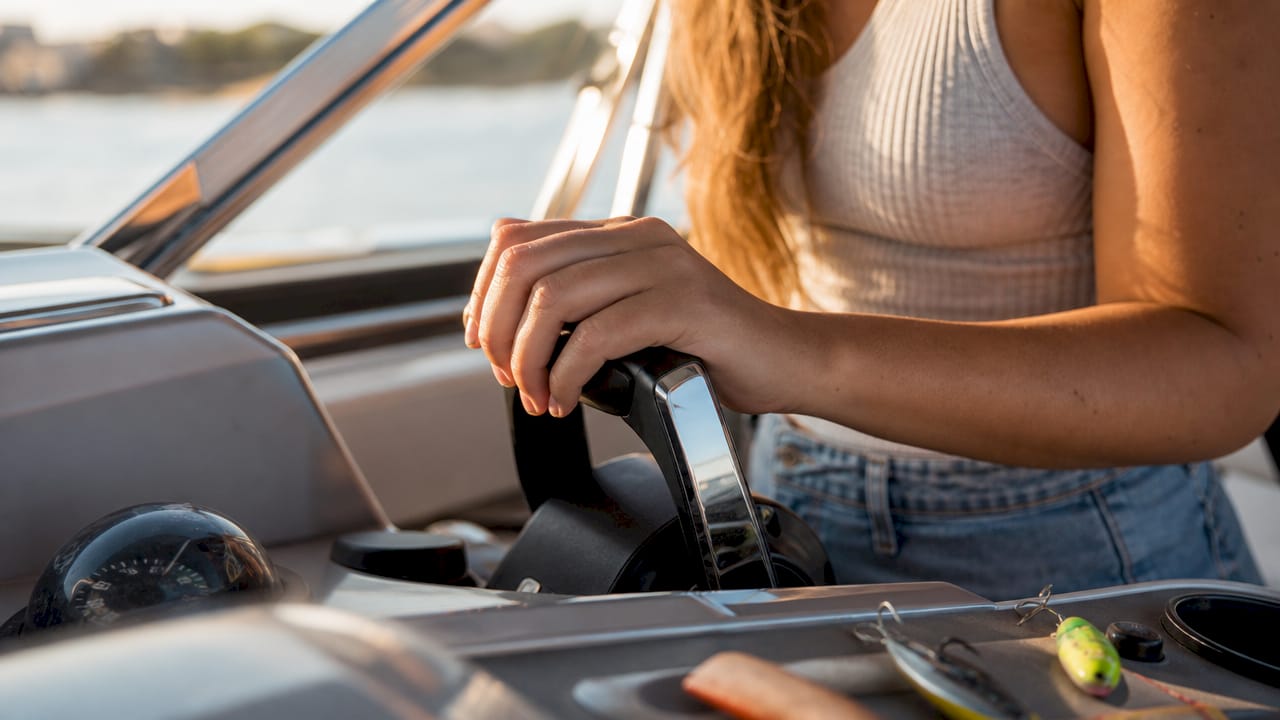
The numbers tell the story clearly. In the Pursuit S288 Center Console, fuel use rises from 9.5 liters per hour at 1,000 RPM all the way to 198 liters per hour at 5,800 RPM. That is a more than twentyfold increase in consumption for roughly a doubling of speed. Running at wide-open throttle is almost never worth the fuel bill.
Every boat has a specific RPM “sweet spot” where the hull planes efficiently and the engine operates in its best fuel economy range. On the 2026 Mag Bay 38 Center Console, best fuel economy landed at 4,000 RPM and 35.4 mph, delivering 0.929 miles per gallon and a cruising range of 497 miles. That is a real-world example of how dialing in your RPM pays off in range.
Running below the optimal RPM range also costs you. At very low RPMs, many outboard and sterndrive engines run rich, burning more fuel per mile than they would at moderate cruise speeds. The goal is to find the middle ground specific to your hull and engine combination.
| RPM Range | Fuel Use (Pursuit S288) | Notes |
|---|---|---|
| 1,000 RPM | 9.5 L/h | Displacement mode, inefficient per mile |
| 2,500–3,500 RPM | Moderate | Transition zone, varies by hull |
| 4,000 RPM | Optimal zone | Best MPG on performance center consoles |
| 5,800 RPM | 198 L/h | Wide-open throttle, maximum consumption |
Pro Tip: Run a fuel-flow test at 500 RPM intervals during a calm-water sea trial. Record speed and consumption at each step. Tracking fuel flow at varying RPMs reveals your boat’s exact sweet spot far more reliably than any generic recommendation.
What role does hull condition play in fuel economy?
Hull condition is the most underestimated factor in center console fuel savings. A dirty bottom creates drag that forces your engine to work harder, burning more fuel for the same speed. Many owners focus entirely on engine tuning while ignoring what is happening below the waterline.
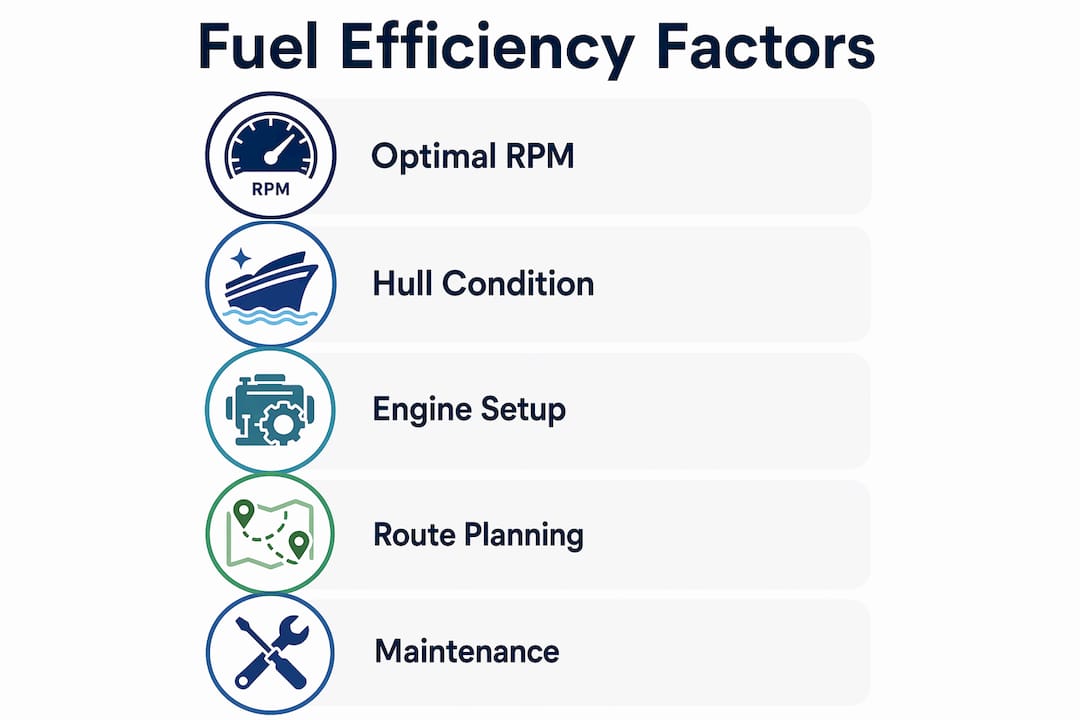
Biofouling is the technical term for the buildup of barnacles, algae, and marine growth on the hull. Keeping the hull free of barnacles and algae is one of the most effective ways to reduce drag and improve fuel economy on center console vessels. Even a thin layer of slime measurably increases water resistance. A heavily fouled hull can force the engine to burn significantly more fuel than a clean one at the same speed.
Boat size and hull design also shape your baseline fuel economy. Larger center consoles (30–36 ft) typically achieve 1–1.5 miles per gallon, while high-performance variants with aggressive hull designs often fall below 1 MPG. A deep-V hull cuts through chop efficiently but requires more power to get on plane compared to a modified-V design. Knowing your hull type helps you set realistic fuel economy expectations.
Here are the maintenance practices that deliver the biggest fuel economy gains:
- Haul and clean the bottom at least once per season, or more frequently if you keep the boat in warm, nutrient-rich water where growth accelerates.
- Apply antifouling paint rated for your local water conditions. The right coating dramatically slows marine growth between hauls.
- Inspect the propeller for nicks, dings, and barnacle buildup. A damaged prop loses efficiency and forces the engine to work harder.
- Check and replace zincs regularly. Electrolytic corrosion on underwater metal surfaces increases drag and damages hull integrity over time.
- Service the engine on schedule. Fouled fuel injectors and worn spark plugs reduce combustion efficiency and raise fuel consumption.
Pro Tip: If you keep your boat in the water year-round, consider a yacht maintenance schedule that includes mid-season bottom inspections. Catching early growth before it hardens saves both fuel and haul-out costs.
Techniques to improve fuel economy on every trip
Weight management is the most immediately controllable factor on any given day. Every extra pound on board raises the waterline and increases hull drag. A center console loaded with full fish boxes, extra gear, and unnecessary equipment burns more fuel than the same boat running lean.
Here are the most effective operational habits for reducing fuel consumption:
- Remove unnecessary gear before departure. Extra anchors, unused fishing tackle, and full coolers add up fast. Strip the boat to what you actually need for the trip.
- Distribute weight evenly. Uneven loading causes the hull to run at an angle, increasing drag. Center heavy items and keep the bow from riding too high or too low.
- Adjust your trim tabs. Proper trim keeps the hull running flat and reduces resistance. Managing trim and weight during trips can significantly improve fuel economy by reducing drag and engine load.
- Plan your route before you leave the dock. Avoiding headwinds and running with the current or tide saves fuel without sacrificing speed. A 10-mile detour to run with a favorable tide can cost less fuel than a direct route into a stiff chop.
- Cruise at your RPM sweet spot, not your top speed. Once you know your boat’s optimal RPM range, set it and hold it. Use a GPS speed display to confirm you are getting the expected velocity for that throttle setting.
“Fuel efficiency is not about going slower. It is about going smarter. The right RPM, a clean hull, and a well-trimmed boat can give you the same range at a fraction of the fuel cost of a boat that is simply pushed harder.”
Route planning deserves more attention than most owners give it. Checking tide charts, wind forecasts, and sea state before departure lets you pick departure times and headings that work with natural conditions rather than against them. On a long offshore run, this discipline can save a meaningful amount of fuel over the course of a season.
How do different center console setups compare for fuel economy?
Engine configuration shapes fuel economy as much as hull design does. A twin-engine setup delivers redundancy and performance but burns roughly twice the fuel of a comparable single-engine boat at cruise. Choosing engine configurations with a focus on range and fuel efficiency rather than pure speed can save thousands in fuel costs over the engine’s lifespan. That trade-off is worth understanding before you buy or repower.
The table below summarizes typical fuel economy expectations by center console category based on 2026 performance data.
| Center console category | Typical size | Fuel consumption | Typical MPG |
|---|---|---|---|
| Mid-size offshore | 23–28 ft | 15–30 GPH | 1.5–3 MPG |
| Large offshore | 30–36 ft | 30–50 GPH | 1–1.5 MPG |
| High-performance | 35+ ft, triple/quad engines | 50+ GPH | Below 1 MPG |
| Day boat / inshore | Under 22 ft | 5–15 GPH | 3–5+ MPG |
Triple and quad engine configurations on large center consoles deliver extraordinary performance but carry extraordinary fuel costs. Owners who prioritize top speed over fuel range often regret that choice on long offshore trips. A well-chosen twin-engine setup on a 28-foot center console frequently offers the best balance of performance, range, and operating cost for most owners.
For buyers evaluating their options, the center console buyer’s guide at Yachtingexperts covers how engine number and power choices affect real-world fuel economy and cruising range in detail.
Key Takeaways
Fuel efficiency in center consoles depends on three factors working together: operating at the correct RPM, maintaining a clean hull, and managing weight and trim on every trip.
| Point | Details |
|---|---|
| RPM sweet spot | Find your boat’s optimal RPM through fuel-flow testing, not guesswork. |
| Hull cleanliness | Biofouling dramatically increases drag; clean the bottom at least once per season. |
| Weight management | Remove unnecessary gear and distribute load evenly to reduce hull drag. |
| Engine configuration | Twin-engine setups offer the best balance of performance and fuel economy for most owners. |
| Route planning | Running with tides and wind saves measurable fuel over a full season. |
What I’ve learned about balancing speed and fuel economy
After working with hundreds of center console owners, the pattern I see most often is this: buyers choose their engine configuration based on top-speed bragging rights, then spend years paying for that decision at the fuel dock. The boats that deliver the most satisfaction over time are almost never the fastest ones. They are the ones whose owners took the time to understand their specific hull’s fuel economy profile and built their operating habits around it.
The maintenance piece surprises people the most. I have seen owners spend thousands on engine upgrades while running on a hull so fouled it looked like a reef. A clean bottom and a well-pitched propeller will do more for your fuel economy than almost any aftermarket modification. The Florida yacht maintenance guide covers this in detail, and the principles apply to center consoles everywhere.
My honest advice: run your boat at its sweet spot RPM for one full season, keep the hull clean, and track your fuel use. You will have real data instead of assumptions. That data is worth more than any rule of thumb.
— Jason
Find the right center console with Yachtingexperts
Choosing a center console that fits your actual usage, range requirements, and budget is exactly where Yachtingexperts excels. We bring personalized expertise to every conversation, whether you are buying your first offshore boat or trading up to a larger platform.

Our team helps you evaluate engine configurations, hull designs, and real-world fuel economy data so you make a confident, informed decision. When the time comes to sell, we work to get you the best return on your investment. Visit our center console services page to connect with our team and get personalized guidance on finding a boat that performs exactly the way you need it to. We are ready to make this process as rewarding as the time you spend on the water.
FAQ
What is the average fuel consumption for a center console boat?
Mid-size center consoles (23–28 ft) consume between 15–30 gallons per hour depending on engine setup and speed. Larger models (30–36 ft) typically achieve 1–1.5 miles per gallon at cruise.
What RPM gives the best fuel economy on a center console?
The optimal RPM varies by hull and engine, but performance center consoles often achieve their best fuel economy in the 3,500–4,500 RPM range. The 2026 Mag Bay 38 delivered its best efficiency at 4,000 RPM, covering 497 miles on a single tank.
How does hull fouling affect fuel consumption?
Barnacle and algae buildup increases water resistance significantly, forcing the engine to burn more fuel at the same speed. Keeping the hull clean is one of the highest-return maintenance tasks for improving fuel economy.
Does a twin-engine setup hurt fuel economy compared to a single engine?
Twin engines burn roughly twice the fuel of a comparable single-engine setup at cruise. However, they offer redundancy and better performance in rough conditions, making them the preferred choice for offshore center console owners who prioritize safety and range together.
How can I find my center console’s fuel economy sweet spot?
Run a fuel-flow test at 500 RPM intervals during a calm-water run and record speed and consumption at each step. Systematic fuel monitoring during sea trials reveals the exact RPM range where your specific hull and engine combination delivers the best miles per gallon.
Recommended
Request A Call
Featured Listings

2027 Canados
100
Miami Florida

2015 Maiora
$3,750,000
90
Miami Florida

2027 Canados
57
Miami Florida

2019 Silent-Yachts Fair Dinkum
$1,599,000
55
Fort Lauderdale Florida

2026 Canados
49
Miami Florida

2026 Buddy Davis
47
Miami Florida

2020 Grady-White No Name
$610,000
45
Hallandale Beach Florida

2020 Viking Huckleberry
$1,495,000
44
Fort Lauderdale Florida

2027 Canados
43
Miami Florida

2021 Intrepid Dream Faster
$730,000
40
Coral Gables Florida

2016 Edgewater
$299,000
37
Miami, Florida

2022 Avid
$56,900
23
Stuart Florida
Get your yacht value Estimate
"*" indicates required fields