

Buying a yacht in Florida is one of the most exciting decisions you’ll ever make. It’s also one of the most complex. Between navigating a fast-moving brokerage market, understanding evolving state regulations, and managing ongoing ownership costs, even experienced buyers can feel overwhelmed. That’s exactly why we built this guide. Whether you’re stepping aboard your first yacht or trading up to something exceptional, we’ll walk you through every stage of the journey, from setting your budget and choosing the right vessel to docking strategies, maintenance routines, and even turning your yacht into a revenue-generating asset.
Table of Contents
- What makes yachting in Florida unique?
- Step-by-step process for buying a yacht in Florida
- Understanding the true cost of yacht ownership
- Florida yachting laws, taxes, and documentation essentials
- Choosing the right marina and docking strategy
- Maintenance best practices for Florida’s saltwater environment
- Yacht investment, chartering, and maximizing ROI
- Ready to make your yachting dream a reality?
- Frequently asked questions
Key Takeaways
| Point | Details |
|---|---|
| Follow a proven process | Defining purpose, choosing the right broker, and step-by-step actions set the stage for smart yacht ownership. |
| Budget for all costs | Ongoing expenses like maintenance, dockage, and insurance add up, so plan for realistic annual outlays. |
| Understand legal requirements | Florida’s tax cap, registration rules, and new laws require careful compliance for peace of mind. |
| Choose marinas wisely | Location, lifestyle, and seasonal needs shape the best docking choices for your yacht. |
| Maximize your investment | Chartering and tax strategies can offset costs and turn your yacht into a smart asset. |
What makes yachting in Florida unique?
Florida isn’t just a great place to own a yacht. It’s arguably the best place in the world to do it. The state offers year-round boating weather, direct access to the Bahamas, and one of the most active yacht brokerage markets on the planet. That combination creates exceptional opportunities, but it also means competition is fierce and the pace is fast.
Understanding Florida yacht ownership costs before you commit is essential, because the region you choose shapes everything from your lifestyle to your budget. Here’s a quick breakdown of what each major area offers:
- Miami and Fort Lauderdale: Highest inventory and brokerage activity. Ideal for buyers who want maximum selection. Expect peak season premiums and a social, high-energy marina culture.
- Palm Beach: Better suited for privacy and Bahamas access. Quieter atmosphere with world-class facilities.
- The Keys: Perfect for liveaboards and fishing-focused owners. More relaxed pace, lower dockage costs.
- Tampa Bay: Growing market with strong value and less seasonal price pressure.
📊 Stat callout: Florida accounts for more registered recreational vessels than any other U.S. state, making it the undisputed capital of American yachting.
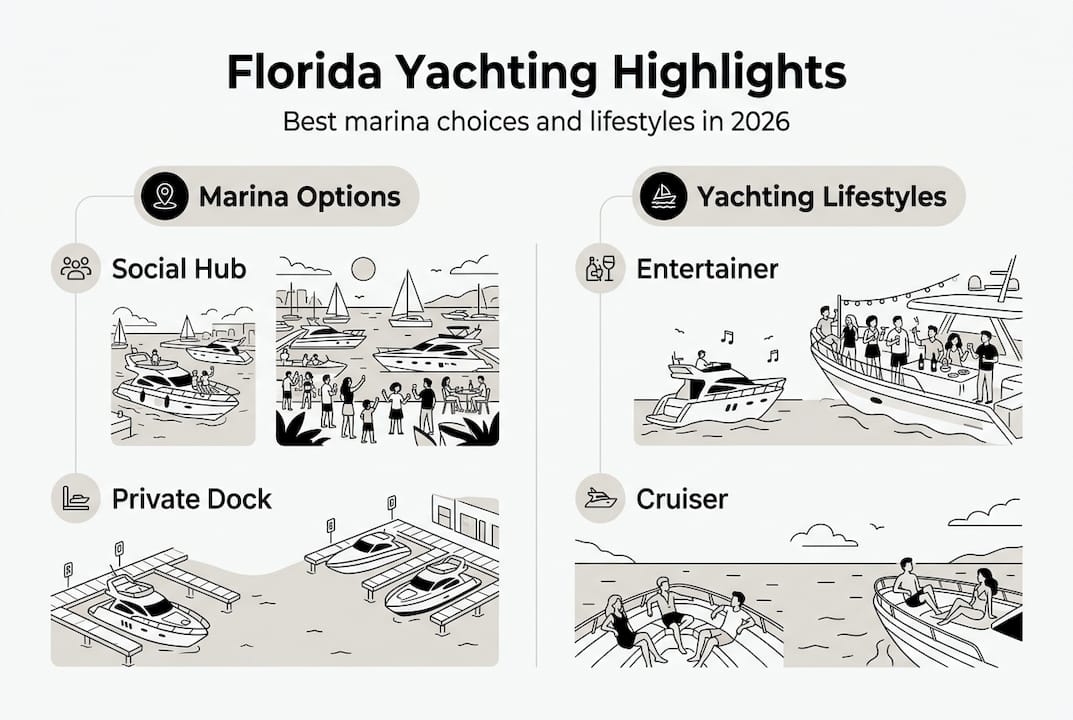
The right marina choice depends entirely on how you plan to use your yacht. A social entertainer and a private cruiser have very different needs, and we help you match both.
Step-by-step process for buying a yacht in Florida
Buying a yacht isn’t like buying a car. The process involves defining your goals, setting a realistic budget, selecting the right yacht type, reviewing available inventory, hiring a qualified broker, completing a professional survey and sea trial, and finally closing and preparing for ownership. Here’s how each step breaks down:
- Define your ownership goals. Weekend cruiser? Liveaboard? Charter investment? Your answer shapes every decision that follows.
- Set your total budget. Include purchase price plus first-year ownership costs, not just the sticker price.
- Choose your yacht type. Production, brokerage, or custom each offer different value propositions (see table below).
- Review inventory. Work with a broker who has real-time access to both listed and off-market vessels.
- Work with a yacht broker. A qualified broker protects your interests, negotiates price, and manages paperwork.
- Conduct a professional survey and sea trial. This step is non-negotiable. A professional survey reveals hidden structural issues, mechanical problems, and deferred maintenance that photos never show.
- Close and prepare for ownership. Handle title transfer, registration, insurance, and dockage before you take delivery.
| Yacht type | Best for | Price range | Key consideration |
|---|---|---|---|
| Production | First-time buyers | $200K–$1M | Proven reliability, resale value |
| Brokerage (used) | Value seekers | $100K–$5M+ | Survey critical, negotiation leverage |
| Custom | Experienced owners | $1M–$20M+ | Long build times, high personalization |
Pro Tip: The best inventory and pricing windows in Florida typically open in late spring and early fall. Avoid peak season (November through March) if you want negotiating room on price. Explore the full Florida yacht sales process to time your purchase perfectly.
Understanding the true cost of yacht ownership
This is where many buyers get surprised. The purchase price is just the beginning. For a 50-70ft yacht, annual ownership costs range from $185,000 to $580,000 depending on size, crew needs, usage, and dockage location.
| Cost category | Estimated annual range |
|---|---|
| Dockage | $20,000–$80,000 |
| Insurance | $15,000–$50,000 |
| Maintenance and repairs | $30,000–$120,000 |
| Crew (if applicable) | $60,000–$200,000 |
| Fuel | $20,000–$80,000 |
| Registration and fees | $200–$1,000 |
📊 Stat callout: Florida caps yacht sales tax at $18,000, which is a significant financial advantage for buyers of high-value vessels compared to most other states.
Here are smart ways to manage these costs effectively:
- Preventive maintenance saves 40-60% compared to reactive repairs over a five-year period.
- Seasonal storage in a dry rack or covered slip reduces hull wear and insurance premiums.
- Evaluate crew needs honestly. Many 50-60ft owners operate without full-time crew using captain-on-demand services.
- Bundle insurance policies with your home or auto insurer for multi-policy discounts.
Pro Tip: Review the full ownership costs guide before finalizing your budget. Knowing your true annual number upfront prevents painful surprises in year two.
Florida yachting laws, taxes, and documentation essentials
Staying compliant in Florida requires attention to both state and federal requirements. The good news is that Florida is genuinely yacht-friendly from a tax perspective. The sales tax is capped at $18,000, annual registration runs $200 to $1,000 depending on vessel length, and federal documentation is still required alongside state registration if your yacht spends more than 90 days in Florida waters.
The 2025-2026 boating law updates introduced mandatory kill switches on tenders under 26 feet, expanded anchoring restrictions in certain waterways, and stricter charter compliance requirements. These changes catch many owners off guard.
⚠️ Important: Chartering your yacht without proper licensing and compliance documentation can result in significant fines and vessel impoundment. Always consult a maritime attorney before entering the charter market.
Here’s your legal must-do checklist for Florida yacht owners:
- ✅ Register your vessel with the Florida DMV within 30 days of purchase
- ✅ Obtain federal documentation through the U.S. Coast Guard if the vessel is over five net tons
- ✅ Install a kill switch on all tenders under 26 feet
- ✅ Review anchoring restrictions for your primary cruising area
- ✅ Secure proper charter licensing if you plan to generate revenue
- ✅ Confirm your insurance meets Florida’s minimum liability standards
Review the complete sales and registration process to make sure nothing falls through the cracks.
Choosing the right marina and docking strategy
Where you dock your yacht is a lifestyle decision as much as a financial one. The right marina keeps your vessel safe, supports your cruising habits, and fits your social preferences. Here’s how Florida’s top regions compare:
| Marina region | Best for | Notable facilities | Avg. dockage cost |
|---|---|---|---|
| Fort Lauderdale | Brokerage, large yachts | Bahia Mar, Pier Sixty-Six | $3–$6/ft/day |
| Miami | Social scene, mega yachts | Island Gardens (up to 550ft), Miami Beach Marina | $4–$8/ft/day |
| Palm Beach | Privacy, Bahamas access | Rybovich, Palm Harbor Marina | $3–$7/ft/day |
| The Keys | Fishing, liveaboard | Various independent marinas | $2–$4/ft/day |
Key amenities and lifestyle factors to evaluate before signing a dockage agreement:
- Hurricane preparedness: Does the marina have a documented storm plan and secure tie-down systems?
- Fuel availability: On-site fueling saves significant time and cost for frequent cruisers.
- Concierge and provisioning services: Essential for owners who entertain regularly.
- Security and access control: 24-hour monitoring matters for high-value vessels.
- Proximity to your home or airport: Reduces friction and increases how often you actually use the yacht.
Annual dockage contracts typically offer 15-25% savings over monthly rates. For detailed marina cost details, compare your options before committing to a slip.
Maintenance best practices for Florida’s saltwater environment
Florida’s warm, salty water is beautiful to cruise but tough on vessels. A consistent maintenance routine is the single best investment you can make to protect your yacht’s value and reliability.
💡 Expert insight: Preventive maintenance costs 40-60% less than emergency repairs. Owners who follow a structured routine consistently spend less over a five-year period than those who react to problems.
Follow this South Florida maintenance routine to stay ahead of issues:
- Daily pre-trip check (10 minutes). Inspect bilge, engine oil, coolant, and safety gear before every departure.
- Post-use saltwater flush. Rinse all exposed metal, deck hardware, and engine cooling systems after every outing.
- Weekly inspection. Check lines, fenders, through-hulls, and electrical connections for wear or corrosion.
- Monthly systems review. Test navigation electronics, fire suppression, and bilge pumps.
- Quarterly haul-out. Inspect and treat the hull bottom, replace zincs (sacrificial anodes that protect metal from corrosion), and service running gear.
- Annual engine service. Full mechanical inspection, impeller replacement, and fuel system check.
- Hurricane season prep (June through November). Move to dry storage or a protected inland slip, remove canvas and electronics, and document the vessel’s condition with photos.
Pro Tip: Budget 10-15% of your yacht’s value annually for upkeep. Owners who treat this as a fixed cost rather than a variable expense maintain significantly higher resale values when it’s time to trade up.
Yacht investment, chartering, and maximizing ROI
Your yacht doesn’t have to be a pure expense. With the right structure, it can offset a significant portion of its own costs. The charter model allows you to generate revenue by renting your vessel to qualified guests when you’re not using it, and new 2026 tax rules make this even more attractive.
Here’s what makes the charter model compelling right now:
- 100% first-year depreciation is permitted if your yacht is used for charter more than 50% of the time, under current federal tax law.
- Miami and Bahamas routes generate the strongest charter demand in the Southeast U.S., with peak bookings from December through April.
- Managed charter programs handle marketing, guest screening, and maintenance coordination so you stay hands-off.
- Hybrid ownership lets you use the yacht personally while still qualifying for tax benefits during charter periods.
Pro Tip: Work with a maritime tax advisor before structuring your charter arrangement. The IRS has specific rules about personal use days versus charter days, and getting this right from the start protects your deductions. Explore yacht investment strategies, review our yacht chartering overview, and read our luxury yacht investment guide to build a strategy that works for your situation.
Ready to make your yachting dream a reality?
At Yachting Experts, we’ve guided buyers through every stage of this journey, from first-time purchases to complex trade-ups and charter structuring. We know the Florida market inside and out, and we bring that knowledge directly to you with a personalized, hands-on approach that makes the process seamless.

Whether you’re ready to start your vessel search today or just want to understand your options, our team is here to help. We offer private viewings, market insight, and dedicated support from your first conversation to the moment you take the helm. This is your moment. Let’s find the right yacht for your life, your goals, and your budget. Reach out to our team at yachtingexperts.com and let’s get started.
Frequently asked questions
How long does it take to buy a yacht in Florida?
The process typically takes 2-4 months, depending on how quickly you find the right vessel, complete the survey and sea trial, and finalize all paperwork and registration.
What is the average yearly cost to own a yacht in Florida?
For a 50-70ft yacht, expect to spend between $185,000 and $580,000 annually, covering dockage, insurance, maintenance, crew, and fuel.
What are the main laws and taxes yacht owners must follow in Florida?
You must register your yacht, comply with updated safety and anchoring laws, and pay a sales tax capped at $18,000. New 2025-2026 boating regulations also require kill switches on tenders and charter compliance documentation.
How do I choose the best marina for my yacht?
Compare dockage rates, amenities, and location fit. Miami offers social hubs, Palm Beach provides privacy and Bahamas access, and Fort Lauderdale leads in brokerage activity and large-vessel facilities.
Recommended
Request A Call
Featured Listings

2027 Canados
100
Miami Florida

2015 Maiora
$3,750,000
90
Miami Florida

2027 Canados
57
Miami Florida

2019 Silent-Yachts Fair Dinkum
$1,599,000
55
Fort Lauderdale Florida

2026 Canados
49
Miami Florida

2026 Buddy Davis
47
Miami Florida

2020 Grady-White No Name
$610,000
45
Hallandale Beach Florida

2020 Viking Huckleberry
$1,495,000
44
Fort Lauderdale Florida

2027 Canados
43
Miami Florida

2021 Intrepid Dream Faster
$730,000
40
Coral Gables Florida

2016 Edgewater
$299,000
37
Miami, Florida

2022 Avid
$56,900
23
Stuart Florida
Get your yacht value Estimate
"*" indicates required fields