

Most prospective yacht owners budget using the 10% rule, assuming annual costs hover around that percentage of yacht value. In Florida, reality tells a different story, with expenses ranging from 9% for casual users to 25% for active cruisers. Understanding these costs prevents budget shocks and positions you for confident ownership.
Table of Contents
- Introduction To Yacht Ownership Costs In Florida
- Annual Cost Breakdown And Usage Impact
- Maintenance And Repair Costs
- Dockage And Marina Fees In Florida
- Fuel Costs And Usage Patterns
- Insurance And Tax Considerations Specific To Florida
- Hurricane Risk And Storm Preparation Costs
- Common Misconceptions And Financial Pitfalls
- Budgeting Framework And Ownership Decision Tradeoffs
- Explore Expert Yacht Services To Simplify Ownership
- Frequently Asked Questions About Yacht Ownership Costs In Florida
Key takeaways
| Point | Details |
|---|---|
| Florida costs exceed national benchmarks | Annual expenses typically range 9-25% of yacht value based on usage intensity, not the standard 10% rule. |
| Usage drives total expenses | Active owners spending 150+ hours annually face significantly higher fuel and maintenance costs than casual 30-hour users. |
| Hurricane risk adds major costs | Storm preparation, specialized insurance riders, haul-out fees, and surge charges create substantial seasonal expenses. |
| Comprehensive budgeting prevents surprises | Hidden costs like emergency repairs and premium dockage fees cause 20-30% budget overruns for unprepared first-time owners. |
Introduction to yacht ownership costs in Florida
Florida’s unique marine environment creates ownership costs that defy standard industry formulas. The year-round boating season, saltwater exposure, and tropical climate accelerate wear on every system. Unlike northern regions where boats sit winterized for months, Florida yachts face continuous usage demands.
Several factors make Florida ownership distinctly expensive:
- Saltwater corrosion attacks metals, electronics, and hull integrity faster than freshwater environments
- High humidity promotes mold, mildew, and electrical system degradation requiring constant vigilance
- Intense UV radiation damages gel coats, canvas, and interior materials more rapidly
- Hurricane season demands specialized preparation, storage, and insurance coverage
- Year-round navigation extends engine hours, fuel consumption, and maintenance cycles
The traditional 10% annual cost estimate fails to account for these regional realities. Florida yacht owners typically spend more than the 10% rule annually, with real-world data showing 9-25% of boat value depending on usage intensity. Understanding your specific usage patterns and environmental factors helps build accurate budgets. Region-specific planning separates confident owners from those facing financial surprises.
Annual cost breakdown and usage impact
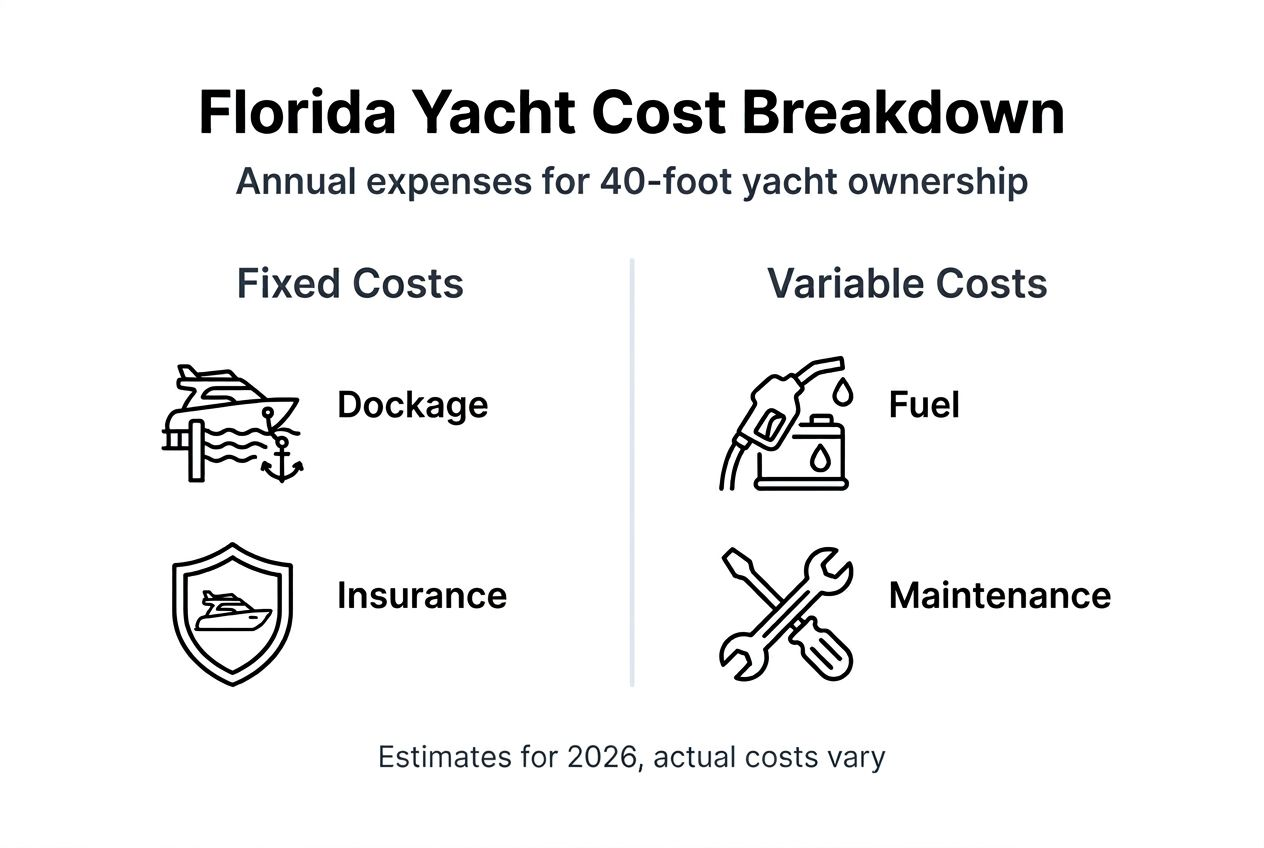
Your annual yacht expenses comprise four primary categories: fuel, maintenance, dockage, and insurance. Each responds differently to usage intensity, creating wide variation between casual and active owners. A moderate user logging 80 hours annually faces dramatically different costs than someone cruising 150+ hours.
For a $200,000 40-foot yacht, annual expenses range $18,000-$50,000 (9-25%) depending on usage hours from 30 to 150+ per year. This breakdown illustrates the impact:
| Usage Level | Annual Hours | Total Annual Cost | % of Yacht Value |
|---|---|---|---|
| Casual | 30-50 | $18,000-$22,000 | 9-11% |
| Moderate | 80-100 | $28,000-$35,000 | 14-17.5% |
| Active | 150+ | $40,000-$50,000 | 20-25% |
Usage intensity affects these specific components:
- Fuel costs scale directly with cruising hours and trip distances
- Engine maintenance intervals arrive faster with higher usage
- Hull cleaning frequency increases with time in water
- Systems wear accelerates requiring more frequent repairs
- Insurance premiums may adjust based on declared annual usage
For intelligent yacht investment planning, track your realistic boating habits before committing to ownership. Many buyers overestimate or underestimate their actual usage, leading to misaligned budgets. Consider your financing options carefully, ensuring monthly payments leave adequate room for operating expenses. Following a structured buying process helps align purchase decisions with long-term affordability.
Pro Tip: Document your first year’s actual cruising hours and expenses meticulously. This data becomes your personalized budgeting baseline for future years, eliminating guesswork.
Maintenance and repair costs
Maintenance represents your most variable and unpredictable expense category. Florida’s aggressive marine environment demands proactive care to prevent catastrophic failures. Annual maintenance costs typically range $1,000-$3,500+ per foot depending on yacht age, systems complexity, and usage intensity.
Saltwater creates relentless corrosion challenges:
- Anodes protecting underwater metals require frequent inspection and replacement
- Stainless steel fittings develop crevice corrosion despite their name
- Aluminum components oxidize rapidly without protective coatings
- Raw water cooling systems demand regular flushing and component replacement
- Electrical connections corrode requiring constant maintenance
Humidity compounds these challenges. Air conditioning systems work overtime fighting moisture, while bilge pumps run frequently managing condensation. Engine rooms become breeding grounds for mold without proper ventilation. Electronics fail prematurely from moisture infiltration.
Yacht age dramatically impacts repair frequency. Boats over 15 years old typically experience:
- Increased engine rebuild or replacement needs
- Electrical system rewiring as connections fail
- Plumbing system overhauls addressing aged hoses and fittings
- Hull blistering requiring expensive gelcoat repairs
- Interior component replacement as materials degrade
Applying smart maintenance strategies early prevents costly emergency repairs later. Regular professional surveys catch developing problems before they escalate. Avoiding common buyer mistakes includes understanding maintenance history before purchase.
Pro Tip: Establish relationships with specialized marine technicians before you need emergency service. Having trusted diesel mechanics, electronics specialists, and fiberglass experts on speed dial saves thousands when problems arise.
Dockage and marina fees in Florida
Dockage represents your largest fixed recurring cost. Florida marina fees vary significantly based on location, amenities, and seasonal demand. Monthly rates typically range $22-$40 per foot, creating annual costs of $9,200-$16,800 for a 35-foot yacht.
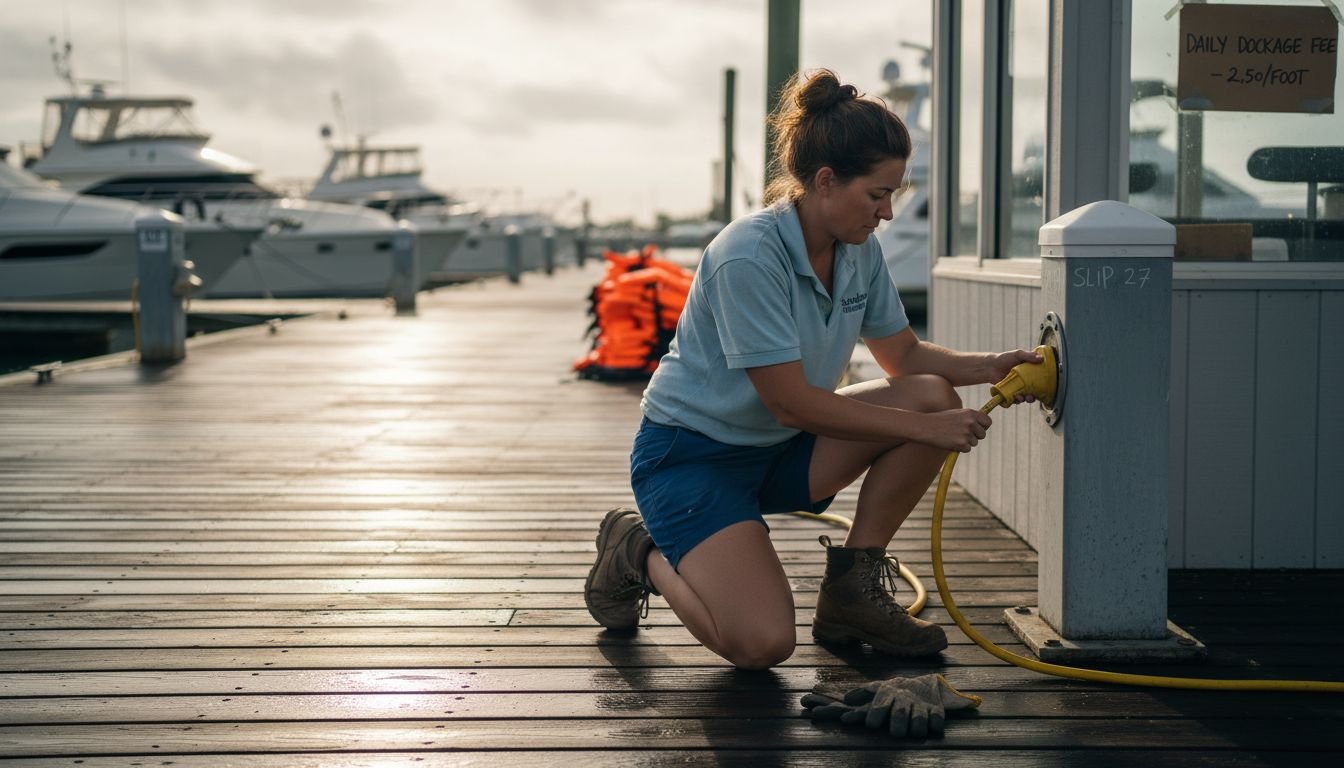
Location drives pricing dramatically:
| Marina Type | Monthly Rate/Foot | Annual Cost (35-foot) |
|---|---|---|
| Basic inland | $22-$28 | $9,240-$11,760 |
| Mid-tier coastal | $28-$35 | $11,760-$14,700 |
| Premium waterfront | $35-$40+ | $14,700-$16,800+ |
Several factors influence your dockage expenses:
- Geographic location with South Florida commanding premium rates
- Marina amenities including pools, restaurants, and concierge services
- Slip configuration with wider slips costing more
- Power availability where 50-amp or 100-amp service adds surcharges
- Seasonal variations with winter rates jumping 20-40% in popular areas
- Transient versus annual contract rates offering different pricing structures
Dry stack storage provides an alternative to traditional wet slips. While monthly rates appear higher per foot, you eliminate bottom painting, anode replacement, and some hurricane preparation costs. Dry stack facilities offer faster launch times but limit spontaneous departure flexibility.
Wet slip owners face additional seasonal charges. Hurricane season brings haul-out fees, storage surcharges, and potential evacuation costs. Premium locations add waiting lists requiring deposits years in advance. Understanding total dockage expenses beyond base rates prevents budget surprises.
Fuel costs and usage patterns
Fuel represents your most directly controllable variable expense. Typical 35-40 foot cruising yachts consume 18-30 gallons per hour depending on speed, sea conditions, and engine efficiency. Florida marina fuel prices average $5.50 to $6.50 per gallon in 2026.
Annual fuel expenses vary dramatically with usage:
- Casual owners (30-50 hours): $3,300-$9,750 annually
- Moderate owners (80-100 hours): $8,640-$19,500 annually
- Active owners (150+ hours): $16,200-$29,250+ annually
Several factors influence your actual consumption:
- Cruising speed with higher speeds exponentially increasing fuel burn
- Trip distances and destinations affecting total engine hours
- Sea conditions where rough water demands more power
- Engine maintenance status with poorly tuned engines wasting fuel
- Boat loading and passenger count impacting efficiency
- Auxiliary generator runtime for extended anchoring or docking
Fuel prices fluctuate seasonally and regionally. Winter months in South Florida see higher prices as demand surges from seasonal residents and tourists. Remote destinations charge premiums over mainland marinas. Planning fuel stops strategically saves hundreds per season.
Diesel engines offer better fuel economy than gasoline, but initial purchase prices run higher. For active users logging 100+ hours annually, diesel efficiency pays back the premium within three to five years. Casual users may find gasoline power more economical overall.
Insurance and tax considerations specific to Florida
Insurance costs approximately 1-2% of yacht value annually in Florida, but hurricane exposure pushes rates higher than national averages. A $200,000 yacht typically carries $2,000-$4,000 annual premiums depending on coverage limits, deductible choices, and hurricane season provisions.
Florida’s unique insurance landscape includes:
- Mandatory named storm coverage with separate deductibles often 5-10% of insured value
- Hurricane haul-out clauses requiring documented storm preparation to maintain coverage
- Navigational limits restricting movement during hurricane warnings
- Increased premiums for boats kept in wet slips versus dry storage
- Specialized riders for high-value electronics, tenders, and personal property
Deductible structure significantly impacts premiums. Standard damage carries typical $1,000-$2,500 deductibles, while named storm deductibles jump to $10,000-$20,000 on a $200,000 yacht. Accepting higher deductibles reduces premiums but increases your financial exposure during active hurricane seasons.
Florida sales tax adds upfront costs to yacht purchases. The state charges 6% plus county surtax capped at $5,000 maximum regardless of purchase price. A $200,000 yacht incurs the maximum $5,000 tax, while a $50,000 boat pays $3,000. This one-time expense often surprises buyers accustomed to unlimited percentage-based sales taxes.
Staying current with Florida insurance market trends helps you secure competitive rates. Market conditions shift annually based on hurricane activity and insurer profitability. Following industry news keeps you informed of regulatory changes affecting coverage requirements.
Hurricane risk and storm preparation costs
Hurricane season from June through November dominates Florida yacht ownership planning. Storm preparation costs add $2,000-$8,000+ annually depending on your storage choices and yacht size. These expenses often catch new owners unprepared, creating significant budget stress.
Wet slip owners face complex storm decisions:
- Emergency haul-out fees ranging $30-$60 per foot when storms threaten
- Temporary storage charges adding $10-$25 per foot during evacuations
- Hurricane surge fees from marinas covering their preparation costs
- Additional tie-down materials, dock line upgrades, and fender protection
- Potential damage repairs if storms strike despite precautions
Dry stack storage simplifies hurricane preparation. Your yacht sits safely inside a concrete building, eliminating haul-out scrambles and exposure risks. However, dry stack facilities charge premium rates and may have limited availability in prime locations.
Insurance companies mandate specific preparation protocols. Most policies require documented haul-out or secure tie-down procedures when hurricane warnings issue. Failure to comply voids coverage, leaving you financially exposed. Some insurers demand 72-hour advance preparation regardless of storm track certainty.
Successful storm management requires advance planning. Identify multiple haul-out facilities accepting your yacht size, since your primary choice may reach capacity quickly. Maintain relationships with mobile hurricane preparation services offering emergency tie-down assistance. Budget contingency funds for unexpected evacuation expenses when storms form rapidly.
Common misconceptions and financial pitfalls
Many prospective owners approach yacht budgeting with dangerous assumptions that lead to financial stress. The most persistent myth suggests the 10% rule adequately covers Florida ownership costs. Active owners in Florida spend 14-19% of yacht value annually, exceeding the industry 10% rule significantly.
Several misconceptions create budget problems:
- Assuming maintenance costs remain constant regardless of usage intensity
- Underestimating hurricane preparation expenses as minor seasonal costs
- Believing insurance covers all storm-related damage without deductible limits
- Expecting marina fees to remain fixed without seasonal surcharges
- Thinking older boats cost less to own when repair frequency actually increases
- Ignoring the full scope of commissioning and decommissioning expenses
Many first-time Florida yacht buyers underestimate annual expenses by 20-30%, neglecting hidden costs such as storm preparation, emergency repairs, and premium dockage fees. These surprise expenses strain budgets and sometimes force premature sales at financial losses.
Many first-time owners face unexpected expenses significantly exceeding budgets, particularly during their inaugural hurricane season when storm preparation realities become clear.
Hidden costs accumulating throughout the year include:
- Emergency haul-outs when mechanical failures occur away from home port
- Premium fuel prices at remote destinations lacking competitive options
- Expedited parts shipping for repairs needed before planned trips
- Professional cleaning services maintaining appearance standards
- Electronics updates keeping navigation systems current and safe
- Unexpected system failures in aged components
Successful ownership requires honest usage assessment before purchase. Overly optimistic projections about weekend cruising frequency lead to disappointment when reality imposes time constraints. Understanding commission structures and negotiation strategies helps control acquisition costs, but ongoing expenses demand equal attention.
Budgeting framework and ownership decision tradeoffs
Building accurate ownership budgets requires systematic analysis balancing yacht specifications against realistic usage patterns. Follow this framework to align your investment with financial capacity and lifestyle goals.
- Calculate baseline fixed costs using the cost-per-foot method for maintenance ($1,000-$3,500/foot annually) and dockage ($22-$40/foot monthly)
- Estimate realistic annual cruising hours based on schedule constraints, family commitments, and seasonal availability rather than aspirational dreams
- Project fuel expenses by multiplying estimated hours by consumption rate (18-30 gallons/hour) and current fuel prices ($5.50-$6.50/gallon)
- Add insurance at 1-2% of yacht value plus any specialized coverage riders for electronics or high-risk navigation areas
- Include hurricane preparation contingency of $2,000-$8,000 depending on storage choices and yacht size
- Reserve 15-20% additional buffer for unexpected repairs, emergency services, and hidden costs that inevitably arise
Size versus cost tradeoffs require careful evaluation. Larger yachts offer more comfort and capability but multiply every expense category. A 50-foot yacht costs roughly 40-50% more annually to operate than a 35-footer, while providing only 30% more usable space. Your usage intensity determines whether the added capability justifies increased costs.
Usage patterns create the greatest budget variability. Casual owners maintaining yachts primarily for occasional entertaining face lower costs than active cruisers. Honestly assess whether you will realistically use your yacht 30, 80, or 150+ hours annually. Overestimating usage leads to wasted fixed costs, while underestimating creates budget strain from excessive variable expenses.
Understanding comprehensive ownership costs and budgeting strategies before committing to purchase prevents financial regrets later. Your yacht should enhance life quality without creating stress from excessive operating expenses.
Explore expert yacht services to simplify ownership
Navigating Florida yacht ownership complexities becomes significantly easier with experienced guidance. You face unique challenges from hurricane preparation to insurance negotiations that benefit from local expertise. Our team helps prospective owners build realistic budgets, identify suitable vessels, and establish efficient operating systems.

We offer personalized consultation services addressing your specific ownership questions and concerns. Our comprehensive ownership guide covers every aspect from acquisition through eventual resale, maximizing your investment return. Understanding Florida insurance market dynamics helps you secure optimal coverage at competitive rates. When you are ready to sell or trade up, we help achieve maximum value for your yacht.
Frequently asked questions about yacht ownership costs in Florida
What percentage of yacht value should I budget annually in Florida?
Budget 9-25% of yacht value annually depending on your usage intensity. Casual owners spending 30-50 hours yearly average 9-11%, while active owners logging 150+ hours reach 20-25% with increased fuel and maintenance demands.
How does hurricane season affect my yacht insurance costs?
Hurricane exposure increases Florida insurance premiums 15-30% over national averages. Policies require separate named storm deductibles typically 5-10% of insured value, and mandate documented preparation procedures to maintain coverage during warnings.
What are typical dockage fees for Florida marinas?
Monthly dockage ranges $22-$40 per foot depending on location and amenities. A 35-foot yacht pays $9,200-$16,800 annually, with premium South Florida locations and seasonal winter surcharges pushing rates to the higher end.
How do usage patterns impact fuel expenses?
Fuel costs scale directly with cruising hours. At current $5.50-$6.50/gallon prices and 18-30 gallons/hour consumption, casual 30-hour users spend roughly $3,300-$9,750 annually while active 150-hour owners pay $16,200-$29,250+.
What hidden costs often surprise new Florida yacht owners?
Emergency haul-out fees, hurricane preparation expenses, premium dockage surcharges, and unexpected system repairs catch new owners unprepared. These hidden costs cause budget overruns of 20-30% during the first ownership year for those who underestimate total expenses.
Recommended
Request A Call
Featured Listings

2027 Canados
100
Miami Florida

2015 Maiora
$3,750,000
90
Miami Florida

2027 Canados
57
Miami Florida

2019 Silent-Yachts Fair Dinkum
$1,599,000
55
Fort Lauderdale Florida

2026 Canados
49
Miami Florida

2026 Buddy Davis
47
Miami Florida

2020 Grady-White No Name
$610,000
45
Hallandale Beach Florida

2020 Viking Huckleberry
$1,495,000
44
Fort Lauderdale Florida

2027 Canados
43
Miami Florida

2021 Intrepid Dream Faster
$730,000
40
Coral Gables Florida

2016 Edgewater
$299,000
37
Miami, Florida

2022 Avid
$56,900
23
Stuart Florida
Get your yacht value Estimate
"*" indicates required fields