

Florida yacht ownership costs run significantly higher than national averages, and the florida yacht ownership cost breakdown is more complex than most buyers expect. Insurance alone runs 3–5% of hull value annually due to hurricane exposure, compared to the 1.5% national average. The industry’s popular “10% rule” for budgeting annual running costs often misleads owners, with real expenses ranging from 7–15% depending on vessel size, usage, and crew. Florida’s year-round saltwater environment and hurricane season push total ownership costs 15–25% higher than seasonal northern markets. Knowing each cost category before you buy is the difference between a rewarding investment and a financial surprise.
What is the Florida yacht ownership cost breakdown?
Purchase price is only the beginning. The full cost of owning a yacht in Florida includes upfront acquisition expenses, fixed annual costs, variable operating costs, maintenance, and regulatory fees. A 40-foot Florida yacht owner budgets roughly $46,675 annually, which equals about 21.7% of a $215,000 purchase price. That figure covers everything from insurance and dockage to fuel, bottom cleaning, and hurricane prep. Understanding each layer of this cost structure lets you plan with confidence rather than guesswork.
What are the upfront purchase-related costs when buying a yacht in Florida?
Yacht purchase costs in Florida start with the vessel price itself, which varies widely by type, size, age, and condition. A used 35-foot cruiser might sell for $80,000, while a new 50-foot motoryacht can exceed $500,000. The purchase price is your largest single outlay, but several fees stack on top of it immediately.
Florida charges a 6% state sales tax on the purchase price minus any trade-in credit. That trade-in deduction matters. If you trade in a vessel worth $30,000 against a $150,000 purchase, you pay tax on $120,000, saving $1,800 in tax. County surtaxes may add an additional percentage on top of the state rate, so your exact location in Florida affects your final tax bill. Review the Florida yacht tax guide before signing any purchase agreement.
Beyond taxes, expect these upfront costs:
- Vessel registration fees: Florida charges registration fees based on vessel length. Boats under 16 feet pay the lowest tier; vessels over 65 feet pay the highest. A 40-foot yacht typically falls in the $200–$400 range for initial registration.
- Survey and sea trial: A pre-purchase marine survey on a 40-foot vessel runs $500–$1,500 depending on the surveyor and vessel complexity. Never skip this step.
- Documentation fees: USCG documentation for vessels over 5 net tons costs $26 for initial registration. Third-party documentation services charge more for convenience.
- Title transfer and closing costs: If you use a yacht broker, closing costs and escrow fees typically range from $500 to $1,500.
- Transport or delivery: If the vessel is not already in Florida waters, delivery or transport adds cost that varies by distance.
Pro Tip: Ask your broker to structure the purchase agreement to maximize your trade-in credit before calculating sales tax. On a $200,000 purchase, a $40,000 trade-in saves you $2,400 in Florida state sales tax alone.
What fixed ongoing expenses should Florida yacht owners expect annually?
Fixed costs are the expenses you pay regardless of how much you use the vessel. They are predictable, which makes them the easiest category to budget accurately.
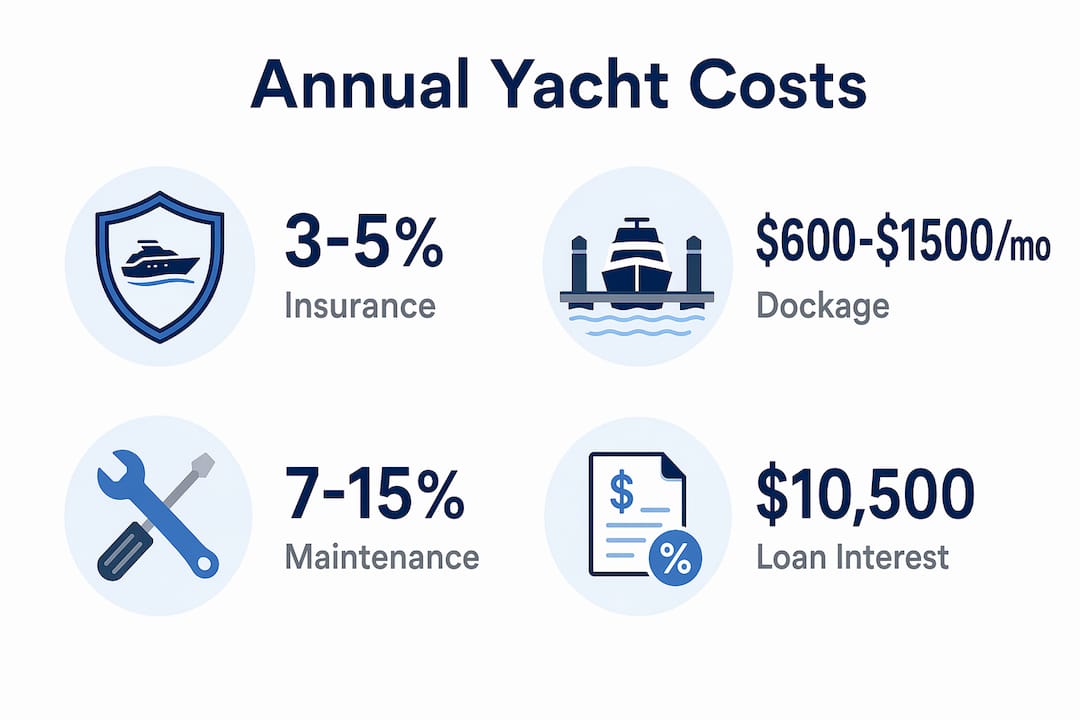
Insurance is the largest fixed cost for most Florida owners. Annual premiums run 3–5% of insured hull value because of Florida’s hurricane exposure, far above the 1.5% national average. On a $215,000 vessel, that means $6,450–$10,750 per year. Premiums depend on navigation territory, your hurricane plan, vessel age and condition, and your own experience as an owner. A documented hurricane plan with a haul-out commitment can reduce your premium meaningfully.
Marina slip fees vary by location and amenities. Tampa Bay dockage for a 40-foot yacht ranges from $600 to $1,500 per month, with an average around $800. South Florida marinas in Miami or Fort Lauderdale run higher, often $1,200–$2,500 monthly for the same size vessel. Dry storage is a lower-cost alternative in some areas, though it adds launch and retrieval fees.
| Fixed cost category | Typical annual range (40-foot yacht) |
|---|---|
| Insurance (hull and liability) | $6,450–$10,750 |
| Marina slip fees | $7,200–$18,000 |
| Loan interest (if financed) | $4,000–$12,000 |
| Annual registration renewal | $200–$400 |
| USCG documentation renewal | $26 |
Loan interest depends entirely on your financing terms. A $150,000 marine loan at 7% over 15 years carries roughly $10,500 in interest in year one, declining as the principal reduces. Registration renewals are modest but mandatory. Skipping renewal creates legal exposure and can complicate insurance claims.
How do variable and maintenance expenses impact Florida yacht ownership costs?
Variable costs shift with how often and how far you cruise. Fuel is the most obvious example. A 40-foot motoryacht burning 15 gallons per hour at 200 hours of annual use consumes 3,000 gallons. At $4.50 per gallon at Florida marinas, that is $13,500 in fuel alone. Sailors spend far less, but their maintenance profile differs.
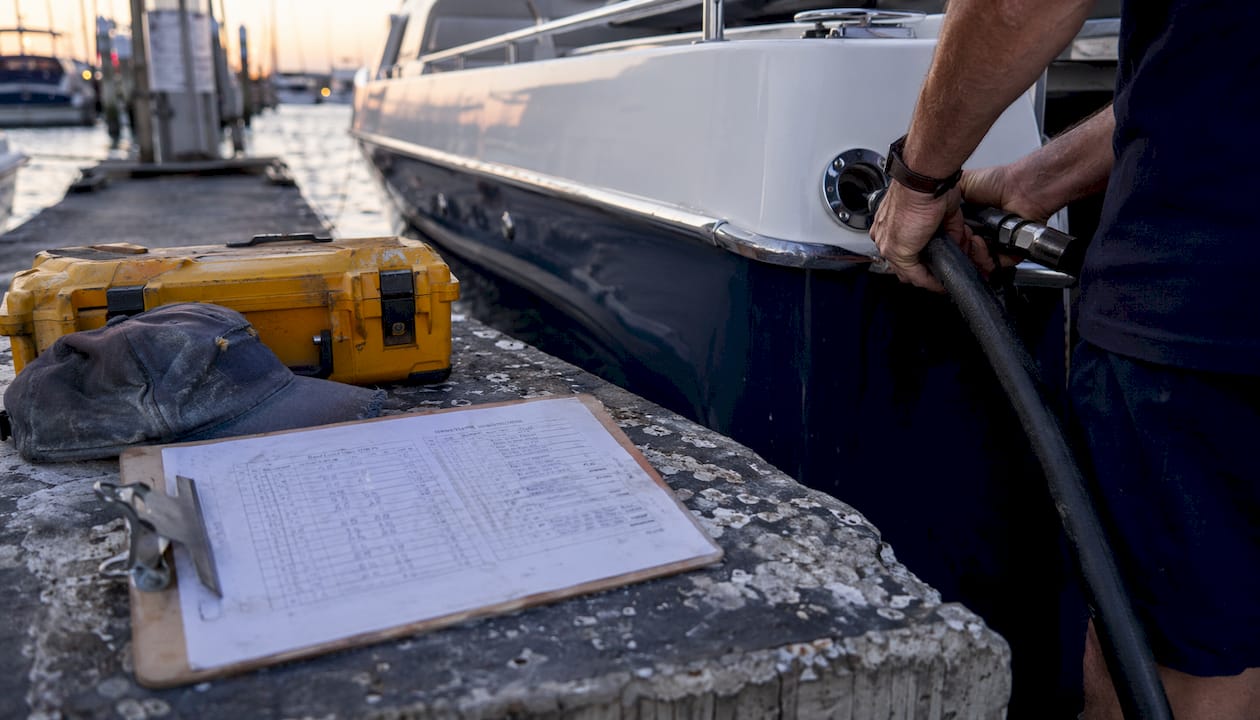
Florida’s saltwater environment accelerates wear on virtually every system aboard. Ownership costs run 15–25% higher than in northern seasonal markets because the hull, running gear, electronics, and HVAC systems face year-round exposure. A vessel kept in New England for six months costs less to maintain than the same vessel in Biscayne Bay year-round. That gap is real money, and it shows up in maintenance line items.
Routine Florida yacht maintenance expenses include:
- Bottom paint and cleaning: Antifouling paint application runs $1,500–$3,500 per haul-out. In Florida’s warm waters, many owners haul twice yearly or use in-water cleaning services every 6–8 weeks at $150–$300 per visit.
- Engine servicing: Annual service on twin diesel engines costs $800–$2,000 depending on engine hours and service intervals.
- HVAC maintenance: Florida’s heat makes air conditioning non-negotiable. Annual HVAC service runs $300–$800, with refrigerant recharges and compressor replacements adding cost in older systems.
- Zincs and running gear: Zinc anodes protect underwater metals from galvanic corrosion. Replacing them costs $200–$600 annually depending on vessel size.
- Electronics and safety gear: Annual inspection and battery replacement for EPIRBs, flares, and fire extinguishers runs $200–$500.
Maintenance costs are lumpy, not linear. Most years you spend on routine items, then a major survey or refit hits and costs spike sharply. A five-year survey on a documented vessel can run $3,000–$8,000 including haul-out, survey fees, and any required repairs. Building a rolling capital reserve of $3,000–$5,000 per year smooths those spikes considerably.
Pro Tip: DIY maintenance saves $1,800 or more annually but requires roughly 30 hours of your time per year. If your hourly rate exceeds $60, hiring out may actually cost less when you factor in your time. Be honest about that trade-off before committing to the DIY path.
For a deeper look at what maintenance tasks matter most in Florida’s climate, the essential yacht maintenance guide from Yachtingexperts covers the full list by system and season.
What are the regulatory and safety-related fees impacting Florida yacht ownership?
Florida has specific regulatory requirements that add predictable costs to total expenses for yacht ownership. Most are modest individually, but they add up across a full year.
Key regulatory and safety costs include:
- Annual registration renewal: Florida FWC charges renewal fees based on vessel length. A 40-foot vessel falls in the $200–$400 range annually.
- USCG documentation: Federal documentation renewal costs $26 per year through the National Vessel Documentation Center.
- Safety equipment certification: Fire extinguishers require annual inspection tags. Life raft certification and repacking runs $300–$600 every 1–3 years depending on the manufacturer’s service interval.
- Hurricane haul-out: Many Florida marinas require vessels to haul out or relocate during named storm threats. A single haul-out and block storage event costs $500–$1,500 for a 40-foot vessel, plus any storm prep supplies.
- Hurricane supply stocking: Dock lines, fenders, chafe gear, and anchor gear for storm prep runs $200–$600 per season for owners who take it seriously.
- Class association fees: If your vessel carries a classification society certificate, annual fees and survey costs vary by class and vessel size. Most recreational yachts under 79 feet do not carry class, but larger vessels or those used commercially do.
Hurricane preparation is the Florida-specific cost that surprises buyers who relocate from other states. A single active hurricane season can trigger two or three haul-out events, multiplying that line item fast. Budget for at least one haul-out per year as a baseline.
How to build a realistic annual budget for owning a yacht in Florida?
The 10% rule tells owners to budget 10% of purchase price annually for running costs. On a $215,000 vessel, that is $21,500. The actual number for a Florida owner is closer to $46,675, more than double that estimate. The 10% rule ignores insurance, dockage, loan interest, and Florida-specific costs entirely.
Bottom-up budgeting works better. Start with your known fixed costs: insurance, dockage, loan interest, and registration. Add your estimated variable costs based on planned usage hours. Layer in routine maintenance by system. Then add a capital reserve for lumpy expenses. The result is a number grounded in your specific vessel and usage pattern, not a generic percentage.
| Budget category | Conservative estimate | Active use estimate |
|---|---|---|
| Insurance | $6,450 | $10,750 |
| Marina dockage | $7,200 | $18,000 |
| Fuel and transient dockage | $4,000 | $15,000 |
| Routine maintenance | $5,000 | $9,000 |
| Capital reserve | $3,000 | $5,000 |
| Regulatory and safety fees | $1,000 | $2,000 |
| Total estimate | $26,650 | $59,750 |
A professional yacht management company typically saves owners 10–20% compared to unmanaged ownership by negotiating supplier rates, scheduling maintenance efficiently, and catching problems early. For owners who cruise frequently or own larger vessels, that saving often exceeds the management fee. Yachtingexperts offers detailed guidance on yacht management in Florida for owners who want professional oversight without losing control of their vessel.
Pro Tip: Review your actual spend against your budget every quarter, not just at year-end. Florida’s maintenance costs cluster in spring and fall around hurricane season prep and post-season repairs. Catching a budget overrun in July gives you time to adjust before the expensive fall haul-out season.
Key Takeaways
Florida yacht ownership costs average 21.7% of purchase price annually, far exceeding the 10% rule, driven by hurricane insurance, saltwater maintenance, and year-round dockage expenses.
| Point | Details |
|---|---|
| Insurance runs 3–5% of hull value | Florida’s hurricane risk pushes premiums well above the 1.5% national average. |
| Sales tax uses trade-in deductions | Florida’s 6% tax applies to purchase price minus trade-in, so structuring the deal correctly saves real money. |
| Maintenance costs are lumpy | Build a rolling capital reserve of $3,000–$5,000 annually to cover survey and refit spikes. |
| Bottom-up budgeting beats the 10% rule | Real Florida costs run 7–15% or higher; build your budget from fixed, variable, and maintenance line items. |
| Professional management saves 10–20% | Managed ownership reduces supplier costs and prevents expensive deferred maintenance. |
What I’ve learned about Florida yacht budgets that most guides skip
Working with Florida yacht owners across a range of vessel sizes, I’ve noticed one consistent pattern: buyers who research purchase price carefully often underestimate ongoing costs by 40–50%. They find the right boat, negotiate a fair price, and then get blindsided by the first insurance renewal or the first haul-out bill.
The mistake is treating the 10% rule as a planning tool rather than a rough conversation starter. A $300,000 yacht does not cost $30,000 per year to operate in Florida. It costs $50,000–$65,000 once you account for insurance at 4% of hull value, a Miami marina slip at $1,800 per month, and a diesel fuel bill for a couple hundred hours of cruising. Those numbers are not scary if you know them going in. They are only scary when they arrive as surprises.
The other thing I see consistently is owners skipping the capital reserve. Routine maintenance feels manageable year to year. Then the five-year survey comes due, the port engine needs a top-end rebuild, and the watermaker membrane fails in the same season. That is a $20,000 year on a vessel that normally costs $8,000 to maintain. Owners who built reserves handle it without stress. Owners who did not end up deferring repairs, which costs more later.
Florida is genuinely one of the best places in the world to own a yacht. The weather, the cruising grounds, and the boating culture are exceptional. The financial commitment is real, but it is manageable with honest planning from the start. The full Florida ownership cost picture is worth studying before you make an offer.
— Jason
Yachtingexperts is here for your Florida ownership experience
Buying a yacht in Florida is one of the most exciting financial decisions you will make. It is also one of the most complex. Yachtingexperts brings deep Florida market knowledge to every step of the process, from helping you understand true ownership costs before you buy to supporting you when it is time to maximize your vessel’s value at resale.

Our team provides personalized cost analyses, connects you with trusted surveyors and insurance specialists, and walks you through every fee and tax implication specific to your vessel and location. We have helped hundreds of Florida buyers step aboard with confidence, knowing exactly what ownership will cost them. When you are ready to get a clear, honest picture of your total investment, connect with our team and let us build your ownership budget together.
FAQ
What is the average annual cost of owning a yacht in Florida?
A 40-foot Florida yacht owner spends roughly $46,675 per year, or about 21.7% of a $215,000 purchase price, covering insurance, dockage, fuel, maintenance, and regulatory fees.
Why is yacht insurance more expensive in Florida?
Florida insurance premiums run 3–5% of hull value annually due to hurricane exposure, compared to the 1.5% national average for less hurricane-prone regions.
How does Florida sales tax apply to yacht purchases?
Florida charges 6% state sales tax on the purchase price minus any trade-in credit, with county surtaxes potentially adding more depending on the buyer’s location.
Is the 10% rule accurate for budgeting Florida yacht ownership?
The 10% rule consistently underestimates real costs. Florida running costs range from 7–15% or higher depending on vessel size, usage, and Florida-specific expenses like hurricane prep and saltwater maintenance.
How much does Florida’s saltwater environment add to maintenance costs?
Year-round saltwater exposure and hurricane season preparation push Florida yacht maintenance expenses 15–25% higher than ownership costs in northern seasonal markets.
Recommended
Request A Call
Featured Listings

2027 Canados
100
Miami Florida

2015 Maiora
$3,750,000
90
Miami Florida

2027 Canados
57
Miami Florida

2019 Silent-Yachts Fair Dinkum
$1,599,000
55
Fort Lauderdale Florida

2026 Canados
49
Miami Florida

2026 Buddy Davis
47
Miami Florida

2020 Grady-White No Name
$610,000
45
Hallandale Beach Florida

2020 Viking Huckleberry
$1,495,000
44
Fort Lauderdale Florida

2027 Canados
43
Miami Florida

2021 Intrepid Dream Faster
$730,000
40
Coral Gables Florida

2016 Edgewater
$299,000
37
Miami, Florida

2022 Avid
$56,900
23
Stuart Florida
Get your yacht value Estimate
"*" indicates required fields