

Owning a yacht in Florida is an exceptional experience, but protecting that investment requires navigating a surprisingly complex insurance landscape. Many owners assume that because Florida does not mandate yacht insurance by law, the decision is simple or low stakes. The reality is quite different. Between hurricane-season deductibles, marina contract requirements, survey obligations, and policy exclusions that can quietly void a claim, the details matter enormously. This article walks you through every essential layer of Florida yacht insurance, from the core coverage types and premium drivers to the edge-case scenarios that catch even seasoned owners off guard.
Table of Contents
- Why yacht insurance matters in Florida
- Key policy components and coverage options explained
- What drives Florida yacht insurance premiums?
- Surveys, inspections, and owner obligations
- Nuanced risks and edge-case scenarios in Florida yachting
- A seasoned approach to Florida yacht insurance: What most owners miss
- Protect your Florida yacht investment with expert guidance
- Frequently asked questions
Key Takeaways
| Point | Details |
|---|---|
| Legal vs. practical requirements | Florida law rarely mandates yacht insurance but contract and storage partners almost always do. |
| Deductibles matter | Named storm deductibles can dramatically raise your out-of-pocket costs versus standard policy terms. |
| Premiums reflect risk | Location, storage, owner experience, and claims history drive insurance quotes and coverage options. |
| Surveys are ongoing | Regular insurance surveys and deficiency remediation are crucial for keeping coverage active. |
| Disclose operations | Changes like chartering or layup periods must be reported to avoid denied claims or higher premiums. |
Why yacht insurance matters in Florida
Florida law does not require insurance for personal yacht owners, but that legal freedom rarely translates to practical freedom. As noted in insurance law basics, recreational boat insurance is not mandated by state law, but it is commonly required by marinas, lenders, and storage agreements as a condition of access or financing. In other words, if you finance your purchase or keep your vessel at a marina, insurance is effectively required.
The financial stakes alone justify careful coverage. A mid-size yacht can easily represent $300,000 or more in value. A single hurricane event without proper coverage could wipe out that asset and expose you to personal liability. Our Florida yacht insurance guide outlines exactly how owners can align their policies with both contractual demands and real risk exposure.
Here is a quick breakdown of who typically requires insurance and what they expect:
- Marinas: Most require minimum liability coverage, often $300,000 or more, as a condition of keeping your slip.
- Lenders: Financing institutions typically require hull coverage equal to the loan value, ensuring the physical asset is protected.
- Storage facilities: Dry-stack and upland storage operators often mandate proof of coverage before accepting a vessel.
- Charter operators: If you plan to use a broker or charter your yacht, additional endorsements are usually required.
Getting written confirmation of your marina’s or lender’s exact insurance requirements before you shop for a policy is one of the smartest first moves you can make. Verbal assurances are not enough when a claim is on the line.
Pro Tip: Request the specific minimum coverage requirements in writing from every party that has a contractual interest in your yacht before you even start comparing policies. This prevents costly mismatches later.
Now that you know insurance is much more than a box to check, let us break down exactly how policies are structured and what they actually cover.
Key policy components and coverage options explained
Understanding what is actually inside a yacht policy makes the difference between feeling protected and being protected. Most comprehensive yacht policies include several distinct coverage types, each addressing a different category of risk.
Hull coverage protects the physical vessel, including the hull, machinery, electronics, and installed equipment, against damage from collision, sinking, fire, and other perils. Liability coverage protects you financially if your yacht injures another person or damages another vessel. Medical payments coverage handles injury costs for you and your passengers, regardless of fault. Beyond these core elements, you can add optional protections such as towing and assistance, personal effects, fishing equipment, and tender boat coverage.
One of the most important distinctions for Florida owners involves named storm deductible terms. As highlighted in cost guidance for Florida boat owners, hurricane deductibles are often expressed as a percentage of the insured value rather than a flat dollar amount, making the out-of-pocket exposure much larger than the standard deductible suggests. For example, on a $400,000 yacht, a 10% named storm deductible means a $40,000 out-of-pocket cost before insurance pays anything, compared to a flat $2,500 standard deductible.
| Deductible type | Typical amount | Applied to | Example out-of-pocket (on a $400K yacht) |
|---|---|---|---|
| Standard deductible | $1,500 to $3,000 flat | Most perils | $2,500 |
| Named storm deductible | 5% to 15% of insured value | Hurricane/named storms | $20,000 to $60,000 |
For more details on named storm deductibles and how they interact with your policy limits, our team breaks down the specific scenarios Florida owners face most often.
Common policy exclusions you should know about:
- Wear and tear or gradual deterioration
- Damage resulting from neglect or lack of maintenance
- Racing activities unless specifically endorsed
- Electronics that are not listed in the policy schedule
- Tender boats or jet skis not separately listed
- Damage caused during commercial charter activities without proper endorsements
Understanding Florida insurance market trends is also key here, because carrier appetite for certain risks shifts from year to year, particularly after active hurricane seasons.
Pro Tip: Always verify whether your tender boat or personal watercraft is automatically included or needs to be listed separately. Many owners discover this gap only after a claim is denied.
With these basics in mind, let us dive deeper into the factors that drive your premium costs and risk ratings in Florida.
What drives Florida yacht insurance premiums?
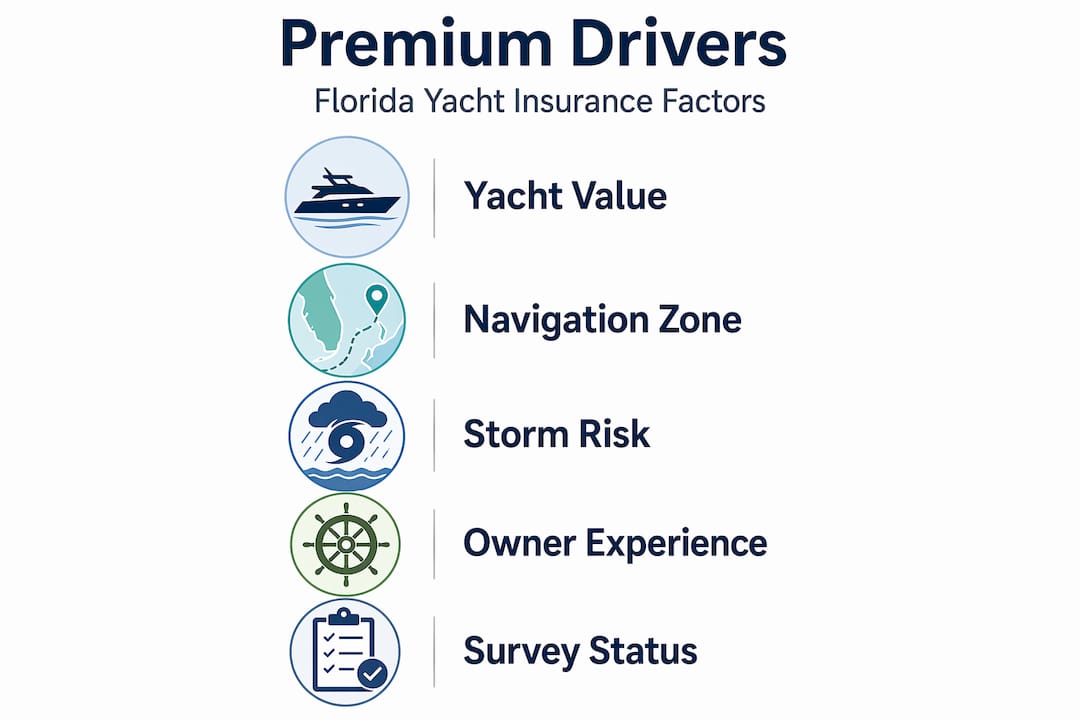
Premiums are not calculated arbitrarily. Insurers evaluate a precise set of underwriting variables, and understanding them puts you in control. According to premium cost guidance, common underwriting risk factors include usage and navigation plans, operator experience, claims history, vessel age and condition, and detailed vessel specifications.
Here is how those variables break down in a Florida context:
| Factor | Lower premium profile | Higher premium profile |
|---|---|---|
| Navigation zone | Inland or coastal Florida only | Offshore, Caribbean cruising |
| Storage method | Dry stack or trailer | Open slip, exposed marina |
| Operator experience | 10+ years, safety course completed | New owner, no formal training |
| Claims history | Clean record | One or more recent claims |
| Vessel age | Under 10 years | 20+ years, older systems |
| Hull material | Fiberglass, newer construction | Steel, older wood construction |
Quotes can differ dramatically between carriers even for identical vessels. One insurer may be comfortable with a 45-foot motor yacht stored in a covered marina in Fort Lauderdale, while another charges a 30% premium surcharge for the same profile due to their internal hurricane zone modeling.
Here are numbered steps to get the most accurate and competitive premium:
- Disclose everything honestly. Undisclosed information that surfaces during a claim can void your policy entirely.
- Take a certified boating safety course. Many insurers offer a meaningful discount, sometimes 5% to 10%, for documented training.
- Upgrade your storm preparedness plan. A documented hurricane plan with secure storage arrangements can positively influence your rate.
- Bundle coverages where possible. Some carriers offer discounts when yacht insurance is bundled with home or auto policies.
- Work with a specialist broker. General insurance agents rarely have access to marine-specific carriers or market knowledge to find the best fit.
Our team actively monitors yacht insurance quotes across the Florida market to match owners with carriers that genuinely fit their risk profile rather than forcing a round peg into a square hole.
These cost factors set the stage, but meeting insurer requirements is just as crucial. Next, let us break down what you need for successful underwriting and claim approval.
Surveys, inspections, and owner obligations
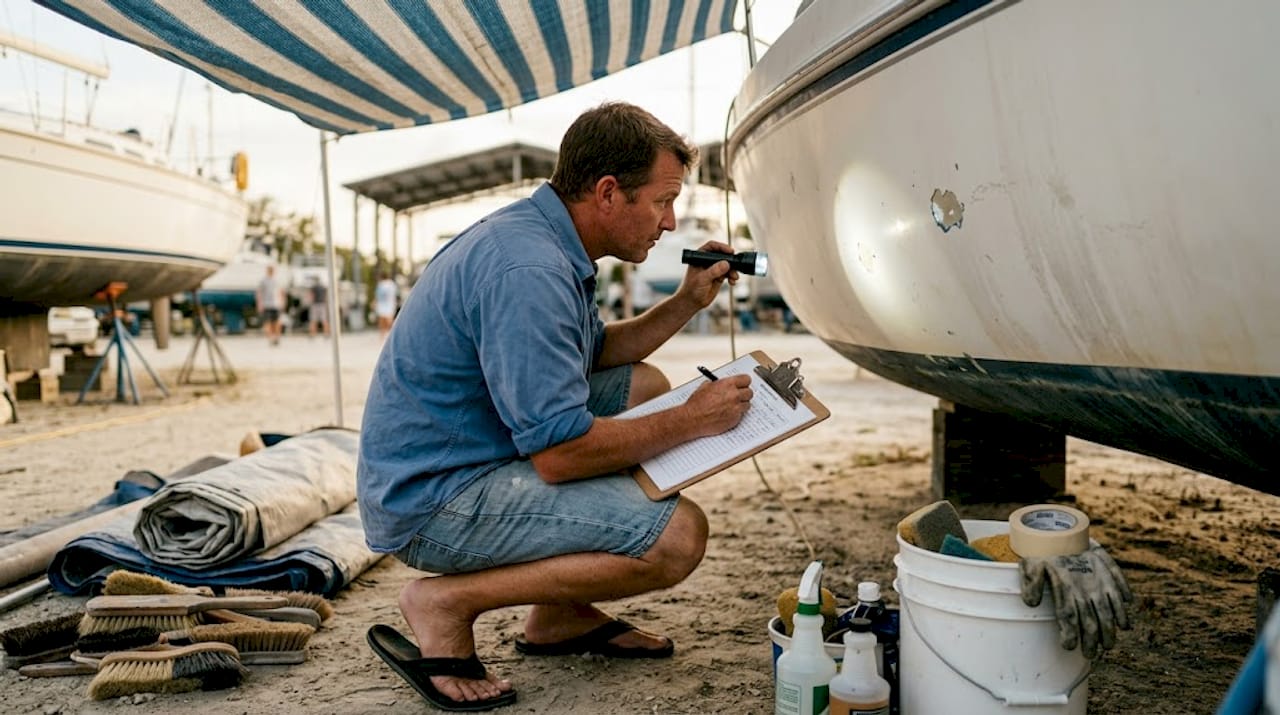
A marine survey is an independent inspection of your vessel’s condition, systems, and value. For insurance purposes, it serves as the underwriter’s baseline for what they are agreeing to cover. As detailed in insurance survey requirements, survey timing is periodic and age or value dependent, and insurers may require updated surveys every few years along with proof that any noted deficiencies have been corrected.
Most owners are surprised to learn that a survey is not a one-time expense. Insurers frequently require updated surveys every one to three years for vessels over a certain age or value threshold. The costs, typically $20 to $25 per foot of vessel length, need to be factored into your total yacht ownership costs alongside maintenance, dock fees, and crew.
Common triggers for a new survey requirement:
- Purchasing or transferring ownership of any vessel
- Reaching a specific age milestone (often 10, 15, or 20 years)
- Undergoing a significant refit or structural modification
- Moving to a new carrier or renewing after a lapse in coverage
- Filing a claim on an older vessel
Follow these steps to stay in full compliance:
- Schedule your survey proactively. Do not wait for the insurer to request one. Staying ahead of the timeline demonstrates responsible ownership.
- Review the surveyor’s findings carefully. Deficiencies listed in the report are items your insurer expects you to address promptly.
- Document all repairs. Keep invoices, photos, and any surveyor sign-off letters as evidence that deficiencies were corrected.
- Notify your broker immediately. Any major repair or upgrade should be communicated to your broker so your coverage terms reflect the current state of the vessel.
Failing to address survey deficiencies is one of the most common ways insurers justify limiting or withdrawing coverage. This is not a bureaucratic technicality. It is a real risk that can leave you unprotected at the worst possible moment.
Pro Tip: Budget not just for the survey itself but also for the likely repair costs that surveys uncover. A $600 survey on a 30-year-old vessel could reveal $10,000 in recommended work that your insurer expects to see addressed.
Understanding your ongoing responsibilities helps maintain coverage, but edge cases can still trip up even experienced owners. Let us finish with a look at overlooked risks.
Nuanced risks and edge-case scenarios in Florida yachting
The most expensive insurance mistakes happen in gray areas. These are situations where owners assume coverage applies, act accordingly, and then discover a gap only when the claim is denied. As highlighted in current operational insurance pitfalls, layup periods during hurricane season and underwriting restrictions for out-of-commission vessels are real and underappreciated risk zones.
Some underwriters may double the named storm deductible or exclude hurricane damage entirely if the yacht is laid up without the proper out-of-commission notification or if storm preparation requirements outlined in the policy are not met. Always check your policy language before scheduling a layup.
Top operational scenarios that can trigger coverage exceptions:
- Yacht layups during hurricane season without notifying your insurer can result in premium surcharges or excluded hurricane claims.
- Chartering activities, even on an informal or occasional basis, can invalidate liability and hull claims if the policy does not include a charter endorsement.
- Expanding your navigation area beyond what is listed in your policy without updating your broker exposes you to claims that fall outside covered geographic limits.
- Adding new crew members, particularly paid crew, often requires additional endorsements.
- Installing high-risk equipment such as experimental propulsion systems or modified fuel systems without disclosure can affect claim eligibility.
- Maintenance periods in a shipyard sometimes require specific yard coverage that differs from your standard afloat policy.
For those interested in yacht charter coverage, our team guides owners through the exact endorsements needed to protect both their vessel and their charter income stream without voiding existing coverage.
After covering these advanced scenarios, it is time to take a step back and share a fresh perspective on the mindset shift that makes insurance work for savvy Florida yacht owners.
A seasoned approach to Florida yacht insurance: What most owners miss
Here is the honest truth we share with every client: treating yacht insurance like a commodity is the most expensive mistake you can make. Comparing prices on a spreadsheet and picking the lowest number feels efficient. But every insurer has a unique tolerance for hurricane risk, and no two quotes represent the same protection, even when the dollar amounts look similar.
We have seen owners save $800 annually by switching carriers, only to discover during a named storm event that their new policy carried a 15% deductible instead of a flat fee. That “savings” cost them $45,000 out of pocket. The number on the declaration page is not the whole story.
What separates smart yacht insurance management from passive coverage is active partnership with a broker who understands the Florida market. Frequent policy reviews catch gaps before claims arise. Honest communication about how you actually use your vessel, whether that means occasional charters, extended Bahamas cruises, or off-season layups, keeps your policy current and your claims defensible.
The gray areas we described earlier, undisclosed activities, neglected survey corrections, forgotten layup conditions, are not traps set by insurers. They are gaps that form when owners treat insurance as something to set and forget rather than an active part of vessel management.
Pro Tip: Treat your insurance insights and broker relationship like a team sport. Your documentation, disclosures, and proactive communication are just as important as reading the fine print.
Protect your Florida yacht investment with expert guidance
Navigating Florida yacht insurance does not have to feel overwhelming, and it should never feel like you are doing it alone. At Yachting Experts, our team brings hands-on market knowledge and a personalized approach to every coverage review, policy comparison, and management consultation we conduct.

Whether you are purchasing your first yacht, upgrading to a larger vessel, or reassessing coverage on a boat you have owned for years, we are here to make the process seamless and genuinely protective of your investment. Our expert brokers will help you identify the right policy structure, negotiate the best terms, and stay compliant with every marina, lender, and survey requirement you face. Take the next step and contact a Florida yacht expert for a personalized coverage consultation. You can also explore our full suite of yacht management solutions designed to maximize the return on one of your biggest assets.
Frequently asked questions
Is yacht insurance required by law in Florida?
No, Florida does not require yacht insurance for private owners by state law, but lenders and marinas almost always require it as a condition of financing or slip access.
What is a named storm deductible and why is it higher?
A named storm deductible is a separate, higher deductible that applies specifically to hurricane-related claims, and as Florida insurers commonly set it as a percentage of the yacht’s insured value, the actual out-of-pocket exposure is far greater than the standard flat deductible.
How often do I need a new insurance survey for my yacht?
Most insurers require a survey every one to three years, depending on the vessel’s age and value, and survey requirements can include documented proof that any flagged deficiencies have been corrected before coverage continues.
Will my premium increase if my yacht is stored during hurricane season?
Yes, some insurers may increase deductibles or limit hurricane coverage if your yacht is out of commission during storm season, as layup conditions can trigger specific underwriting restrictions outlined in your policy terms.
Do I need to update my insurance if I start chartering my yacht?
Absolutely. Standard coverage typically does not extend to charter activities, and as mega yacht coverage guidance confirms, specific endorsements are required to align your policy with your actual charter exposure and protect against denied claims.
Recommended
Request A Call
Featured Listings

2027 Canados
100
Miami Florida

2015 Maiora
$3,750,000
90
Miami Florida

2027 Canados
57
Miami Florida

2019 Silent-Yachts Fair Dinkum
$1,599,000
55
Fort Lauderdale Florida

2026 Canados
49
Miami Florida

2026 Buddy Davis
47
Miami Florida

2020 Grady-White No Name
$610,000
45
Hallandale Beach Florida

2020 Viking Huckleberry
$1,495,000
44
Fort Lauderdale Florida

2027 Canados
43
Miami Florida

2021 Intrepid Dream Faster
$730,000
40
Coral Gables Florida

2016 Edgewater
$299,000
37
Miami, Florida

2022 Avid
$56,900
23
Stuart Florida
Get your yacht value Estimate
"*" indicates required fields