

Owning a yacht in Florida is one of life’s great pleasures, but insuring it correctly is where many owners hit rough water. Florida’s combination of hurricane seasons, high-traffic waterways, and marina theft rates creates a uniquely demanding insurance environment. The wrong policy, or a misunderstood clause, can mean a denied claim worth hundreds of thousands of dollars. We’ve seen it happen. This guide breaks down every major coverage type clearly, so you can make a confident, well-informed decision that genuinely protects your investment from bow to stern.
Table of Contents
- How to evaluate Florida yacht insurance options
- Comprehensive yacht insurance: Full protection explained
- Liability, collision, and named perils: Key alternatives for Florida yachts
- Hurricane and storm coverage: What Florida owners must know
- Comparing coverage types: Which Florida yacht insurance is right for you?
- Why most Florida yacht owners misunderstand insurance risk
- Protect your Florida yacht investment with expert guidance
- Frequently asked questions
Key Takeaways
| Point | Details |
|---|---|
| Comprehensive coverage essentials | Comprehensive insurance offers the broadest Florida yacht protection but requires compliance with hurricane plans and acceptably high deductibles. |
| Evaluate storm risk carefully | Storm and hurricane deductibles in Florida average 5-10% of insured value, making risk planning essential. |
| Alternatives to consider | Liability, collision, and named perils policies provide more limited but cost-effective options for some yacht owners. |
| Matching policy to yacht value | Your choice should reflect vessel value, usage habits, and willingness to meet detailed compliance terms. |
| Expert guidance matters | Working with an expert or broker simplifies complex coverage selections and helps avoid critical mistakes. |
How to evaluate Florida yacht insurance options
Before you compare policies, you need to understand exactly what you’re up against as a Florida yacht owner. This state presents a specific set of risks that simply don’t exist in the same way elsewhere in the country, and those risks directly shape which coverage types make sense for your situation.
Primary risks for Florida yacht owners include:
- Hurricanes and tropical storms: Florida is in the heart of Atlantic hurricane territory. Major storms can cause catastrophic damage to both the vessel and marina infrastructure.
- Theft: Florida’s bustling marina culture and high vessel density make it a target for theft of both entire boats and onboard equipment.
- Fire: Fuel systems, electrical wiring, and onboard appliances all create fire risk, especially in hot, humid conditions.
- Collision and grounding: Heavy boat traffic in the Intracoastal Waterway, the Keys, and Tampa Bay increases the likelihood of collisions and groundings.
- Flooding and storm surge: Even a moderate named storm can push surge far inland, leaving vessels that seemed safely moored in serious trouble.
Florida law does not require yacht insurance the way it requires auto insurance, but marinas, lenders, and charter operators almost universally require proof of coverage. If you’re financing your yacht, your lender will mandate at minimum a comprehensive policy that protects their collateral.
One of the most misunderstood cost factors is the deductible structure. Standard deductibles may sit at 1-2% of insured value, but named storm deductibles for Florida yachts typically land at 5-10% of the vessel’s insured value. On a $500,000 yacht, that’s a potential out-of-pocket cost of $25,000 to $50,000 before your insurer pays a single dollar. Understanding Florida’s insurance market trends helps you anticipate what insurers will require and what rates look like year over year.
“Before you sign any policy, request a five-year claims history for the marina where you plan to moor your yacht. Marinas with frequent storm damage claims can signal geographic vulnerability that will affect your premium and your claim outcomes.”
Pro Tip: Always review a marina’s history of hurricane damage before choosing a slip. Insurers take this location risk seriously, and so should you. Pair this with our ownership costs guide to budget accurately from day one.
Now that you know what you’re up against, let’s break down the actual types of insurance available.
Comprehensive yacht insurance: Full protection explained
Comprehensive insurance is often considered the gold standard, but what does it actually cover and what does it leave out?
Comprehensive yacht insurance covers your vessel against a wide range of perils. Think of it as an “all risks” policy, meaning it covers everything that isn’t explicitly excluded. This makes it the most robust option available for Florida yacht owners who want real peace of mind.
What comprehensive coverage typically includes:
- Physical damage to the hull, machinery, and equipment
- Theft of the vessel and permanently installed gear
- Fire and explosion
- Sinking and flooding
- Hurricane and named storm damage (subject to deductibles and compliance requirements)
- Personal liability for injuries or property damage to third parties
- Medical payments for passengers
What comprehensive coverage often excludes:
- Wear and tear or gradual deterioration
- Damage caused by marine organisms (barnacles, wood rot)
- Mechanical breakdown not caused by a covered peril
- Racing events unless specifically endorsed
- Damage resulting from non-compliance with hurricane plans
That last exclusion is critical. Hurricane coverage is included in comprehensive policies, but insurers attach strict conditions. You must have a documented hurricane action plan. You must haul out the vessel or place it in an approved storm-resistant mooring when a named storm is approaching. Failure to follow these procedures can result in a denied claim even if your yacht is otherwise fully covered.
“A comprehensive policy without compliance is just expensive paper. Your insurer will ask for documentation of every step you took when a storm approached.”
The cost of comprehensive coverage varies widely based on yacht value, age, navigation area, and your claims history. For a newer vessel worth $300,000, annual premiums typically range from $3,000 to $6,000, though Florida’s storm risk often pushes them higher. Enjoy the rewards of full coverage by understanding every aspect of yachting in Florida before you select your policy.
Pro Tip: Ask your insurer whether they use an “agreed value” or “actual cash value” settlement method. Agreed value means you get the insured amount with no depreciation applied. Actual cash value subtracts depreciation, which can leave you significantly undercompensated after a total loss.
Liability, collision, and named perils: Key alternatives for Florida yachts
Not all owners need (or can afford) full comprehensive protection. Here’s how these popular alternatives stack up.
Liability coverage pays for bodily injury and property damage that you cause to others. It does not cover damage to your own vessel. If you collide with another boat or a swimmer is injured near your vessel, liability coverage steps in to cover legal costs and settlements. This is the most basic form of protection and the minimum most marinas will accept.
Collision coverage specifically covers damage to your yacht resulting from a collision with another vessel, a dock, or an object in the water. It does not typically extend to storm or hurricane damage. This is useful as a standalone add-on for owners who have an older vessel with lower market value.
Named perils coverage is a more limited alternative to comprehensive. Instead of covering everything except exclusions, it only covers the specific perils listed in the policy. Common named perils include fire, lightning, theft, and collision, but hurricane damage may or may not be included depending on the policy terms. This can be a more affordable option for owners navigating lower-risk waters or with older vessels where full comprehensive coverage doesn’t pencil out financially.
| Coverage type | What it covers | Hurricane coverage | Avg. deductible | Best for |
|---|---|---|---|---|
| Comprehensive | All risks minus exclusions | Yes, with conditions | 5-10% named storm | New or high-value yachts |
| Liability only | Third-party injury/property | No | N/A | Budget-conscious owners |
| Collision | Your vessel from collisions | No | 1-2% | Owners with older yachts |
| Named perils | Specific listed perils | Sometimes | Varies | Moderate-value vessels |
Understanding yacht management benefits can also influence your coverage decision. Well-maintained yachts with documented service records often qualify for better rates across all policy types. Staying current on maintenance options keeps your vessel in insurable condition and demonstrates responsible ownership to underwriters.
As mentioned, named storm deductibles are a defining feature of Florida policies and apply most directly to comprehensive coverage. With alternatives like named perils or liability-only, storm damage is often simply not covered, which is a significant exposure in this state.
Hurricane and storm coverage: What Florida owners must know
Florida’s hurricane risk sets it apart. Even the best policy has unique requirements, so let’s break down the storm coverage specifics you absolutely need to understand.
The majority of significant yacht insurance claims in Florida are connected to hurricane and tropical storm events. Storms like Ian, Irma, and Dorian have collectively caused billions in marine losses throughout the state. This outsized risk is why insurers treat storm coverage differently than any other peril.
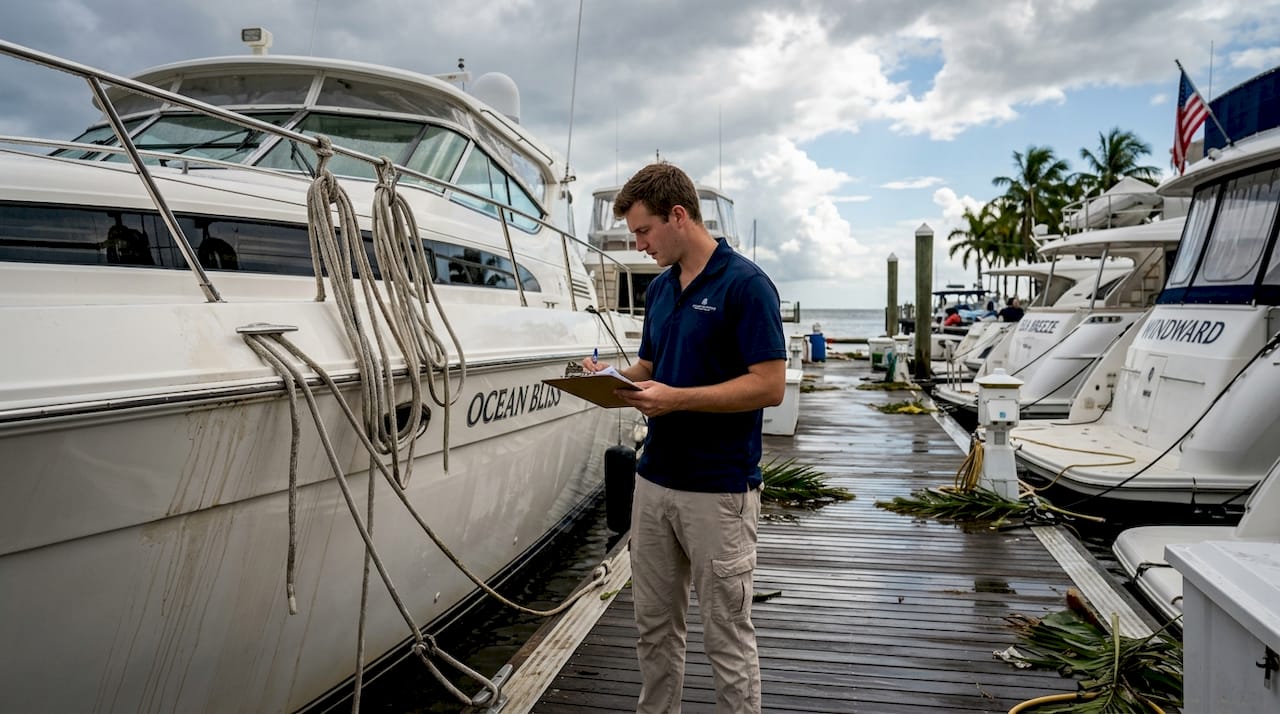
Named storm deductibles of 5-10% of insured value are standard across Florida yacht policies. Here’s what that looks like in real dollar terms:
| Yacht insured value | 5% deductible | 10% deductible |
|---|---|---|
| $150,000 | $7,500 | $15,000 |
| $300,000 | $15,000 | $30,000 |
| $500,000 | $25,000 | $50,000 |
| $1,000,000 | $50,000 | $100,000 |
These are significant numbers. Planning for them before a storm is essential, not something to figure out after the fact.
To stay compliant and keep your coverage intact, you should:
- Maintain a written hurricane action plan and update it annually
- Know which haul-out facilities your insurer has approved
- Confirm your marina’s mooring qualifications with your insurer in writing
- Execute your plan when a storm enters a watch or warning zone, not when it’s already on your doorstep
- Keep receipts and photos of all steps taken before, during, and after any named storm
Similar storm-related requirements also appear in hurricane policies for Florida homes, where compliance documentation plays an equally important role in claim outcomes.
Being proactive about yacht tax considerations during the planning phase can also help you allocate funds for larger deductibles without disrupting your overall financial strategy.
Pro Tip: Set a calendar reminder for June 1, the official start of hurricane season, to review your hurricane plan, confirm haul-out reservations, and update your insurer on any changes to your vessel’s location or mooring situation.
Comparing coverage types: Which Florida yacht insurance is right for you?
Armed with a detailed understanding of your choices, let’s visualize how the options compare and which fits your needs.
| Feature | Comprehensive | Liability only | Collision | Named perils | Hurricane add-on |
|---|---|---|---|---|---|
| Hull damage | ✓ | ✗ | Partial | Partial | ✓ with deductible |
| Third-party liability | ✓ | ✓ | ✗ | Varies | ✗ |
| Hurricane/storm | ✓ with deductible | ✗ | ✗ | Sometimes | ✓ |
| Theft | ✓ | ✗ | ✗ | Sometimes | ✗ |
| Medical payments | ✓ | Varies | ✗ | Varies | ✗ |
| Typical cost | Highest | Lowest | Moderate | Moderate | Additional premium |
How to choose the right coverage based on your profile:
- High-value or newer yacht: Always go comprehensive. The cost of replacing or repairing a newer vessel makes full coverage the only sensible choice.
- Older vessel with lower market value: A named perils or collision policy may offer sufficient protection without the premium cost of comprehensive.
- Liveaboard or full-time users: You need comprehensive. You’re exposed to more risks simply by being aboard more frequently.
- Occasional recreational users: A named perils policy with liability may be adequate, but storm risk in Florida still warrants serious consideration.
- Charter or commercial use: Specialty commercial marine coverage is required. Standard yacht policies typically exclude commercial activity.
Understanding how yacht deals work in Florida also helps you approach insurance from a total investment perspective, rather than viewing it purely as an expense. The right coverage protects the asset’s resale value just as much as it protects your finances in a loss event.
Why most Florida yacht owners misunderstand insurance risk
Here’s an uncomfortable truth we’ve observed working with yacht owners across Florida: most people choose their insurance policy based almost entirely on premium price. They shop for the lowest number without understanding what they’re actually buying, and then they’re genuinely shocked when a claim gets denied.
The most common and costly mistake is treating a Florida yacht policy like a standard homeowner’s or auto policy. These are fundamentally different products operating in a uniquely high-risk environment. Florida’s storm exposure means the fine print matters enormously. A 7% named storm deductible on a $400,000 vessel is a $28,000 surprise if you haven’t planned for it. That’s not a minor detail buried in the back of a policy. That’s real money.
We also see owners routinely overlook haul-out compliance. They buy comprehensive coverage, feel protected, and then fail to act on their hurricane plan when a storm approaches because it seems like too much effort, or they can’t get a haul-out appointment in time. Insurers don’t accept “we couldn’t get an appointment” as a valid reason for non-compliance. Claims get denied. It happens every storm season.
The second mistake is relying on generic, national-brand policies that aren’t written with Florida’s specific conditions in mind. A policy that works perfectly well for a yacht owner in the Chesapeake Bay may have completely different storm compliance requirements, navigation area limits, or exclusions that make it inadequate for South Florida or the Gulf Coast.
Our advice is clear: work with professionals who understand the local marine insurance market. Review your expert insurance insights regularly and don’t let a low premium lull you into a false sense of security. The right policy costs a bit more. It also actually pays when you need it most.
Protect your Florida yacht investment with expert guidance
The best protection for your yacht goes beyond coverage. It starts with knowledgeable guidance from people who live and breathe this industry.

At Yachting Experts, we’re thrilled to walk alongside you at every stage of yacht ownership, from selecting the right vessel to understanding the insurance policies that protect it. Our team brings firsthand market knowledge and a genuine passion for yachting to every client relationship. Whether you’re trying to understand why using a yacht broker makes a measurable financial difference or you want a clear picture of the complete yacht sales process, we’re here to make every step seamless. Reach out to our team today and let us help you protect your investment with the confidence it deserves.
Frequently asked questions
What is the average named storm deductible for Florida yacht insurance?
In Florida, named storm deductibles are typically 5-10% of your yacht’s insured value, which can represent tens of thousands of dollars depending on your vessel’s worth.
Are hurricane action plans required for all Florida yacht insurance policies?
Most comprehensive policies require hurricane plans, haul-out provisions, or specific mooring locations to maintain full coverage, and failing to comply can result in a denied claim.
Can I purchase only liability insurance for my Florida yacht?
Yes, liability-only coverage is available for Florida yachts, but as standard policies note, it will not cover hurricane or storm damage to your own vessel.
How can I reduce my yacht insurance premiums in Florida?
Maintaining a strong, documented hurricane plan, completing accredited marine safety courses, and accepting higher deductibles can all help reduce your annual premium costs according to Florida boat insurance guidelines.
Recommended
Request A Call
Featured Listings

2027 Canados
100
Miami Florida

2015 Maiora
$3,750,000
90
Miami Florida

2027 Canados
57
Miami Florida

2019 Silent-Yachts Fair Dinkum
$1,599,000
55
Fort Lauderdale Florida

2026 Canados
49
Miami Florida

2026 Buddy Davis
47
Miami Florida

2020 Grady-White No Name
$610,000
45
Hallandale Beach Florida

2020 Viking Huckleberry
$1,495,000
44
Fort Lauderdale Florida

2027 Canados
43
Miami Florida

2021 Intrepid Dream Faster
$730,000
40
Coral Gables Florida

2016 Edgewater
$299,000
37
Miami, Florida

2022 Avid
$56,900
23
Stuart Florida
Get your yacht value Estimate
"*" indicates required fields