

Florida yacht environmental compliance is defined as the legal obligation of vessel owners and operators to meet state, federal, and local rules governing sewage discharge, water pollution, and marine ecosystem protection. Florida Statute 327.53 sets the baseline: all vessels with installed toilets must use approved marine sanitation devices. The Clean Water Act adds a federal layer, and local no-discharge zones, especially in the Florida Keys, tighten restrictions further. Non-compliance carries civil fines, criminal charges, and cleanup costs that can reach six figures. Knowing the full picture before you cast off is the only way to protect both your vessel and your investment.
What sewage management and discharge rules must Florida yachts follow?
Sewage management is the most cited compliance failure among Florida yacht owners. The rules are specific, and ignorance of them is not a legal defense.
Florida law requires that floating structures with living quarters have permanently installed toilets connected to Type III marine sanitation devices or shore-based disposal systems. A Type III holding tank stores sewage onboard until it can be pumped out at an approved facility. No overboard discharge is permitted in Florida’s no-discharge zones, which cover the Florida Keys National Marine Sanctuary and several other designated coastal areas.
The penalty structure is clear:
- No-discharge zone violations carry civil fines of $250 per violation as of 2026. That fine applies each time a discharge occurs, not just once per trip.
- Repeat violations escalate quickly and can trigger state enforcement action beyond the initial fine.
- Anchoring violations range from $100 to $500 depending on the number of offenses, and derelict vessels can be removed at the owner’s expense.
- Willful pollution is classified as a third-degree felony in Florida, carrying fines up to $50,000 and up to five years in prison.
Pump-out facilities are widely available at Florida marinas, and mobile pump-out services operate in many coastal counties. Using them consistently is the simplest way to stay clean under the law.
Pro Tip: Before anchoring overnight in South Florida or the Keys, check the Florida Fish and Wildlife Conservation Commission’s no-discharge zone map. Many owners are surprised to find their favorite anchorage falls inside a restricted area.
How do federal and state water pollution regulations apply to yacht maintenance?
The Clean Water Act governs what enters Florida’s waterways from every source, including your yacht during routine maintenance. The National Pollutant Discharge Elimination System (NPDES) permit program enforces specific pollutant limits on marinas and the vessels they service.
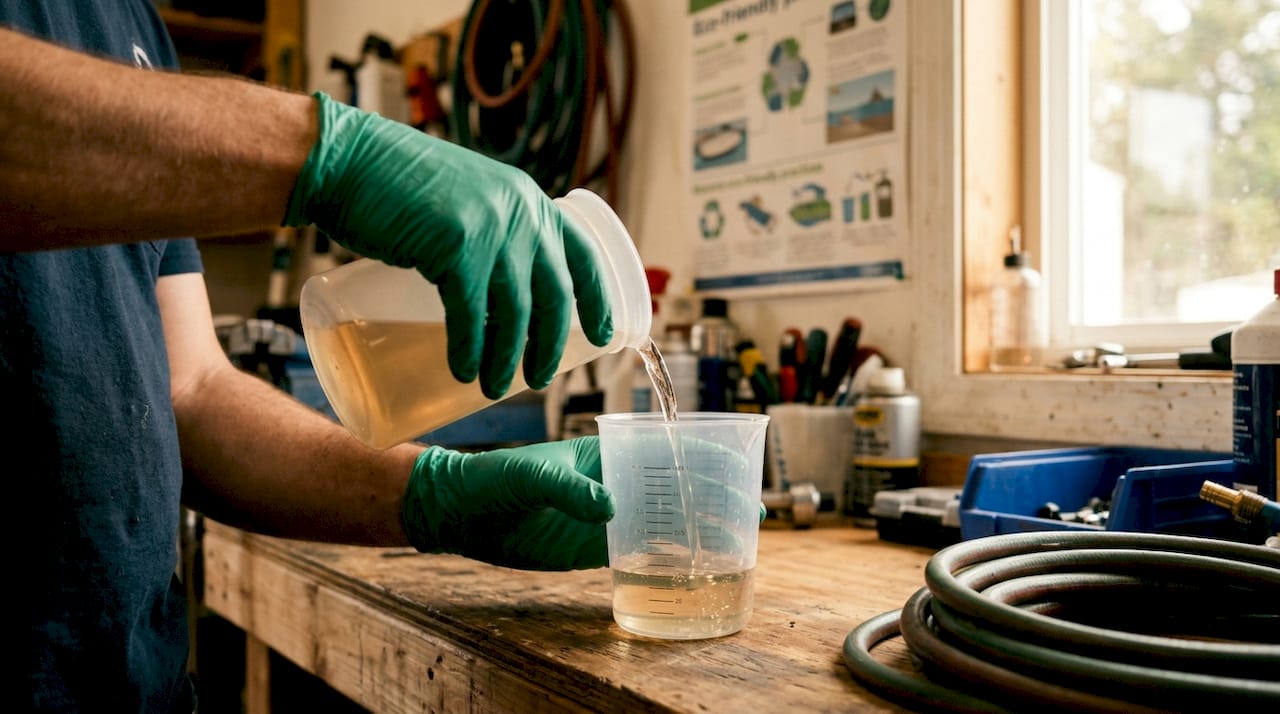
Federal civil penalties under the Clean Water Act can reach $25,000 per day per violation. Florida DEP then adds state fines and cleanup costs on top of that, with total exposure often reaching six figures. That is not a theoretical risk. Enforcement actions against vessel owners in South Florida have resulted in exactly those outcomes.
Here is what yacht owners must do to stay compliant during maintenance operations:
- Verify your marina’s NPDES permit status. Commercial marinas in South Florida must hold NPDES permits and enforce Best Management Practices (BMPs) for all on-water work. Ask to see the permit before scheduling any hull cleaning or painting.
- Use only approved cleaning products. Phosphate-free, biodegradable cleaning products are the standard under NPDES permit conditions. Using anything else puts you and the marina at risk.
- Confirm your detailer’s compliance. Vessel owners remain liable for pollution caused by contractors working on their boat, even when the marina holds its own permit. Get written confirmation that your detailer follows facility BMPs.
- Contain wash water. BMPs at certified marinas require wash water containment systems. Never allow rinse water from hull cleaning to flow freely into the water.
- Document everything. Keep records of products used, contractors hired, and maintenance dates. Documentation is your first line of defense in any enforcement inquiry.
Private vessel owners can also be held liable under Florida Statute Chapter 403 for pollution caused by maintenance activities, completely independent of what the marina’s permit covers. That is a detail most owners do not know until it is too late.
Pro Tip: Ask your detailer for the product safety data sheets for every chemical they plan to use on your vessel. If they cannot produce them, find a different detailer.
What local regulations affect liveaboards and anchoring compliance?
Local governments in Florida hold significant authority over anchoring zones and sewage disposal, and their rules often go further than state statutes. This creates a layered compliance picture that catches many yacht owners off guard.
Local governments are authorized to regulate anchoring and sewage disposal for liveaboard vessels beyond what Florida state law requires. The distinction between a liveaboard vessel, a houseboat, and a recreational yacht matters legally. Each classification carries different sewage requirements, anchoring rights, and municipal obligations.
Key points every owner should understand:
- Classification determines compliance. A vessel used primarily as a residence faces stricter sewage and anchoring rules than one used recreationally. Misclassifying your vessel’s status can result in penalties for both anchoring and sewage violations simultaneously.
- Registration does not equal mooring rights. A properly registered vessel is not automatically entitled to anchor in any location. Local ordinances in high-traffic areas like Miami-Dade, Broward, and Monroe counties set specific anchoring zones with time limits.
- Municipal ordinances vary widely. What is permitted in one county may be a fineable offense in the next. Owners who cruise between jurisdictions must research each area’s rules before dropping anchor.
- Repeat anchoring violations escalate fast. Fines start at $100 for a first offense and climb to $500 for repeat violations, with the added risk of vessel removal at owner expense.
Consulting local maritime authorities and reviewing marina policies before anchoring overnight is not optional. It is the only way to avoid a fine that compounds with each day of non-compliance. A knowledgeable Florida yacht broker can help you understand which jurisdictions apply to your typical cruising area.
How can marina environmental programs reduce your compliance risk?
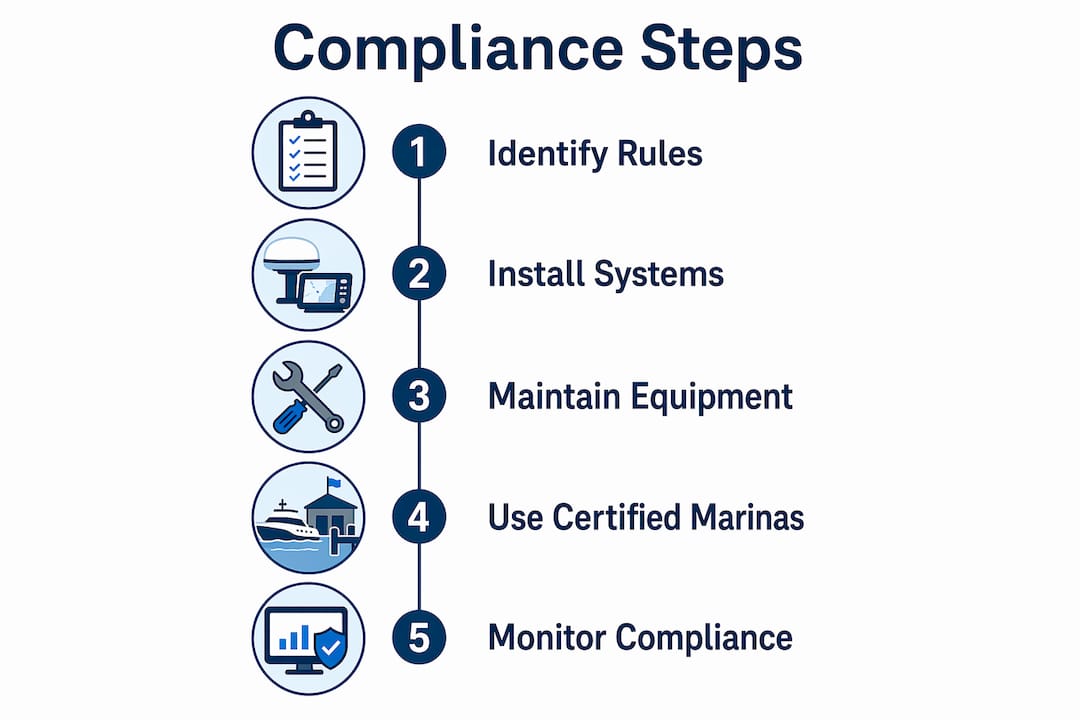
The Florida Clean Marina Program, administered by the Florida Department of Environmental Protection, is the most practical compliance risk reduction tool available to yacht owners. Choosing a certified Clean Marina facility means you are operating within an environment that has already been audited for environmental management systems.
Certified marinas go beyond the legal minimum. They implement voluntary BMPs that cover fuel spill prevention, waste oil collection, stormwater management, and controlled cleaning chemical use. For yacht owners, this translates directly into reduced personal liability. When your vessel is maintained at a facility with documented environmental controls, your exposure to enforcement action drops significantly.
The program also benefits owners during routine operations like fueling and hull cleaning. Certified facilities have containment systems, trained staff, and approved product lists already in place. You do not have to audit every contractor yourself because the marina’s certification process has already done that work.
Sustainable boating in Florida is not just about following the law. It protects the marine ecosystems that make Florida waters worth sailing in the first place. Seagrass beds, coral reefs, and mangrove systems are all directly affected by vessel pollution. Owners who choose certified facilities and follow voluntary BMPs contribute to the long-term health of those ecosystems while also protecting their own legal standing.
Understanding yacht management in Florida means treating environmental compliance as an ongoing operational responsibility, not a one-time checkbox.
Key Takeaways
Florida yacht environmental compliance requires continuous attention to sewage management, water pollution rules, and local anchoring restrictions to avoid penalties that can reach six figures.
| Point | Details |
|---|---|
| Type III holding tanks required | Florida law mandates approved marine sanitation devices on all vessels with installed toilets. |
| No-discharge zones carry real fines | Civil penalties reach $250 per violation in designated zones, with willful pollution classified as a felony. |
| Owner liability survives marina permits | Vessel owners remain personally liable for contractor-caused pollution under Florida Statute Chapter 403. |
| Local rules add another layer | Municipal ordinances on anchoring and sewage often exceed state requirements and vary by county. |
| Clean Marina certification reduces risk | Choosing Florida DEP-certified facilities lowers compliance exposure through audited environmental management systems. |
Why compliance is not a one-time conversation
I have worked with enough Florida yacht owners to know that most compliance problems start the same way. An owner assumes that because the marina handles permits, they are covered. Or they figure that washing the hull offshore puts them outside any jurisdiction. Both assumptions are wrong, and both have cost owners serious money.
The layered nature of Florida yacht regulations is genuinely complex. You have federal Clean Water Act rules, Florida DEP enforcement, local municipal ordinances, and no-discharge zone maps that do not always align with what your GPS shows as open water. No single document covers all of it. That is why I always tell owners to treat compliance as a standing agenda item, not a pre-season checklist.
The most common misconception I encounter is that on-water washing is unregulated. Commercial marinas enforce strict NPDES BMPs on cleaning chemicals and wash protocols, and your detailer’s choices become your legal problem if they get it wrong. Verifying contractor compliance is not paranoia. It is basic risk management.
My practical advice: build a relationship with a Clean Marina certified facility, keep a written log of every maintenance activity, and consult a knowledgeable broker or maritime attorney when you change your cruising area. The role of a yacht broker extends well beyond the transaction. A good one knows which marinas are certified, which counties have aggressive anchoring enforcement, and how to connect you with the right professionals before a problem develops.
Compliance protects your vessel’s value. A yacht with documented environmental compliance history is a cleaner sale when the time comes to move up.
— Jason
Yachtingexperts and your compliance confidence
Navigating Florida’s yacht environmental regulations takes more than reading the statutes. It takes experience, local knowledge, and the right network of certified facilities and maritime professionals.

At Yachtingexperts, we bring that experience directly to you. Our team understands how federal, state, and local rules intersect for Florida yacht owners, and we factor compliance into every vessel recommendation and management conversation we have. Whether you are buying your first yacht or preparing to maximize your vessel’s value before a sale, we make sure environmental obligations are part of the picture from day one. Reach out to our team and let us help you own and operate your yacht with confidence, clarity, and full legal standing.
FAQ
What is a Type III marine sanitation device?
A Type III marine sanitation device is a holding tank that stores sewage onboard until it can be pumped out at an approved facility. Florida law requires this system on all vessels with permanently installed toilets.
What are Florida’s no-discharge zones for yachts?
No-discharge zones prohibit any overboard sewage discharge and cover areas including the Florida Keys National Marine Sanctuary. Civil fines for violations reach $250 per incident as of 2026.
Can I be fined for my detailer’s actions?
Yes. Vessel owners remain personally liable for pollution caused by contractors or detailers working on their boat, even when the marina holds its own NPDES permit.
What is the Florida Clean Marina Program?
The Florida Clean Marina Program is a voluntary certification administered by the Florida DEP that recognizes marinas implementing environmental management systems and best management practices beyond the legal minimum.
How do local anchoring rules differ from state law?
Local governments in Florida have authority to set anchoring zones and sewage disposal rules that exceed state statutes. Fines for anchoring violations start at $100 and reach $500 for repeat offenses, with derelict vessels subject to removal at owner expense.
Recommended
Request A Call
Featured Listings

2027 Canados
100
Miami Florida

2015 Maiora
$3,750,000
90
Miami Florida

2027 Canados
57
Miami Florida

2019 Silent-Yachts Fair Dinkum
$1,599,000
55
Fort Lauderdale Florida

2026 Canados
49
Miami Florida

2026 Buddy Davis
47
Miami Florida

2020 Grady-White No Name
$610,000
45
Hallandale Beach Florida

2020 Viking Huckleberry
$1,495,000
44
Fort Lauderdale Florida

2027 Canados
43
Miami Florida

2021 Intrepid Dream Faster
$730,000
40
Coral Gables Florida

2016 Edgewater
$299,000
37
Miami, Florida

2022 Avid
$56,900
23
Stuart Florida
Get your yacht value Estimate
"*" indicates required fields