

You’ve likely heard that yacht broker commissions in Florida are set at 10%. That’s misleading. Commission rates are negotiable, typically ranging between 8% and 10%, and recent legal challenges are forcing brokers to justify their fees. Understanding Florida’s commission structures empowers you to negotiate better deals, avoid hidden costs, and maximize your investment returns in 2026’s competitive yacht market.
Table of Contents
- Introduction To Yacht Commission Structures In Florida
- Legal And Regulatory Framework In Florida
- Typical Commission Rates And Variability
- Common Misconceptions About Yacht Commissions
- Negotiation Strategies For Commission Fees
- Broker Licensing And Commission Impacts
- Practical Guidance For Maximizing Investment Returns
- Maximize Your Yacht Investment With Yachting Experts
- Frequently Asked Questions About Florida Yacht Commission Structures
Key Takeaways
| Point | Details |
|---|---|
| Florida law mandates disclosure but not fixed commission rates | Brokers must reveal all fees upfront; no legal requirement for 10% standard |
| Typical commissions range between 8% and 10% and are negotiable | Rates vary by vessel size, broker relationship, and transaction complexity |
| Broker licensing enforces transparency and accountability | Licensed brokers must meet bonding, education, and residency requirements |
| Recent lawsuits challenge mandatory 10% commissions as anticompetitive | Legal actions question whether standard rates inflate costs unfairly |
| Effective negotiation can reduce commissions by up to 30% | Research, volume leverage, and exclusivity agreements yield significant savings |
Introduction to Yacht Commission Structures in Florida
Florida’s yacht market is one of the nation’s largest, with thousands of transactions annually spanning vessels from modest cruisers to superyachts exceeding $10 million. This market complexity drives commission practices that significantly impact your bottom line. Whether you’re buying your first yacht or selling to upgrade, understanding how Florida’s Yacht and Ship Brokers’ Act regulates brokerage commissions and licensing requirements gives you negotiation leverage.
Commission rates directly affect both seller proceeds and buyer costs. On a $500,000 yacht sale, the difference between an 8% and 10% commission is $10,000. That’s real money that stays in your pocket when you negotiate effectively. Market and legal changes in 2026 have reshaped commission practices, with increasing pressure on brokers to justify their fees and offer flexible terms.
Brokers set commissions based on several factors:
- Vessel size and complexity of the transaction
- Marketing costs and time investment required
- Exclusivity of the listing agreement
- Competitive pressure from other brokers
- Your relationship and potential for repeat business
Common commission percentages break down into listing side and selling side fees, often split evenly but not always. The listing broker represents the seller, while the selling broker represents the buyer. Both sides negotiate their portions separately, though the total typically ranges from 8% to 10% of the sale price. Understanding these dynamics helps you approach negotiations strategically rather than accepting quoted rates as fixed.
Stay informed about latest news on Florida yacht brokerage to track how ongoing legal developments and market trends affect commission structures. Knowledge of current practices strengthens your position when discussing fees with brokers.
Legal and Regulatory Framework in Florida
Florida’s Yacht and Ship Brokers’ Act regulates brokerage commissions and licensing requirements, defining broker duties and protecting yacht owners from unfair practices. The Act establishes clear standards for who can broker yacht sales and how they must conduct business. Broker licensing under Florida statutes requires bonding, education, and maintaining either residency or active business operations within the state. These requirements ensure brokers possess the knowledge and financial accountability necessary to handle high-value transactions professionally.
Mandatory disclosure of all commission terms protects you from hidden fees and surprise costs. Brokers must provide written disclosure of their commission structure before you sign any agreement. This transparency requirement is critical because it forces brokers to justify their rates and explain how fees are split between parties. Florida law requires brokers to disclose commission terms; no fixed rates mandated, giving you the legal foundation to negotiate.
No legal fixed commission rate exists, despite industry norms suggesting 10% is standard. This distinction matters enormously. While 10% has become a market convention, it’s not a legal requirement. Recent lawsuits allege that mandatory 10% sales commissions are anticompetitive and inflate costs, challenging brokers who present this rate as non-negotiable.
“The yacht brokerage industry is facing scrutiny over commission practices that may violate antitrust principles by artificially maintaining high fee structures.”
These legal challenges create opportunities for you. Brokers increasingly recognize that rigid commission structures expose them to liability. Understanding your legal protections strengthens your negotiation position by demonstrating you know the law doesn’t require you to accept their initial quote.
Key legal protections include:
- Right to negotiate commission rates freely
- Requirement for written commission agreements
- Protection against undisclosed fee arrangements
- Ability to terminate exclusive listings under certain conditions
- Recourse through state licensing board for violations
Follow ongoing legal developments in Florida yacht brokerage to stay current on cases that may further strengthen buyer and seller rights. Review the Florida Yacht and Ship Brokers’ Act official rules, South Florida yacht commission lawsuits, and commission disclosure regulations to understand your full legal position.
Typical Commission Rates and Variability
Florida commissions typically range from 8% to 10% and vary by transaction characteristics, vessel specifications, and market conditions. Standard commission rate ranges serve as starting points for negotiation, not fixed requirements. Larger vessels and high-value sales usually allow for lower negotiated commissions because the dollar amount of even a reduced percentage still compensates brokers adequately.
A $2 million yacht at 8% commission generates $160,000 in fees, compared to $200,000 at 10%. Brokers can afford flexibility on larger transactions while maintaining profitability. Conversely, smaller vessel sales may see brokers resist dropping below 10% because the absolute dollar amount is already modest.
Broker-client relationships, exclusivity agreements, and transaction volume influence rates significantly. If you’re a repeat client or bringing multiple transactions, brokers often reduce commissions to maintain the relationship. Exclusive listings, where you commit to working with one broker, typically command lower rates than open listings because the broker invests marketing resources without competing for the sale.
| Vessel Value | Typical Commission | Negotiated Range |
|---|---|---|
| Under $250k | 10% | 9% to 12% |
| $250k to $1M | 10% | 8% to 10% |
| $1M to $5M | 9% | 7% to 9% |
| Over $5M | 8% | 6% to 8% |
Fee splitting between buyer and seller sides varies but must be disclosed. Traditionally, the total commission splits evenly between listing and selling brokers. However, some transactions see uneven splits, particularly when one broker represents both parties or when negotiated differently. Always ask how fees divide and whether the structure affects your net proceeds or purchase price.
Common misconceptions include believing rates are fixed at 10%. This incorrect assumption costs yacht owners thousands unnecessarily. Understand why commission rates vary by broker and vessel to approach negotiations with realistic expectations and strong evidence supporting your requested rate.
Pro Tip: Request commission breakdowns in writing before signing listing agreements. Seeing exactly how your broker’s fee compares to market averages gives you concrete data for negotiation and helps identify inflated rates.
Common Misconceptions about Yacht Commissions
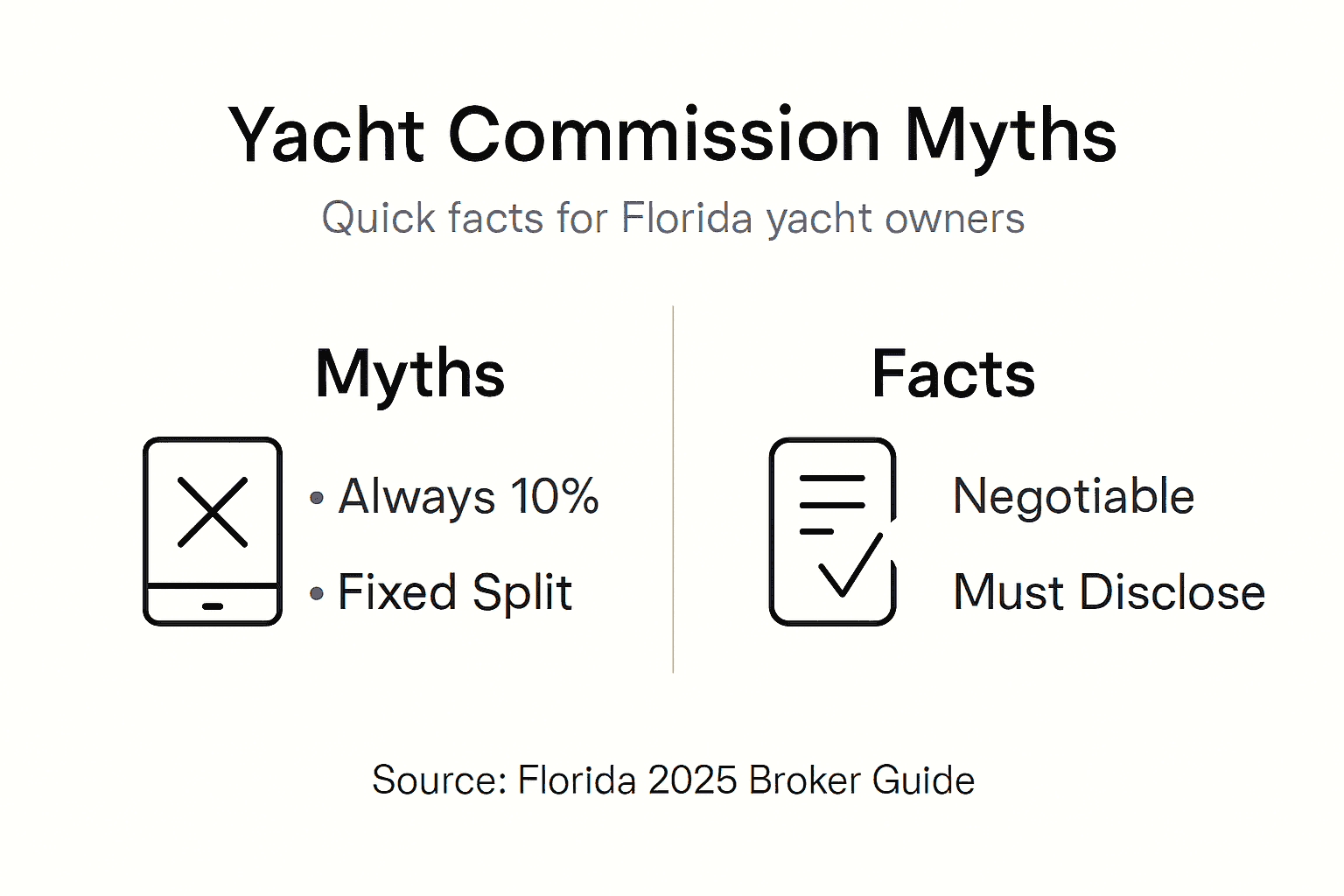
Myth #1: Commissions are always fixed at 10%. Fact: Commissions are not fixed at 10%; they are negotiable and vary based on transaction specifics and market dynamics. No Florida law mandates this rate, and brokers who insist otherwise are either misinformed or hoping you won’t challenge them. The 10% figure emerged as an industry convention, not a legal standard.
Myth #2: All commissions must split 50/50 between buyer and seller brokers. Fact: Fee splitting varies and must be disclosed, but there’s no requirement for equal division. Some transactions see 60/40 splits or other arrangements. Florida law prohibits undisclosed fee splitting; transparency is mandatory, but the actual split percentages remain negotiable.
Myth #3: Licensing doesn’t affect commission transparency. Fact: Licensing enforces disclosure and accountability by requiring brokers to follow strict rules. Licensed brokers face penalties for hiding fees or misrepresenting commission structures. Unlicensed individuals operating as brokers violate Florida law and put your transaction at risk.
Lack of disclosure creates commission disputes that delay closings and generate legal costs. Transparency prevents conflicts by ensuring everyone understands the fee structure upfront. When brokers fail to disclose how much they’re earning or how fees split, sellers may discover at closing that their net proceeds fall short of expectations.
Debunking misconceptions enables you to negotiate better and avoid overpaying. When you understand that:
- Commission rates are flexible, not fixed
- Fee splits can vary based on circumstances
- Licensing protects your interests through enforced transparency
- Written agreements are legally required
- You can walk away from unfair terms
You gain confidence to challenge brokers who present inflexible terms. Learn accurate facts about brokerage commissions and review FAQs on yacht commissions in Florida to separate myth from reality.
Negotiation Strategies for Commission Fees
Prepare by researching typical commission rates and broker reputations before entering negotiations. Check recent comparable sales in your yacht’s category and geographic area. Knowing that similar vessels sold with 8% commissions gives you evidence to support your request for the same rate. Review broker credentials and past client feedback to identify professionals willing to work flexibly.
-
Use volume or repeat business as leverage during negotiations. If you plan to sell one yacht and buy another, or if you own multiple vessels, make that clear upfront. Brokers value ongoing relationships and often reduce commissions for clients who bring multiple transactions.
-
Consider exclusive agreements to secure lower commissions. Offering exclusivity means the broker invests marketing resources without competing for the sale. This security often justifies reduced rates because the broker doesn’t risk losing the listing to competitors.
-
Request clear written commission agreements before proceeding with any transaction. Verbal promises mean nothing if disputes arise. Insist on detailed contracts specifying exact percentages, how fees split, and what services the commission covers.
-
Be aware of recent legal challenges to mandatory commissions as negotiation leverage. Reference ongoing lawsuits challenging 10% standard rates when brokers resist flexibility. Demonstrating knowledge of legal trends shows you’re informed and serious about fair terms.
-
Time your negotiations strategically. Brokers may offer better rates during slower market periods when they need listings to maintain cash flow.
Pro Tip: Don’t negotiate commission in isolation. Consider the broker’s marketing plan, experience, and track record alongside their fee. A skilled broker at 9% who sells your yacht quickly for top dollar delivers better value than a discount broker at 7% who takes months and accepts lowball offers.
Explore brokerage negotiation tips for additional strategies tailored to Florida’s market conditions.
Broker Licensing and Commission Impacts
Broker licensing requires bonding, education, and residency/business operations within Florida, creating accountability mechanisms that protect you from fraud and unprofessional conduct. Licensing enforces broker accountability via bonding requirements that provide financial recourse if brokers mishandle funds or violate regulations. Education requirements ensure brokers understand Florida law, including commission disclosure rules and fiduciary duties.
Licensed brokers must adhere to disclosure rules, impacting commission transparency by mandating written agreements and upfront fee discussions. You can verify any broker’s license status online through Florida’s Department of Business and Professional Regulation database. This simple check protects you from unlicensed individuals who may charge commissions without legal authority or accountability.
Broker credentials provide assurance of compliance with Florida commission laws and ethical standards. Licensed professionals risk losing their credentials if they engage in deceptive practices regarding fees. This regulatory oversight creates incentives for fair dealing that benefit you directly.
“Licensed yacht brokers in Florida must maintain bonds, complete continuing education, and operate transparently to protect consumer interests and maintain market integrity.”
Licensing reduces risk of illegal or unethical commission practices by establishing clear standards and enforcement mechanisms. Unlicensed brokers may:
- Charge hidden fees not disclosed in advance
- Misrepresent commission structures
- Fail to maintain proper trust accounts for deposits
- Lack professional liability insurance
- Operate without bonding that protects your funds
Understanding licensing helps you choose trustworthy brokers and negotiate commissions confidently. When interviewing brokers, ask about their license status, bonding coverage, and years of experience. Licensed professionals with established track records typically offer more flexibility because they’re confident in their value proposition.
Learn how broker licensing impact on commissions affects your transaction security and fee negotiations. Review broker licensing regulations to understand minimum professional standards.
Practical Guidance for Maximizing Investment Returns
Evaluate brokers based on both commission fees and quality of service to ensure you’re getting value, not just the lowest rate. A broker charging 9% who has extensive marketing networks, professional photography capabilities, and proven negotiation skills may deliver better net returns than a discount broker at 7% with minimal resources. Consider their track record with vessels similar to yours.
Use up-to-date market data to negotiate realistic, fair commissions. Request comparable sales data showing recent transactions and their associated commission rates. Brokers who provide transparent market analysis demonstrate professionalism and give you ammunition for negotiations. If they claim 10% is standard, ask them to prove it with recent examples.
Demand clear, detailed commission disclosures in writing before signing contracts. The agreement should specify:
- Exact commission percentage
- How fees split between listing and selling brokers
- What marketing services the commission covers
- Duration of the listing agreement
- Conditions under which you can terminate
- Any additional fees beyond base commission
Avoid rushing deals to prevent costly commission misunderstandings or disputes. Take time to interview multiple brokers, compare their proposals, and verify their credentials. Pressure to sign quickly often indicates a broker more interested in locking you in than delivering optimal results.
Build long-term relationships with brokers for future commission advantages and insider market knowledge. Brokers value repeat clients and often provide preferential rates, early access to new listings, and priority service. If you plan to buy or sell multiple yachts over time, investing in a strong broker relationship pays dividends.
Learn how to maximize returns with the right broker by balancing commission costs with service quality. Follow practical steps for yacht purchase and sale to navigate Florida’s market efficiently.
Maximize Your Yacht Investment with Yachting Experts
Navigating commission structures and broker negotiations requires expertise you may not have time to develop. That’s where professional guidance makes the difference between overpaying and optimizing your investment.

Yachting Experts offers tailored commission management and brokerage negotiation services for Florida yacht owners seeking maximum value from their transactions. We leverage deep market knowledge and established broker relationships to secure competitive commission rates while ensuring you receive premium service. Our team understands the nuances of Florida’s regulatory environment and uses that knowledge to protect your interests.
Access professional support for buying, selling, and commission structuring in Florida’s competitive market. We provide transparent commission management services that clarify fee structures and identify negotiation opportunities specific to your vessel and circumstances. Our expert yacht brokerage advice helps you make informed decisions backed by data and experience. When you’re ready to move forward, our selling your yacht effectively services combine strategic pricing with aggressive commission negotiation to maximize your net proceeds.
Partner with licensed brokers committed to transparency and client value, not just closing deals quickly.
Frequently Asked Questions about Florida Yacht Commission Structures
How do I verify a yacht broker’s license status in Florida?
Visit the Florida Department of Business and Professional Regulation website and search their license database using the broker’s name or license number. Active licenses indicate current bonding, education compliance, and good standing.
Do buyers pay commission fees in Florida yacht sales?
Traditionally, sellers pay the total commission, which then splits between listing and selling brokers. However, buyers may indirectly absorb commission costs through higher negotiated purchase prices, making commission rates relevant to both parties.
What commission reduction can I realistically negotiate?
Depending on vessel value, market conditions, and your leverage, reductions of 1% to 2% are common, translating to 10% to 30% savings on total commission costs. Larger vessels and repeat clients typically achieve better results.
What legal options exist if I believe commissions are inflated?
You can file complaints with the Florida Department of Business and Professional Regulation, consult an attorney about antitrust violations, or simply refuse to work with brokers charging unreasonable rates. Recent lawsuits provide precedent for challenging anticompetitive practices.
How have recent lawsuits affected commission norms in 2026?
Legal challenges have increased broker flexibility and willingness to negotiate, as rigid 10% requirements face scrutiny. Many brokers now proactively offer tiered commission structures or competitive rates to avoid appearing anticompetitive.
Should I use the same broker for buying and selling?
Dual representation can reduce total commission costs, but ensure the broker discloses any conflicts of interest and provides fair representation to both transaction sides. Request written confirmation of reduced commission rates before proceeding.
Recommended
Request A Call
Featured Listings

2027 Canados
100
Miami Florida

2015 Maiora
$3,750,000
90
Miami Florida

2027 Canados
57
Miami Florida
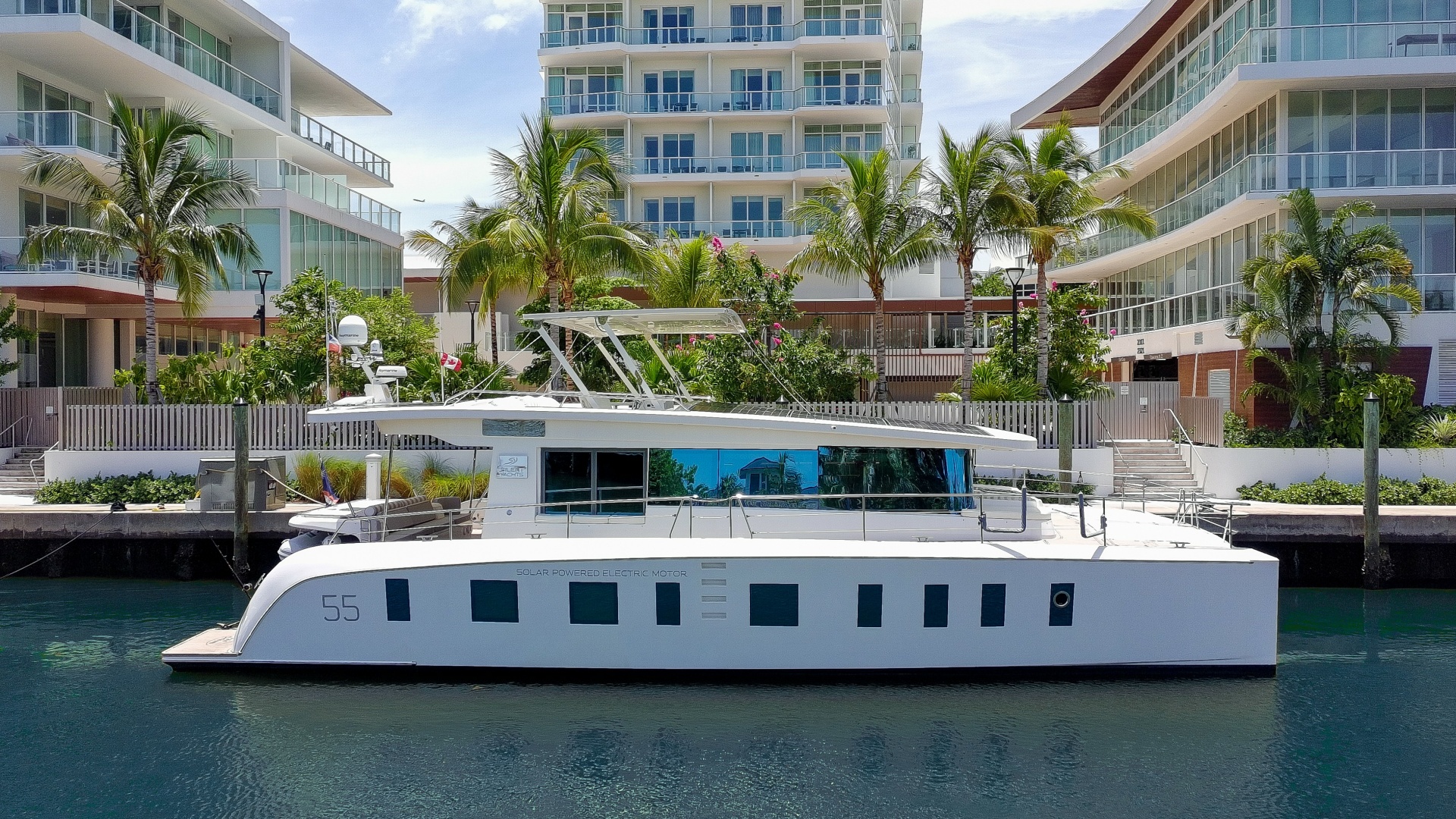
2019 Silent-Yachts Fair Dinkum
$1,599,000
55
Fort Lauderdale Florida

2026 Canados
49
Miami Florida

2026 Buddy Davis
47
Miami Florida
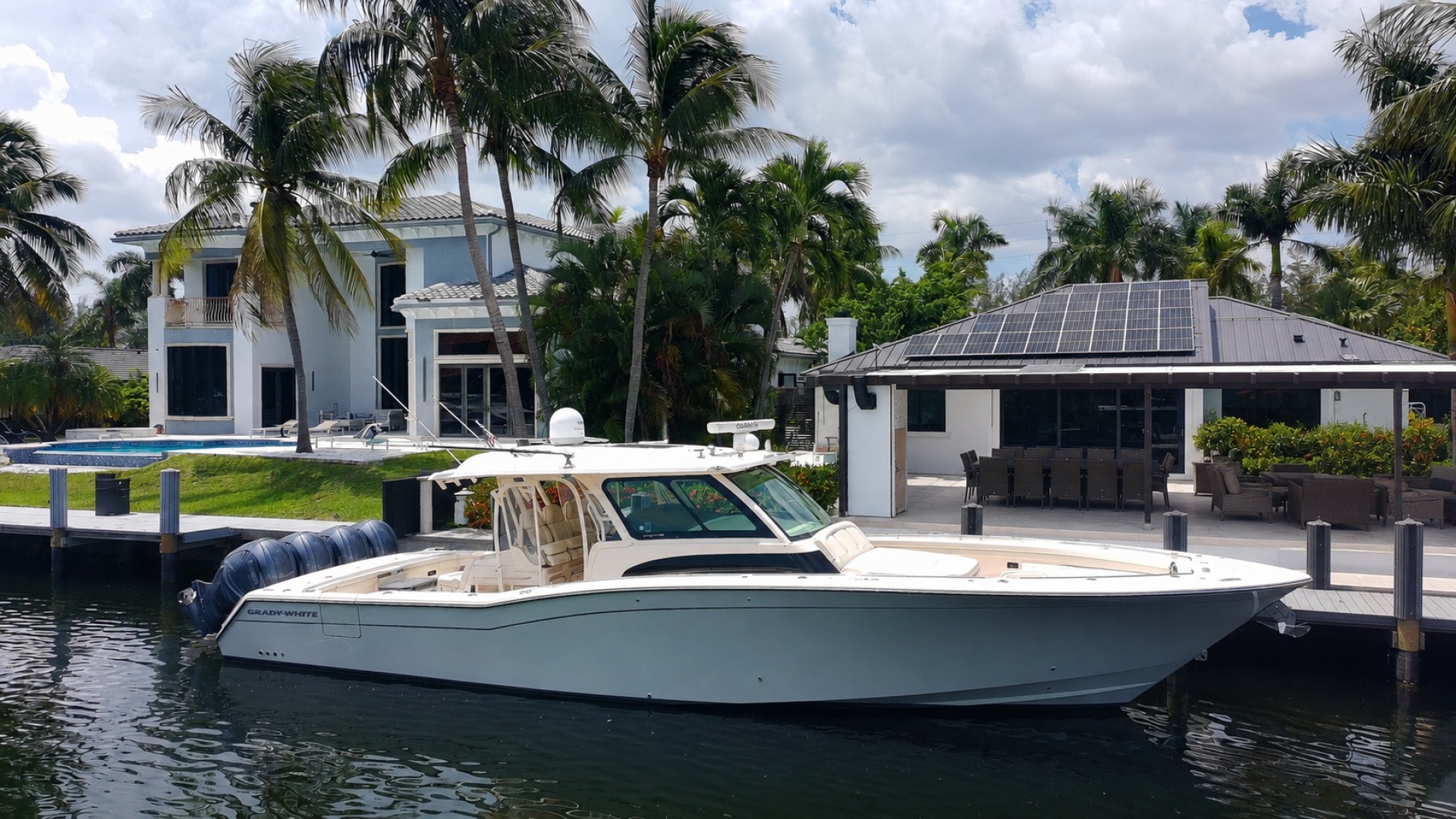
2020 Grady-White No Name
$610,000
45
Hallandale Beach Florida
2020 Viking Huckleberry
$1,495,000
44
Fort Lauderdale Florida

2027 Canados
43
Miami Florida
2021 Intrepid Dream Faster
$730,000
40
Coral Gables Florida

2016 Edgewater
$299,000
37
Miami, Florida

2022 Avid
$56,900
23
Stuart Florida
Get your yacht value Estimate
"*" indicates required fields