

An outboard engine is a self-contained propulsion unit that mounts on a boat’s transom and combines an engine, gearbox, and propeller in one compact package. Unlike inboard systems buried inside the hull, an outboard handles both thrust and steering by physically pivoting left and right. Whether you fish coastal flats, run offshore, or cruise freshwater lakes, understanding outboard mechanics is the difference between a great day on the water and an expensive tow back to the dock. This guide covers everything from engine types and core components to power matching and maintenance schedules.
What are the main types of outboard engines and how do they differ?
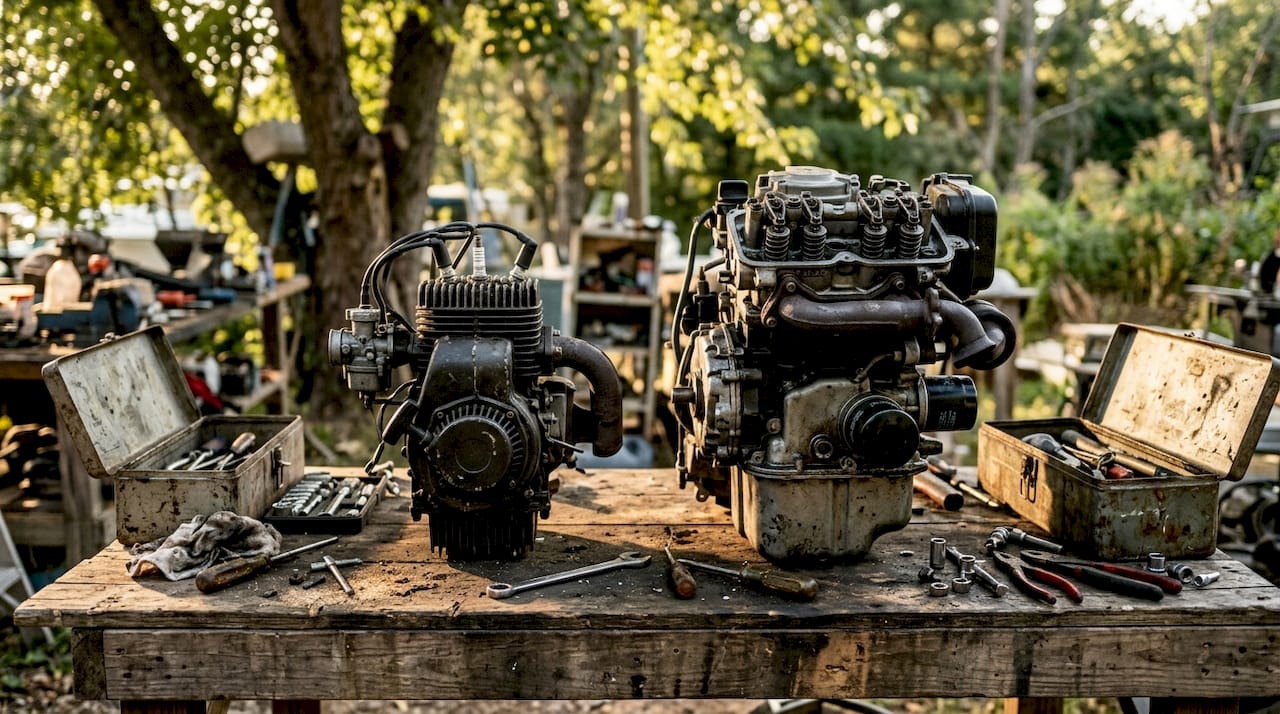
The two engine types every boater needs to understand are 2-stroke and 4-stroke outboards. The difference comes down to how often each fires. 4-stroke engines fire every 720 degrees of crankshaft rotation, while 2-stroke engines fire every 360 degrees. That means a 2-stroke fires twice as often, delivering faster acceleration but burning more fuel and producing more noise.
Two-stroke outboards are lighter and accelerate faster, making them a natural fit for smaller, lighter boats where quick throttle response matters. Four-stroke models run quieter, use less fuel, and comply with modern emissions regulations, which makes them the preferred choice for larger boats and environmentally sensitive waterways. If you fish early mornings in shallow coves, a quiet 4-stroke won’t spook fish the way a buzzing 2-stroke will.
| Feature | 2-Stroke | 4-Stroke |
|---|---|---|
| Firing frequency | Every 360° | Every 720° |
| Acceleration | Faster | Moderate |
| Fuel economy | Lower | Higher |
| Noise level | Higher | Lower |
| Emissions | Higher | Lower |
| Best use | Small, light boats | Larger boats, regulated areas |
Pro Tip: If you run a jon boat or a small bass boat and need instant throttle punch, a 2-stroke fits. If you fish long days offshore or in protected marine areas, invest in a 4-stroke from the start.
What are the key components of an outboard engine?
Every outboard is built around three main sections: the powerhead, the midsection, and the lower unit. Each section handles a specific job, and they work together as one integrated system.
- Powerhead: The top section houses the engine itself, including cylinders, pistons, and the ignition system. This is where combustion happens and power is generated.
- Midsection: The middle section connects the powerhead to the lower unit. It contains the driveshaft, exhaust routing, and the mounting clamp or bracket that attaches the engine to the transom.
- Lower unit: The bottom section holds the gearbox and propeller. The gearbox converts vertical driveshaft rotation into horizontal propeller rotation, and it provides forward, neutral, and reverse gear selection.
- Propeller: The propeller translates engine power into thrust. Pitch and diameter affect speed and pulling power, so propeller selection matters as much as engine size.
- Steering integration: The entire engine pivots on a swivel bracket. Turning the tiller or steering wheel physically rotates the engine, which directs thrust and steers the boat.
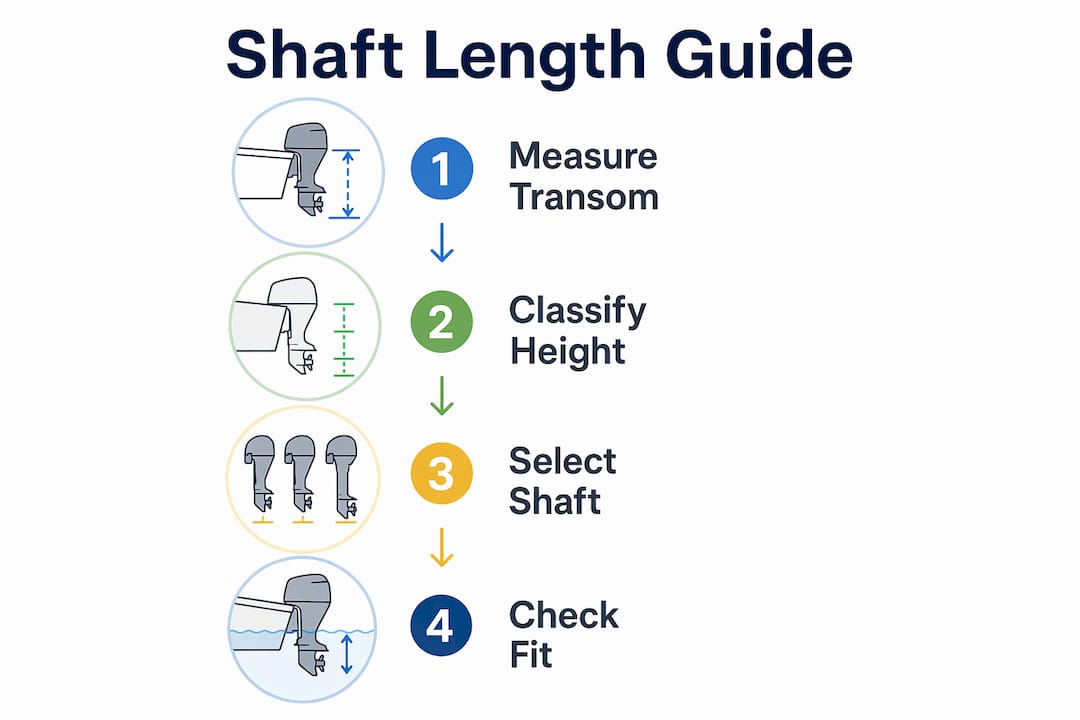
Shaft length is one of the most overlooked components in outboard setup. Improper shaft length leads to air intake or excess drag that degrades performance and fuel efficiency. A shaft that is too short pulls air into the propeller, causing cavitation. A shaft that is too long creates unnecessary drag. Always match shaft length to your transom height before buying.
Pro Tip: Measure your transom height before you shop. Most transoms fall into short (15 inches), long (20 inches), or extra-long (25 inches) categories. Getting this wrong is a mistake you cannot fix without buying a different engine.
How do you choose the right engine power and shaft length?
Matching horsepower to your hull is not about buying the biggest motor you can afford. Focusing on mid-range torque aligned to your actual boating activities is more effective than chasing maximum horsepower ratings. A fishing skiff needs smooth, consistent power at trolling speeds. A wakeboard boat needs strong pull from a dead stop. Those are torque requirements, not peak horsepower numbers.
Improper horsepower matching reduces fuel efficiency, increases stress on the transom, and can cause instability at speed. Every hull has a maximum horsepower rating stamped on its capacity plate, and exceeding it is both dangerous and illegal. Staying within the manufacturer’s recommended range gives you the best balance of performance and safety.
| Boat length | Typical use | Recommended HP range |
|---|---|---|
| Under 14 ft | Fishing, light cruising | 15–40 HP |
| 14–18 ft | Bass fishing, family use | 40–115 HP |
| 18–22 ft | Offshore fishing, watersports | 115–200 HP |
| 22–28 ft | Offshore cruising | 200–350 HP |
Before you buy, check the boat buying checklist from Yachtingexperts to confirm that engine specs align with your hull’s capacity plate and intended use. Getting both horsepower and shaft length right from the start saves you money and frustration.
What are the essential outboard engine maintenance practices?
Maintenance is the single biggest factor in outboard engine longevity. The boaters who get 20 years out of a motor treat maintenance as a calendar commitment, not a reaction to something going wrong.
Daily and after every outing:
- Flush the engine with fresh water after every saltwater trip. Flushing prevents salt and sediment buildup in cooling passages and stops corrosion before it starts.
- Inspect the propeller for dings, fishing line wrapped around the shaft, and visible damage.
- Check the engine for fuel or oil leaks before and after each run.
Scheduled service milestones:
- 100 hours: Change engine oil and filter, inspect spark plugs, check gear oil in the lower unit, and inspect the fuel system.
- 300 hours: Replace spark plugs, inspect the water pump impeller, and check all belts and hoses.
- 500 hours: Replace the water pump impeller, check valve clearance, and inspect the fuel injectors.
- 1,000 hours: Timing belt replacement is critical at this milestone. Skipping it risks catastrophic engine failure.
Your owner’s manual is the definitive guide for model-specific fluid specifications, torque settings, and service intervals. Generic advice gets you close, but the manual gets you exact. Boaters who skip the manual often use the wrong oil viscosity or miss a model-specific interval, which voids warranties and shortens engine life.
Pro Tip: Set calendar reminders for your service hours, not just dates. An engine that sits all winter and runs hard for two summer weeks can hit 100 hours faster than you expect. Track hours on a logbook or a digital hour meter.
For boaters running in saltwater environments, consider sourcing marine replacement engines from specialists who understand the corrosion demands of salt exposure. The right replacement or backup engine can save a season.
How does understanding outboard mechanics improve your time on the water?
Knowing how your engine works changes how you handle your boat. A boater who understands that a 4-stroke runs quieter at idle will choose that engine for early morning bass fishing. A boater who knows how propeller pitch affects top speed will swap props when conditions change, rather than accepting sluggish performance.
Engine knowledge also improves safety. Recognizing the early signs of water pump failure, like rising engine temperature or reduced water flow from the tell-tale, lets you address the problem before it becomes a breakdown. Understanding how shaft length affects propeller depth means you can diagnose cavitation instead of assuming the engine is underpowered.
The economic benefit is real too. Boaters who follow proper maintenance schedules spend less on repairs and get more resale value when it is time to sell. Understanding boat ownership costs including engine maintenance and fuel helps you budget accurately and avoid surprises. A well-maintained outboard holds its value, and a documented service history is one of the strongest selling points when you trade up.
Key Takeaways
Matching engine type, power, shaft length, and maintenance schedule to your specific boat and use case is the foundation of reliable outboard performance.
| Point | Details |
|---|---|
| Engine type selection | Choose 4-stroke for fuel economy and quiet operation; 2-stroke for lightweight, fast-accelerating small boats. |
| Shaft length precision | Match shaft length to transom height exactly; incorrect sizing causes cavitation or drag and cannot be corrected without a new engine. |
| Horsepower matching | Stay within the hull’s rated HP range and prioritize mid-range torque over peak power for your specific activity. |
| Maintenance scheduling | Treat service intervals as calendar commitments at 100, 300, 500, and 1,000 hours to prevent costly failures. |
| Fresh water flushing | Flush after every saltwater outing to protect cooling passages and prevent corrosion that shortens engine life. |
What I’ve learned from watching boaters get outboards wrong
Every season, I see the same mistakes repeated. The most common one is buying a used outboard and trusting the seller’s word on service history. Compression and leakdown tests on a used engine tell you the actual condition of the powerhead. No test, no deal. That is the rule I follow, and it has saved me from expensive surprises more than once.
The second mistake is treating shaft length as an afterthought. I have watched boaters spend thousands on a motor and then mount it at the wrong height because they never measured the transom. Shaft length precision is not a minor detail. It directly affects how the propeller sits in the water, and getting it wrong costs you speed, fuel, and peace of mind.
The third mistake is reactive maintenance. Boaters who only service their engine when something breaks spend three times more over a decade than boaters who follow a schedule. Put your service intervals in your phone calendar right now. Treat them like oil changes on your truck. The engine does not care whether you feel like servicing it. It only cares whether you did.
— Jason
Yachtingexperts can help you get your setup right
Getting your outboard engine dialed in is one of the most rewarding things you can do as a boater. The right motor, properly matched and well maintained, makes every trip more enjoyable and every dollar spent more worthwhile.

At Yachtingexperts, we work with boaters and fishing enthusiasts to match the right engine configuration to their hull, use case, and budget. Our team offers personalized guidance on motor setup, performance optimization, and maintenance planning so you spend more time on the water and less time troubleshooting. Whether you are buying your first boat or upgrading to a larger vessel, our motor configuration service connects you with expert advice tailored to your specific situation. Reach out to our team and let us help you get it right from the start.
FAQ
What is an outboard engine?
An outboard engine is a self-contained propulsion unit that mounts externally on a boat’s transom and integrates an engine, gearbox, and propeller to provide both thrust and steering.
What is the difference between a 2-stroke and 4-stroke outboard?
A 2-stroke fires every 360 degrees of crankshaft rotation for faster acceleration, while a 4-stroke fires every 720 degrees for better fuel economy, lower noise, and reduced emissions.
How do I know what horsepower my boat needs?
Check the capacity plate on your hull for the maximum rated horsepower, then choose an engine that delivers strong mid-range torque for your specific activity rather than simply maximizing peak power.
How often should I service my outboard engine?
Service your outboard at 100-hour intervals for basic tasks like oil and filter changes, with escalating tasks at 300, 500, and 1,000 hours including water pump and timing belt replacement.
Why is flushing my outboard with fresh water important?
Flushing after every saltwater outing removes salt and sediment from cooling passages, preventing corrosion that shortens engine life and leads to costly repairs.
Recommended
Request A Call
Featured Listings

2027 Canados
100
Miami Florida

2015 Maiora
$3,750,000
90
Miami Florida

2027 Canados
57
Miami Florida

2019 Silent-Yachts Fair Dinkum
$1,599,000
55
Fort Lauderdale Florida

2026 Canados
49
Miami Florida

2026 Buddy Davis
47
Miami Florida

2020 Grady-White No Name
$610,000
45
Hallandale Beach Florida

2020 Viking Huckleberry
$1,495,000
44
Fort Lauderdale Florida

2027 Canados
43
Miami Florida

2021 Intrepid Dream Faster
$730,000
40
Coral Gables Florida

2016 Edgewater
$299,000
37
Miami, Florida

2022 Avid
$56,900
23
Stuart Florida
Get your yacht value Estimate
"*" indicates required fields