

Selling a boat should feel like setting sail on calm water. Instead, many owners find themselves overwhelmed by competing platforms, confusing paperwork, unrealistic price expectations, and buyers who ghost them after a sea trial. The wrong move at any step can cost you thousands of dollars or drag your listing out for months. We’ve guided countless clients through this process, and we know exactly where things go sideways. This article lays out the complete, proven workflow trusted by expert sellers so you can protect your investment, move your vessel with confidence, and walk away with the return you deserve.
Table of Contents
- Get your boat ready to stand out
- Gather your paperwork: Documents you need before listing
- Set a winning price: Valuation and pricing strategies
- Choose your selling path: Private sale vs. broker
- List, show, and close your sale
- What most boat sellers overlook—and how to go beyond the basics
- Ready to maximize your boat sale? Let the experts help
- Frequently asked questions
Key Takeaways
| Point | Details |
|---|---|
| Prepare like a pro | Deep clean, fix minor issues, and stage your boat to attract more buyers fast. |
| Document everything | Have all titles, bills of sale, and records ready to streamline your transaction. |
| Price strategically | Use recent comps and avoid overpricing to sell faster and for more money. |
| Choose the best path | Brokers excel with complex or high-end sales; private sales suit smaller boats with hands-on owners. |
| Actively manage the workflow | Stay proactive at every step, from marketing to closing, to avoid costly delays. |
Get your boat ready to stand out
To start a smooth sale, focus on what potential buyers see first. First impressions in the boat market are everything. A buyer scrolling through dozens of listings will skip past anything that looks neglected, no matter how solid the mechanical condition may be underneath. Preparation is not just about appearances. It signals to buyers that the vessel has been cared for and that there are no hidden surprises waiting after the purchase.
The boat selling process typically follows 7 to 10 sequential steps, and preparation is always number one for good reason. Here is what your prep phase should cover:
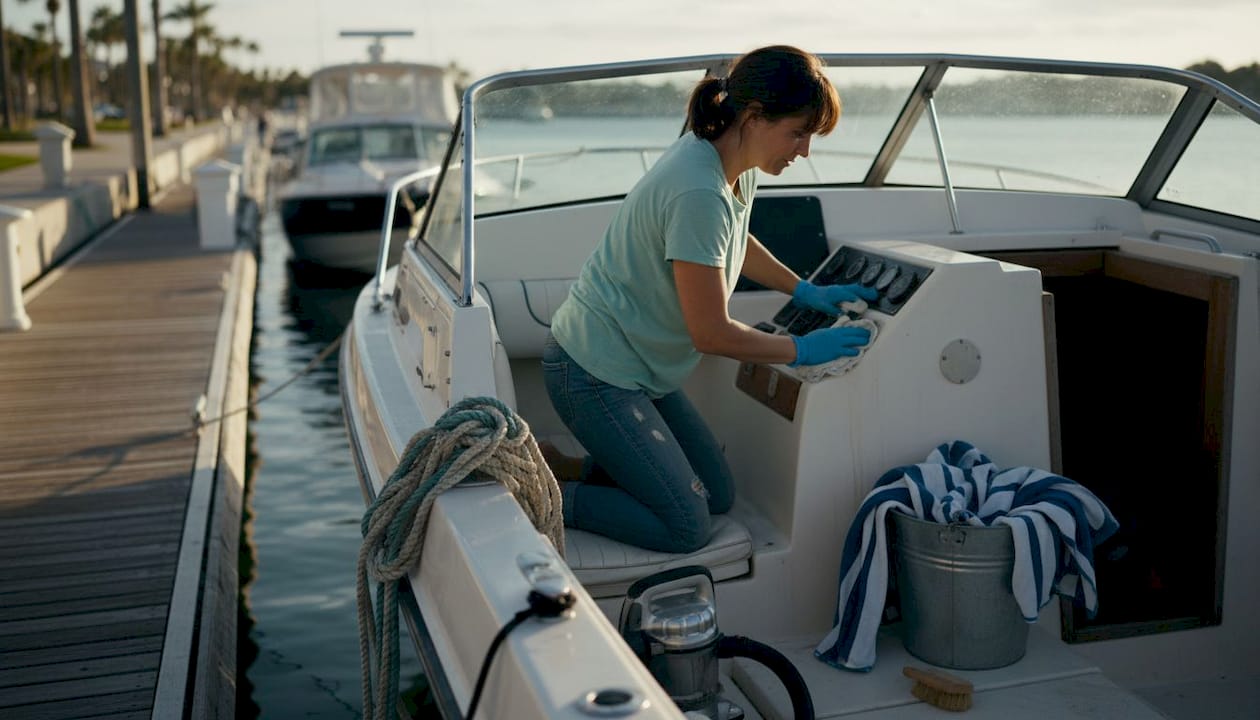
- Deep clean the entire vessel. Scrub the hull, polish the gelcoat, clean the bilge, and detail the interior. Buyers notice odors, stains, and grime instantly. A professional detail service is a worthwhile investment if time is short.
- Address cosmetic issues. Faded upholstery, cracked cleats, peeling graphics, or a worn swim platform all chip away at perceived value. Small fixes like replacing worn dock lines or touching up teak can make a measurable difference.
- Service the engine and mechanical systems. Change the oil, replace filters, and make sure all electronics and navigation equipment function properly. A buyer who finds a dead chart plotter during a showing will start questioning everything else.
- Stage the boat for photos and showings. Remove personal items, clutter, and anything that makes the space feel lived-in. Add a few tasteful touches like a clean set of fenders and neatly coiled lines to project a sense of pride and order.
Following a thorough pre-listing boat checklist ensures you do not miss steps that commonly delay showings or derail offers.
“A buyer’s first five seconds aboard your boat will set the emotional tone for the entire negotiation. Make those seconds count.”
Pro Tip: Rent a storage unit or use your garage to remove personal gear before any showings. A clutter-free cockpit photographs brilliantly and allows buyers to imagine their own adventures on board.
Our boat prep best practices guide covers the specific prep checklist we use with our own clients, including which upgrades deliver the highest return on investment and which ones are simply not worth the cost before a sale.
Gather your paperwork: Documents you need before listing
Once your boat is spotless, turn to the paperwork buyers will request. Nothing derails a deal faster than missing documents. We have seen sales collapse at the closing table simply because the seller could not produce a clear title or locate a lien release. Getting organized early removes one of the most common sources of stress and delay in any boat transaction.
Key paperwork for selling a boat includes the title or registration, bill of sale, lien releases if the vessel was financed, maintenance logs, USCG documentation for larger vessels, and a trailer title if applicable. State-specific forms also vary, so verify local requirements before you list.
Understanding document terminology helps you communicate confidently with buyers and brokers during the closing process.
Here is a quick reference for the documents most commonly required:
| Document | Who needs it | Notes |
|---|---|---|
| Title/registration | All sellers | Must show clear, transferable ownership |
| Bill of sale | All sellers | Records the agreed price and transfer terms |
| Lien release | Financed vessels | Lender must provide this upon payoff |
| Maintenance logs | Recommended for all | Demonstrates care and history |
| USCG documentation | Vessels over 25 feet | Federal documentation required for certain transactions |
| Trailer title | If trailer is included | Separate document from the vessel title |
| State-specific forms | Varies by state | Check with your local DMV or marine authority |
- Separate documents for engine and trailer. Many sellers forget that outboard engines over a certain horsepower may have their own title in some states. Trailers almost always require their own title. Tracking these down after a buyer signs can cause serious delays.
- Clean up liens early. If you still owe money on the boat, contact your lender now to understand the payoff process and request a lien release letter. Do not wait until closing to discover this takes two weeks.
- Create a document folder. Keep physical and digital copies of everything in one organized place. Buyers and brokers will ask for these repeatedly throughout the transaction.
Pro Tip: Scan every document and save them in a shared cloud folder. This allows you to send everything to a buyer or broker instantly, which signals professionalism and speeds up the process considerably.
Our step-by-step yacht selling guide includes state-specific document checklists for Florida sellers and covers the unique requirements for USCG-documented vessels, which follow federal rules rather than state titling systems.
Set a winning price: Valuation and pricing strategies
With paperwork in order, it is time to decide what your boat is worth. Pricing is where most sellers make their most expensive mistakes. Set the price too high and your listing will sit on the market while comparable boats sell around you. Set it too low and you leave real money on the table. Finding the right number requires research, timing awareness, and a clear strategy.
Here is how to approach pricing with confidence:
- Research comparable sold listings. Look at boats of the same make, model, year, and condition that have actually sold in the last 90 days, not just listed. Listing prices are not the same as sale prices.
- Adjust for your boat’s condition and upgrades. A full canvas replacement, upgraded electronics, or a recent engine rebuild can justify a premium. Poor cosmetic condition should factor the other direction.
- Price 3 to 7 percent above your target number. This pricing buffer gives you room to negotiate without giving away margin. Buyers almost always expect to negotiate, so build that into your ask from the start.
- Avoid the overpricing trap. Overpricing a boat can increase time on market by four times compared to accurately priced vessels. The longer a boat sits, the more buyers question what is wrong with it.
- Consider seasonal timing. The spring market, especially February through May, typically brings the highest buyer demand and strongest prices. Listing in the fall or winter can mean slower traffic and more negotiation pressure.
| Strategy | Benefit | Risk |
|---|---|---|
| Price at market value | Faster sale | Less negotiation buffer |
| Price 3 to 7% above target | Room to negotiate | May reduce showing traffic slightly |
| Price above 10% over value | Appears aspirational | Dramatically longer time on market |
Understanding how timing your sale impacts final price is one of the most underrated tools available to sellers. The same boat can command thousands more in April than it does in October in most Florida and coastal markets.
Choose your selling path: Private sale vs. broker
How you sell can be as important as what you are selling. Let’s compare your options honestly.
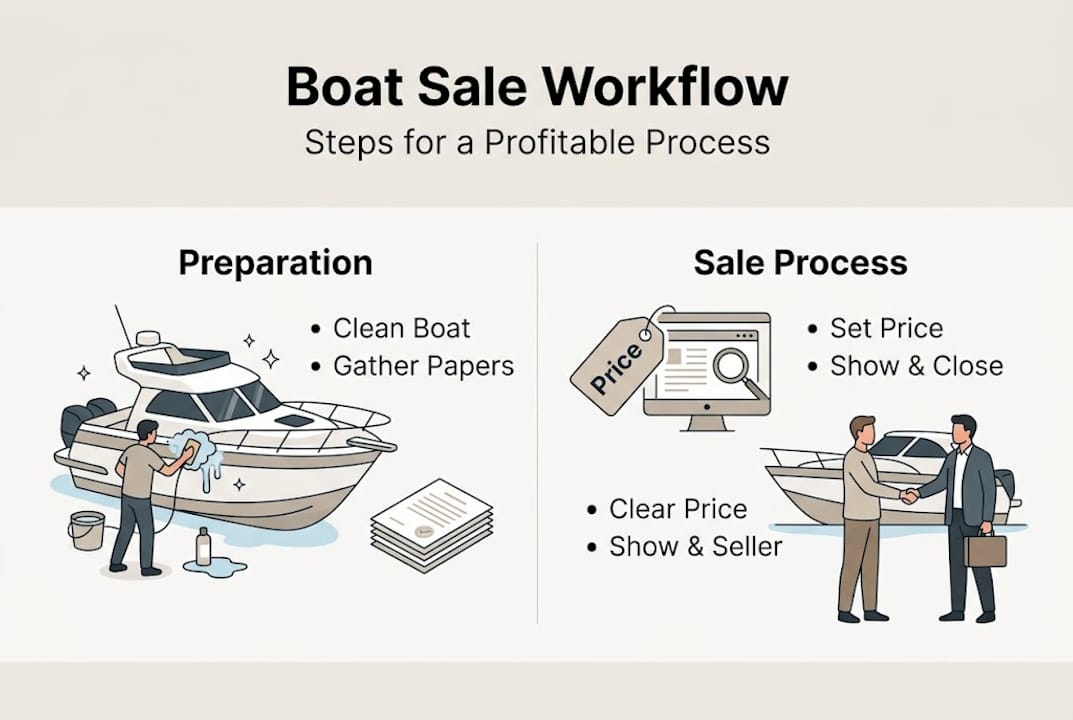
Selling privately means you control the timeline, the messaging, and the full proceeds of the sale. It also means you handle every inquiry, showing, sea trial, negotiation, and closing document yourself. For smaller boats priced under $30,000, this approach can make financial sense, especially if the seller has experience and time available.
Hiring a broker changes the equation significantly. Brokers provide broader market exposure, manage all paperwork, screen buyers, and in some cases net sellers 8 to 12 percent higher final prices even after commissions of 10 to 15 percent are factored in. For larger or more complex vessels, the value proposition is clear.
Here is a side-by-side comparison to help you decide:
| Factor | Private sale | Broker-assisted sale |
|---|---|---|
| Upfront cost | Low | Commission-based |
| Time required | High | Low |
| Buyer reach | Limited | Extensive |
| Legal protection | Seller’s responsibility | Broker handles |
| Best for | Smaller, local boats | Large, complex, or high-value vessels |
- Brokers shine for yachts over 40 feet. The transaction complexity, documentation requirements, and buyer pool for larger vessels make professional representation almost always worth it.
- Private sales work best when you know the market. If you have sold boats before, understand local comps, and can respond to inquiries quickly, a private sale can preserve your full margin on a straightforward listing.
- The broker vs. private approach decision is not just financial. Consider your stress tolerance, schedule, and how much you value a guided, expert experience.
Pro Tip: Even if you choose a private sale, consider a one-time consulting session with a broker to validate your pricing and review your listing materials. It is a low-cost way to access professional insight without committing to a full commission arrangement.
Learn more about what makes brokers valuable by exploring the benefits of using a broker and how professional representation protects you from common closing pitfalls.
List, show, and close your sale
Once you have chosen your selling path, execute these steps to seal the deal.
- Create an exceptional listing. Use 20 to 35 high-quality photos and include a walkthrough video. Exterior shots, interior shots, engine room, helm station, and detail photos all matter. Listings with professional media consistently outperform those with smartphone snapshots.
- List on multiple platforms. Boat Trader, YachtWorld, Craigslist, Facebook Marketplace, and local marina bulletin boards each reach different segments of the buyer pool. Do not rely on a single platform.
- Respond to inquiries within 30 minutes. Fast response times are directly correlated with higher conversion rates. Buyers shopping boats are often contacting multiple sellers simultaneously, and the first to respond with clear, helpful information wins the showing.
- Screen buyers before showings. Ask basic qualifying questions. Has the buyer been pre-approved for financing, or are they a cash buyer? Do they have experience with this type of vessel? Screening saves time and filters out tire-kickers.
- Conduct a proper sea trial and inspection. Allow serious buyers to hire a certified marine surveyor. A clean survey report builds buyer confidence and justifies your price. Trying to block or discourage a survey sends a red flag.
- Use escrow for payment. Never accept cash payments at the dock or wire transfers without verified escrow services. Fraud in private boat sales is a real risk. A reputable escrow service protects both parties and keeps the transaction clean.
“The closing process is not the finish line. It is the final lap. Stay organized, respond promptly, and never let paperwork slow down a motivated buyer.”
Pro Tip: If your boat is over 60 feet, working exclusively through a licensed broker is standard practice in the industry. The complexity of documentation, escrow, and survey coordination at that level benefits enormously from professional management.
Strong negotiation strategies can help you maintain your asking price during sea trials and survey negotiations, which is where many sellers inadvertently give back margin they worked hard to earn.
What most boat sellers overlook—and how to go beyond the basics
Even with the workflow mapped out, expert sellers do not stop at the checklist. The sellers who achieve the best outcomes treat the process as an active, data-informed campaign rather than a passive listing exercise.
One of the biggest oversights we see is underestimating the power of presentation and response speed. Sellers spend weeks cleaning their boat and then post blurry photos and wait days to return calls. Those two habits alone can cost 10 to 15 percent of final price.
Tracking your listing’s performance matters too. How many views is your listing generating? How many inquiries? If you have had 200 views and zero inquiries, the price or photos are the problem. If you have had 10 inquiries and no offers after showings, the boat itself needs attention. Metrics tell you where to focus.
The biggest gains really do come from diligent upfront preparation, not from last-minute negotiation tactics. By the time a buyer is at your dock, the price is largely determined by how the listing looked online and how the boat felt in person. Our advanced boat selling tips dig deeper into how to use listing analytics and buyer psychology to your advantage in 2026’s competitive market.
Seasonal timing and buyer psychology still play a major role this year. Buyers are more emotionally driven than they admit, and a boat that feels ready to go on the water right now will always command more than one that needs work before the next trip.
Ready to maximize your boat sale? Let the experts help
Take your sale from checklist to success with expert help.

Selling a boat is one of the most significant financial transactions you will make, and getting every step right requires more than a good checklist. At Yachting Experts, we bring personalized, high-touch service to every sale, helping you sell your boat with confidence and maximum return. Whether you want to boost your sale value with targeted preparation strategies or want to fully benefit from a yacht broker who handles every detail, we are here to guide you from first listing to final signature. Let’s make your next sale your best one yet.
Frequently asked questions
What paperwork do I need to sell my boat?
You need the title, registration, bill of sale, lien release if financed, and any state or federal documentation relevant to your vessel. For larger boats, USCG documentation and a separate trailer title are also commonly required.
How should I price my boat to sell quickly?
Research comparable boats recently sold and price yours 3 to 7 percent above your minimum to allow negotiation room; avoid overpricing, which can quadruple the time your boat spends on the market.
Do I need a broker to sell my boat?
Not always. Brokers are most valuable for complex or high-value sales, while private sales can work well for smaller or local boats if you have the time and experience to manage the process yourself. Learn more about broker vs. private tradeoffs to find the right fit for your situation.
What are the most important steps to avoid delays or failed sales?
Thoroughly prepare your boat, gather all documents in advance, set a realistic price, and respond quickly to buyer inquiries. The full workflow covers 7 to 10 sequential steps, and skipping any one of them is where most deals run into trouble.
Recommended
Request A Call
Featured Listings

2027 Canados
100
Miami Florida

2015 Maiora
$3,750,000
90
Miami Florida

2027 Canados
57
Miami Florida

2019 Silent-Yachts Fair Dinkum
$1,599,000
55
Fort Lauderdale Florida

2026 Canados
49
Miami Florida

2026 Buddy Davis
47
Miami Florida

2020 Grady-White No Name
$610,000
45
Hallandale Beach Florida

2020 Viking Huckleberry
$1,495,000
44
Fort Lauderdale Florida

2027 Canados
43
Miami Florida

2021 Intrepid Dream Faster
$730,000
40
Coral Gables Florida

2016 Edgewater
$299,000
37
Miami, Florida

2022 Avid
$56,900
23
Stuart Florida
Get your yacht value Estimate
"*" indicates required fields