

Best practices for yacht resale are the proven steps that turn a complicated, high-stakes transaction into a confident, profitable sale. Yacht resale, known in the industry as vessel disposition or brokered sale, combines maintenance preparation, documentation accuracy, pricing strategy, and legal compliance into one coordinated process. Sellers who skip any of these steps routinely leave money on the table or face closing delays that kill deals. Whether you own a 40-foot cruiser or a superyacht, the fundamentals are the same: present the vessel at its best, price it with data, and get your paperwork airtight before you list.
1. What are the top maintenance steps to maximize yacht resale value?
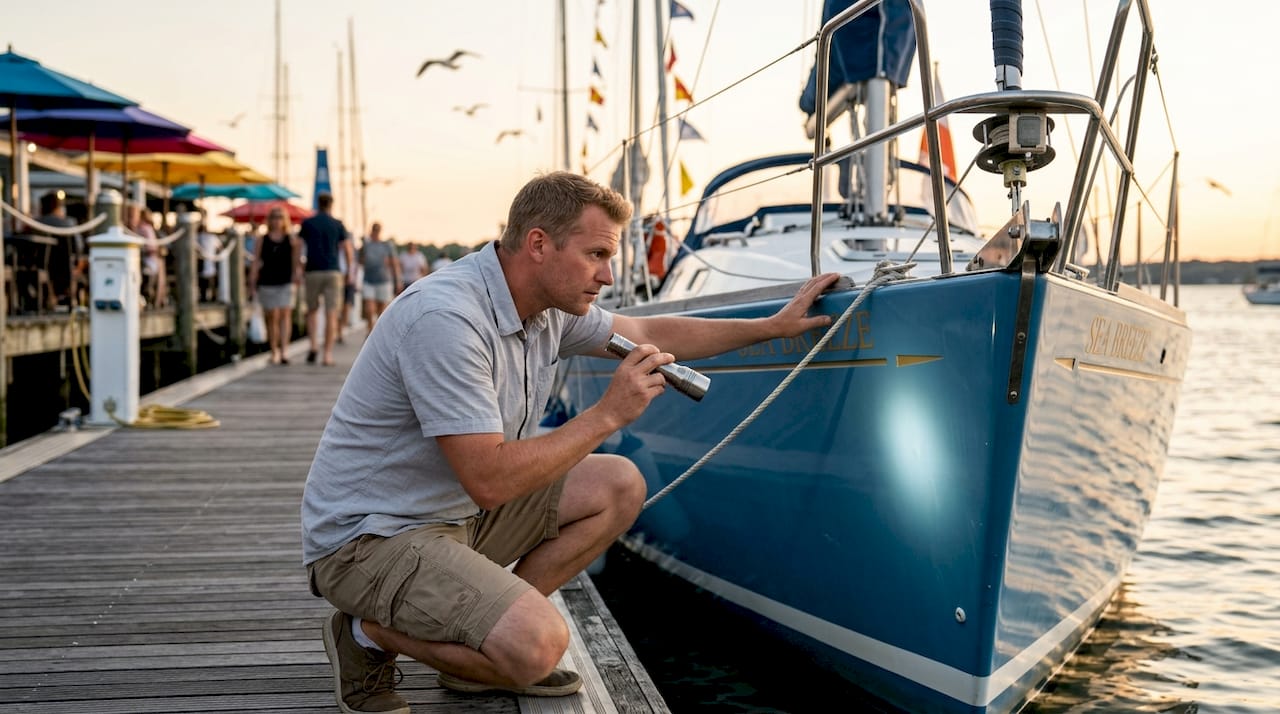
Pre-sale maintenance is the single highest-return investment a seller can make before listing. Scheduled maintenance and cosmetic repairs improve buyer confidence and accelerate the sale. A buyer who walks aboard a clean, well-maintained vessel makes a faster, higher offer than one who spots deferred work.
Focus your preparation on these high-impact areas:
- Hull and bottom paint: Fresh antifouling paint signals active care and removes one of the first objections buyers raise.
- Engine and mechanical systems: Service logs, fresh impellers, and clean bilges tell buyers the vessel was treated seriously.
- Varnish and brightwork: Cosmetic improvements like varnish touch-ups have an outsized impact on buyer perception relative to their cost.
- Interior cleaning and upholstery: Stained cushions and musty cabins kill deals faster than mechanical issues. Deep clean everything.
- Safety equipment: Expired flares, outdated life rafts, and missing fire extinguishers create liability concerns buyers will use to negotiate down.
Pro Tip: Schedule a pre-listing survey with a certified marine surveyor before you set a price. The surveyor will find issues you have lived with for years. Fix the flagged items first, then price with confidence.
A professional survey also gives you a defensible number when buyers push back on your asking price. Sellers who skip this step often face a second, buyer-commissioned survey that surfaces problems at the worst possible moment.
2. How can upgrades and features influence your yacht resale strategies?
The right upgrades attract buyers who are willing to pay a premium. The wrong ones cost more than they return. The key is matching your investment to what today’s buyers actually want.
Eco-friendly upgrades like solar panels and efficient engines align with growing buyer preferences and justify premium pricing. Modern buyers, particularly those under 50, actively seek vessels with lower operating costs and reduced environmental footprints. A solar array that cuts generator hours is a selling point, not just a green gesture.
High-impact upgrades worth considering include:
- Updated chartplotters and navigation electronics: Garmin, Furuno, and Simrad systems are recognized brands buyers trust. Outdated electronics are a common negotiating chip.
- Energy-efficient engines or repowering: A recent repower with a Yanmar or Volvo Penta engine adds documented value and removes buyer anxiety about reliability.
- Stylish, neutral interior updates: Replacing dated fabrics and lighting with clean, neutral finishes broadens your buyer pool significantly.
- Watermaker and generator upgrades: Offshore-capable buyers prioritize self-sufficiency. A functioning, recently serviced watermaker is a genuine value-add.
- Luxury amenities: Buyers researching luxury yacht amenities expect certain comfort features on vessels above 50 feet.
Balance every upgrade decision against your expected return. Spending $15,000 on a custom paint job on a vessel priced at $120,000 rarely pays back dollar for dollar. Spending $3,000 on new electronics on the same vessel often does.
3. What legal and documentation best practices prevent resale delays?
Documentation is the keystone of legal ownership transfer and sale legitimacy. Sellers who treat paperwork as an afterthought routinely face escrow delays, rejected filings, and frustrated buyers who walk away.
For federally documented vessels, the process is specific and unforgiving. A properly executed and notarized bill of sale must include vessel identifiers, legal names, addresses, and ownership percentages. The Coast Guard will reject informal or incomplete sale agreements outright. There is no workaround.
Follow these steps in order before you list:
- Confirm your vessel identifiers. The official number and Hull Identification Number (HIN) on your documentation must match federal records exactly. Even small inconsistencies cause critical delays.
- Verify ownership percentages. If the vessel has multiple owners, every party’s percentage must be documented accurately. Errors in ownership percentages are among the most common causes of USCG filing denials.
- Gather SSN or TIN data for all owners. Missing tax identification data stops federal registration updates cold.
- Prepare a notarized bill of sale. Work with a maritime attorney or documentation service to draft this correctly the first time.
- Review your ownership history. Clean ownership records prevent title disputes and protect both parties at closing.
“Incorrect or incomplete transfer paperwork can stall escrow disbursement and closing timelines, causing sale delays and buyer hesitation.”
Pro Tip: Start your paperwork cleanup at least 60 days before you plan to list. Title issues that look simple often take weeks to resolve through the National Vessel Documentation Center (NVDC).
The role of documentation in boat sales goes beyond legal compliance. Transparent, complete records build buyer trust and remove one of the most common reasons deals fall apart at the finish line.
4. What pricing and marketing tactics optimize your sale outcome?
Pricing a yacht correctly from day one is more important than any upgrade you can make. Overpriced listings sit on the market, accumulate days-on-market stigma, and eventually sell for less than a correctly priced vessel would have fetched at launch.
Set your asking price using three data points: recent comparable sales in your region, current active listings for similar vessels, and the condition adjustment from your pre-listing survey. Do not rely on what you paid or what you feel the vessel is worth.
Effective marketing for yacht sellers includes:
- Professional photography and video: Buyers browsing YachtWorld, Boat Trader, or similar platforms make instant judgments based on images. Poor photos are a deal-killer regardless of vessel quality.
- Detailed, transparent listings: Buyers pass on yachts with vague or incomplete details. Transparent, detailed presentation boosts buyer trust and accelerates the sale.
- Targeted outreach to niche segments: A 60-foot sailing ketch appeals to a very different buyer than a 60-foot motor yacht. Your marketing channel should match your vessel type.
- Broker representation: A qualified yacht broker manages listings, negotiations, and paperwork efficiently, reducing seller stress and broadening buyer reach.
| Marketing Channel | Best For | Key Advantage |
|---|---|---|
| YachtWorld / Boat Trader | All vessel types | Massive buyer audience |
| Yacht broker network | Vessels above $100,000 | Qualified buyer access |
| Social media (Instagram, Facebook) | Lifestyle-oriented buyers | Visual storytelling |
| Direct outreach via broker | Superyachts and rare vessels | Confidential, targeted |
5. How to compare resale strategies by yacht type and seller situation?
Not every yacht sells the same way. A 28-foot day cruiser and a 120-foot superyacht require completely different approaches to documentation, marketing, and buyer expectations.
| Factor | Recreational Yacht (under 65 ft) | Superyacht / Federally Documented |
|---|---|---|
| Documentation | State title or USCG certificate | NVDC filing, notarized bill of sale mandatory |
| Buyer pool | Local and regional | International, broker-driven |
| Marketing lead time | 30–90 days | 6–18 months |
| Upgrade priority | Cosmetics and electronics | Systems, compliance, and classification |
| Pricing data | Regional comps | Global broker databases |
Regional market conditions matter significantly. Florida, for example, is one of the most active yacht resale markets in the world, with year-round demand and a deep broker network. Sellers in Florida benefit from market-specific selling strategies that account for seasonal buyer traffic and local survey standards.
Timing also affects return. Trade-up strategies focused on timing and market demand can maximize investment return beyond typical resale value. Selling during peak season, when buyer activity is highest, consistently produces better outcomes than listing in the off-season out of urgency.
Older vessels require a different calculus. A 20-year-old yacht with documented maintenance history often outsells a similar vessel with no records, even if the undocumented boat is in objectively better condition. Buyers cannot verify what they cannot see.
Key takeaways
Maximizing yacht resale value requires preparation, clean documentation, and market-aware pricing executed in the right sequence before you list.
| Point | Details |
|---|---|
| Maintenance before listing | Pre-sale repairs and cosmetic work improve buyer confidence and increase final sale price. |
| Documentation accuracy | Notarized bills of sale with exact vessel identifiers and ownership data are mandatory for federally documented vessels. |
| Targeted upgrades | Eco-friendly systems and updated electronics attract modern buyers and justify premium pricing. |
| Pricing with data | Use recent comparable sales and survey findings to set a competitive, defensible asking price. |
| Broker advantage | A qualified yacht broker broadens buyer reach, manages negotiations, and reduces closing risk. |
What I have learned after years of yacht resale transactions
Sellers consistently underestimate two things: how long documentation takes and how much first impressions matter. I have watched deals fall apart at closing because a seller assumed a title issue would “sort itself out” and it did not. I have also watched a well-presented, mid-range vessel outsell a technically superior boat because the owner invested in professional photography and a thorough clean before listing.
The sellers who get the best outcomes are the ones who treat the sale like a business transaction from day one. They pull their documentation early, fix what needs fixing, price with data instead of emotion, and work with a broker who knows the market. They do not wait for a buyer to find the problems. They find the problems first and solve them.
One thing I tell every seller: do not skip the pre-listing survey. It feels like an unnecessary expense when you already know your vessel. But a surveyor will find the deferred maintenance item you stopped noticing two seasons ago. Fix it before a buyer’s surveyor finds it during due diligence, because at that point it becomes a negotiating weapon, not just a repair.
The sellers who struggle are almost always the ones who listed too fast, priced too high based on sentiment, and then watched their vessel sit while the market moved on. Patience and preparation are not opposites. They work together.
— Jason
Yachtingexperts is ready to help you sell with confidence
Selling a yacht is one of the largest financial transactions most owners will ever make. Getting it right requires more than a listing and a prayer.

At Yachtingexperts, we bring a high-touch, personalized approach to every sale. Our team handles everything from documentation review and pre-sale preparation guidance to professional marketing and buyer negotiations. We know the Florida market deeply, and our broker network reaches qualified buyers nationally and internationally. Whether you are ready to list today or still planning your exit, our step-by-step selling workflow gives you a clear path to a profitable close. Reach out to our team and let us put our market knowledge to work for you. ✅
FAQ
What documents are required to sell a federally documented yacht?
A federally documented vessel requires a properly executed and notarized bill of sale that includes the vessel’s official number, HIN, legal names, addresses, and ownership percentages. The Coast Guard will reject incomplete or informal agreements.
How early should I start preparing my yacht for sale?
Start at least 90 days before your target listing date. Documentation cleanup, pre-listing surveys, and high-priority repairs all take more time than sellers expect.
Does working with a yacht broker actually increase my sale price?
A qualified yacht broker broadens your buyer reach, manages negotiations, and handles paperwork efficiently. Brokers consistently help sellers achieve better pricing than private listings by connecting vessels with qualified, motivated buyers.
What upgrades add the most resale value to a yacht?
Updated navigation electronics, energy-efficient engines, and eco-friendly systems like solar panels deliver the strongest return. Neutral interior updates and fresh bottom paint also improve buyer perception significantly.
How does the Florida market differ from other yacht resale markets?
Florida offers year-round buyer demand, a deep broker network, and high transaction volume compared to most other U.S. regions. Sellers in Florida benefit from listing during peak season, typically october through april, when buyer activity is at its highest.
Recommended
Request A Call
Featured Listings

2027 Canados
100
Miami Florida

2015 Maiora
$3,750,000
90
Miami Florida

2027 Canados
57
Miami Florida

2019 Silent-Yachts Fair Dinkum
$1,599,000
55
Fort Lauderdale Florida

2026 Canados
49
Miami Florida

2026 Buddy Davis
47
Miami Florida

2020 Grady-White No Name
$610,000
45
Hallandale Beach Florida

2020 Viking Huckleberry
$1,495,000
44
Fort Lauderdale Florida

2027 Canados
43
Miami Florida

2021 Intrepid Dream Faster
$730,000
40
Coral Gables Florida

2016 Edgewater
$299,000
37
Miami, Florida

2022 Avid
$56,900
23
Stuart Florida
Get your yacht value Estimate
"*" indicates required fields